For quarry and mine operators, a cone crusher that’s not performing at its best is more than just a frustration—it’s a costly problem. Studies show 44% of plants spend over 40 hours weekly on maintenance, while inefficient crushing leads to lost capacity,higher power costs, and frequent downtime. With the right mix of pre-operation preparation, real-time tuning, proactive maintenance, and smart upgrades, you can unlock significant improvements. This guide shares proven strategies from industry leaders like Metso, Sandvik, and Superior Industries—designed to be simple enough for on-site teams to implement, yet powerful enough to deliver measurable results.
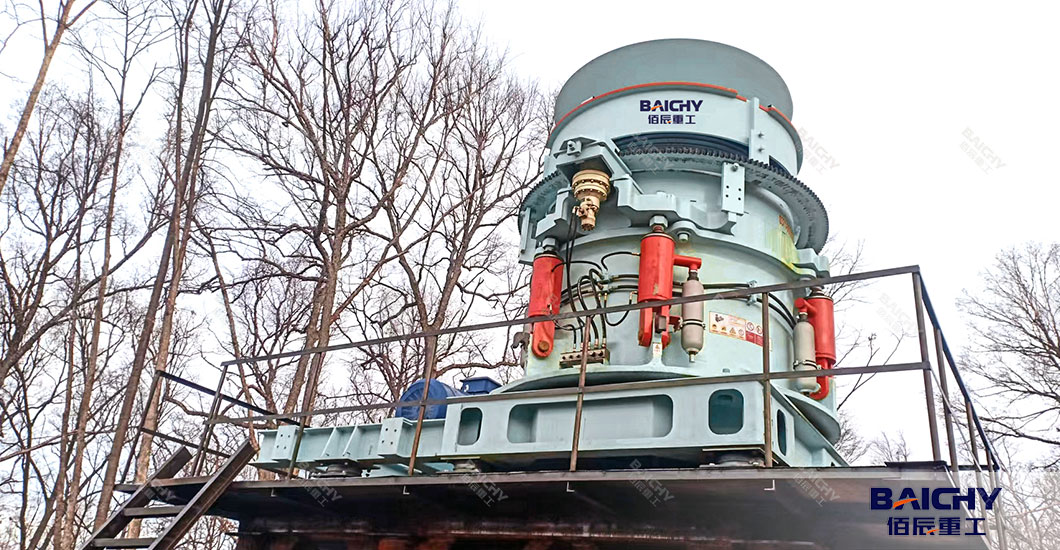
1. Start with the Basics: Pre-Operation Optimization
Before your cone crusher even starts, lay the groundwork for success with these foundational steps.
First, match your equipment to your material and goals. Every cone crusher has design limits—know your material’s compressive strength (avoid feeding rock harder than the crusher’s rating)、moisture content, and particle size distribution. Clearly define your target capacity (t/h) and desired output size (controlled by the Closed Side Setting, or CSS). For example, high-hardness ore (like granite with f=10-12) needs a robust crusher with wear-resistant liners, while softer materials work better with a different cavity design.
Next, optimize feeding and circuit design. Uniform feeding is critical—use a vibrating grizzly feeder to avoid overload and ensure the crusher runs “full cavity” (not starved or stuffed). Control fine material in the feed: for secondary crushers, keep fines below 25%; for tertiary crushers, limit to 10% to reduce liner wear and energy waste. Also, make sure your screening capacity matches the crusher—bottlenecks in the closed circuit lead to unnecessary material recirculation.
Finally, invest in quality parts. The mantle and bowl liners are the heart of your crusher—choose custom-engineered, wear-resistant alloys (like high-chromium steel) instead of generic options. A benefication process plant in China swapped standard 16Mn steel liners for high-chromium cast steel, extending liner life from 2-3 months to 3-4 years . Opt for OEM or high-compatibility hydraulic components and bearings to minimize warranty issues (top suppliers boast a 0.17% warranty rate, far below the industry average of 3%).
2. Tune Key Parameters for Real-Time Performance
Even the best-prepared crusher needs precise adjustments during operation to stay efficient. Focus on these three critical areas:
Master the Closed Side Setting (CSS). The CSS—the smallest gap between the mantle and concave—directly impacts output size and capacity. A common mistake? Letting the CSS drift as liners wear. One study found that a CSS increase from 10mm to 13mm reduced target-size product by 15% . Check and adjust CSS every shift to balance your desired particle size with maximum throughput.
Adjust speed and stroke for your material. There’s no one-size-fits-all setting: use a “high speed, short stroke” for hard, brittle materials (like basalt) to get uniform particle shape, and a “low speed, long stroke” for softer, more ductile rocks. Monitor the crusher’s power draw—aim for 75-95% of rated power to avoid inefficiency or overload .
Maintain optimal cavity fill. A full cavity ensures efficient “rock-on-rock” crushing, reducing wear on liners and improving particle shape. Avoid underfeeding (which damages bearings) or overfeeding (which causes bowl float and excessive vibration). Use variable-speed feeders to keep the cavity consistently filled without overflow.
3. Leverage Automation for Smarter Operation
Modern cone crushers come with powerful automation tools—don’t let them go to waste. These features take the guesswork out of optimization and protect your equipment.
Enable real-time monitoring of key metrics: bowl float, ring bounce, current load, and temperature. Systems like Sandvik’s crusher monitoring tools can detect abnormal vibrations or pressure spikes, alerting you to issues before they cause breakdowns. For example, hydraulic overload protection automatically retracts the mantle if tramp metal (like steel pieces) enters the cavity, then resets—avoiding costly damage and unplanned downtime .
Use wear compensation features. As liners wear, the CSS changes—automated systems adjust the setting dynamically to maintain consistent output size. This eliminates the need for manual adjustments mid-shift and ensures your product meets quality standards from start to finish.
4. Implement Proactive & Predictive Maintenance
Maintenance is the single most important factor in long-term crusher efficiency. Reactive repairs cost 3x more than planned maintenance—so shift to a proactive approach.
Stick to a regular inspection schedule. Check wear parts (liners, blow bars, conveyor belts) weekly—replace liners when they’re worn to 50% of their original thickness. Inspect fasteners and retighten as needed to prevent vibration-related damage. Don’t forget lubrication: clean the lubrication system regularly and use the recommended oil grade to extend bearing and gear life .
Adopt predictive maintenance technologies. Vibration sensors and laser scanning tools (like those from Optimum Crush) can diagnose performance loss early.
Train your team. Even the best equipment performs poorly with untrained operators. Teach your crew how to adjust CSS, recognize warning signs (like unusual noise or vibration), and follow standard operating procedures (SOPs) for startup, shutdown, and maintenance. Well-trained operators can increase 产能 by 10% or more just by following best practices .
5. Upgrade for Advanced Performance
If you’re looking to take efficiency to the next level, consider these targeted upgrades—they deliver high ROI by addressing specific pain points.
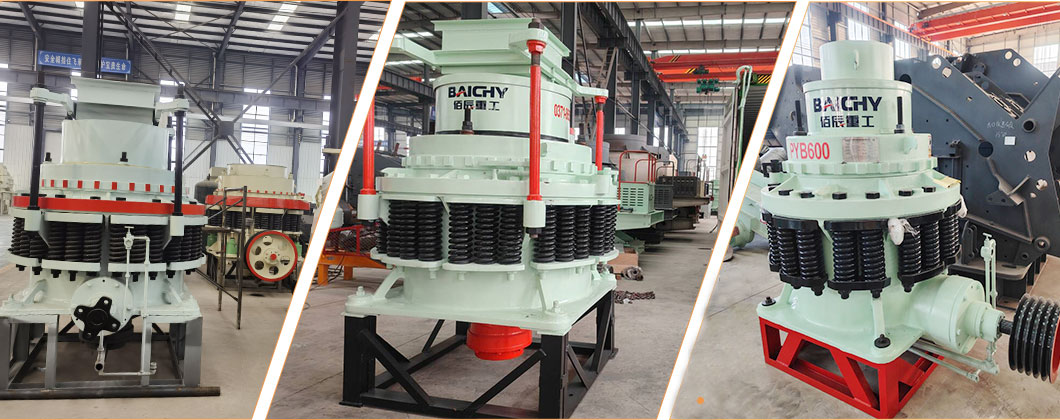
Optimize cavity design. Swap out standard cavities for application-specific designs: use a short-head cavity for fine crushing, a standard cavity for medium-duty applications, and a coarse cavity for primary crushing. Some manufacturers (like Metso, Baichy Machinery) offer interchangeable cavity liners, letting you reconfigure the crusher for different materials without replacing the entire unit.
Upgrade to energy-efficient components. Modern hydraulic systems and motors can reduce power consumption by 15-30% compared to older models.
Add auxiliary systems. Install pulse dust collectors to meet strict environmental standards (emissions ≤15mg/m³) and expand your operating locations. For high-moisture materials, add a pre-drying system to prevent clogging. Magnetic separators remove tramp metal before it enters the crusher, protecting expensive components .
6. Troubleshoot Common Performance Issues
Even with proper optimization, problems can arise. Here’s how to fix the most frequent issues:
---Low capacity: Check for uneven feeding (use a vertical guide plate to center the feed)、clogged screens, or worn liners. Increase CSS slightly and ensure the crusher is running at full power .
---Uneven output size: Adjust speed and stroke, replace worn liners (which cause irregular crushing), or recalibrate CSS. Ensure the feed is properly graded (no large clumps on one side) .
---Excessive vibration: Tighten loose fasteners, check for bearing damage, or adjust feed rate to reduce overload. If vibration persists, inspect the eccentric sleeve—replace if wear exceeds 3mm .
---High wear/energy use: Switch to high-wear liners, optimize feed particle size, or reduce fine material in the feed. Ensure the crusher isn’t running above its design limits (power, capacity, or crushing force) .
7. Learn from Real-World Success Stories
These case studies prove that the right optimization strategies deliver tangible results:
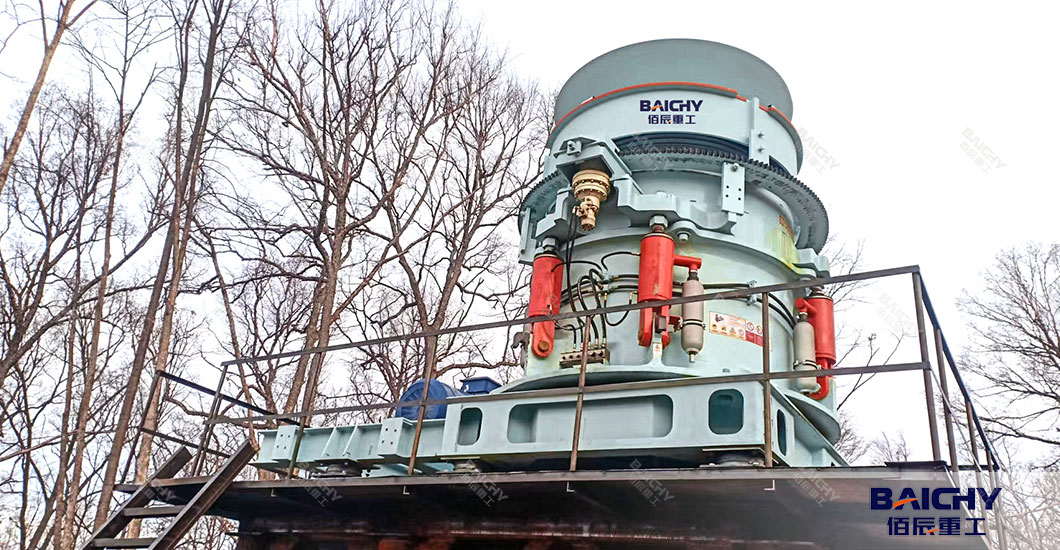
An iron mine in Philippines upgraded to Baichy HPC300 cone crusher, which features automated CSS adjustment and high-wear liners. The result? Capacity increased by 30%, needle-like and flaky material decreased by 20-30%, and unit energy cost dropped by 15-30% .
Optimizing cone crusher performance isn’t about one big fix—it’s about combining small, targeted improvements across pre-operation, operation, maintenance, and upgrades. By matching your equipment to your material, tuning key parameters, leveraging automation, and investing in proactive maintenance, you can boost capacity,reduce costs, and extend equipment life. Ready to start optimizing? Begin with a CSS check and liner inspection—two quick wins that deliver immediate results. For complex issues, consult a crusher performance specialist ( like Baichy Machinery ) to tailor a plan to your specific equipment and materials.




 2026-09-28





 86-15093113821
 86-15093113821