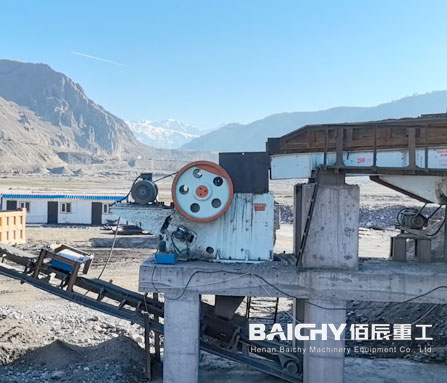
In industrial applications such as gypsum board, cement retarder, and high-end plaster, purity determines performance. Run-of-mine gypsum often contains clay, silt, sand, and other impurities that reduce its commercial value. A complete gypsum wash plant solves this problem through an integrated wet processing system — crushing, scrubbing, screening, and dewatering — to upgrade raw gypsum ore to meet strict commercial specifications.

A gypsum wash plant is an integrated processing system that uses water and mechanical scrubbing equipment to clean raw gypsum ore.
The plant is mainly designed to:
● Remove sticky clay and soil
● Separate impurities from gypsum particles
● Improve gypsum purity and whiteness
● Reduce fine dust contamination
● Produce commercial-grade gypsum products
The final washed gypsum can be directly sold or further processed into gypsum powder.
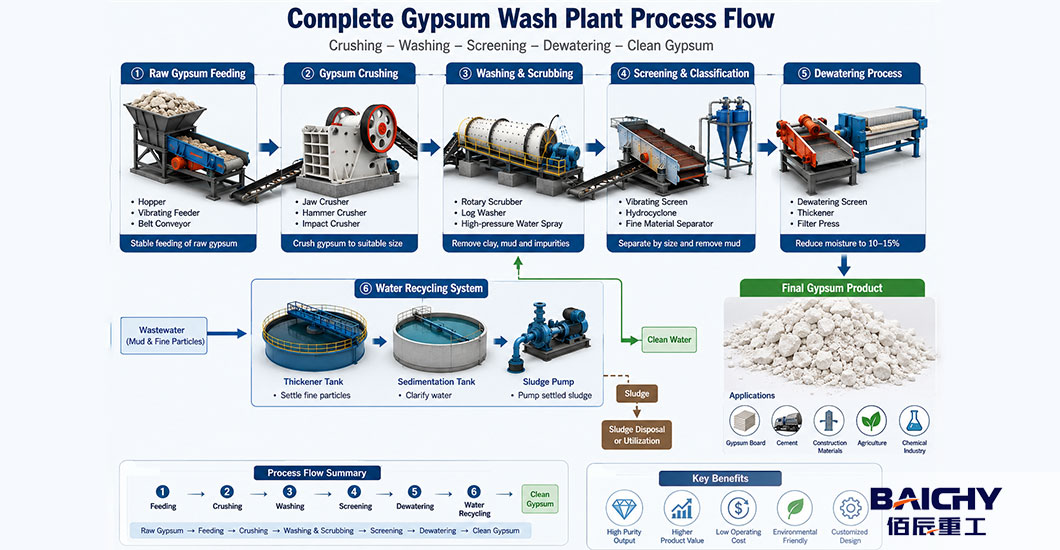
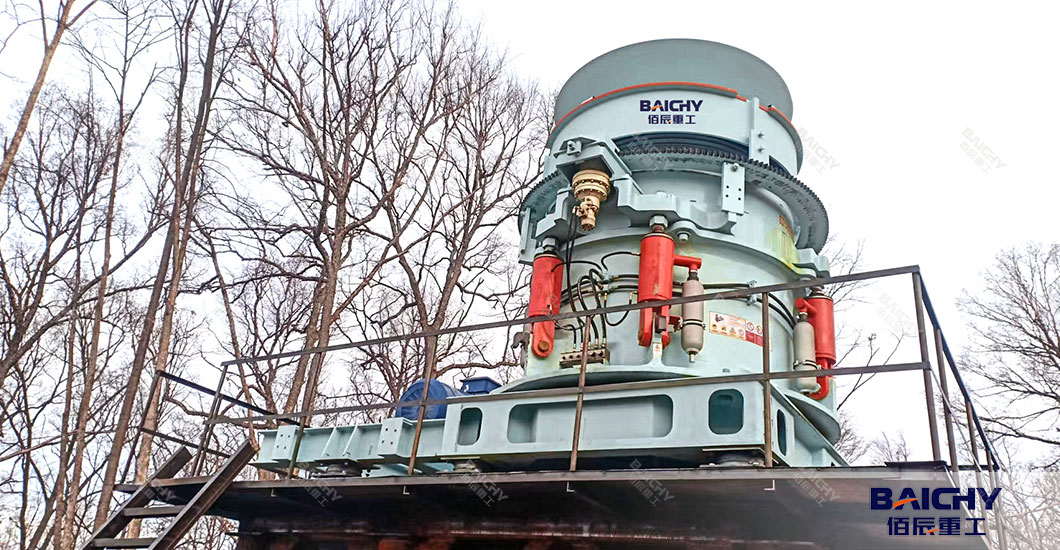
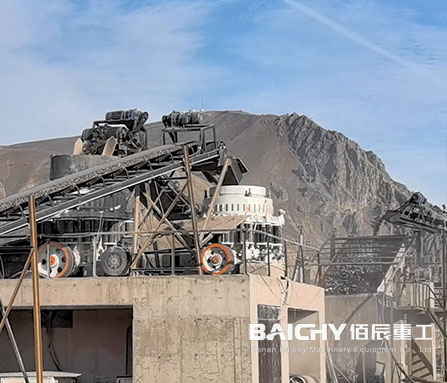
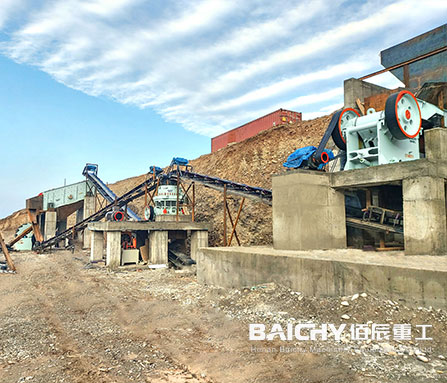
Run-of-mine gypsum is loaded into a feed hopper, then passed through a primary crusher (typically a jaw crusher or hammer crusher). This stage reduces large rocks to a manageable size (usually <100mm) for further processing.
Purpose: Size reduction for efficient washing and scrubbing.
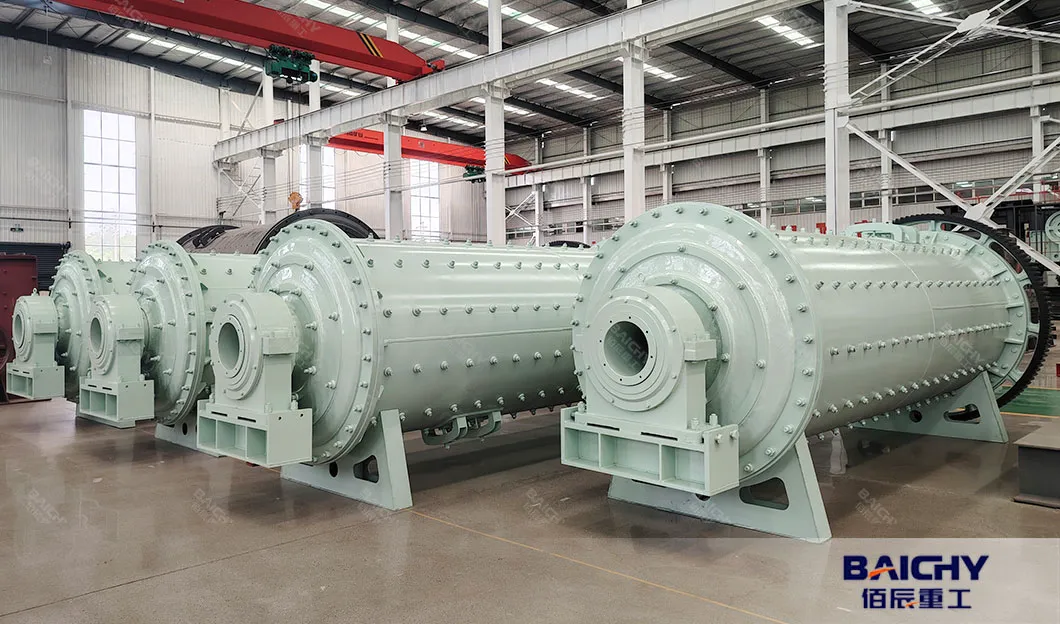
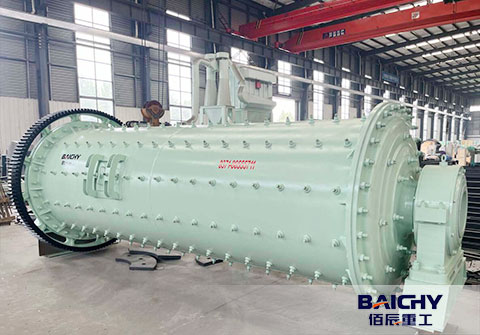
The crushed gypsum enters a rotary scrubber or log washer. These machines use high-energy water agitation and material-on-material attrition to break down soft impurities like clay, silt, and sticky fines.
Purpose: Separate clay and mud from gypsum crystals.
After scrubbing, the slurry passes through a wet screening stage (typically a vibrating screen or trommel screen). Water sprays assist in rinsing.
Oversize (+ mesh): Clean gypsum rock proceeds to dewatering.
Undersize (- mesh): Mud, silt, and fine waste are sent to a settling pond or thickener.
Purpose: Physically separate clean gypsum from fine impurities.
Clean, screened gypsum contains significant moisture. It is fed into a dewatering screen, centrifuge, or vacuum filter to reduce surface water content to <10–12%, making it suitable for handling, stacking, or further drying.
Purpose: Produce a stable, low-moisture product for transport or direct use.
Fine waste slurry from the screening stage is sent to a thickener followed by a filter press or clarifier. Recovered water is recirculated back to the scrubber, reducing fresh water consumption.
Purpose: Minimize environmental impact and operating costs.
A complete gypsum wash plant may include:
| Process Stage | Main Equipment |
| Feeding | Hopper, Vibrating Feeder |
| Crushing | Jaw Crusher, Hammer Crusher |
| Washing | Rotary Scrubber, Log Washer |
| Screening | Vibrating Screen, Hydrocyclone |
| Dewatering | Dewatering Screen, Thickener |
| Water Recycling | Settling Tank, Sludge Pump |
● High Purity Gypsum Output. Efficiently removes clay, silica, and unwanted impurities.
● Improved Product Value. Clean gypsum can achieve higher market prices.
● Flexible Plant Capacity. Suitable for small, medium, and large-scale gypsum processing projects.
● Customized Plant Design. Equipment configuration can be adjusted according to:
○ Ore condition
○ Capacity requirement
○ Final product size
○ Site layout
● Low Operating Cost. Water recycling systems reduce water usage and operating expenses.
● Environmentally Friendly. Wet processing greatly reduces dust pollution compared with dry crushing systems.
Save Time! Get A Detailed Quotation Quickly.