Ball mills are essential grinding equipment for mining, mineral processing, cement, and chemical industries. Traditional steel mill liners commonly suffer from rapid wear, loud noise, high energy consumption, and metal contamination, leading to frequent maintenance, short service life, and high operational costs. As an efficient and upgraded alternative, rubber lined ball mills effectively resolve these drawbacks. By adopting durable rubber lining instead of steel, these mills deliver better wear resistance, lower noise, energy savings, and cleaner grinding results, making them ideal for modern fine and wet grinding operations.
What Is a Rubber Lined Ball Mill?
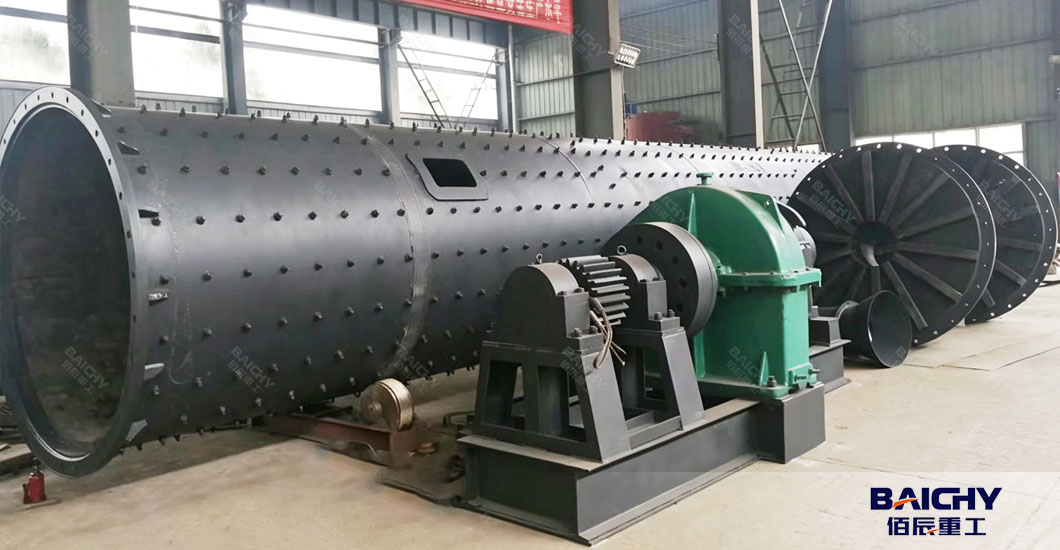
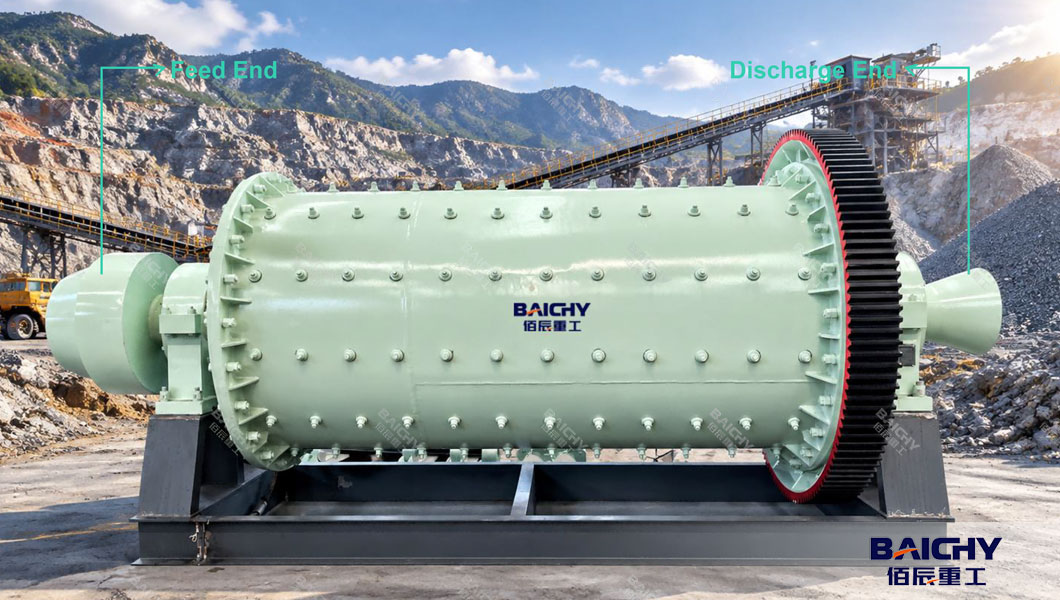
A rubber lined ball mill is a horizontal industrial grinding equipment with customized wear-resistant rubber liners firmly attached to the inner wall of the mill shell. Different from traditional steel-lined ball mills, its core protective component is high-polymer rubber lining instead of metal lining, which provides flexible buffering and anti-abrasion protection for the entire grinding chamber.
Working Principle
During the grinding operation, the grinding media and materials inside the mill continuously collide, impact, and rub against the inner wall of the mill shell. The elastic rubber liners effectively buffer the strong impact force generated by grinding media and raw materials, reduce direct friction and abrasion on the mill body, and stabilize the internal grinding environment. While protecting the mill shell from damage, the rubber lining system optimizes the material flipping and grinding track, improving the uniformity and efficiency of fine grinding.
Core Functional Orientation
Rubber lined ball mills are mainly positioned for high-efficiency fine grinding and precise material processing. They realize three core functions: energy-saving and low-consumption grinding, noise and vibration reduction, and pollution-free material processing, meeting the high-standard production demands of fine powder and high-purity materials in various industries.
Structure & Composition of Rubber Lined Ball Mill
The overall structure of a rubber lined ball mill is stable and reasonable, which can be divided into three core parts: the main mill body, the full rubber lining system, and auxiliary transmission and control systems.
1 Main Mill Body
It is the main bearing and grinding structure of the equipment, including the integral cylinder shell, sealing end covers, feeding ports, and discharging ports. The whole body is made of high-strength steel structure to ensure stable operation under long-term heavy load, providing a stable installation foundation for the rubber lining system.
2 Complete Rubber Lining System (Core Component)
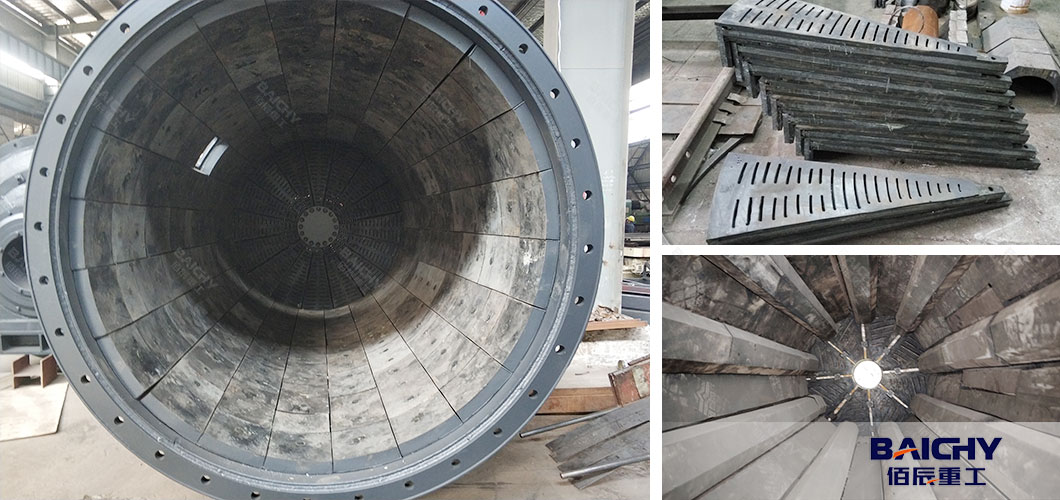
As the key functional component distinguishing rubber lined ball mills from ordinary ball mills, the complete lining system covers all wear parts inside the mill:
• Barrel rubber liners and lifting strips: Responsible for material lifting and main anti-abrasion protection of the cylinder
• End rubber liners and end lifting strips: Protect the mill end cover from impact and abrasion
• Center guard plate and grid plate: Applicable to grid-type rubber lined ball mills to realize material classification and discharge
• Supporting accessories: Including sealing fillers, manhole cover liners, and special fastening parts to ensure tight installation and no slurry leakage
3 Auxiliary System
It consists of transmission devices, high-load bearing systems, and intelligent control systems, which ensure stable power output, flexible operation, and safe and controllable grinding process of the equipment.
Core Advantages: Rubber Liner VS Steel Liner
Compared with traditional high manganese steel liners, rubber liners have comprehensive performance advantages, which greatly improve the overall operating efficiency and economic benefits of ball mills:
| Comparison Dimension |
Steel Liner |
Rubber Liner |
| Wear Resistance & Service Life |
Poor slurry corrosion resistance, easy to wear out in wet grinding conditions, short service life, frequent replacement |
Excellent anti-abrasion and anti-corrosion performance, 1-2 times longer service life, reduces replacement frequency |
| Noise & Vibration Control |
Hard metal collision causes loud operating noise and strong mechanical vibration, poor working environment |
Flexible cushioning effect absorbs impact force, effectively reduces noise and vibration, eco-friendly operation |
| Energy Consumption |
Heavy weight increases mill operating load, high power consumption and operation cost |
Lightweight structure reduces equipment load, realizes 10%-20% energy saving, lower long-term consumption |
| Material Purity |
Worn metal particles fall off easily, causing metal contamination to finished materials |
No metal shedding, zero impurity pollution, ensures high purity of grinding products |
| Installation & Construction |
Heavy and cumbersome, difficult and time-consuming installation, high construction risk |
Light weight, simple installation process, short construction period, low labor intensity and risk |
| Maintenance Cost & Downtime |
Short maintenance cycle, frequent failure and replacement, leads to long production downtime and high cost |
Stable performance, strong adaptability to harsh environments, low failure rate, less downtime and lower overall O&M cost |
Classification & Types of Rubber Lined Ball Mills
Rubber lined ball mills can be classified in multiple dimensions according to liner shape, grinding process, and liner material, with rich customizable specifications to meet diverse production needs.
1 Classification by Liner Design Shape
There are various mainstream liner shapes for optional selection, including corrugated type, flat-convex type, flat type, stepped type, wedge type, rudder type, and K-type. Different shapes match different grinding intensities and material characteristics to optimize grinding efficiency.
2 Classification by Grinding Process
•Wet-type rubber lined ball mill: The mainstream model in the industry, suitable for ore mineral processing, slurry grinding, and wet fine processing of various minerals
•Dry-type rubber lined ball mill: Specially designed for dry powder grinding scenarios, widely used in cement, building materials, and non-metallic dry powder processing
3 Classification by Liner Material
•Pure rubber liner: Conventional wear-resistant type, cost-effective, suitable for medium and light-duty grinding scenarios
•Steel-backed rubber composite liner: High-strength heavy-duty type, combining the toughness of steel and wear resistance of rubber, suitable for high-intensity and heavy-load grinding operations
4 Customizable Features
All rubber lined ball mills support personalized customization, including adjustable liner size, rubber hardness, appearance color, and equipment specifications. All products comply with ISO9001 quality certification standards, ensuring stable and reliable product quality.
Industrial Application Scenarios
With excellent comprehensive performance, rubber lined ball mills are widely used in multiple industrial fields, becoming the preferred equipment for fine grinding processing:
1 Mining Industry
Suitable for fine grinding of various ores, mineral separation processing, and coal crushing and refining. It solves the problems of easy wear and high contamination of traditional equipment in mineral processing.
2 Building Materials Industry
Applied to fine processing of cement raw materials, clay, stone powder, and other building materials, realizing energy-saving and high-efficiency powder making.
3 Chemical & New Materials Industry
Ideal for grinding high-purity chemical raw materials and new material powders. Its zero metal contamination feature ensures the purity and quality of finished chemical products.
4 Other Industrial Fields
It also applies to fine processing of non-metallic minerals, industrial fine powder manufacturing, and other scenarios with high requirements for grinding precision and equipment stability.
Maintenance & Service Life Extension Tips
Standard daily maintenance is the key to stabilizing equipment performance and extending the service life of rubber lined ball mills:
1 Daily Inspection
Regularly check the wear degree of rubber liners, the tightness of fastening parts, and the sealing performance of the mill body to eliminate hidden dangers such as slurry leakage and loose parts in time.
2 Regular Maintenance & Replacement
Timely replace severely worn liners and accessories to avoid secondary damage to the mill body caused by failed protective parts. Strictly prohibit long-term overload operation to prevent excessive impact damage to rubber liners.
3 Standard Operation Precautions
Control the feeding particle size and feeding load within the equipment design range, avoid hard foreign matter from entering the grinding chamber, and reduce abnormal abrasion and impact of rubber liners.




 2026-09-28





 86-15093113821
 86-15093113821