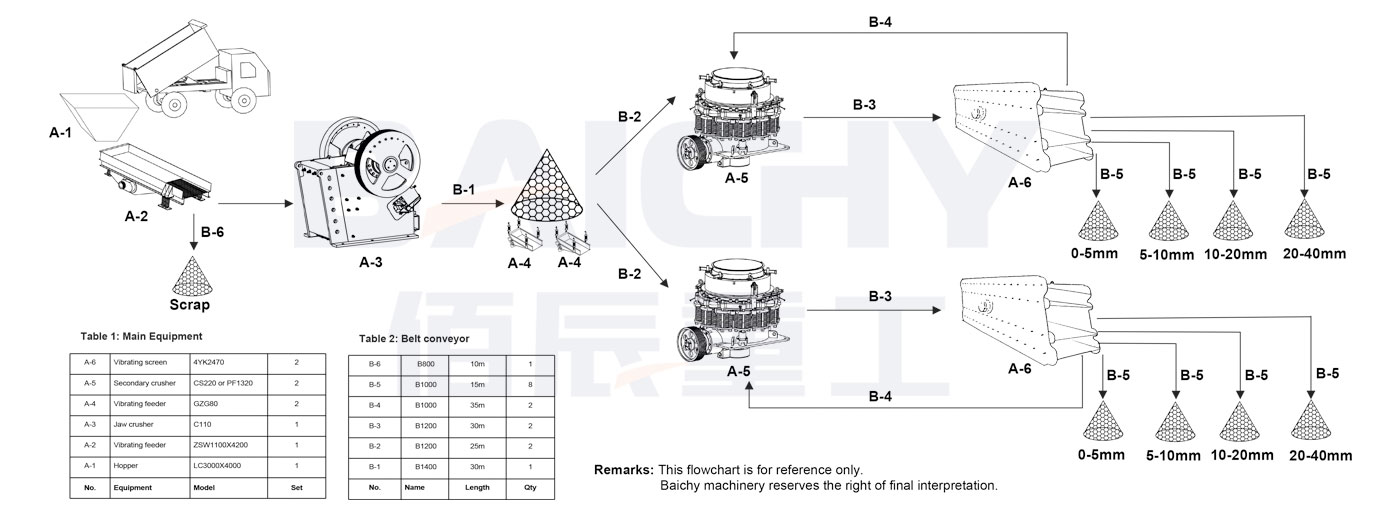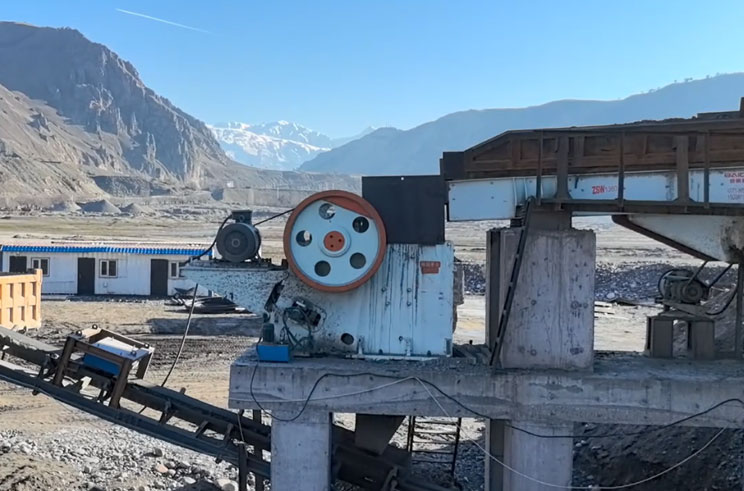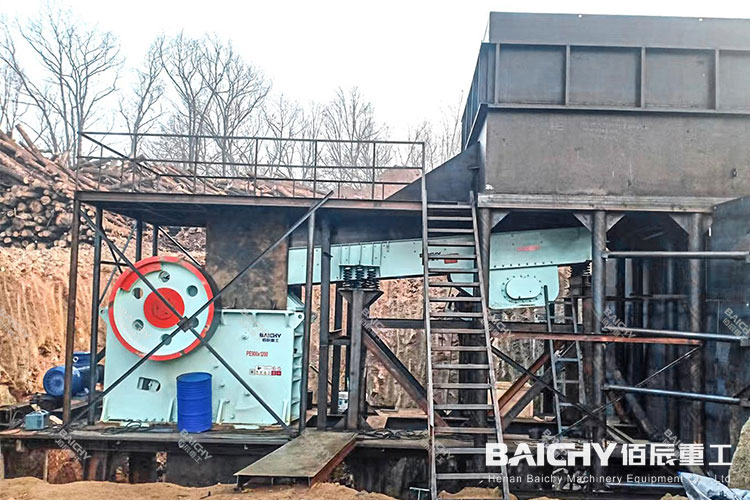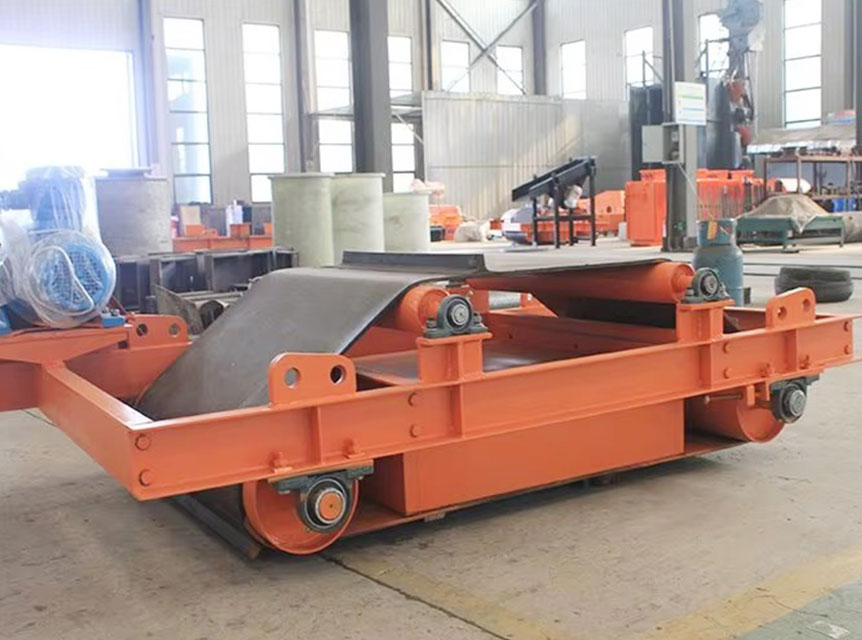
Step 1: Raw Material Feeding. Raw material is dumped into the feed hopper using a loader or excavator. A vibrating feeder then transfers the material evenly and continuously into the primary jaw crusher. The vibrating feeder is equipped with a grizzly bar section to remove fine material before it enters the crusher, reducing unnecessary wear on the jaw plates.
Step 2: Primary Crushing. The material enters the C125 jaw crusher, where it is crushed to a medium size, typically between 150 mm and 250 mm, depending on the crusher setting. The jaw crusher operates with a fixed jaw and a moving jaw that creates a compressive force. This stage reduces large rocks to a manageable size for the secondary crusher.
Step 3: Material Transfer and Buffering. After primary crushing, the material is conveyed to a transfer bin. This bin serves three purposes. First, it transfers material from the primary crushing stage to the secondary crushing stage. Second, it buffers against fluctuations in feed rate. Third, it allows for system adjustment and maintenance without completely stopping the entire plant. The bin is sized to hold two to three hours of material for the secondary crusher.
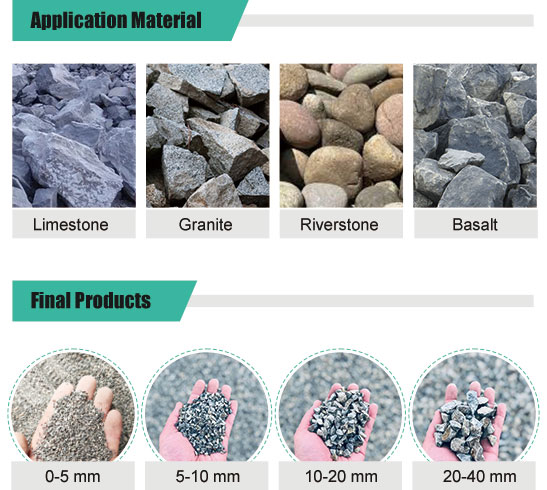
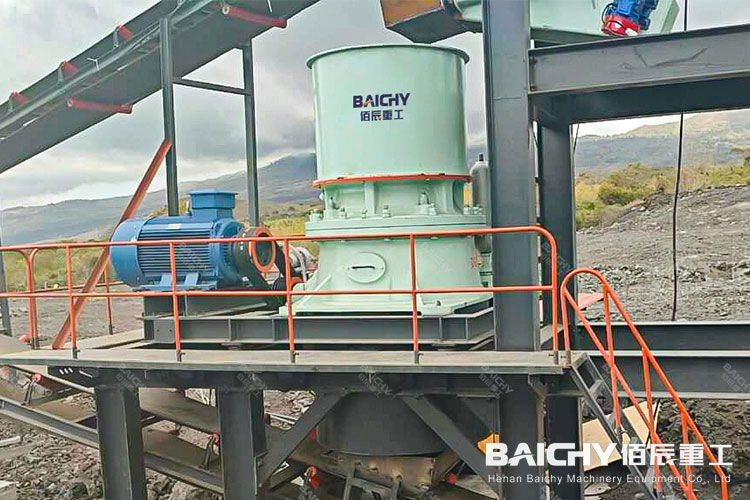
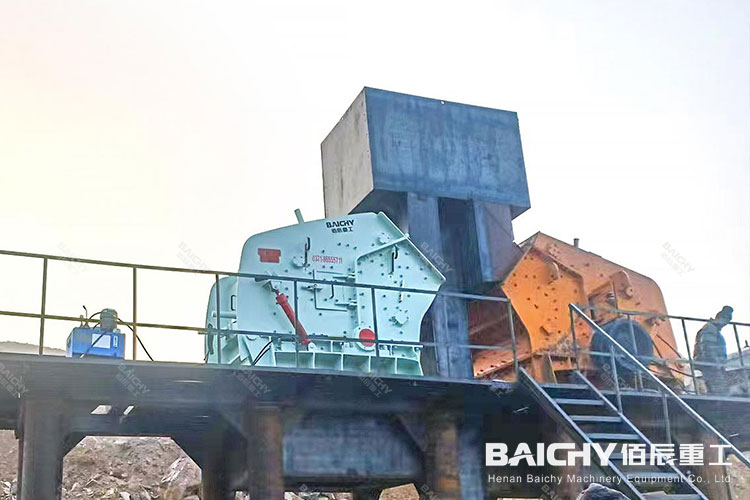
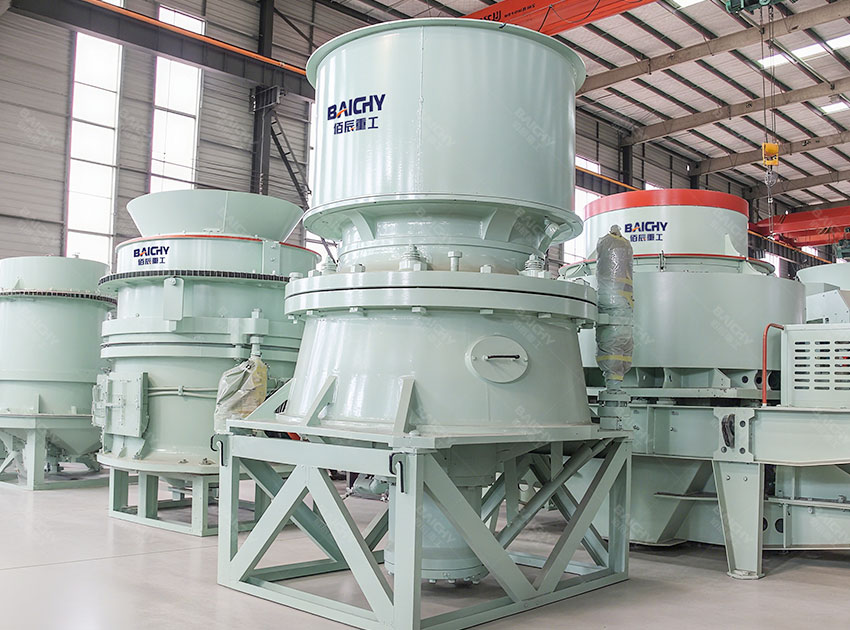
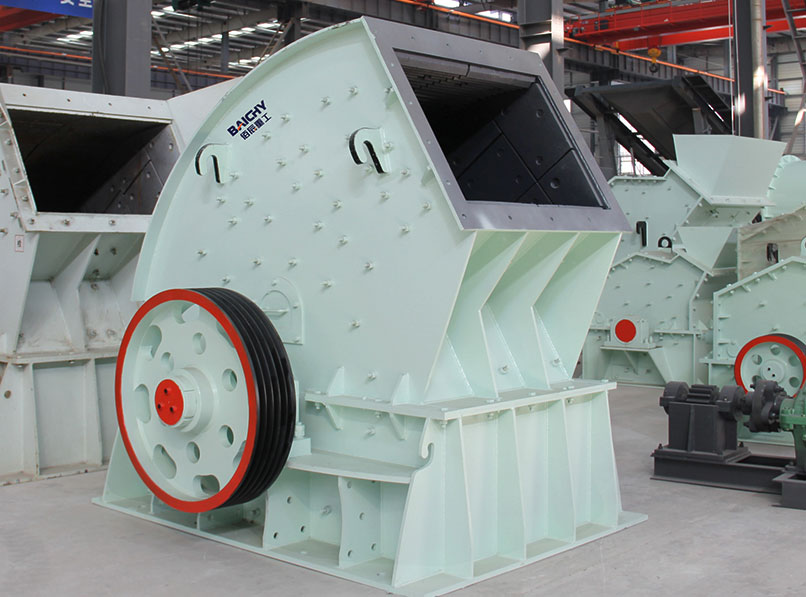
Step 4: Secondary Crushing. Material from the transfer bin is fed into the secondary crusher. The choice of secondary crusher depends on material hardness and the required final product shape. For hard and abrasive materials such as granite, basalt, and river stone, an HPC series cone crusher is used. The cone crusher applies laminated crushing, where material is compressed between a mantle and a concave, producing a cubical product shape. For softer materials such as limestone or dolomite, an impact crusher can be used, which uses blow bars and impact plates to break the material.
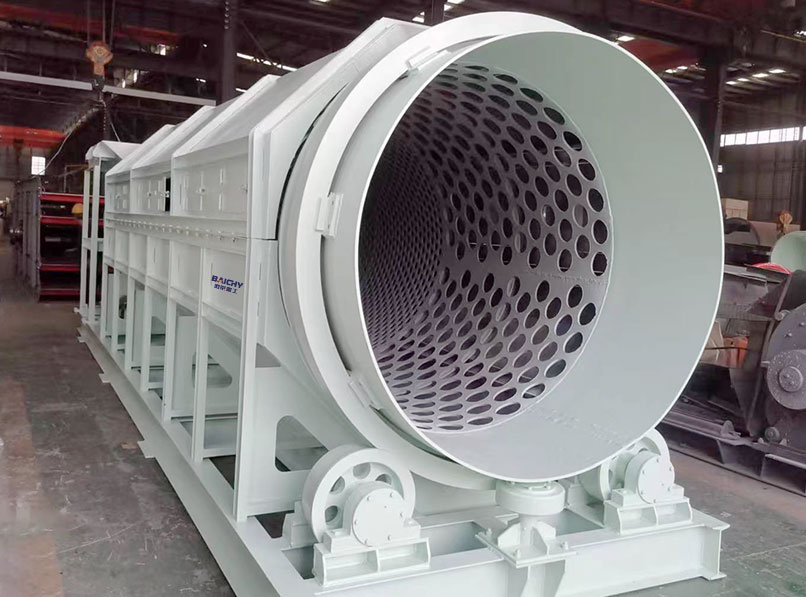
Step 5: Screening and Classification. The material leaving the secondary crusher is transported to a YK series vibrating screen. This circular motion screen has multiple decks, typically two to four, each fitted with a different mesh size. The screen separates the crushed material into different size ranges, such as 0–5 mm, 5–10 mm, 10–20 mm, 20–31.5 mm, and 31.5–40 mm. Each size fraction is discharged through a separate chute and conveyed to its own stockpile.
Step 7: Final Product Stockpiles. The classified final products are conveyed to separate stockpiles. These stockpiles are arranged according to product size for easy loading and dispatch. All final products meet relevant construction industry standards for road base, concrete aggregate, asphalt aggregate, or railway ballast, depending on local specifications.
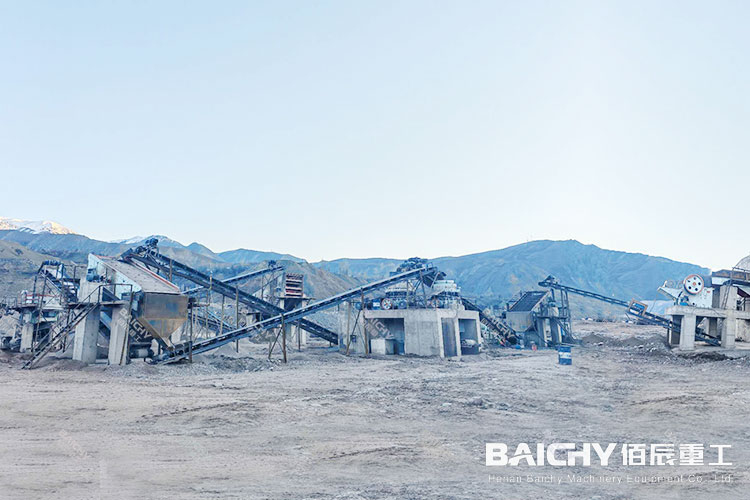
A 350 tph river stone crusher plant was installed in Tajikistan to process river cobbles and pebbles. The plant used a C series jaw crusher for primary crushing and an HPC cone crusher for secondary crushing. The final products were used for local road construction and concrete production. Although the capacity is 350 tph, the plant layout and equipment selection are directly scalable to 400 tph..
350TPH complex crushing and screening plant is designed to handle granite’s abrasiveness and rigidity
This crushing plant could get a cubic - shaped final product, which is highly desirable in the market for its better strength and workability in construction.
It consists of 2 sets primary jaw crusher, 2 sets secondary impact crushers, screens, conveyors and others.
1. Customized Plant Selection. Baichy provides professional guidance to choose the right stone crusher plant based on your material type, production capacity, and project requirements. Every recommendation is tailored to ensure maximum efficiency and cost-effectiveness.
2. Timely Delivery & Logistics Support. We ensure your stone crusher plant is manufactured and delivered on schedule. Our logistics team coordinates every step, minimizing project downtime and keeping your operations on track.
3. On-Site Installation & Commissioning. Our engineers offer full on-site installation, setup, and commissioning services. We also train your operators to safely and efficiently run the plant, ensuring smooth operation from day one.
4. Spare Parts Supply & Certified Quality Assurance. Baichy provides a full range of spare parts and consumables for long-term plant maintenance. All equipment comes with ISO 9001 and CE certification, guaranteeing international quality and safety standards.
Save Time! Get A Detailed Quotation Quickly.