In the mining, aggregate, and sand production industries, vibrating screens play a critical role in material classification and separation. The screening efficiency of a vibrating screen directly affects the quality of finished products, production capacity, and overall operational costs. However, many factors can influence the screening process, causing reduced efficiency, uneven particle separation, material blockage, or excessive equipment wear. Understanding these factors helps operators optimize vibrating screen performance and improve production stability. This article explains the major factors affecting the screening process of vibrating screens and provides practical solutions for improving screening efficiency.
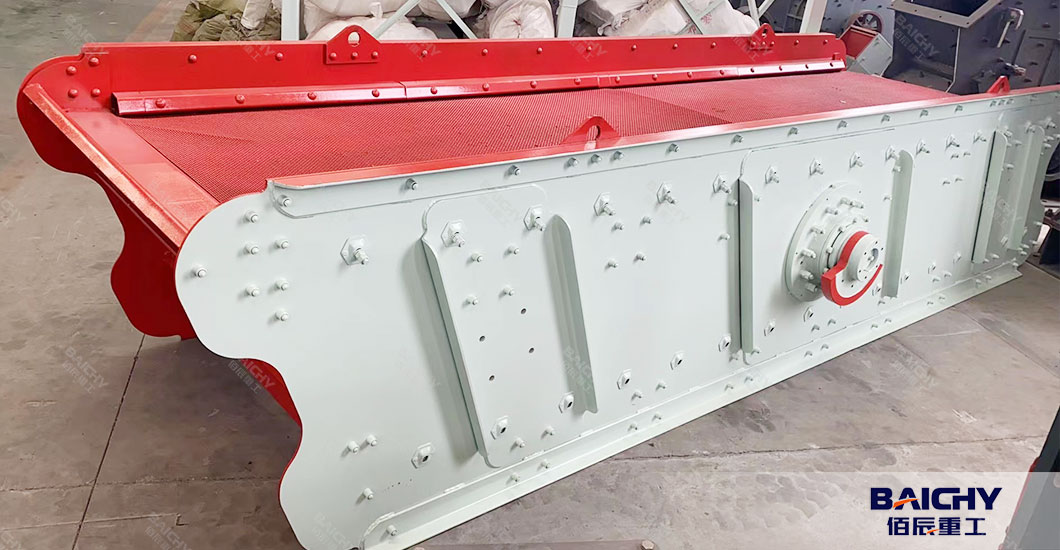
What Is the Screening Process of a Vibrating Screen?
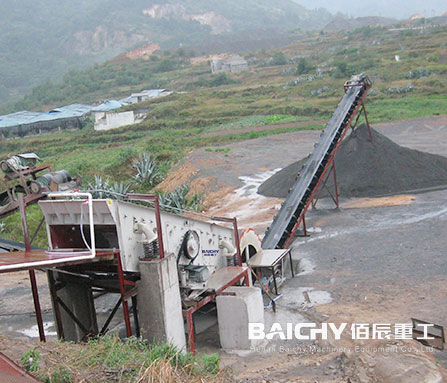
A vibrating screen separates materials of different particle sizes through vibration and layered movement on the screen surface. Materials smaller than the screen aperture pass through the mesh, while oversized materials remain on the surface and are discharged separately.
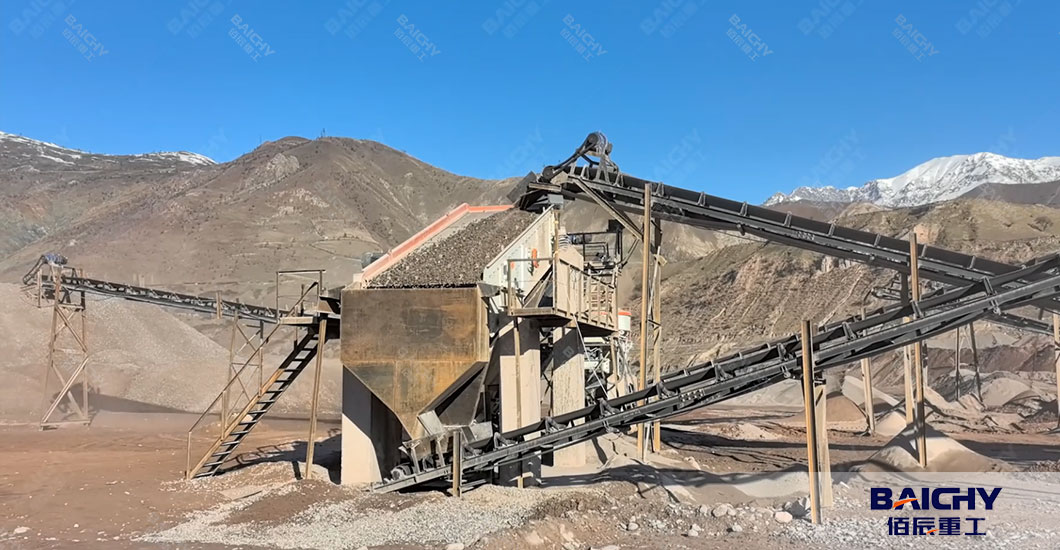
The screening process is widely used in:
● Stone crushing plants
● Sand making production lines
● Mining ore processing plants
● Coal preparation plants
● Recycling industries
● Construction material processing
Efficient screening ensures consistent product size and stable downstream equipment operation.
Main Factors Affecting Vibrating Screen Screening Efficiency
1. Material Properties: The Physics of the Input
The material itself is the primary variable. Three characteristics dictate the "difficulty" of the screening:
● Particle Size Distribution: The most challenging particles are those known as **"Near-mesh" particles** (sizes within 0.75x to 1.5x of the screen opening). These tend to lodge in the mesh, causing "pegging."
● Moisture Content: Surface moisture is the enemy of flow. It creates capillary forces that cause particles to stick together (agglomeration) or adhere to the wire, leading to "blinding."
● Particle Shape: Spherical particles screen effortlessly. Elongated or "flaky" materials require specific vibration angles to ensure they don't bridge over the openings.
2. Bed Depth: The Logic of Stratification
Efficiency is won or lost in the stratification layer. For effective screening, the vibration must cause the material bed to "fluidize."
● Too thick: Fine particles cannot migrate to the screen surface.
● Too thin: Material bounces too violently, reducing the "probability of passage."
● The Golden Rule: Ideally, the bed depth at the discharge end should be roughly 2–3 times the size of the screen opening for optimal results.
3. Vibration Kinematics: Amplitude and Frequency
Think of vibration as the energy delivered to the particles.
● Frequency (RPM): Determines how many times a particle "attempts" to pass through the mesh per second. High frequency is better for fine materials.
● Amplitude (Stroke): Determines the height of the bounce. Larger strokes are necessary for coarse materials to prevent the bed from compacting and to shake off sticky fines.
4. Screen Surface Inclination (The Slope)
The angle of the screen determines the material travel speed.
● A steeper slope increases capacity but reduces "residence time"—meaning a particle has fewer chances to fall through.
● Most horizontal screens rely on linear motion to move material, while inclined screens (usually 15°–25°) use gravity to assist the process.
5. The "Open Area" Ratio
Not all 10mm screens are created equal. The Open Area is the ratio of the area of the holes to the total area of the screen cloth.
● A higher open area increases the probability of a particle hitting a hole rather than a wire.
● Trade-off: High open area often means thinner wires, which leads to shorter wear life. Choosing the right balance is a matter of ROI.
6. Feed Consistency: The Silent Efficiency Killer
Vibrating screens crave stability. An uneven feed—either in volume or in distribution across the width of the screen—leads to:
● Channeling: Material rushes down one side, leaving the rest of the screen surface unused.
● Surging: Momentary overloads that collapse the stratification layer, sending fines into the oversize pile.
7. Mechanical Health and Blinding Control
Even a perfectly designed process will fail if the machine is unhealthy.
● Tensioning:** A loose screen cloth absorbs vibration rather than transmitting it to the material.
● Anti-Blinding Measures:** In difficult applications, the use of bouncing balls, ultrasonic systems, or polyurethane "flip-flow" mats is essential to keep the apertures clear.
Summary Table: Quick Optimization Guide
| Factor |
Optimal Condition |
Sign of Problem |
| Moisture |
<3% (dry) or >30% (wet) |
Mesh blinding, wet cake |
| Amplitude |
3-8 mm |
Dead material or bouncing balls |
| Feed Rate |
Bed depth < 4x aperture |
Carryover (fines in overs) |
| Open Area |
40-70% |
Low throughput |
| Inclination |
15-20 degrees |
Slow travel or overspeed |
| Particle Shape |
Equidimensional |
Near-size wedging |
How to Improve Vibrating Screen Screening Efficiency
To optimize vibrating screen performance, operators should:
● Select suitable screen mesh and material
● Control feed size and feed rate
● Reduce material moisture when possible
● Adjust vibration frequency and amplitude properly
● Ensure even material distribution
● Perform regular maintenance inspections
● Use high-quality wear-resistant screen media
Modern intelligent vibrating screens can also monitor vibration parameters in real time, helping improve automation and reduce downtime. At baichy.com, we believe that understanding the "why" behind the vibration is what separates a standard operation from a world-class one. Welcome to contact us and get the solution for your mining proejct.




 2026-09-28





 86-15093113821
 86-15093113821