The jaw crusher is a core piece of equipment in mining and aggregate production lines. Its operational efficiency directly determines the overall production capacity, cost, and final profit of the project. However, many production managers often encounter a common problem: despite significant investment in equipment, the output remains low while energy consumption remains high.
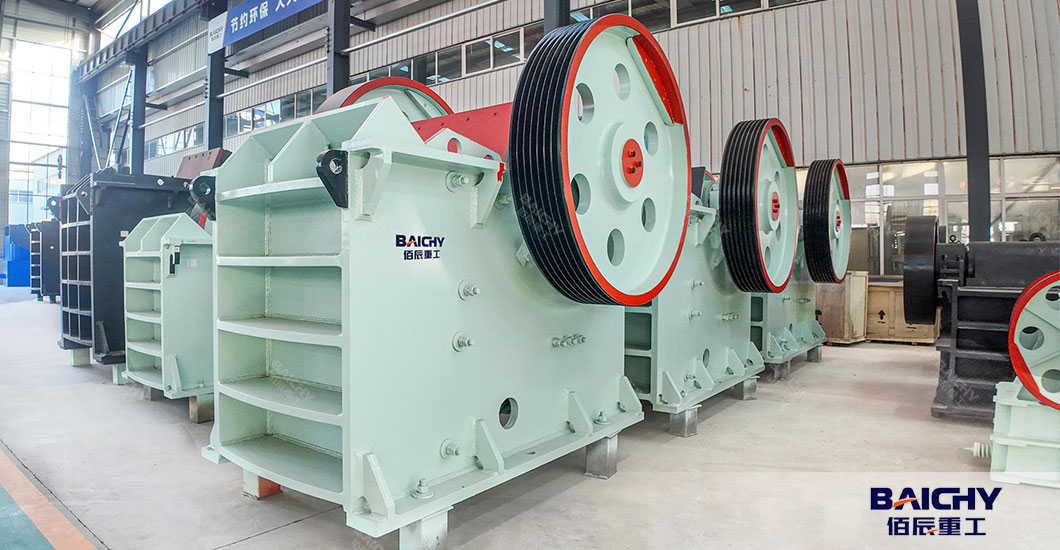
Improving the efficiency of a jaw crusher is not a difficult task; the key lies in mastering the correct methods. This article will provide you with a systematic optimization guide from three dimensions: feeding control, parameter adjustment, and preventive maintenance. Whether you are a novice just entering the crushing industry or an experienced production manager, these industry-verified strategies can help you unlock the true potential of your equipment.
Feeding control: The starting point for efficiency improvement
The efficiency of a jaw crusher begins with feeding. No matter how advanced the equipment itself is, if there is a problem with the feeding process, everything will be twice the effort for half the result.
Maintaining a "full feed" without "overloading" is the first golden rule. The term "full feed" in the industry is known as choke feeding, which means keeping the crushing cavity always filled with materials. This may sound simple, but it is the key to improving efficiency. When the crushing cavity is filled with materials, the rocks squeeze and rub against each other, creating a "rock-on-rock" crushing effect, which not only enhances the crushing efficiency but also makes the product particle size more uniform. More importantly, the full feed state allows the materials to fully cover the jaw plates, using rocks to protect the liners, significantly reducing direct metal-to-metal contact and extending the service life of wear parts.
However, full feeding does not mean overloading. Excessive material piling up above the feed inlet will instead clog the crushing chamber, causing the equipment to stall. The ideal feeding state is for the material to continuously enter, keeping the crushing chamber consistently full, but with only a small amount of buffer material above the feed inlet.
Controlling the feed particle size is equally important. Any oversized material beyond the equipment's design capacity may get stuck at the feed opening or in the crushing chamber, causing minor issues such as unplanned shutdowns for handling or, in severe cases, damaging the equipment. Therefore, it is crucial to install a grizzly or a magnetic separator before the feeding stage. The grizzly can pre-separate fine materials and oversized particles, while the magnetic separator can remove metal debris such as excavator bucket teeth mixed in. These seemingly insignificant pre-treatment steps can significantly increase the effective throughput of the jaw crusher and reduce unplanned downtime.
Continuous and stable feeding is the third key point. The vibrating feeder should supply materials to the crusher at a constant speed, avoiding intermittent impact feeding. Fluctuating amounts of materials will cause severe fluctuations in the load of the crushing cavity, which not only affects the crushing efficiency but also accelerates the fatigue damage of the equipment components.
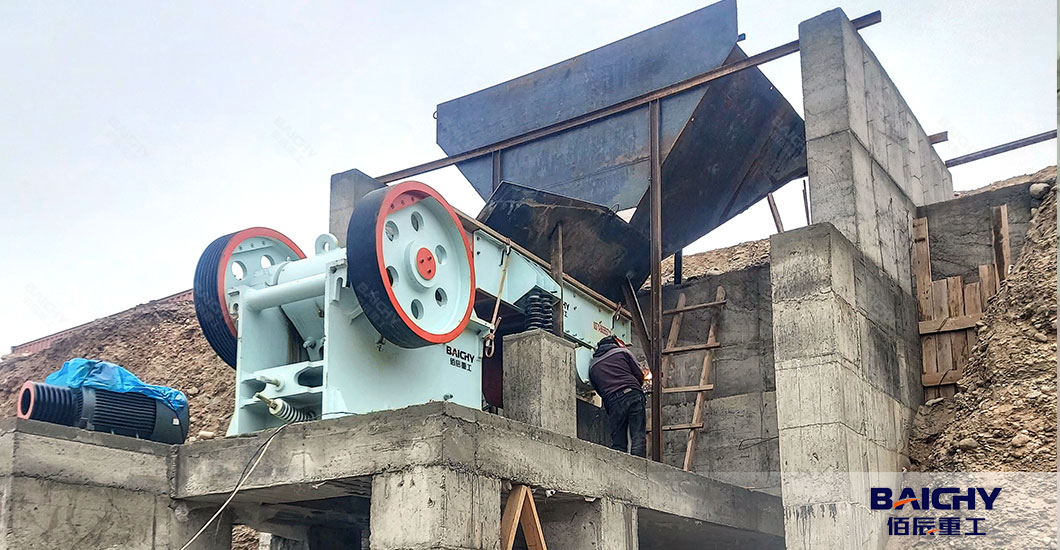
Key parameter adjustment: Unleashing the potential of the equipment
If feed control is laying a solid foundation, then parameter adjustment is the key to unlocking the potential of the equipment. The design of the jaw crusher leaves room for adjustment, and the key lies in whether the operator can scientifically set various parameters based on the characteristics of the material and product requirements.
The size of the discharge opening is a core parameter that affects efficiency. It directly determines the maximum particle size of the product and also influences the processing capacity and crushing ratio. A smaller discharge opening results in finer products but a lower processing capacity; a larger discharge opening leads to a higher processing capacity but coarser products. Therefore, operators need to find a balance between output and particle size. Regular inspection and calibration of the discharge opening size are crucial. As the jaw plates wear, the actual discharge opening gradually increases, causing the products to become coarser. If not adjusted in time, the production of non-conforming products will increase significantly.
The rotational speed setting also affects the crushing efficiency. The flywheel and eccentric shaft of the jaw crusher operate at a certain speed. If the speed is too high, the material stays in the crushing chamber for too short a time and is discharged before being fully crushed, resulting in coarse output particle size and increased circulating load. If the speed is too low, the crushing frequency is insufficient, and the output is directly limited. The ideal approach is to follow the rotational speed range recommended by the equipment manufacturer and make minor adjustments based on the material hardness. When processing softer materials, the speed can be appropriately increased to boost output; when dealing with hard rock, the speed can be slightly reduced to minimize equipment impact and extend its service life.
Motor power matching is also a frequently overlooked aspect. It is essential to ensure that the motor power is in line with the load of the crushing cavity to prevent the situation of a small horse pulling a heavy cart or a large horse pulling a light one. Insufficient power can lead to overloading and stalling, while excessive power results in energy waste. Modern jaw crushers are usually equipped with ammeters, and operators should pay attention to the operating current. A current that is too high indicates an excessive load, while a current that is too low suggests that the equipment is not being fully utilized. Keeping the current stable at around 85% of the rated value is the ideal state for efficient operation.
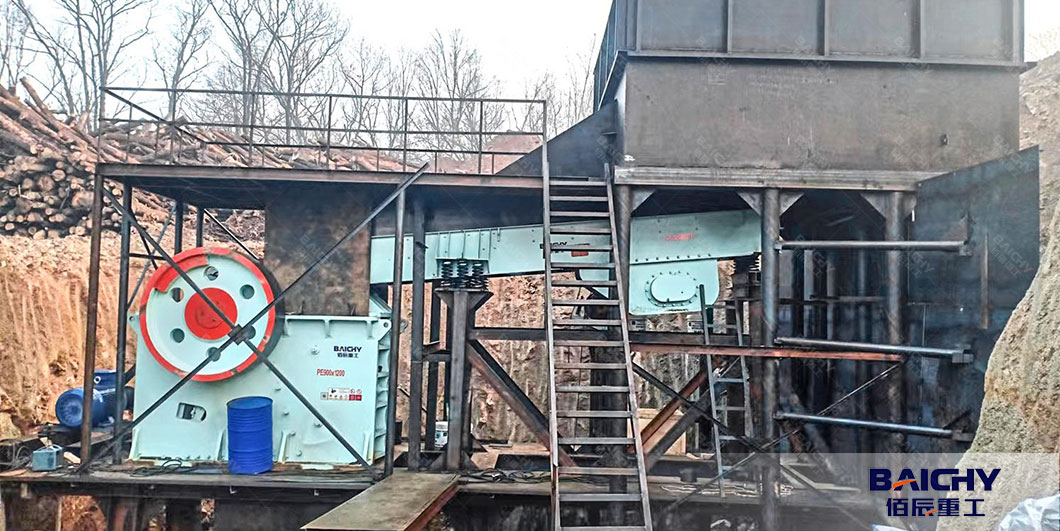
Preventive Maintenance: Minimize Downtime, Maintain Peak Performance
Even the best crushing equipment will see its efficiency plummet over time without proper maintenance. The essence of preventive maintenance lies in identifying and resolving issues before they occur, rather than passively repairing the equipment after it breaks down.
Wear-resistant parts management is the top priority in maintenance work. The jaw plates are components that directly contact rocks, and their wear status directly affects the crushing efficiency and product particle size. Establish a regular inspection system to observe the wear of the jaw plates every shift or every week. When the tooth shape wears down to 50% of the original height, it is advisable to consider symmetrically replacing the upper and lower jaw plates. Continuing to use overly worn jaw plates not only leads to low crushing efficiency but may also cause uneven force distribution, resulting in elbow plate breakage or machine body damage. Many experienced managers keep a set of spare jaw plates and arrange for replacement before the wear reaches the critical point to ensure uninterrupted production.
The lubrication system is the lifeline of the crusher. The main bearings and connecting rod bearings of the jaw crusher bear huge loads and must rely on clean and sufficient lubrication to ensure normal operation. Regularly check whether the grease pump is working properly, whether the pipeline is blocked, and whether the distribution valve evenly delivers grease to each lubrication point. Select the grease grade that meets the equipment requirements and strictly follow the replacement cycle. Remember, bearing damage caused by poor lubrication is often an expensive failure.
The tightness of key connecting parts needs to be checked regularly. The connecting bolts of the movable jaw, toggle plate, pull rod spring and other parts are prone to loosening under continuous vibration. Loose bolts can cause abnormal vibration, leading to component displacement and even serious accidents such as the detachment of the toggle plate. A comprehensive tightening should be arranged once a month to ensure efficient power transmission and avoid unnecessary energy loss.
Operation status monitoring provides early warnings of faults. By using temperature sensors or infrared thermometers, the temperatures of the main bearings and motor bearings are measured regularly. An abnormal increase in temperature is usually a sign of poor lubrication, bearing wear or overload. Daily operation data, including output, energy consumption, bearing temperature and current values, are recorded to form historical trends. When an indicator shows abnormal fluctuations, timely investigation can be carried out to prevent small problems from developing into major faults.
Improving the efficiency of jaw crushers , starting from feed control, ensure that the material is fully, evenly and cleanly supplied to lay a solid foundation for efficient crushing. Next comes parameter adjustment, scientifically setting the discharge opening and rotational speed to keep the equipment operating in the optimal range. Finally, there is preventive maintenance, using regular inspections and timely replacements to keep the equipment in peak condition at all times. These three dimensions are interrelated and none can be missing. Stable feeding requires the support of good equipment condition, precise parameter setting needs accurate feeding to cooperate, and effective maintenance is the basis of all this.
It is recommended that every production manager develop the habit of keeping data records, documenting daily output, energy consumption, and the wear of liners. Use the data to guide the next adjustments and improvements. When encountering difficult problems, communicate promptly with the technical support team of the equipment manufacturer, who can offer more targeted professional advice. Welcome to contact us get more information about jaw crusher.





 2026-10-22






 86-15093113821
 86-15093113821