In the mining and construction industries, crushing equipment is at the core of production lines. Primary crushing and secondary crusher are two crucial stages, but many people are not clear about the differences between them. In simple terms, primary crushing deals with large raw stones after blasting, while secondary crushing further reduces the materials from primary crushing to meet the final product requirements. This article will delve into the core differences between the two to help you make the right equipment selection.
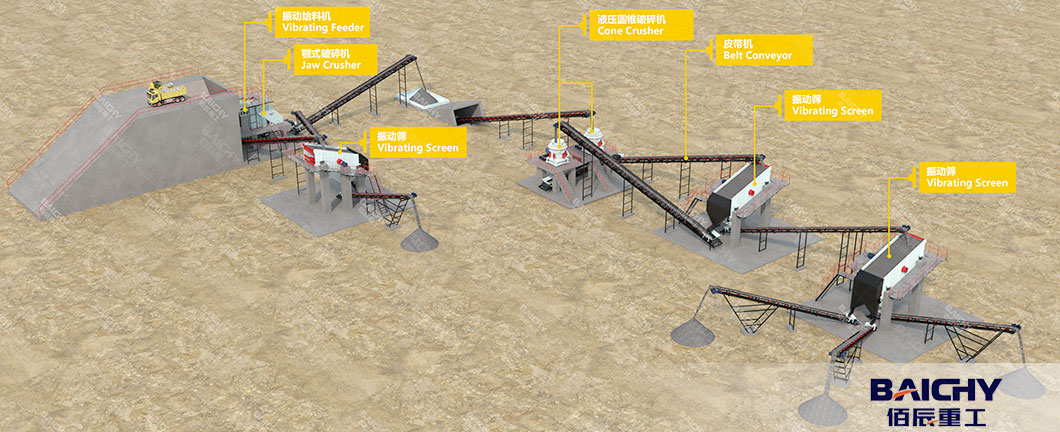
Detailed Explanation of Primary Jaw Crusher
1. Core Functions and Positioning
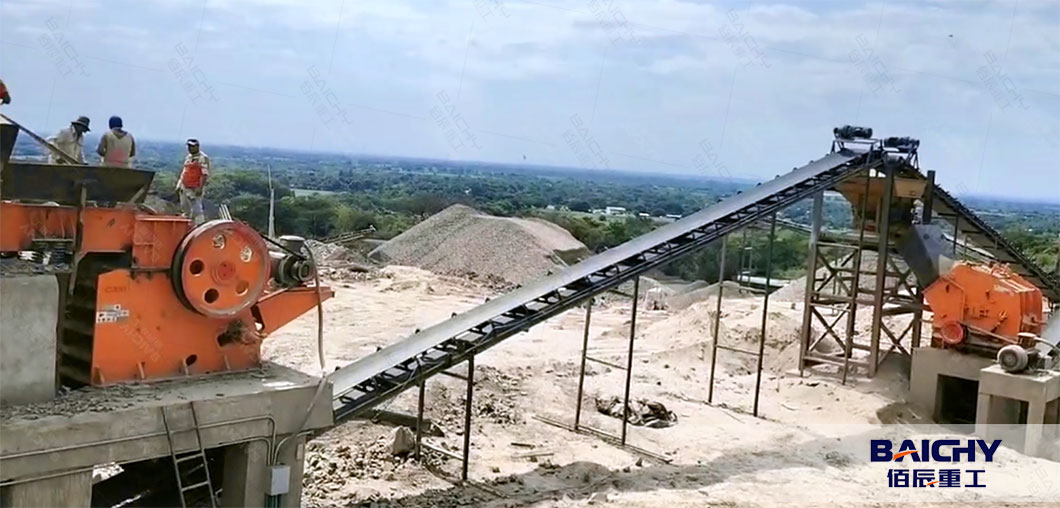
The primary jaw crusher is the first checkpoint in the entire production line. Its mission is to process boulders with a diameter of up to 1 meter, breaking them down to 150-300 millimeters to facilitate further processing by downstream equipment.
Therefore, the core pursuit of the primary jaw crusher is only two: extremely high throughput capacity and extreme equipment durability. It must be able to continuously withstand the impact of huge materials while maintaining stable operation.
2. Brief Description of Working Principle
The working principle of the jaw crusher is like a huge "tiger's mouth". The movable jaw plate periodically approaches and moves away from the fixed jaw plate. When it approaches, it squeezes and crushes the material. When it moves away, the crushed material falls out by gravity.
This simple and reliable "squeezing toothpaste" principle has made the jaw crusher the most classic primary crushing equipment. Since its birth in the 19th century, it has remained dominant in the industry.
3. Key Features and Design
The primary jaw crusher is designed with the concept of "durable and reliable" in mind. The feeding opening of large-scale equipment can reach over 1200mm. The frame is welded from thick steel plates, and key parts are reinforced to withstand huge impact loads. The jaw plates are typically made of high manganese steel, which undergoes work hardening under impact, becoming harder with use. The eccentric shaft and bearings are specially designed to ensure reliable operation under high-load conditions. The primary jaw crusher has a large crushing ratio, usually between 4:1 and 6:1, capable of reducing one-meter large pieces of material to approximately 20 centimeters in a single pass.
4. Common Types and Application Scenarios
The common primary jaw crushers on the market include two major types: the standard type and the German version. The standard type has a simple and reliable structure and is easy to maintain; the German version has a higher crushing efficiency and greater output, making it suitable for large-scale mines with extremely high production capacity requirements.
In application, the primary jaw crusher is mainly used for processing hard and highly abrasive materials such as granite, basalt, and iron ore. These materials cause significant wear and tear on equipment, and only a robust and durable jaw crusher can handle them.
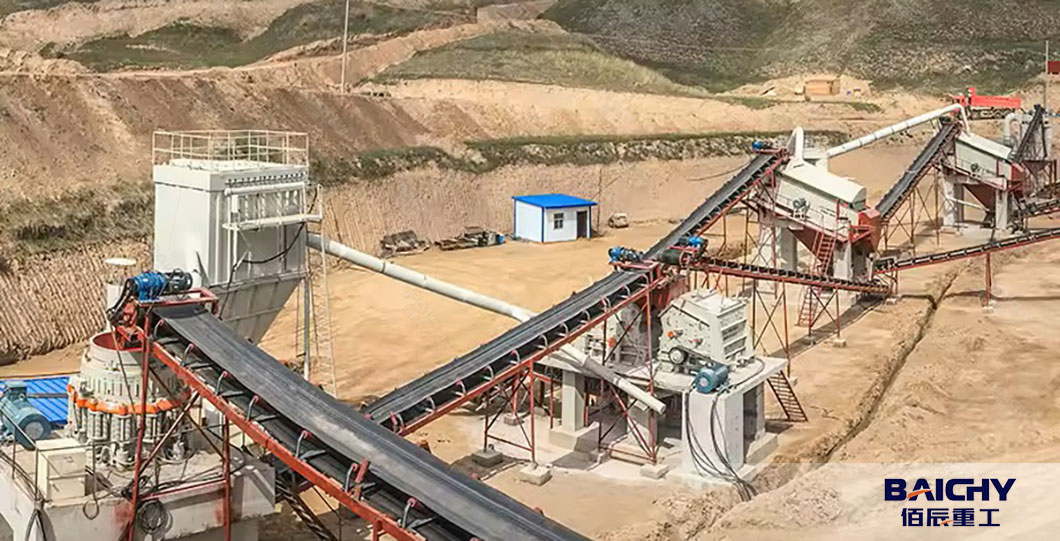
Detailed Explanation of Secondary Crushing Equipment
1. Concepts to Clarify
For most production lines, the secondary crushing stage more commonly employs cone crushers or impact crushers. Although there are indeed fine crushing jaw crushers, they are not the mainstream choice for secondary crushing. Therefore, when this article discusses secondary crushing, it will mainly compare cone crushers and impact crushers, which is more in line with the actual situation of the industry.
2. Core Function and Positioning
The secondary crushing equipment receives materials from the primary crushing process, with the feed size typically ranging from 150 to 300 millimeters. Its task is to further crush these materials to the finished product size, such as the 10-30 millimeter aggregates commonly used in construction projects.
If the primary crushing aims for "ingesting and discharging", the secondary crushing pursues "finer output and better particle shape". Besides reducing the size, it also needs to control the product particle shape and reduce the needle and flake-shaped particles, which is crucial for the quality of concrete.
3. The main types of secondary crushing equipment
● Cone crushers are ideal for processing high-hardness and highly abrasive materials. They employ a layering crushing principle, with the moving cone performing an eccentric swing motion within the fixed liner. Materials are crushed under continuous pressure. This method is highly efficient, produces good particle shape, and has a long service life for wear parts, making it very suitable for secondary crushing of hard rocks such as granite and basalt.
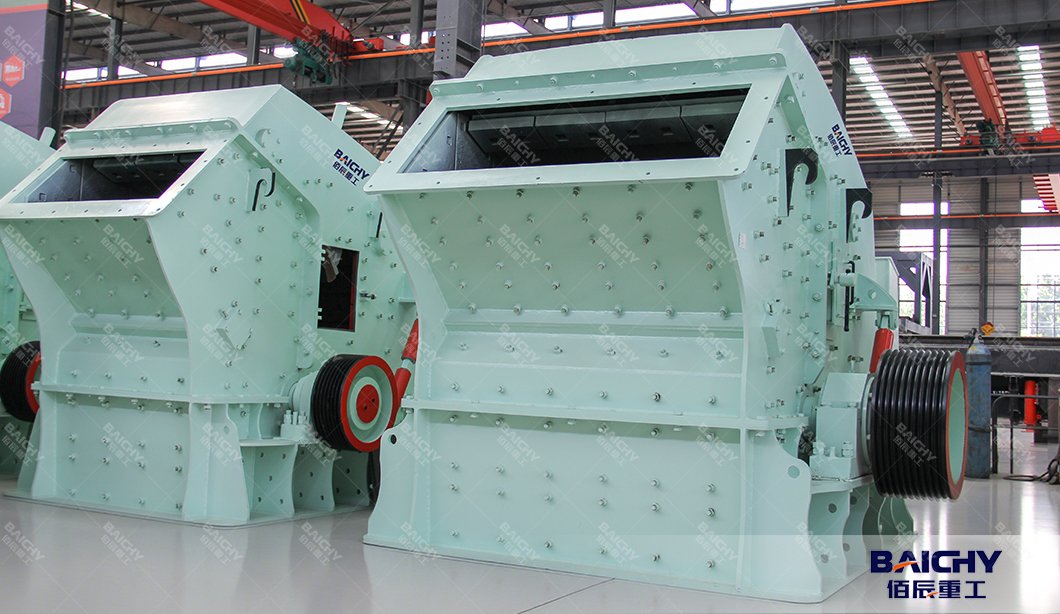
● Impact crusher is suitable for processing materials with medium hardness or less, such as limestone and construction waste. It uses a high-speed rotor to drive the hammer plates to impact the materials, causing them to break along the joint plane. The greatest advantage of the impact crusher is its excellent product shape, high cubic content, and large crushing ratio.
● The fine-crushing jaw crusher also finds application in certain scenarios, such as small-scale sand-making lines or projects with sensitive investment considerations. It has a structure similar to that of a regular jaw crusher, but with a smaller feed opening and a higher rotational speed to achieve finer products. However, its processing capacity is generally lower than that of cone crushers and impact crushers.
Key Features and Design
The design of secondary crushing equipment is significantly different from that of primary jaw crushers. Their feed openings are smaller, but the shapes of their crushing chambers are more complex. Cone crushers are designed with various cavity types, such as standard and short-head types, to meet different discharge requirements based on product needs.
The control of crushing force by the equipment is also more precise. The cone crusher can achieve iron passage protection and automatic reset by adjusting the discharge opening through the hydraulic system; the impact crusher controls the product particle size by adjusting the rotor speed and the gap of the impact plate.
Typical application scenarios
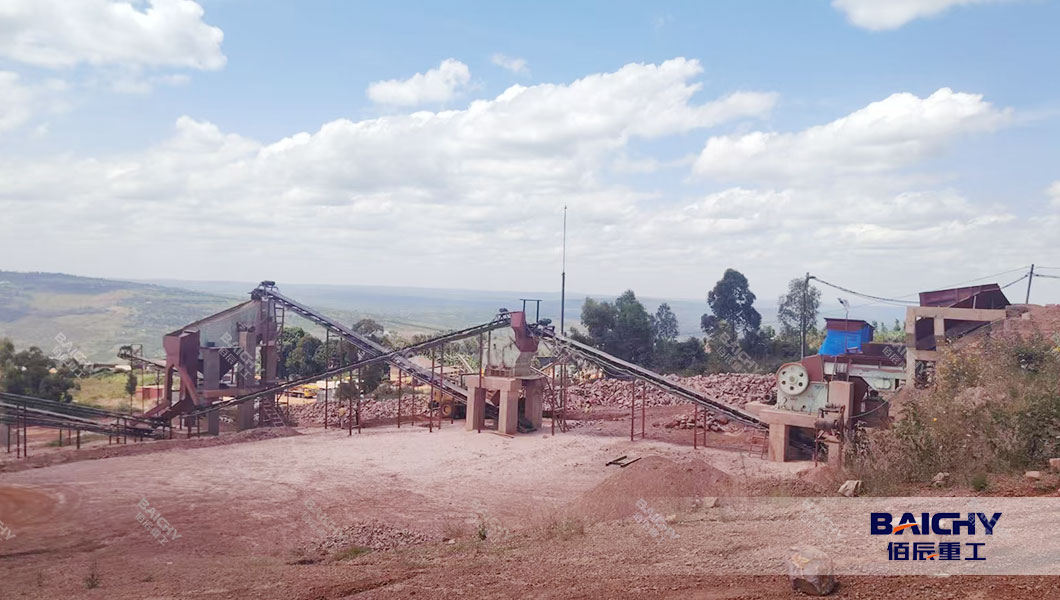
● The cone crusher is a standard equipment in the hard rock aggregate production line. The materials coming out of the primary jaw crusher enter the cone crusher for secondary crushing. After screening, the qualified products are sent to the finished product pile, and the oversized materials are returned for further crushing, forming a closed circuit.
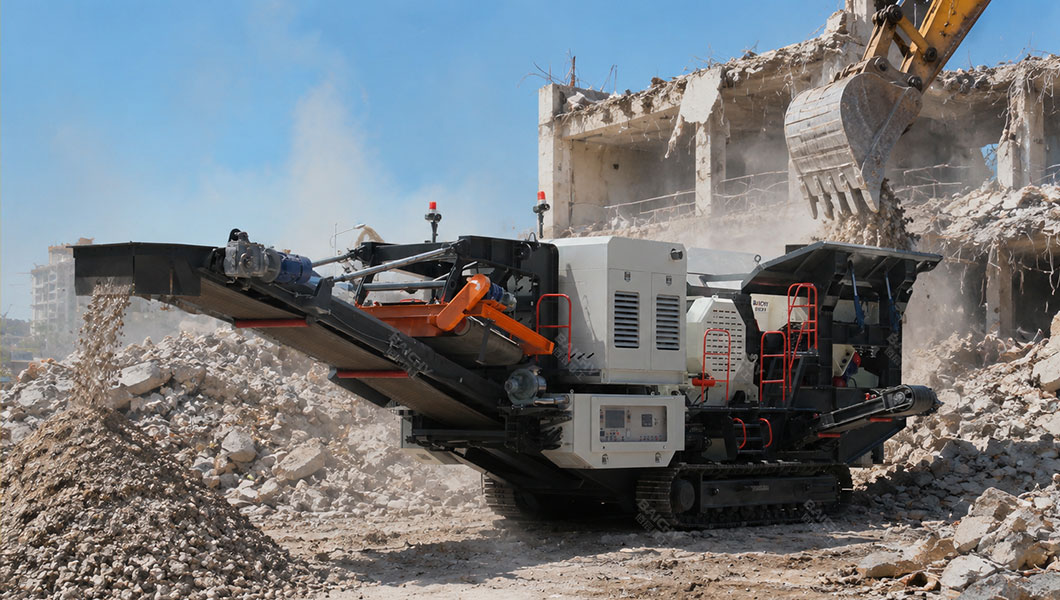
● The impact crusher has shown its prowess in limestone aggregate and construction waste recycling projects. It not only breaks materials efficiently but also improves the shape of the product. It is a core device in mobile crushing stations.
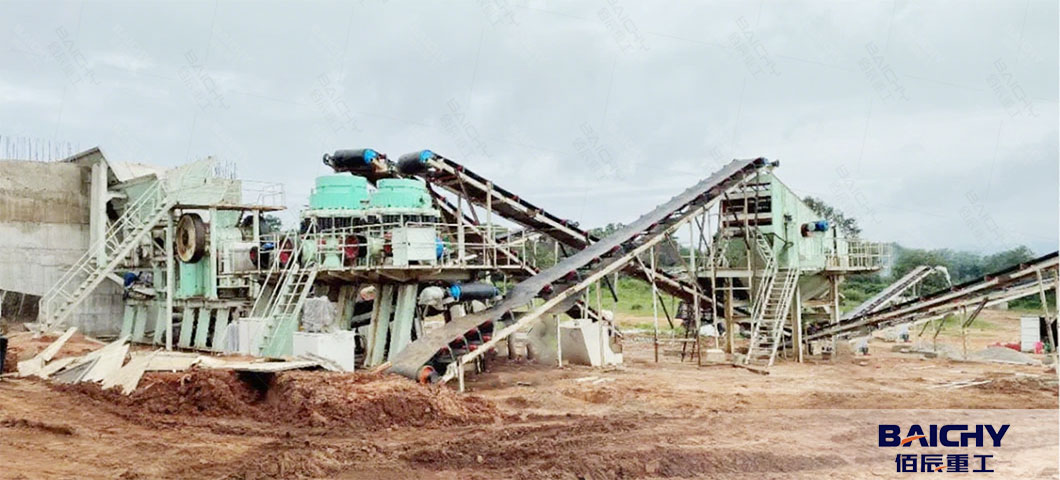
How to Choose the Right Crushing Equipment
1. Based on Material Characteristics
Material characteristics are the primary factor in selection. For hard and highly abrasive materials such as granite and basalt, a jaw crusher should be chosen for the primary stage and a cone crusher for the secondary stage. This combination ensures equipment lifespan and operational stability.
For materials with medium hardness or less, such as limestone and construction waste, the primary jaw crusher combined with the secondary impact crusher is the best choice. The high crushing ratio and good particle shape of the impact crusher can fully exert its advantages, and the equipment investment is relatively low.
In addition, the moisture content and mud content of the materials also need to be taken into account. Materials with high moisture content are prone to sticking in the crushing chamber, and it is necessary to reasonably design the screening process or consider anti-blocking designs.
Based on production requirements, the total processing capacity determines the equipment specifications. Large-scale production lines require large jaw crushers and multiple secondary equipment to work in coordination to ensure capacity matching. The processing capabilities of primary and secondary equipment must be well-coordinated to avoid capacity bottlenecks or waste.
The requirements for the final product directly influence the selection of secondary equipment. For those with high requirements for particle shape, such as high-grade concrete aggregates, impact crushers or high-performance cone crushers should be chosen; for those with lower requirements, ordinary cone crushers can suffice.
2. Based on cost and efficiency
Stone crusher quipment selection ultimately needs to return to economic analysis, including multiple aspects such as initial investment, operating costs, and maintenance costs. The initial investment of the combination of jaw crusher and impact crusher is relatively low, but the wear parts of the impact crusher wear out quickly, and the operating cost for hard materials is relatively high. The initial investment of the combination of jaw crusher and cone crusher is relatively high, but the wear parts have a longer service life, and the comprehensive operating cost is lower.
3. In terms of maintenance costs
The replacement cycle, difficulty and price of spare parts for vulnerable components need to be considered. The jaw plate replacement of a jaw crusher is relatively simple, while the liner replacement of a cone crusher requires professional personnel. Choosing a brand with a large market share and good after-sales service can significantly reduce the later maintenance costs and downtime risks.
Although both primary jaw crushers and secondary crushing equipment belong to crushing machinery, they have significant differences in functional positioning, design features, and application scenarios. Primary crushing is the "pioneer" of the production line, shouldering the responsibility of processing large chunks of raw ore. Its core value lies in its durability and high throughput. Secondary crushing is the "gatekeeper" of the final product quality, responsible for processing the material to the ultimate requirements. Its core value is in the crushing efficiency, product quality and control accuracy. A successful crushing production line is not merely a haphazard assembly of equipment, but rather requires systematic thinking. The selection of primary and secondary equipment must be considered in concert, based on the characteristics of the material, production capacity requirements, and product standards, to achieve a scientific and reasonable configuration. An incorrect choice may lead to insufficient production capacity, substandard products, or persistently high operating costs. Welcome to contact us to get customized crushing plant solutions for you projects.




 2026-10-22





 86-15093113821
 86-15093113821