For a mid-sized project with a target of 100,000 tons per year (TPY)—approximately 20–25 tons per hour (TPH)—the choice of grinding technology depends on your priority between initial cost and long-term efficiency:
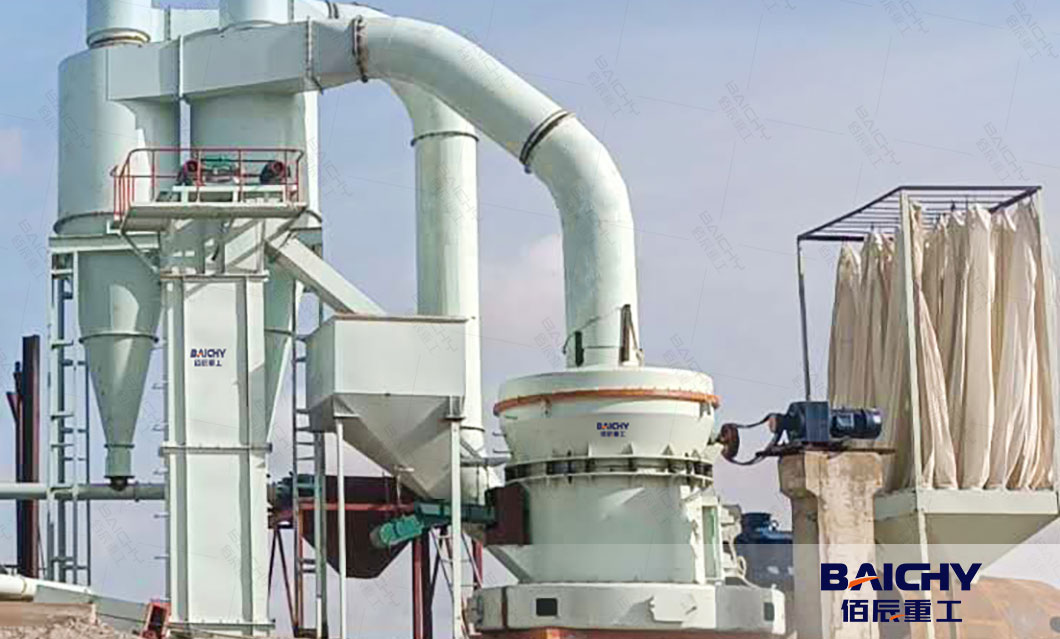
● Best Overall Value: Raymond mill. It offers the most balanced ROI for this specific scale, with lower CAPEX and high-quality output.
● Highest Quality & Efficiency: Vertical Roller Mill (VRM). Best for projects focusing on low energy consumption and superior particle size distribution (PSD).
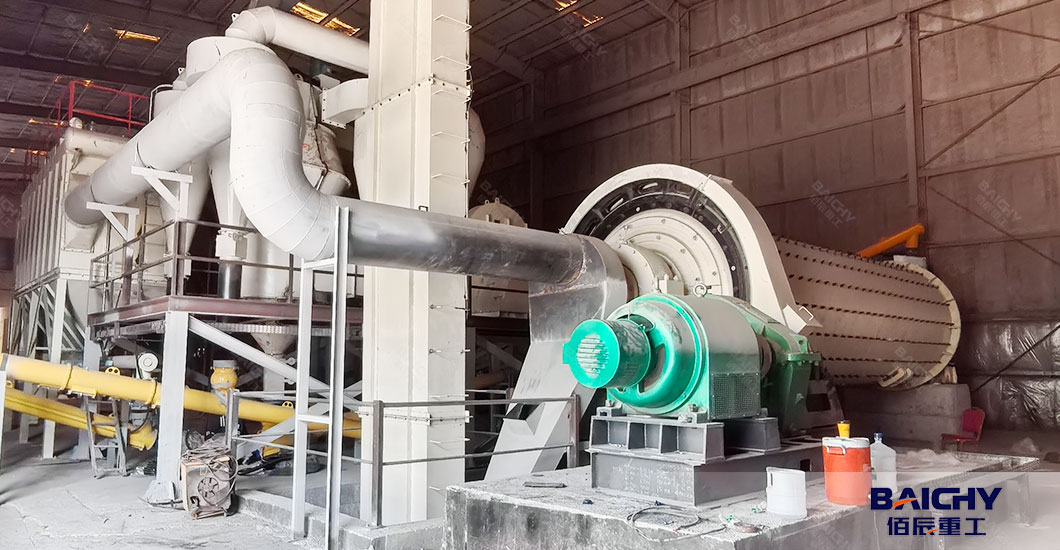
● Legacy Choice: Ball Mill. Reliable and simple, but carries high energy costs and a larger footprint, making it less competitive for new 100,000 TPY setups.
1. Technical Comparison Matrix
According to industrial processing data, the performance metrics for these three systems at a 25 TPH capacity are as follows:
| Metric |
European Version Mill |
Vertical Roller Mill (VRM) |
Ball Mill (+ Classifier) |
| Energy Consumption |
Moderate (15-20 kWh/t) |
Lowest (12-15 kWh/t) |
Highest (25-35 kWh/t) |
| Initial Investment (CAPEX) |
Lowest |
Highest |
Moderate |
| Footprint |
Compact |
Moderate |
Large |
| Fineness Control |
Excellent (Cage Classifier) |
Superior (Integrated VFD) |
Moderate |
| Maintenance |
Low to Moderate |
Moderate |
Low (Simple) |
2. Product Quality: Impact on Construction Gypsum
In the production of construction-grade gypsum (Beta-hemihydrate), the quality of the final product is measured not just by fineness, but by Particle Size Distribution (PSD) and Standard Consistency Water Demand.
The "Cage Classifier" Advantage (VRM & European Mill):
Both the Vertical Roller Mill and the European Version Mill utilize an integrated, high-speed cage-type (turbine) classifier. Unlike older static separators, these units use centrifugal force to create a "sharp cut-point." Research indicates that this produces a narrow, consistent PSD. For construction gypsum, this is critical; a narrow PSD reduces the "Standard Consistency Water Demand"—the amount of water needed to create a workable slurry. Lower water demand directly translates to higher compressive strength and reduced drying energy in downstream board production.
The "Over-Grinding" Risk (Ball Mill):
Ball mills operate on the principle of cascading impact and attrition. Without an extremely high-efficiency external classifier, material stays in the mill longer, leading to "over-grinding." This creates an abundance of ultra-fine particles. While this might look good on a fineness test, it increases the specific surface area excessively, causing the gypsum to absorb more water. This often results in a "brittle" final product with lower mechanical density.
Color and Purity:
Because the VRM and European Mills process material in a "thin layer" with a short residence time (often less than 1–2 minutes), there is minimal heat-induced discoloration. This helps maintain the natural whiteness of the gypsum, a key selling point for high-end wall plasters.
3. Financial Breakdown: CAPEX vs. OPEX Analysis
For a 100,000 TPY project (approximately 25 TPH), the economic decision rests on the balance between Capital Expenditure (CAPEX) and Operating Expenditure (OPEX).
Initial Investment :
The European Version Mill is widely considered the "entry-point" leader for 100,000 TPY lines. Its compact, integrated design means lower costs for equipment procurement, foundation work, and steel structures. In contrast, a VRM requires a sophisticated hydraulic station and a more robust foundation to handle vertical pressure, typically making the initial investment 30% to 50% higher than a European Mill.
Energy Consumption:
Energy is the largest recurring cost in gypsum processing.
VRM: The most efficient, consuming approximately 12–15 kWh/ton.
European Mill: Consumes 15–20 kWh/ton.
Ball Mill: The least efficient, often exceeding 25–35 kWh/ton.
Impact: Over an annual production of 100,000 tons, a VRM can save up to 1.5 million kWh compared to a ball mill. Depending on local industrial electricity rates, this can save 100,000–150,000 USD per year in power alone.
Wear Parts and Maintenance:
European Mills and VRMs use high-manganese or specialized alloy liners that are easily accessible for replacement. Ball mills require the periodic manual addition of steel balls and grueling liner replacements, though their "simple" mechanical nature means they can be repaired by general technicians without specialized hydraulic knowledge.
4. System Integration: Process Flow and Footprint
Modern gypsum plants emphasize compactness and automation. The primary difference between these technologies lies in how they integrate with the calcination (boiling/dehydration) stage.
"Three-in-One" Efficiency (VRM & European Mill):
These mills function as integrated systems that combine grinding, drying, and classifying. For gypsum that may have residual quarry moisture, the mill can use waste heat from the calcination kiln to dry the material during the grinding process. This eliminates the need for a separate dryer.
Negative Pressure and Dust Control:
Both the VRM and European Mill systems operate under total negative pressure. This is a significant environmental advantage, as it prevents dust from escaping into the factory environment. The integrated fan and pulse dust collector ensure that 99.9% of the powder is captured efficiently.
Layout and Civil Engineering:
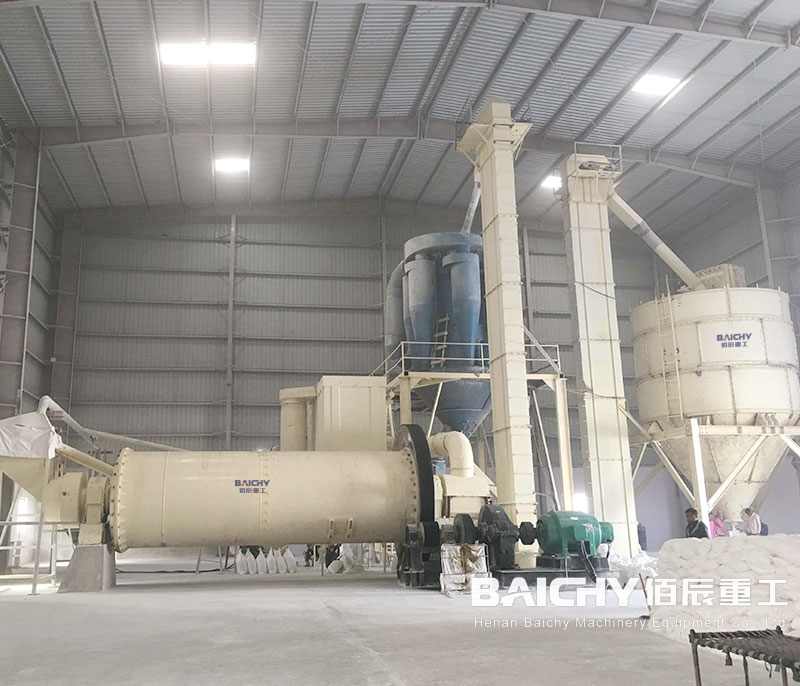
A Ball Mill circuit is sprawling; it requires separate elevators, an external classifier, and a complex return-pipe system for coarse rejects. A 100,000 TPY ball mill line can take up twice the floor space of an equivalent European Mill layout. For new plants where land or building costs are high, the European Mill’s vertical, compact design offers a massive advantage in reducing civil engineering overhead.
Automation Compatibility:
VRMs and European Mills are designed for modern PLC/DCS control. Because they respond almost instantly to speed changes (via VFD on the cage classifier), the entire plant can be automated to maintain a constant 25 TPH output, even if the raw gypsum hardness varies slightly.
5. Final Verdict: Which One Should You Choose?
Scenario A: You need the fastest Return on Investment (ROI).
Recommendation: European Version Mill (Enhanced Raymond Mill).
At the 100,000 TPY scale, the European Mill is the industry favorite. It provides high-precision powder quality (thanks to the cage-type classifier) at a fraction of the cost of a VRM.
Scenario B: You prioritize long-term sustainability and high-end branding.
Recommendation: Vertical Roller Mill (VRM).
If electricity is expensive and you plan to expand or target premium markets (like high-strength self-leveling gypsum), the VRM’s superior energy profile and particle consistency make it the best long-term asset.
Scenario C: You are operating in a remote area with minimal technical support.
Recommendation: Ball Mill.
If low-tech reliability is more important than energy bills, the ball mill remains a "tank" of the industry, though it is increasingly being phased out in modern, efficiency-driven gypsum plants.




 2026-10-12





 86-15093113821
 86-15093113821