For materials with a Mohs hardness of 7 (like Granite or Quartzite) and high silica content, the Cone Crusher offers the lowest wear-part cost per ton in secondary and tertiary stages. For primary crushing, the Jaw Crusher is the most cost-effective.
The Comparison at a Glance:
Winner: Cone Crusher (Compression-based, designed for abrasive rock).
Runner-up: Jaw Crusher (Best for primary stage, low-speed compression).
Avoid: Impact Crusher (HSI) (High-speed impact leads to unsustainable wear costs in rocks with >10% silica).
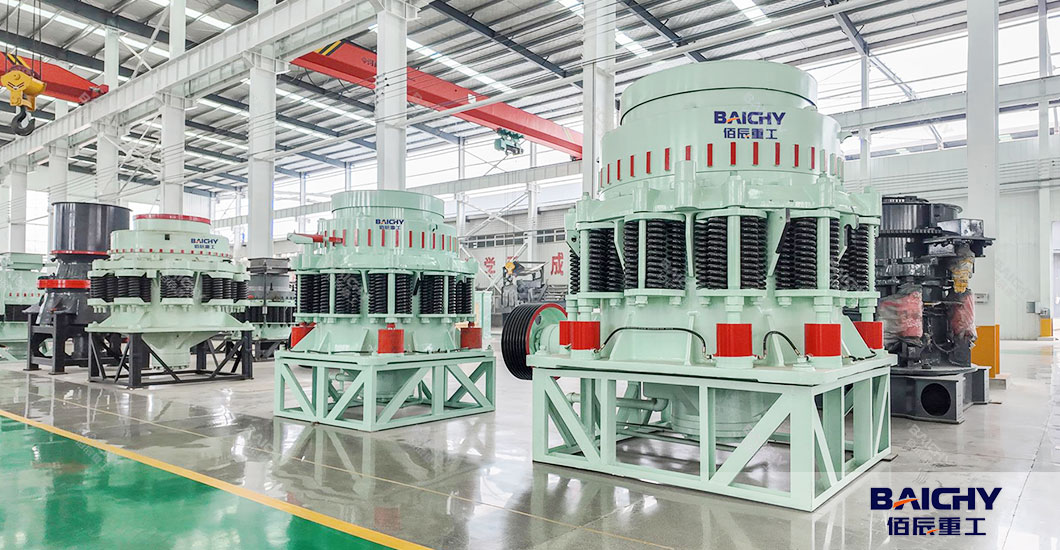
Understanding the Challenge: Mohs 7 and Silica
When a material reaches Mohs 7, it is harder than most standard carbon steels. High silica (SiO2)content acts like sandpaper on the internal components of a crusher. In the crushing industry, we measure this using the Abrasion Index (Ai). Granite typically has an Ai of 0.5 to 0.9. If you use the wrong equipment, your profit margins will literally be "ground away" by replacement part costs.
1. Jaw Crusher: The First Choice for Coarse Crushing of High-Hardness Materials
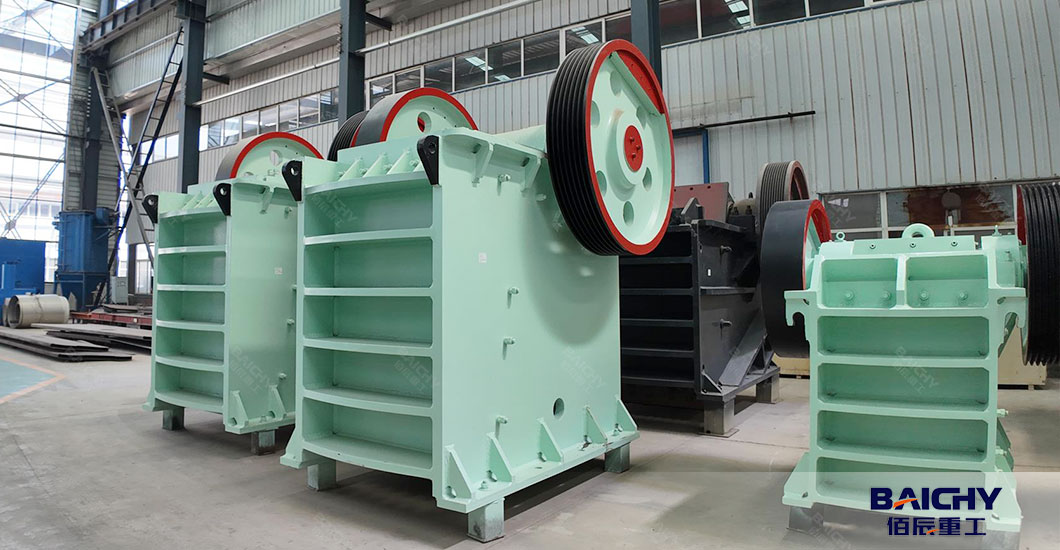
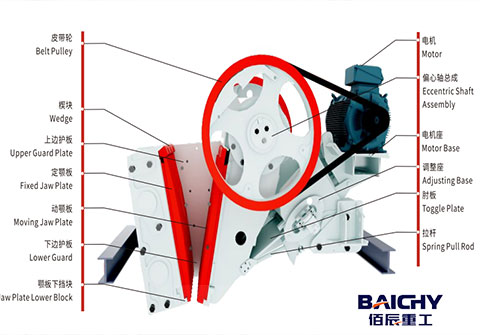
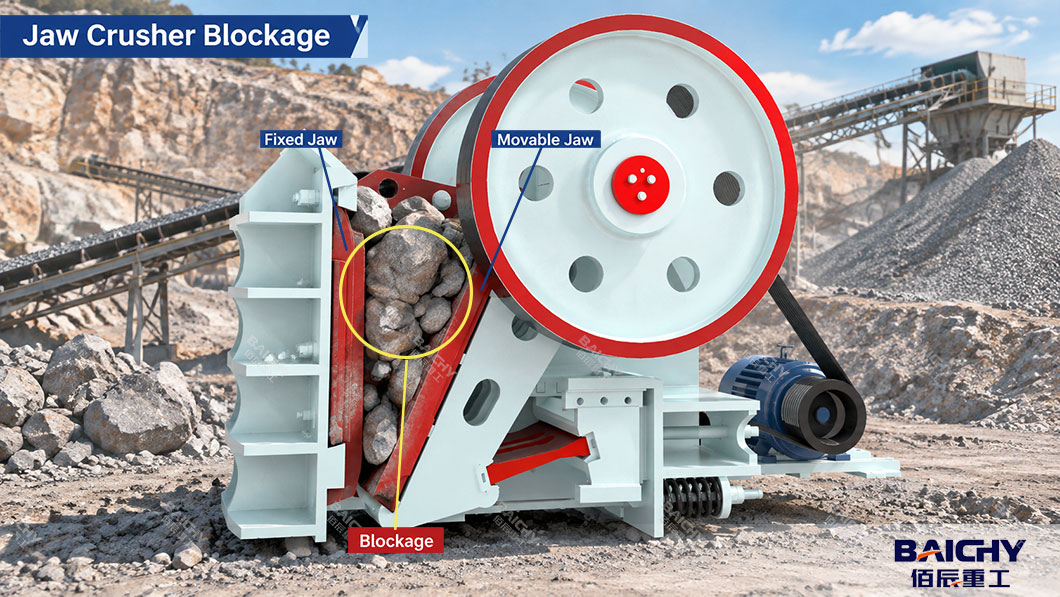
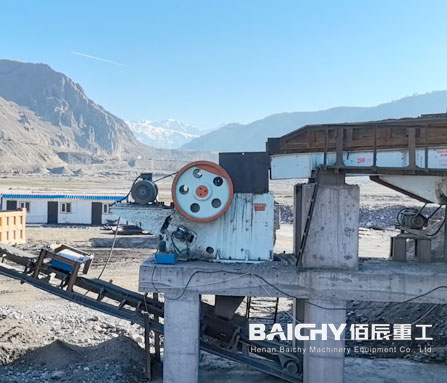
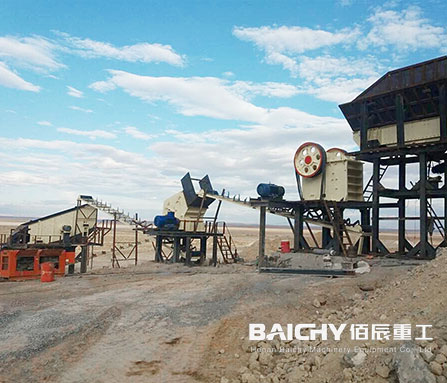
The jaw crusher is the core equipment for primary crushing of materials with a Mohs hardness of 7, such as granite. Its working principle mimics the movement of an animal's jaw, crushing materials through the low-speed "squeezing" between the movable and fixed jaw plates. This "squeezing" method has a natural advantage when dealing with high-silica content stones, as it does not rely on high-speed impact, significantly reducing the erosion rate of metal wear parts. When processing large, high-hardness rocks, its thickened manganese steel liner can withstand extremely high pressure without cracking. Although the jaw crusher is not typically used for final product shaping, it can efficiently and cost-effectively reduce hard raw ores to manageable sizes in the first stage, laying the foundation for subsequent fine crushing. It is an irreplaceable "heavy laborer" in the processing of highly abrasive materials.
2. Cone Crusher: The "Cost-Per-Ton King" for Medium and Fine Crushing of High-Silica Hard Rocks
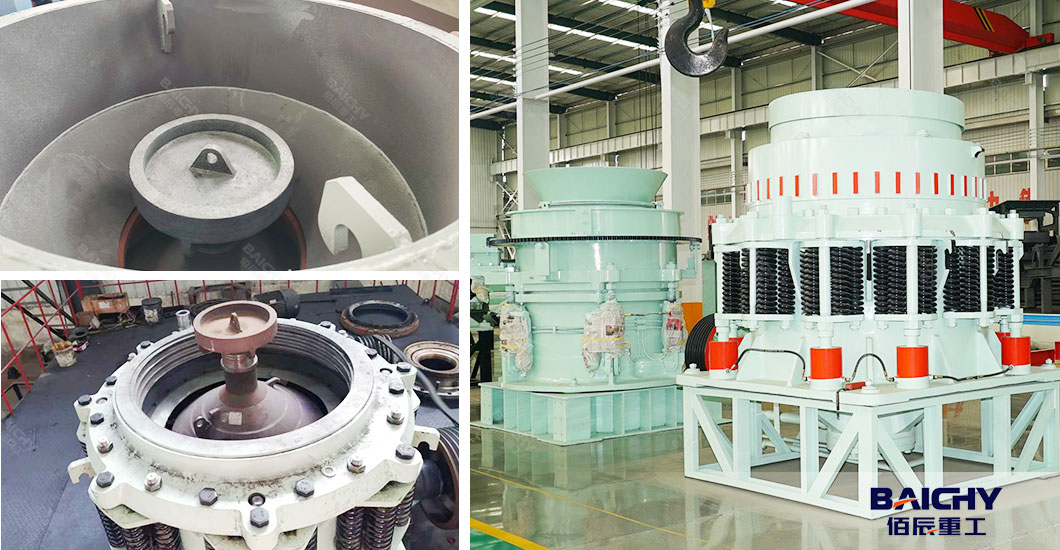
The cone crusher is recognized as the most economical equipment for secondary and tertiary crushing of materials with a Mohs hardness of 7, such as granite and basalt. It operates by driving the crushing wall in an eccentric rotation through an electric motor, subjecting the material to continuous squeezing and breaking within the crushing chamber. Its core advantage lies in the "layered crushing" principle, where materials are squeezed against each other within the chamber, greatly reducing the direct contact and friction between high-silica materials and metal liners. For materials with high silicon content, the lifespan of the cone crusher's liners is several times or even ten times longer than that of impact crushers, meaning less downtime for maintenance and lower cost per ton of wear parts. Modern hydraulic cone crushers also integrate over-iron protection and automatic cavity cleaning functions, ensuring stable high output and extremely low operating and maintenance costs even when dealing with extremely hard ores.
3. Impact Crusher: The "High-Cost Risk" in High-Hardness Material Processing
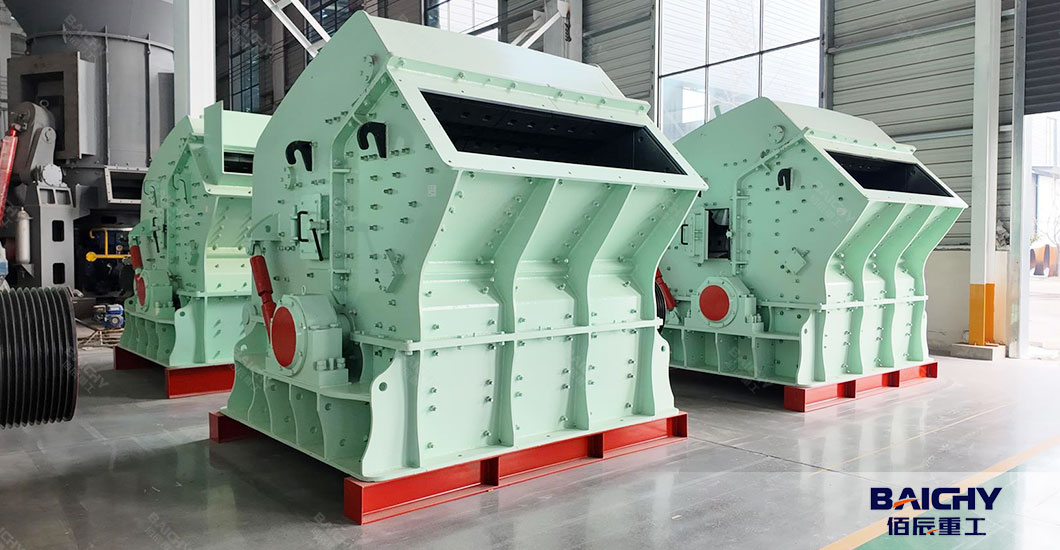
The impact crusher relies on the high-speed rotation of the rotor to drive the hammers, generating tremendous kinetic energy to violently impact the material entering the crushing chamber and cause it to repeatedly collide between the impact plates for crushing. Although this "impact crushing" method can produce excellent final particle shapes (cubical with few needle and flake shapes), its economic efficiency rapidly deteriorates when processing materials with a Mohs hardness of 7 and high silica content. Due to the extremely abrasive nature of silica, the high-speed rotating hammers wear out rapidly, similar to being ground by a grinding wheel, leading to a very high replacement frequency of hammers and impact liners. In granite production lines, if the impact crusher is mistakenly used as the secondary crusher, the cost per ton often exceeds the profit margin. Therefore, unless there are strict requirements for the final product shape in specific conditions, it is generally recommended to use the impact crusher only for processing materials with a Mohs hardness of 5 or less and low abrasiveness (such as limestone).
Wear-Part Cost Comparison Table
| Feature |
Jaw Crusher |
Cone Crusher |
Impact Crusher (HSI) |
| Crushing Method |
Compression |
Compression |
Impact |
| Suitability for Mohs 7 |
Excellent (Primary) |
Best (Secondary) |
Poor |
| Wear Part Life |
High |
High |
Very Low |
| Cost Per Ton |
Low |
Lowest |
Very High |
| Maintenance Need |
Low |
Moderate |
Very High |
Expert Tips to Further Reduce Costs per Ton
To achieve the absolute lowest wear-part cost in a granite plant, follow these three industry best practices:
Maintain "Choke Feeding": Keep the cone crusher cavity full. This maximizes inter-particle crushing (rock-on-rock) and minimizes "liner-on-rock" wear.
Use High-Manganese Metallurgy: Ensure your liners are made of Mn18Cr2 or Mn22Cr2. The higher chromium content helps the metal work-harden under the pressure of the Mohs 7 granite.
Automated Setting Adjustments: Use a crusher with a hydraulic adjustment system. This maintains a consistent closed-side setting (CSS), ensuring uniform wear across the entire surface of the liner.
Final Verdict: The Optimal Crushing Circuit for High-Silica Materials
When processing materials with a Mohs hardness of 7 and high silica content, the ultimate objective is to minimize metal-to-stone contact and maximize pressure-based reduction. The most economically viable and operationally stable strategy is to utilize a Compression-Based Crushing Circuit. For primary crushing, the Jaw Crusher remains the undisputed choice due to its ability to handle massive, abrasive feed without the rapid erosion seen in impact-based systems. For secondary and tertiary stages, the Cone Crusher is the industry’s "gold standard"; its laminated crushing principle ensures that rocks crush against one another rather than just grinding against the mantle, significantly extending the service life of wear parts and lowering the Total Cost of Ownership (TCO).
While an Impact Crusher (HSI) might offer a lower initial capital investment and produce a superior cubical shape, the operational reality in high-silica environments is one of unsustainable maintenance costs—where blow bar replacement cycles are measured in days rather than months. Therefore, for any long-term granite or quartzite operation, the Jaw-plus-Cone configuration is the only logical choice to ensure the lowest wear-part cost per ton. If your project specifically requires high-quality manufactured sand or specific particle shaping, a Vertical Shaft Impactor (VSI) with a "Rock-on-Rock" (autogenous) configuration should be added as a final stage, as it utilizes the material itself as a crushing medium to protect the machine from the abrasive nature of the silica. In summary: Prioritize compression to protect your profit margins from the abrasive wear of high-hardness rock.
If you plan to optimize your crushing plant, choosing a compression-based circuit is the most significant step you can take to protect your bottom line from the abrasive power of silica. Baichy Machinery has a history of more than 20 years. It not only produces a full set of crushing and sand making equipment, but also provides EPC project general contracting services, including plant site selection and construction, production line design and installation, and production and operation technical training. Welcome to consult online to get your exclusive stone crusher solution.
FAQs (People Also Ask)
1. Is a jaw crusher good for granite?
Yes, it is the preferred primary crusher for granite due to its ability to handle high compressive strength.
2. How do you reduce wear in silica crushing?
Lowering the stroke of the crusher and ensuring a "choke feed" (keeping the crushing chamber full) helps create inter-particle crushing, which reduces wear on the liners.
3. Can a VSI crush high silica sand?
Yes, provided it is a "Rock-on-Rock" (VSI-OR) model, which is the standard for manufactured sand (M-Sand) production.




 2026-10-12





 86-15093113821
 86-15093113821