In the modern stone crushing equipment market, the quality of manufactured sand is no longer judged solely by the absence of oversized rocks, but by its Product Size Distribution (PSD). For civil engineers and stone crusher plant operators, the PSD curve determines the Fineness Modulus (FM), which directly impacts the workability, water demand, and cement consumption of high-strength concrete.
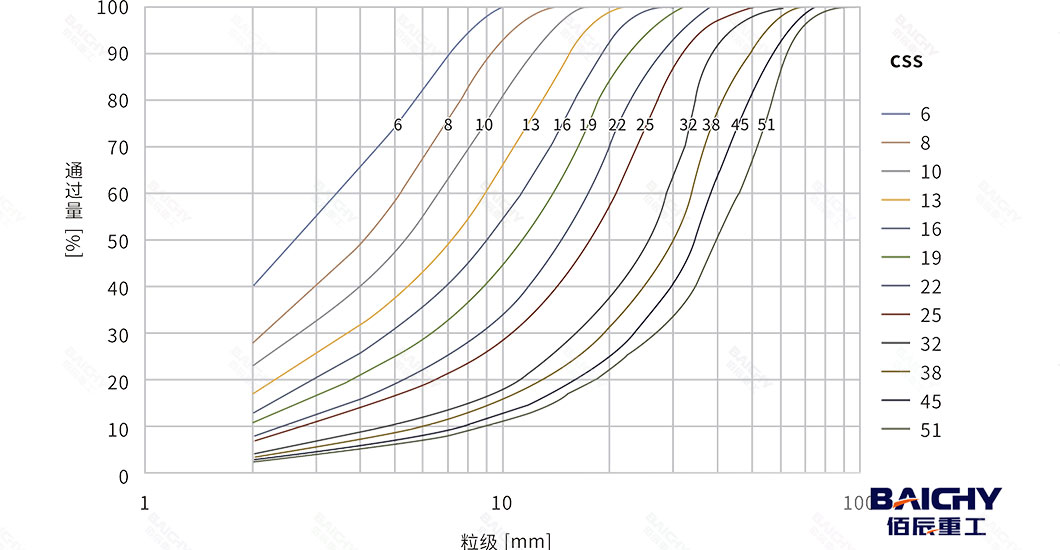
HPC Cone Crusher PSD
While both the VSI crusher (Vertical Shaft Impactor) and the tertiary cone crusher are used in the final stages of a stone crushing plant, they utilize fundamentally different mechanical principles, resulting in vastly different graduation curves.
What is PSD in Manufactured Sand Production?
Product Size Distribution (PSD), often visualized through graduation curves, represents the percentage of material passing through various sieve sizes. For stone crusher plant operators, matching the PSD to international standards like ASTM C33 is essential for high-value aggregate crushing projects.
VSI Crusher: The Master of Sand Graduation
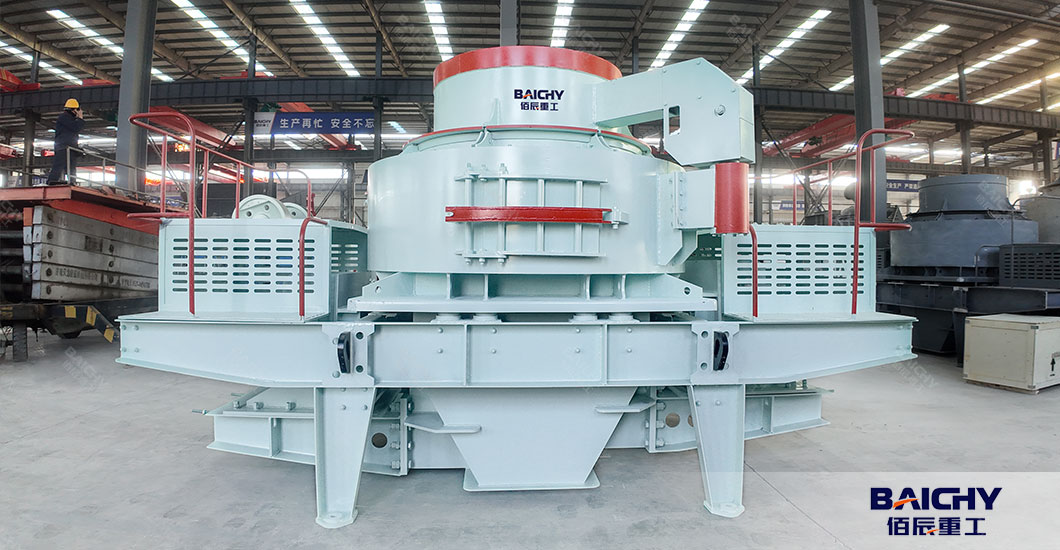
The VSI stone crusher machine is the industry standard for "shaping" and "sand making." Its working principle involves a high-speed rotor that flings raw materials against a stationary "stone-bed" (autogenous crushing).
● Impact Mechanics: Because the material breaks along natural mineral boundaries and internal fault lines through high-velocity impact, the crushing machines produce a highly consistent, continuous graduation.
● Fines Generation: VSIs are uniquely capable of generating the "micro-fines" (material passing 0.15mm and 0.075mm) required by ASTM C33 standards. This ensures the PSD curve has a smooth, long tail at the fine end.
● PSD Characteristic: The curve is "Broad and Continuous." It provides a balanced distribution across all sieve sizes from 4.75mm down to 75 microns, reducing the "void ratio" in concrete mixtures.
Tertiary Cone Crusher: The Efficiency Specialist
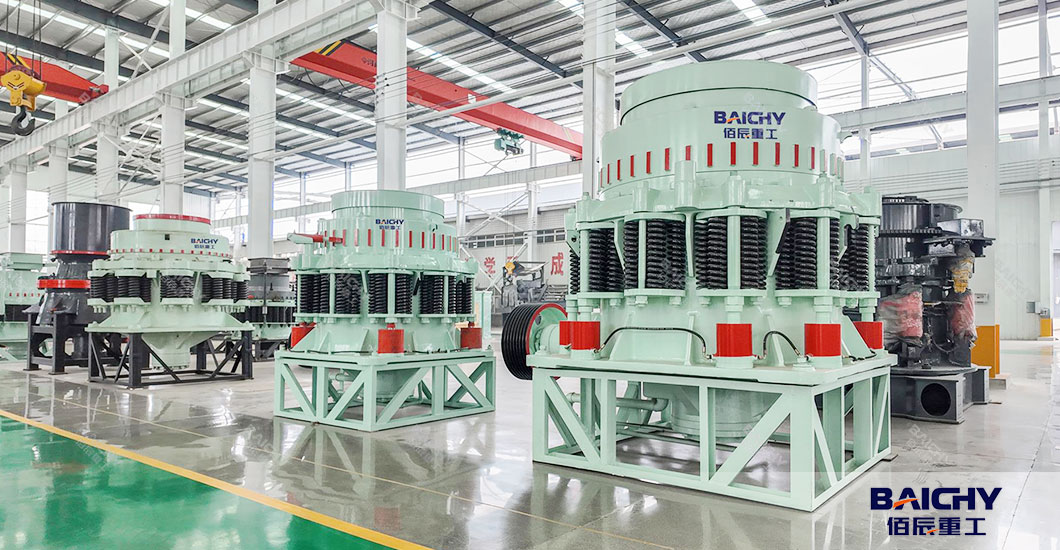
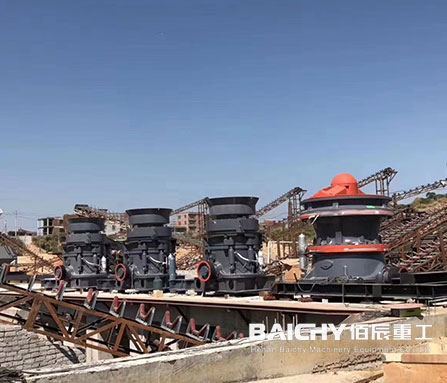
The tertiary cone crusher (specifically the short-head or multi-cylinder hydraulic models) uses inter-particle compression to reduce material.
● Compression Mechanics: Material is squeezed between the mantle and the concave. The size reduction is largely governed by the Closed Side Setting (CSS).
● The "Gap" Problem: Tertiary cones are highly efficient at reducing stone crusher capacity in the 10mm to 20mm range. However, because they rely on compression, they struggle to produce the 1mm to 0.15mm fraction effectively.
● PSD Characteristic: The curve is "Steep and Discontinuous." A large percentage of the product (often 60-70%) is concentrated in a narrow size band just above the CSS. This creates a "gap-graded" product that often requires additional blending or secondary processing to be used as M-sand.
Data Comparison: PSD Graduation Table
This table shows the typical Product Size Distribution (Cumulative % Passing) for both machines when processing a standard feed:
| Sieve Size (Metric/US) |
VSI Crusher (% Passing) |
Tertiary Cone (% Passing) |
Target M-Sand Goal |
| 9.5 mm (3/8") |
100% |
98% |
100% |
| 4.75 mm (#4) |
90% - 98% |
50% - 70% |
Fine Aggregate Entry |
| 2.36 mm (#8) |
65% - 80% |
30% - 45% |
Mid-range Grading |
| 1.18 mm (#16) |
45% - 60% |
15% - 25% |
Grading Continuity |
| 0.15 mm (#100) |
10% - 15% |
2% - 5% |
Concrete Workability |
4. Visualizing the Graduation Curves: The "Bell" vs. The "Spike"
VSI Curve (The Bell): When plotted, the VSI curve shows a gradual slope. This indicates a "well-graded" aggregate where smaller particles perfectly fill the gaps between larger particles. This is essential for aggregate crushers producing asphalt or high-density concrete.
Cone Curve (The Spike): The cone crusher curve shows a sharp vertical rise at its setting. This indicates a "uniform-graded" material. While excellent for railway ballast or specific road base applications, it fails to meet the criteria for "pumpable" concrete sand without further refinement.
Strategic Recommendation for M-Sand Production
For a high-performing stone crushing plant, Baichy Machinery recommends a dual-stage approach to optimize the PSD. A tertiary cone crusher should be used first to maximize the reduction ratio and handle the bulk of the aggregate crushing load. Following this, the material should be fed into a VSI crusher for "shaping" and "sand making." This combination ensures you reach the necessary stone crusher capacity while the VSI corrects the flakiness of the cone crusher’s output and adds the critical fines needed to smooth out the final graduation curves.
As a globally recognized stone crusher manufacturer, Baichy Machinery specializes in quarry stone crushing machine engineering. We provide full-service support—from stone crusher factory selection to on-site PSD testing in countries like the Philippines, Indonesia, and Saudi Arabia. Whether you need a hard stone crusher for quartz or a mountain stone crusher for limestone, we ensure your graduation curves meet the strictest international standards.
FAQ: PSD and Equipment Selection
Q: Why is Fineness Modulus (FM) lower in VSI produced sand?
A: FM is a numerical index of the average particle size. Because a VSI stone crushing machine generates significantly more material in the 0.15mm to 1.18mm range, it naturally lowers the FM to the 2.6 range, which is the "sweet spot" for construction.
Q: Can I achieve a 2.6 FM with a tertiary cone crusher alone?
A: It is extremely difficult. To reach a low FM with a cone crusher, you would have to set the CSS so tight that you would dramatically increase the stone crusher setup cost due to frequent liner changes and reduced throughput.
Q: Is PSD different for granite vs. limestone?
A: Yes. Granite crushing equipment often produces more "angular" fines, while lime stone crusher setups produce more "dusty" fines. A VSI is essential for granite to prevent the sand from being too abrasive and "harsh."




 2026-10-16





 86-15093113821
 86-15093113821