Home About us
Products
News
Solution
Video Service Contact us
Home  /  News

Confused between impact crusher and hammer crusher? This guide breaks down working principles, structure, output control, wear costs, and application positioning to help you choose the right machine. Let's begin from this Quick Comparison Table


Quick Comparison Table : Impact Crusher vs Hammer Crusher

No Item Impact Crusher Hammer Crusher
1 Working Principle Multi-stage impact against impact plates Single-stage impact on hammer head
2 Crushing Chamber Multiple impacting cavities  Single cavity with sieve plate
3 Output Control Adjustable impact plate gap Replace sieve plate (requires stopping)
4 Product Shape Cubic, low flake content Higher flake content
5 Process Position Secondary crushing, shaping Primary or fine crushing
6 Moisture Handling  <8% recommended  <10% with special design


1. Working Principle: The Foundation of All Differences

The fundamental difference determines everything else.

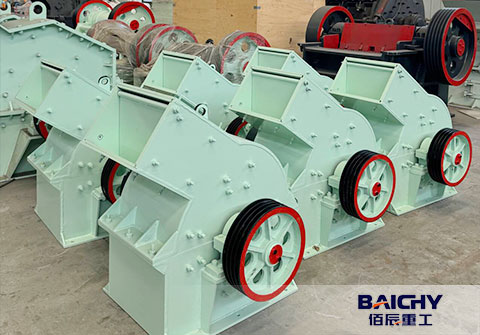
Hammer Crusher: Uses single-point impact. The rotor drives hammers to strike materials downward against the sieve plate. Materials are crushed until small enough to pass through sieve openings.

● Impact Crusher: Uses multi-stage impact. The rotor throws materials against impact plates. Materials bounce between plates and rotor, experiencing multiple impacts until crushed.

Why this matters: Single impact means less control over shape; multi-impact means better shaping capability.


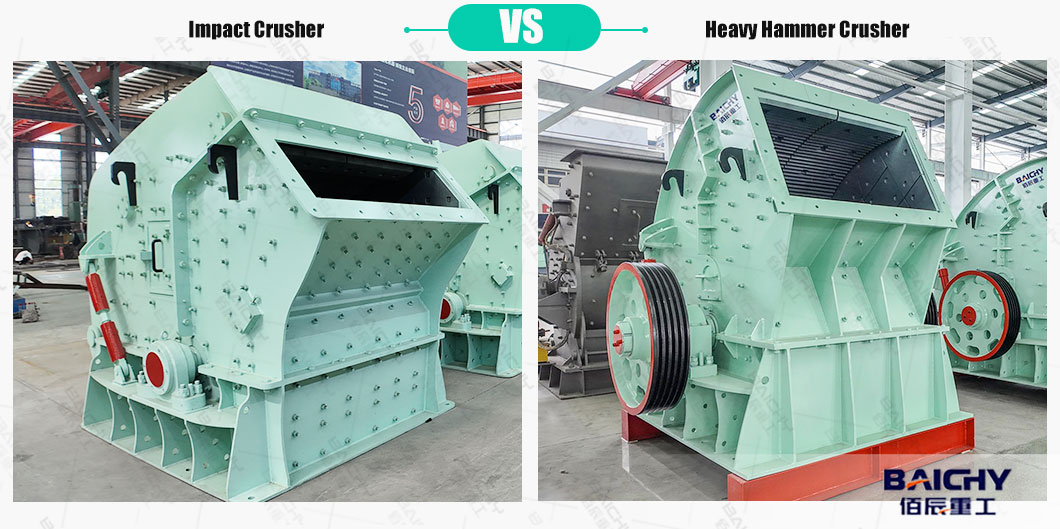
Difference-Between-Impact-Crusher-And-Hammer-Crusher00.jpg


2. Internal Structure: Design Follows Function

Rotor and Wear Parts
Hammer Crusher: Heavy hammer head (20-80kg each) attached to rotor. When worn, replace entire hammer head. Cannot flip for reuse.

Impact Crusher: Lighter blowbars  (100-300kg each) bolted to rotor. Can be flipped 180° when one side wears—doubles life.

Crushing Chamber
Hammer Crusher: Single chamber with sieve plate at bottom. Material must pass through sieve to exit. Prone to clogging with wet/sticky material.

Impact Crusher: Multiple impact plates forming upper and lower chambers. Material exits by gravity when size reduces—no sieve plate.

●  Critical Difference
Hammer crusher relies on sieve plate for size control; impact crusher relies on gap between blowbars and impact plate. This single difference affects everything—output adjustment, maintenance frequency, and material applicability.


3. Output Control: How You Adjust Matters

●  Hammer Crusher Adjustment
    ○ To change output size, it needs to stop the crusher (production halts).  Remove housing, access sieve plate.  Replace with different opening size. Then reassemble, restart

    ○ Time required: 2-4 hours minimum
    ○ Labor: 2-3 mechanics


●  Impact Crusher Adjustment
    ○ To change output size: It uses hydraulic or mechanical adjustment of impact plate gap.  Turn a screw or press a button while machine runs. Gap changes instantly

    ○ Time required: 5-15 minutes
    ○ Labor: One operator

Real-world impact: Plants needing frequent product changes (e.g., producing 0-5mm sand in morning, 5-20mm aggregate at night) choose impact crushers for flexibility.


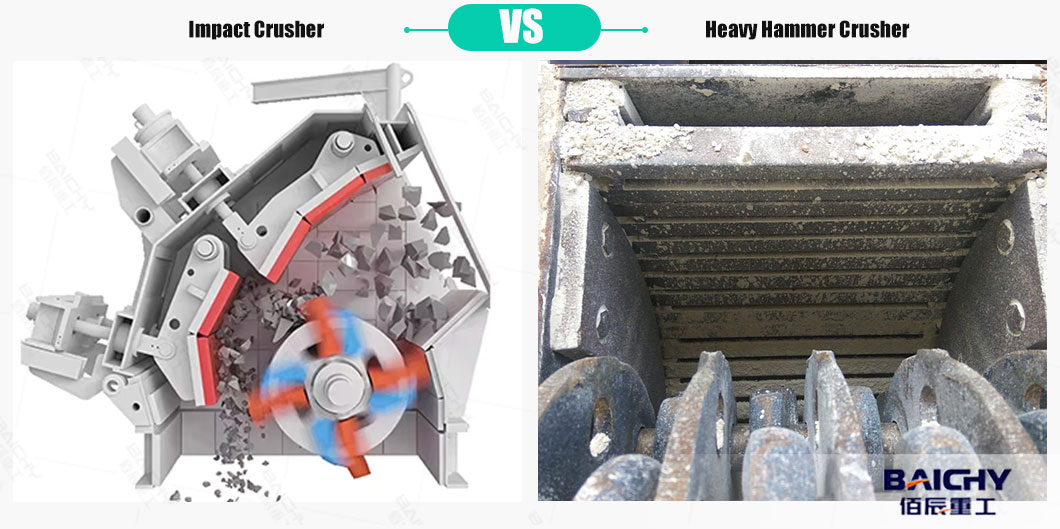
Difference-Between-Impact-Crusher-And-Hammer-Crusher02.jpg


4. Product Shape: Market Value Difference

●   Hammer Crusher Output:

Higher flake content (15-25%), More elongated particles, Lower market value for concrete applications


●  Impact Crusher Output:

Cubic shape (flake content <10%), Better particle interlock in concrete, Commands 10-20% higher price in premium markets

Why: Hammer crusher's single impact and sieve plate create elongated particles. Impact crusher's multi-stage冲击 breaks materials along natural fracture lines.


5. Process Positioning: Where Each Belongs

●  Hammer Crusher Applications
    ○ Single-stage crushing: From mine to finished product in one machine (limestone, gypsum)

    ○ Fine crushing: Producing <10mm materials for power plants, chemical industry

    ○ Brittle materials: Coal, coke, salt, fertilizer


●  Impact Crusher Applications

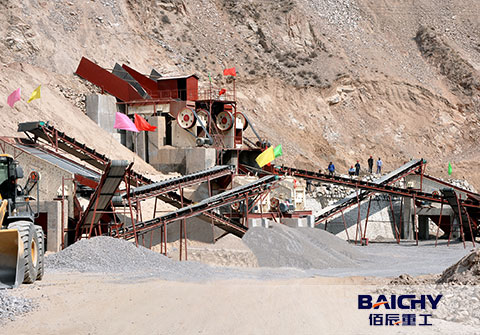
    ○ Secondary crushing: After jaw crusher, before screens

    ○ Shaping stage: Improving particle shape from cone crushers

    ○ Medium-hard materials: Limestone, dolomite, concrete recycling

    ○ Premium aggregate production: Highways, dams, high-rise concrete


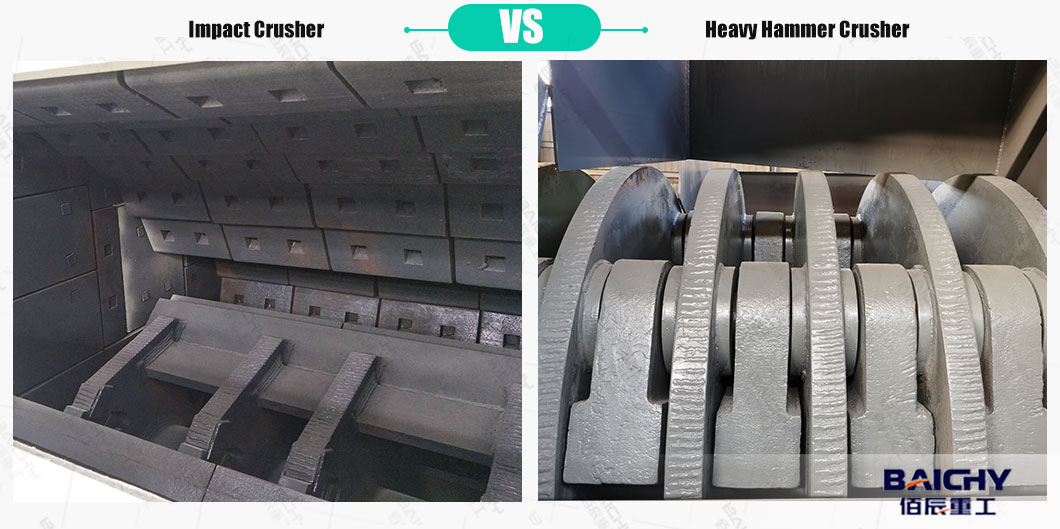
Difference-Between-Impact-Crusher-And-Hammer-Crusher01.jpg


How to choose suitable crusher machine? 

●  Never Use Hammer Crusher For

    ○ Shaping requirements (output will be flaky)

    ○ Wet materials >10% moisture (sieve plate blinds)

    ○ Abrasive materials (wear costs explode)


  Never Use Impact Crusher For

    ○ Primary crushing of >500mm material (needs feeder breaker)

    ○ Materials with >8% moisture (may clog chamber)

    ○ Very high silica content (>15% increases wear)


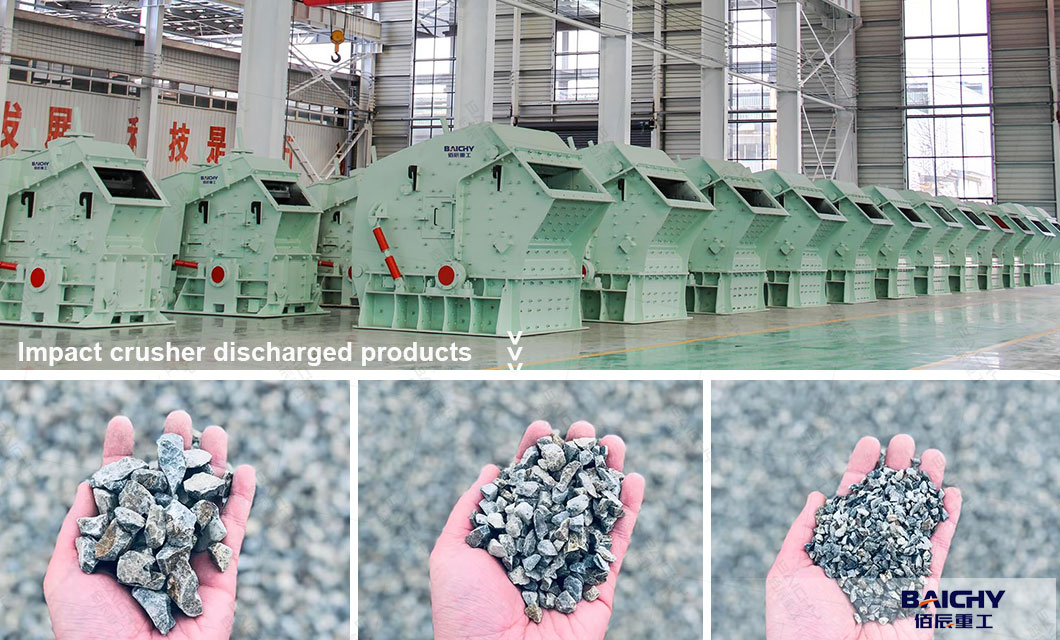
Difference-Between-Impact-Crusher-And-Hammer-Crusher03.jpg


Baichy Machinery has a history of more than 20 years. It not only produces a full set of crushing and sand making equipment, but also provides EPC project general contracting services, including plant site selection and construction, production line design and installation, and production and operation technical training. Welcome to consult online to get your exclusive stone crushing plant solution.


Maybe you are interested in