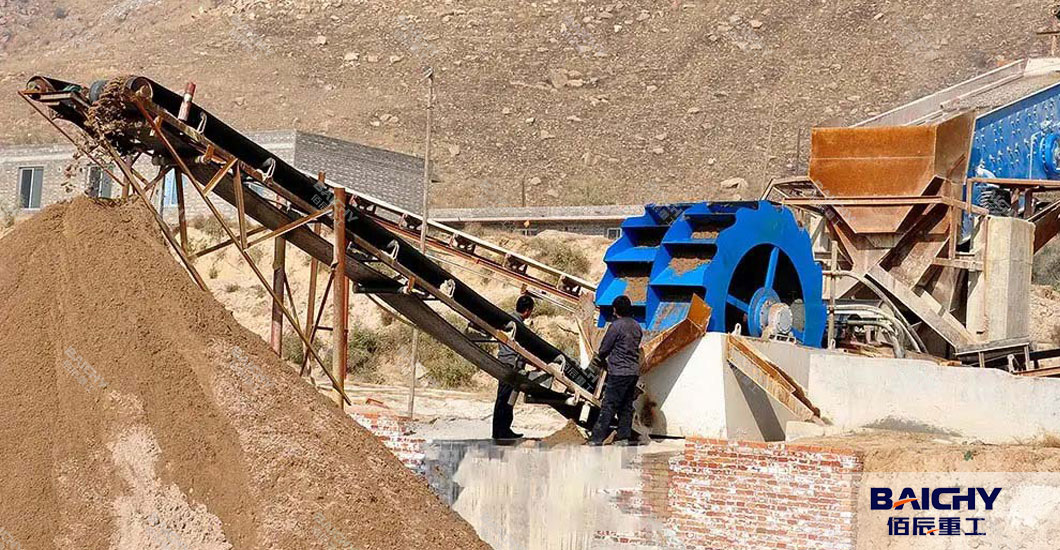
If you're planning a sand washing operation, one of the first questions you'll ask is about water consumption. Understanding water requirements for a 100 TPH (tons per hour) washing plant is essential for budgeting, equipment selection, and environmental compliance. Here's the short answer: A 100 TPH sand washing plant typically requires between 200 and 350 tons of water per hour when operating without recirculation. However, with a well-designed water recycling system, that figure can drop to as low as 10 tons per hour—a reduction of over 95% .

The water consumption of a 100 TPH washing plant depends almost entirely on whether you're using a once-through system or a closed-loop recycling system.
In a conventional setup where water is used once and discharged, consumption ranges from 2 to 3.5 tons of water per ton of sand processed . For a 100 TPH plant: Raw water requirement: 200 to 350 tons/hour
This approach is increasingly impractical due to environmental regulations and water scarcity.
Modern sand washing operations use recycling systems that recover 85–95% of process water . With a settling pond, thickener, or similar system, fresh water makeup drops to approximately 0.1 to 0.5 tons per ton of sand .
For a 100 TPH plant with good recirculation:
Fresh water makeup: 10 to 50 tons/hour
The exact figure depends on system efficiency, climate, and final product moisture.
To size your system correctly, you need to understand where water goes. A typical water balance for a 100 TPH plant includes these components :
| Water Output | Typical Rate (m³/t) | For 100 TPH (m³/hr) |
| Product moisture (sand retains water) | 0.10–0.15 | 10–15 |
| Waste slurry (moisture in silt/clay) | 0.05–0.15 | 5–15 |
| Evaporation | 0.02–0.08 | 2–8 |
| System losses (leaks, spillage) | 0.01–0.05 | 1–5 |
Fresh water makeup = Product moisture + Waste moisture + Evaporation + Losses – Feed moisture
A well-designed system achieving 85–90% recirculation will consume just 0.2–0.4 m³ of fresh water per tonne processed . Actual case studies confirm this: one operation processing 100 tons of sand used 300 tons of water but recovered 90–95% through recycling, reducing fresh draw to a fraction of that amount.
Different washing equipment has different water consumption characteristics. Here's what to expect for a 100 TPH operation:
| Equipment Type | Consumption Range | Notes |
| Hydrascrew 100 Fine Material Washer | 160–1,300 L/min (9.6–78 m³/hr) | For washing, dewatering, and classification -1 |
| Wheel Sand Washer (Twin Impeller) | 3–5 m³ per ton (300–500 m³/hr for 100 TPH) | Without recirculation -4 |
| Aggwash 60 Modular System | 100–190 m³/hr | Built with low water usage design -3 |
| Bucket-type Sand Washer (100 t/h model) | 80–150 tons/hr | Typical consumption range |
To achieve the 90%+ water recovery that minimizes fresh water needs, your plant should include :
1. Settling Pond or Thickener
Removes suspended solids from wastewater
Retention time: 2–4 hours
For fine sand, thickener sizing: 0.3–0.5 t/m²/hr unit area rate
2. Clarified Water Tank
Buffers clarified water for recirculation
Size for 15–30 minutes of process demand
3. Return Pump
Pumps recovered water back to the washing circuit
Rated at 1.2× peak demand
4. Flocculant System
Enhances settling of fine particles
Typical dosage: 20–80 g per ton of solidswww.baichy.com/contact/
A documented quarry operation processing sand and aggregates calculated a net fresh water requirement of 208 liters per ton (0.208 m³/t) after accounting for evaporation, product moisture retention (55L/t), seepage (3L/t), and dust suppression (43L/t) . This aligns with the 0.2–0.4 m³/t range cited by engineering sources.
At 100 TPH, this works out to:
20.8 m³/hr (about 21 tons per hour) fresh water makeup
For a 100 TPH sand washing plant:
Without recycling: 200–350 tons of water per hour (2–3.5 tons per ton of sand)
With recycling (85–95% recovery): 10–50 tons of fresh water per hour (0.1–0.5 tons per ton)
The key to minimizing water consumption is a properly engineered recirculation system featuring a thickener or settling pond, clarified water storage, and return pumping. With the right design, you can reduce fresh water consumption by over 90%, dramatically lowering both operating costs and environmental impact. For a precise estimate tailored to your specific material characteristics, site conditions, and equipment selection, consult with an engineering specialist who can perform a detailed water balance calculation for your operation.
Baichy Machinery is a professional mining equipment manufacturer with 20+ years of rich experience in the mining machinery industry, including crushing machine, sand machies, powder grinding mill, ball mill, rotary dryer etc. Welcome to consult our professional team to get factory prices. According to your situation and product requirements, we will design a complete sand-crushing production line flow chart and provide an accurate quotation
Save Time! Get A Detailed Quotation Quickly.