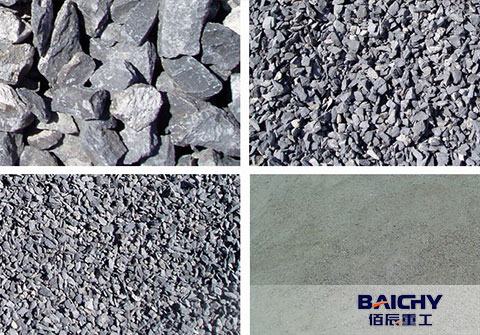
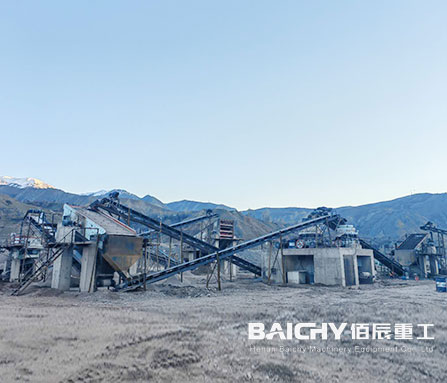
Granite, as a hard rock with a compressive strength of 150-300MPa, is widely used in construction aggregates, road paving, and manufactured sand production due to its advantages such as wear resistance, corrosion resistance, and aesthetic appearance. However, the "hardness" of granite also poses strict requirements for the selection of equipment in the crushing production line. Choosing the right equipment can increase production capacity by 30% and reduce operation and maintenance costs by 20%, while choosing the wrong equipment can lead to a "high wear and low output" situation. This article will break down the core equipment selection logic into three stages: "coarse crushing - medium crushing - shaping / sand making", and at the same time answer the equipment alternative solutions in special scenarios, providing accurate references for investors.
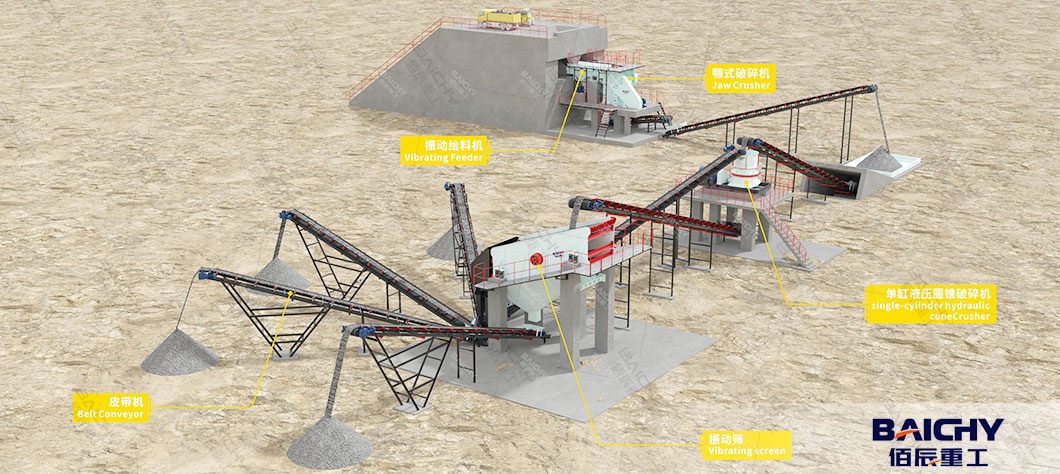
Stage 1 (Coarse Crushing): Why To Choose Jaw Crushers?
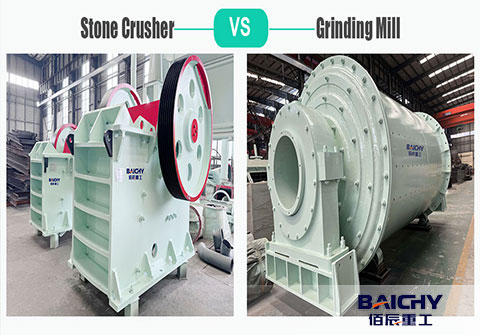
After granite is mined, it is mostly in the form of large blocks of 500-1000mm. The core demand for coarse crushing is "efficiently crushing large blocks, withstanding high hardness, and reducing the pressure on subsequent processes". Among many equipment options, the jaw crusher is the only irreplaceable choice, with key advantages in three aspects:
● Superior compressive strength adaptability: The jaw crusher uses the "compression crushing" principle. The V-shaped cavity formed by the movable jaw and the fixed jaw can firmly grip large blocks of granite and achieve crushing through periodic compression, fully adapting to the high compressive strength of granite without the problem of "unable to crush and machine stoppage".
● High wear resistance and low operation and maintenance costs: The jaw plates of the jaw crusher are made of high manganese steel or alloy materials, with extremely strong wear resistance. The service life for granite crushing can reach 800-1200 hours, and the replacement is simple and the cost is low. At the same time, the equipment structure is simple, with few vulnerable parts, and it can operate stably in harsh outdoor conditions, reducing downtime due to faults.
● Large feed opening and high processing efficiency: The feed opening width of mainstream coarse crushing jaw crushers (such as PE750×1060, PE900×1200) can reach 750-900mm, directly accepting large blocks of granite after mining without additional pre-treatment. The single machine production capacity can reach 100-300t/h, meeting the coarse crushing needs of production lines of different scales.
● Other equipment (such as gyratory crushers) have higher production capacity, but they have high equipment investment and large floor space, and are only suitable for super-large mines. For medium and small-scale granite crushing projects, the "cost-effectiveness + adaptability" of the jaw crusher is irreplaceable.
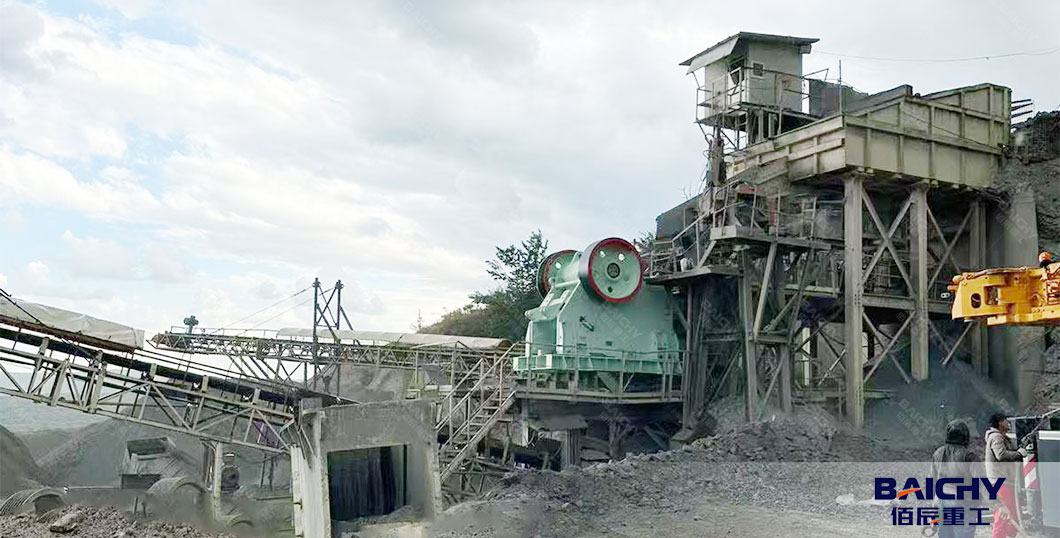
Stage 2 (Medium Crushing): Why is the Cone Crusher the Only Solution?
After coarse crushing, the granite particles (usually 50-100mm) need to enter the medium crushing stage, with the goal of crushing to 10-30mm intermediate aggregates to prepare for subsequent shaping or sand making. In this stage, the cone crusher is the absolute core and even the only solution. Compared to the disadvantages of the impact crusher, its advantages are more prominent:
● Layered crushing, suitable for high hardness: The cone crusher uses the "layered crushing" principle. The granite particles in the crushing cavity are subjected to multi-layer compression and grinding rather than a single impact, effectively dealing with the high hardness of granite and avoiding equipment overload or rapid wear of wear parts. In contrast, the impact crusher uses the "impact crushing" principle. When the high-speed rotating hammer impacts granite, it is prone to hammer breakage and rapid wear, and the service life of wear parts for granite crushing is only 1/3 to 1/2 that of the cone crusher.
● Long wear part life and stable operation: The crushing wall and liner of the cone crusher are made of hard alloy materials, with a service life of 1500-2000 hours in granite crushing. During the crushing process, the force is evenly distributed, the equipment vibration is small, and the operation is stable. The hammer and liner of the impact crusher wear unevenly, requiring frequent replacement and may cause the equipment base to loosen due to vibration, affecting the stability of the entire production line.
● The product has uniform particle shape and reasonable gradation: Layered crushing can reduce the needle and flake content of granite particles. The particle shape of the medium-crushed product is close to a cube, with continuous gradation. It can enter the next process without additional screening.
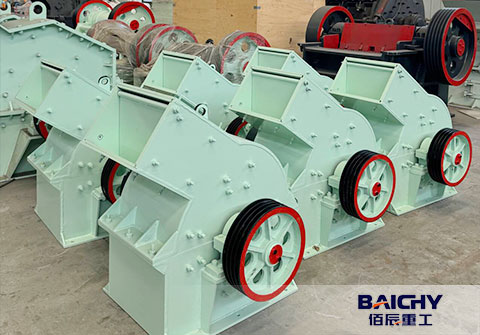
In contrast, when a counterattack crusher crushes granite, it is prone to produce more needle and flake particles, and additional screening is required in the subsequent process, reducing the overall production efficiency. In short, the counterattack crusher is more suitable for medium crushing of medium-soft rocks such as limestone and dolomite, while for hard rocks like granite, the "wear-resistant, stable, and efficient" cone crusher is an irreplaceable choice, significantly reducing the operation and maintenance costs and product loss in the medium crushing process.
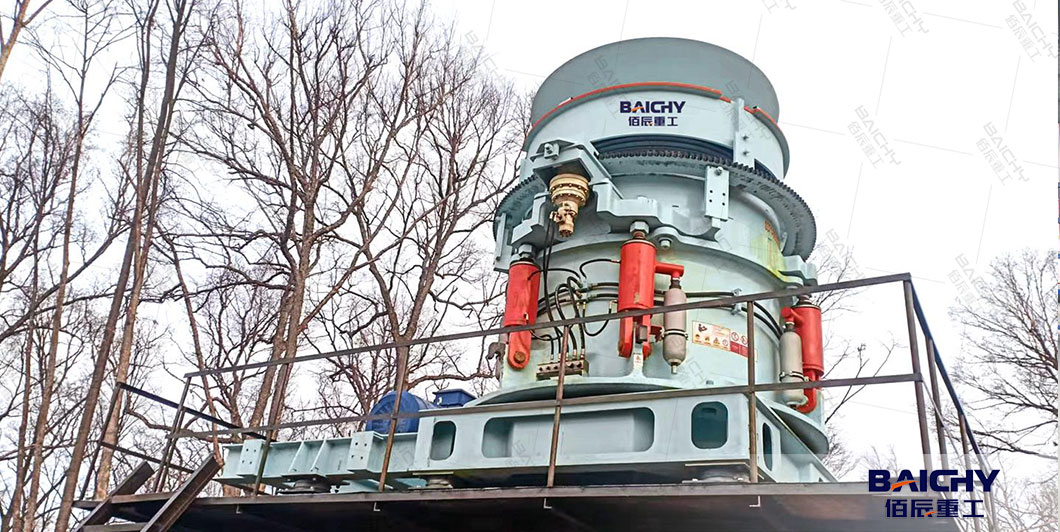
Stage 3 (Shaping / Sand Making): What are the advantages of the VSI sand making machine?
When the medium-crushed granite needs to be processed into high-quality construction aggregates (such as 1-5mm, 5-10mm) or manufactured sand (0.15-5mm), the shaping / sand making process is crucial. The VSI sand making machine (vertical shaft impact sand making machine) is the core equipment in this process, with advantages in three dimensions: "particle shape, efficiency, and cost":
● Stone-on-stone principle, better particle shape: The VSI sand making machine adopts the "stone-on-stone" or "stone-on-iron" dual mode. Granite particles are crushed through mutual impact and grinding in the crushing chamber, rather than mechanical compression. This effectively removes the sharp edges of the particles, and the produced manufactured sand or shaped aggregates have a round particle shape with a high cube content (up to over 90%), meeting the strict requirements for aggregate particle shape in high-grade highways, high-speed railways, and commercial concrete.
● Controllable particle shape, adaptable to diverse needs: By adjusting the equipment's rotational speed, feed rate, and crushing mode, the VSI sand making machine can flexibly control the finished product size. It can produce 0.15-5mm manufactured sand and also shape 10-20mm aggregates, achieving "one machine for multiple uses" and adapting to product demands in different scenarios.
● Low iron consumption cost, higher efficiency: The wear-resistant parts (such as impact blocks) of the VSI sand making machine are made of high-chromium alloy, and in the "stone-on-stone" mode, the particles impact each other, reducing direct friction between the wear-resistant parts and the rock. The wear-resistant parts have a lifespan of 1000-1500 hours. Compared with traditional sand making machines (such as hammer sand making machines), its iron consumption cost is reduced by 30%-40%, and the single machine production capacity can reach 50-200t/h, significantly improving production efficiency.
Special Chapter: Special Application of Impact Crushers / Double Roll Crushers
Although jaw crushers, cone crushers, and VSI sand making machines constitute the mainstream configuration of granite crushing production lines, in some special scenarios, impact crushers or double roll crushers can also be used as supplementary or alternative options:
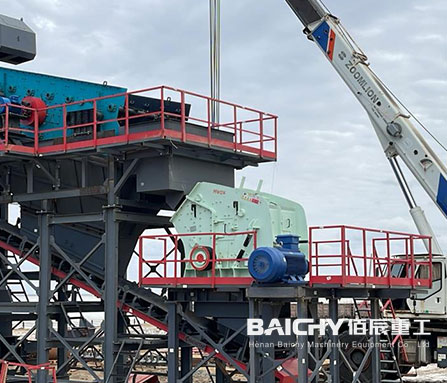
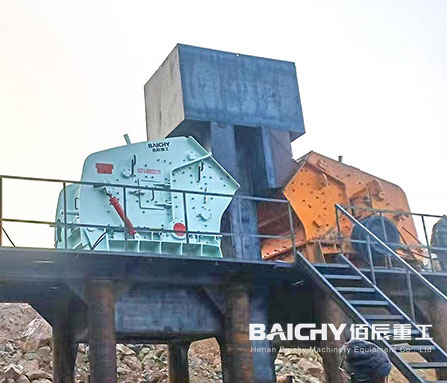
● Applicable scenarios of impact crushers: When the production line has extremely high requirements for the finished product particle shape (such as decorative aggregates, special-shaped stone processing), and the hardness of the granite is relatively low (such as compressive strength < 180MPa), impact crushers can be used in the medium crushing or shaping process.
● Its impact crushing can produce finer and more rounded particles, but it requires a higher frequency of wear part replacement and higher operation and maintenance costs. Additionally, impact crushers have a large crushing ratio and can simplify the production process, making them suitable for small-scale projects with high particle shape requirements.
● Applicable scenarios of double roll crushers: Double roll crushers use the "double roll extrusion" principle and are suitable for producing ultra-fine granite products (such as 0-5mm fine aggregates, fine powder for chemical fillers). Their advantages are uniform product particle size and less over-crushing, with a simple equipment structure and low energy consumption. However, their limitations are obvious - the feed particle size needs to be controlled below 50mm, and the wear parts wear out quickly. They are only suitable for small-scale, fine particle size demand special projects and cannot replace the role of cone crushers and VSI sand making machines in mainstream production lines.
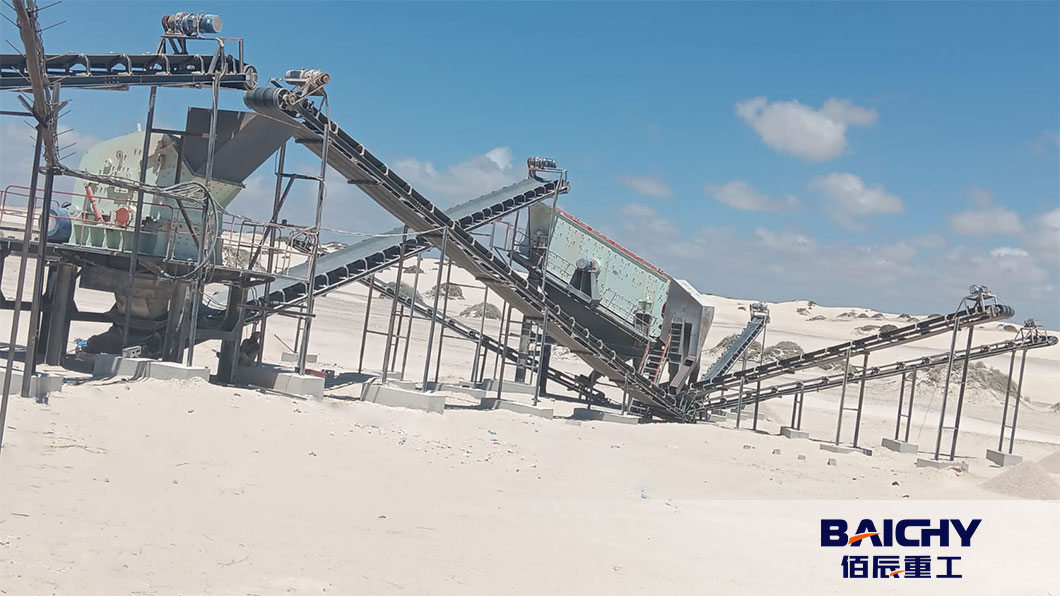
Expansion Chapter: Mobile Crushing Station
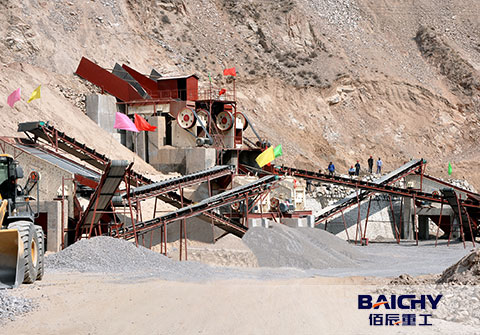
When granite mines are scattered, raw material transportation is inconvenient, or on-site crushing is required (such as in construction waste recycling or road emergency repairs), mobile crushing stations become the best solution. Essentially, a mobile crushing station is just the integration of the above core equipment (jaw crusher, cone crusher, VSI sand making machine) onto a tracked or wheeled chassis. The core crushing principle and equipment performance remain unchanged, only adding the advantage of "mobility":
● Flexible site transfer, reducing transportation costs: Tracked mobile stations can directly enter the mine site and crush large pieces of granite on-site, avoiding the high cost of long-distance transportation of raw stones; wheeled mobile stations are suitable for road transfer and can be quickly moved to different construction sites.
● Integrated design, quick start-up: Mobile crushing stations integrate feeders, crushers, screens, conveyors and other complete sets of equipment. No complex foundation construction is required. After arriving at the site, they can start working by simply connecting to power, with the start-up period shortened to 3-7 days, making them suitable for emergency projects or short-term projects.
● Adaptation to complex working conditions: Tracked mobile stations have the ability to climb slopes (with a maximum climbing angle of 15°), can adapt to complex terrains such as mines and mountains; at the same time, the equipment has good sealing performance and can be equipped with dust removal devices to meet environmental protection requirements, making them suitable for areas near cities or regions with high environmental protection standards.
In short, a mobile crushing station is a "mobile production line", and the selection logic of core equipment is exactly the same as that of a fixed production line - jaw crushers are still used for coarse crushing, cone crushers for medium crushing, and VSI sand making machines for shaping and sand making. It is just that through an integrated design, higher flexibility has been achieved. Conclusion
The equipment selection for a granite crushing production line centers on "matching rock properties with production demands": a jaw crusher is chosen for primary crushing due to its high compressive strength and wear resistance, suitable for large and hard rocks; a cone crusher is selected for secondary crushing, as its layering crushing principle reduces wear and tear and ensures stable output; a VSI sand making machine is used for shaping and sand making, relying on the "stone-on-stone" principle to guarantee particle shape and efficiency. Impact crushers and double roll crushers are only applicable in special scenarios, while mobile crushing stations represent the "mobile upgrade" of mainstream equipment.
Choosing the right combination of equipment can enable the granite crushing production line to achieve "high output, low wear and tear, and long-term stable operation", significantly enhancing the return on investment. If you need a customized production line solution based on specific output, finished product requirements, and site conditions, plese contact Baichy Machinery to get precise selection advice and quotations.




 2026-10-16





 86-15093113821
 86-15093113821