In the mining and aggregate industry, the vibrating screen is the heartbeat of the production line. A single hour of unexpected downtime can cost a plant thousands of dollars in lost productivity. Whether you are operating a circular vibrating screen in a Philippines iron ore mine or a high-frequency screen in Indonesia, understanding the early warning signs of mechanical failure is critical.
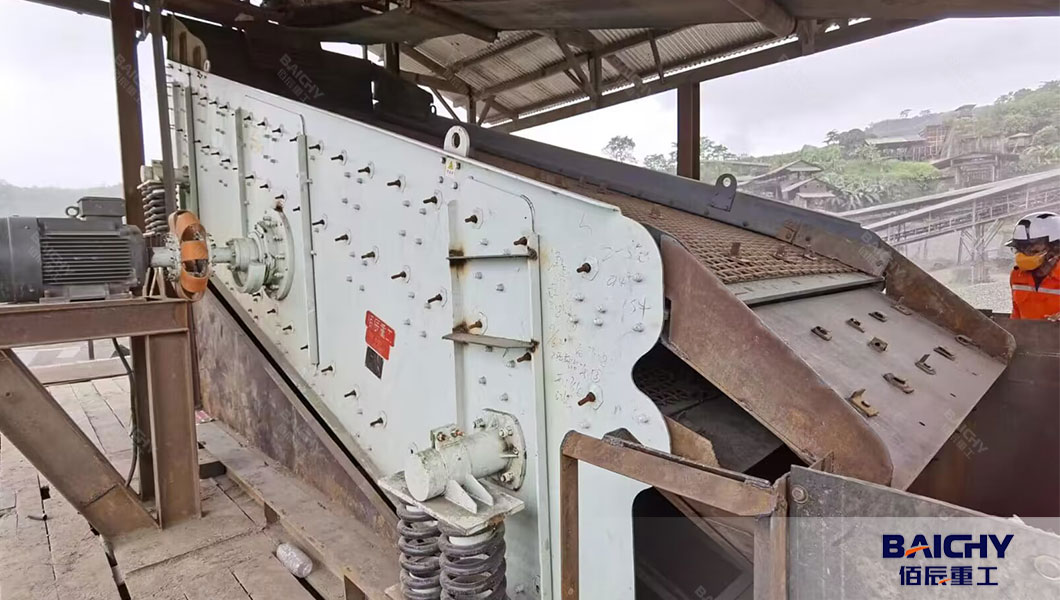
Drawing on years of field experience with Baichy Machinery equipment, this guide analyzes the seven most common vibrating screen problems and provides actionable solutions to optimize your ROI.
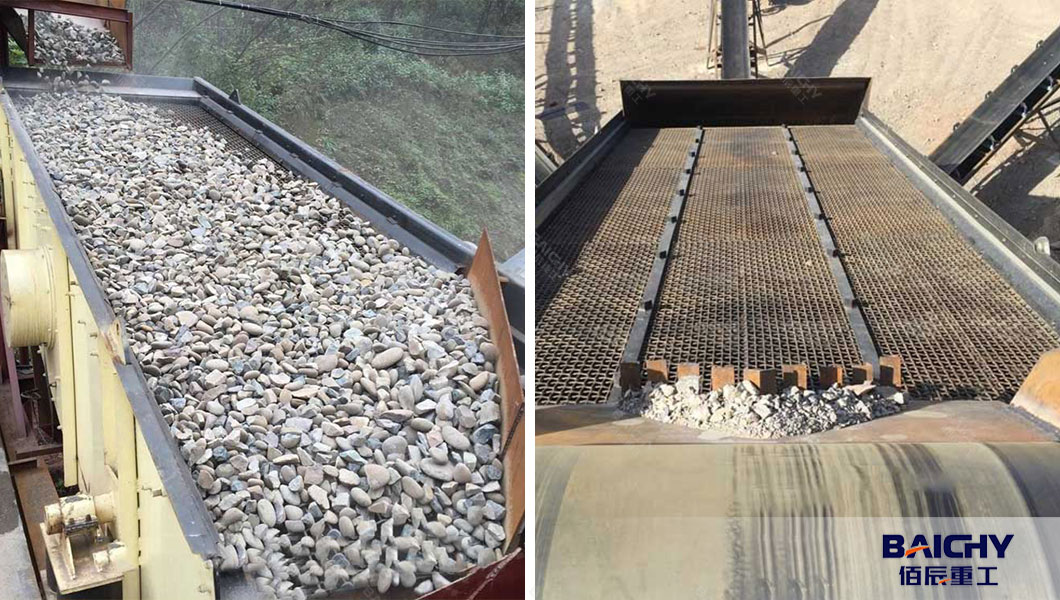
1. Screen Blinding and Clogging
The Symptom: Material gets stuck in the screen mesh openings, significantly reducing throughput and causing "carryover" (undersize material staying in the oversize deck).
The Cause: High moisture content in the feed or near-size particles that wedge into the openings.
The Solution:
● Switch to polyurethane or self-cleaning screen media (like anti-blinding wire).
● Install a screen spray system to wash away sticky fines.
● Adjust the vibration amplitude to increase the "throw" and dislodge particles.
2. Bearing Overheating and Failure
The Symptom: The exciter housing feels excessively hot, or you hear a high-pitched metallic grinding sound.
The Cause: Poor lubrication (too much or too little), contaminated grease, or improper bearing installation.
The Solution:
● Pro Tip: Implement IoT Vibration Monitoring. Sensors can detect thermal anomalies before the bearing seizes.
● Ensure the use of specialized vibratory-rated bearings (e.g., C3 or C4 clearance).
● Follow a strict lubrication schedule based on operational hours rather than calendar days.
3. Structural Cracks in Side Plates
The Symptom: Visible hairline cracks appearing near the exciter mount or the discharge lip.
The Cause: Structural fatigue caused by uneven loading, operating at a critical frequency (resonance), or weakened side plates due to corrosion.
The Solution:
● Avoid welding directly onto side plates, as this creates stress points.
● Ensure the feed is distributed evenly across the full width of the screen.
● Check for "twisting" vibration caused by unequal spring stiffness.
4. Loose Bolts and Fasteners
The Symptom: Excessive rattling or a "knocking" sound during startup and shutdown.
The Cause: High-frequency vibration naturally works fasteners loose over time.
The Solution:
● Use Huck bolts or high-tensile locking nuts.
● Perform a weekly "torque check" on all critical connections, especially around the motor base and exciter.
5. Abnormal Vibration (Twisting or Surging)
The Symptom: The screen doesn't move in a straight or circular path but seems to "wobble" or rock side-to-side.
The Cause: Broken springs, unequal eccentric weights, or a motor that is out of phase.
The Solution:
● Replace springs in complete sets to ensure uniform stiffness.
● Verify that eccentric weights on both sides of the exciter are set to the exact same degree.
6. Excessive Noise Levels
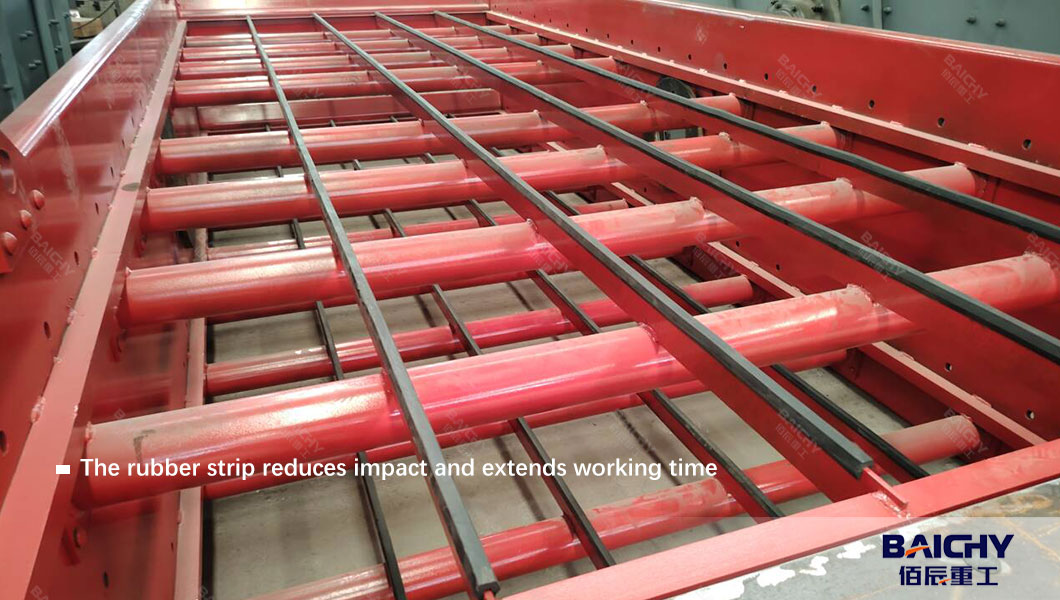
The Symptom: Decibel levels exceeding 90–100 dB, indicating mechanical distress.
The Cause: Steel-on-steel contact, worn rubber liners, or internal gear damage in the exciter box.
The Solution:
● Replace worn rubber buffers and spring seats.
● Upgrade to IE4 High-Efficiency Motors, which offer smoother operation and lower noise profiles compared to older generations.
7. Material Surging and Poor Stratification
The Symptom: Material travels too fast or "bounces" too high, preventing fines from reaching the screen surface.
The Cause: Incorrect deck inclination or improper vibration frequency.
The Solution:
● Adjust the lead/lag of eccentric weights to fine-tune the material travel speed.
● Ensure the screen is running at its designed RPM (typically 700–900 RPM for heavy-duty screens).
● Expert Insight: The Role of Predictive Maintenance
Your 5-Point Daily Checklist:
● Listen for abnormal noises at startup.
● Look at the screen deck for wear, blinding, and tension.
● Feel (or use a thermal gun) to check bearing temperatures.
● Check belt tension and alignment.
● Verify feed is distributed evenly across the deck.
By implementing these best practices, you can increase the reliability of your vibrating screens, reduce maintenance costs, and significantly improve your plant's overall equipment effectiveness
In 2026, the industry has shifted from reactive to predictive maintenance. By integrating IoT smart sensors and analyzing vibration harmonics, operators can identify a failing bearing two weeks before it breaks. This allows for scheduled maintenance during natural shifts, protecting your ROI and ensuring the "cubical" shape of your final aggregate product. Contact Baichy Machinery, get expert reply about vibrating screen machine solutions and price.
People Also Frequently Asked For - FAQ
Q: Why is my vibrating screen side plate cracking?
A: Side plate cracking is usually caused by structural fatigue due to resonance, uneven feed distribution, or the use of improper fasteners. Ensure your screen isn't running at its natural frequency and that all bolts are torqued correctly.
Q: How often should I lubricate vibrating screen bearings?
A: Lubrication frequency depends on the environment and load. Standard practice is every 8 to 24 hours of operation. Always use the specific grease grade recommended by the manufacturer to prevent overheating.
Q: What is the best way to stop screen blinding?
A: The most effective solutions for screen blinding include using self-cleaning wire mesh, installing ball decks (bouncing balls), or increasing the vibration amplitude to dislodge stuck particles.
Q: Can I repair a vibrating screen side plate by welding?
A: Welding on side plates is generally discouraged as it introduces heat-affected zones that lead to further cracking. If necessary, use cold-repair methods or specialized reinforcement plates with bolt-on designs.




 2026-09-28





 86-15093113821
 86-15093113821