With the rapid development of urban construction and infrastructure projects, the amount of construction and demolition waste (C&D waste) continues to increase worldwide. Concrete blocks, bricks, asphalt, and other waste materials generated from building demolition occupy large areas of land and create environmental challenges if they are not properly treated. Traditional disposal methods, such as landfilling, not only waste valuable resources but also increase transportation costs and environmental pressure. Therefore, construction waste recycling has become an important solution for sustainable development. Among various recycling technologies, impact crusher solutions are widely used because they can efficiently process construction waste and produce high-quality recycled aggregates for road construction, concrete production, and other applications.
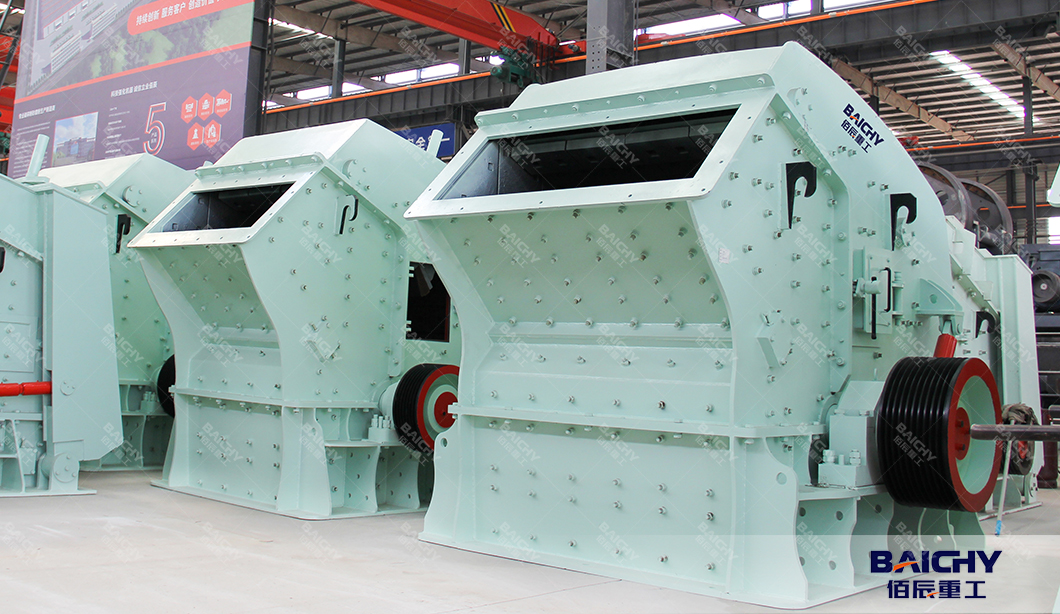
What Is an Impact Crusher for Construction Waste Treatment?
An impact crusher is a crushing machine that uses impact force to break materials. Unlike compression crushing equipment, it uses a high-speed rotor and impact plates to crush materials through repeated collision.
For construction waste treatment, impact crushers are mainly used to process:
- Waste concrete blocks
- Reinforced concrete
- Demolition debris
- Bricks and tiles
- Asphalt materials
- Construction site waste
The impact crushing process helps produce more cubic-shaped aggregates with better particle size distribution, making them suitable for reuse in construction projects.
How Does an Impact Crusher Work in Construction Waste Recycling?
A typical construction waste recycling process with an impact crusher includes several stages:
1. Feeding and Pre-Screening
Construction waste is collected from demolition sites and transported to the recycling plant. Large steel bars, wood, and other impurities are removed before crushing.
A vibrating feeder is usually used to provide continuous and uniform feeding to the crushing system.
2. Primary Crushing
Large pieces of concrete and demolition waste enter the primary crusher, where they are reduced into smaller sizes.
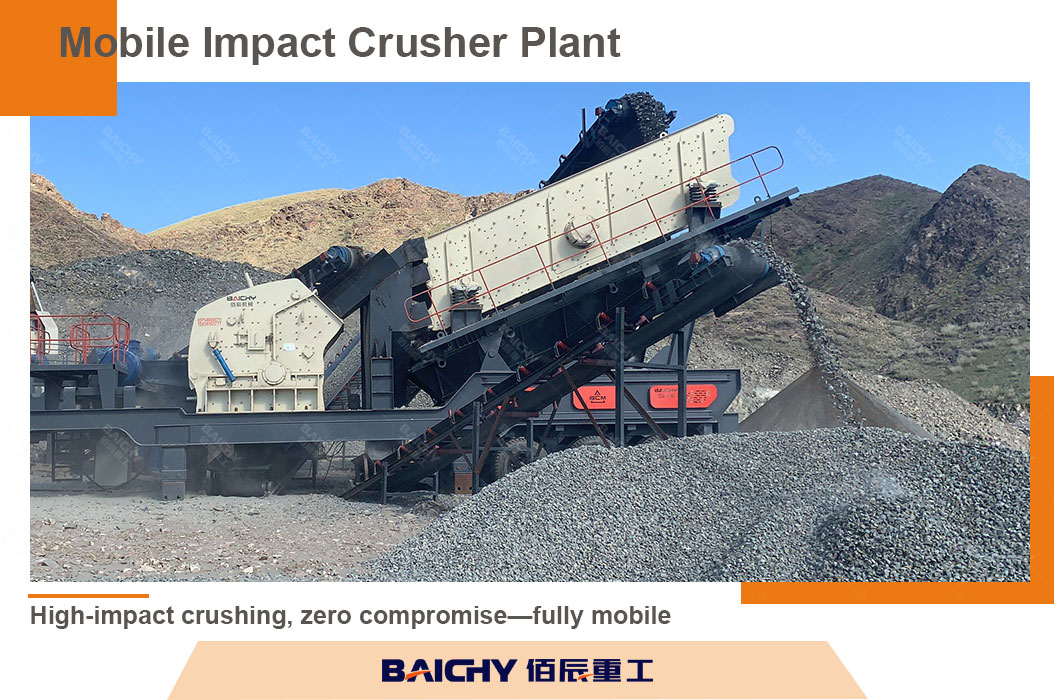
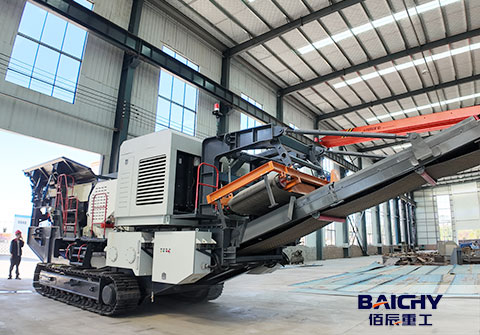
For projects requiring flexible operation, a mobile impact crusher plant can be directly transported to construction sites, reducing material handling and transportation costs.
3. Impact Crushing and Shaping
The crushed materials enter the impact crusher. The high-speed rotor throws the materials against the impact plates, causing further crushing and shaping.
This process provides:
- Better aggregate shape
- Lower needle-like particle content
- Improved material quality
4. Screening and Material Separation
After crushing, vibrating screens separate materials into different sizes.
Optional equipment such as:
- Magnetic separators
- Air separators
- Water separation systems
can remove steel, light impurities, and other unwanted materials, improving the quality of recycled aggregates.
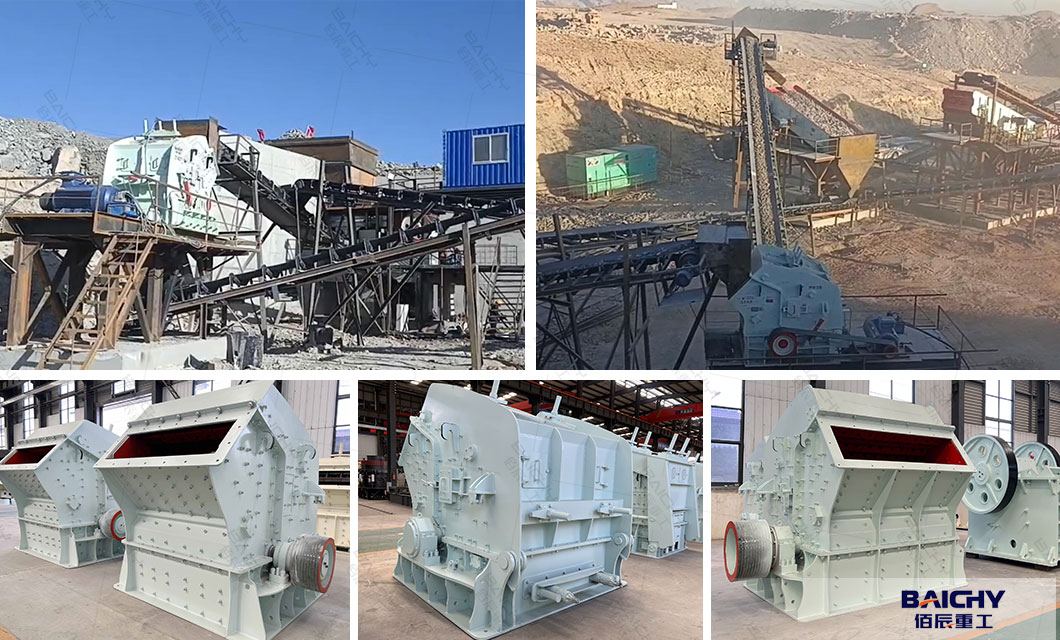
Advantages of Using Impact Crusher for Construction Waste Treatment
1. High Crushing Efficiency
Impact crushers provide strong crushing capacity for hard construction waste such as concrete and bricks. The high-speed impact force enables efficient reduction of large waste materials into usable aggregates.
2. Produces High-Quality Recycled Aggregates
The impact crushing method improves particle shape and reduces excessive flaky materials. The final recycled aggregates can be used for:
- Road base materials
- Pavement construction
- Concrete production
- Backfilling applications
3. Reduces Transportation and Disposal Costs
By processing construction waste near the demolition site, mobile impact crusher solutions significantly reduce transportation requirements.
This helps contractors:
- Lower operating costs
- Shorten project timelines
- Improve construction efficiency
4. Supports Sustainable Construction
Construction waste recycling reduces landfill usage and allows valuable materials to be reused.
Using impact crusher-based recycling systems helps achieve:
- Resource conservation
- Lower carbon emissions
- Environmentally friendly construction practices
Mobile Impact Crusher Solution for Construction Waste Recycling
For urban demolition projects and temporary construction sites, mobile impact crusher plants are an ideal choice.
Compared with stationary recycling plants, mobile solutions offer:
Flexible Installation
The equipment can be quickly moved between different job sites without complex foundations.
On-Site Processing
Construction waste can be crushed directly at the demolition location, reducing secondary transportation.
Integrated Operation
A complete mobile recycling plant can combine:
- Vibrating feeder
- Impact crusher
- Vibrating screen
- Conveyor system
- Magnetic separator
to provide a complete waste recycling solution.
Construction Waste Treatment Application Example
A construction company handling urban demolition waste needed an efficient recycling solution to process large amounts of concrete debris.
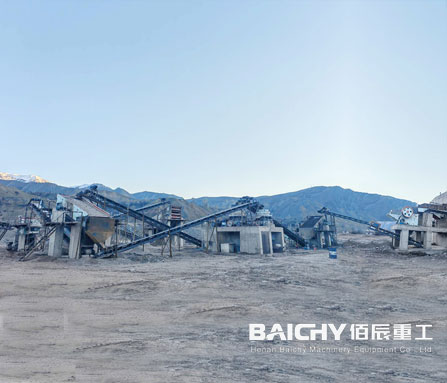
The project adopted a mobile impact crusher system equipped with feeding, crushing, screening, and magnetic separation units.
The solution successfully transformed demolished concrete into reusable aggregates, which were used for road base construction and site backfilling.
This approach reduced waste transportation costs while improving resource utilization.
Future Development of Construction Waste Recycling Technology
As environmental regulations become stricter and the demand for recycled materials increases, construction waste treatment technology will continue to develop.
Future recycling systems will focus on:
- Higher automation
- Improved separation efficiency
- Lower energy consumption
- More intelligent operation control
Impact crushers will remain an important part of construction waste recycling solutions because of their efficiency, versatility, and ability to produce high-quality recycled aggregates.




 2026-10-10





 86-15093113821
 86-15093113821