1. What Equipment Is Needed for a 200 TPH Mobile Basalt Crushing Plant?
Basalt is a hard, dense volcanic rock commonly used in road construction, concrete production, railway ballast, and other infrastructure projects. Its hardness and abrasive properties make crushing more demanding than processing softer rocks such as limestone. For a quarry targeting around 200 tons per hour, equipment selection must consider the entire production process. The primary crusher needs to handle large blasted rocks, the secondary crusher must process hard material efficiently, and the screening plant must separate the finished aggregates into the required sizes.
A practical mobile configuration consists of three main units:
Tracked Mobile Jaw Crusher + Tracked Mobile Cone Crusher + Tracked Mobile Screening Plant.
The jaw crusher handles primary crushing, the cone crusher reduces the material further, and the screening plant classifies the crushed basalt. These machines work together to maintain a continuous production process. This configuration is particularly suitable for quarries that need to move crushing equipment as extraction areas change. Instead of building a permanent crushing station at every working location, operators can reposition the tracked units according to site conditions.
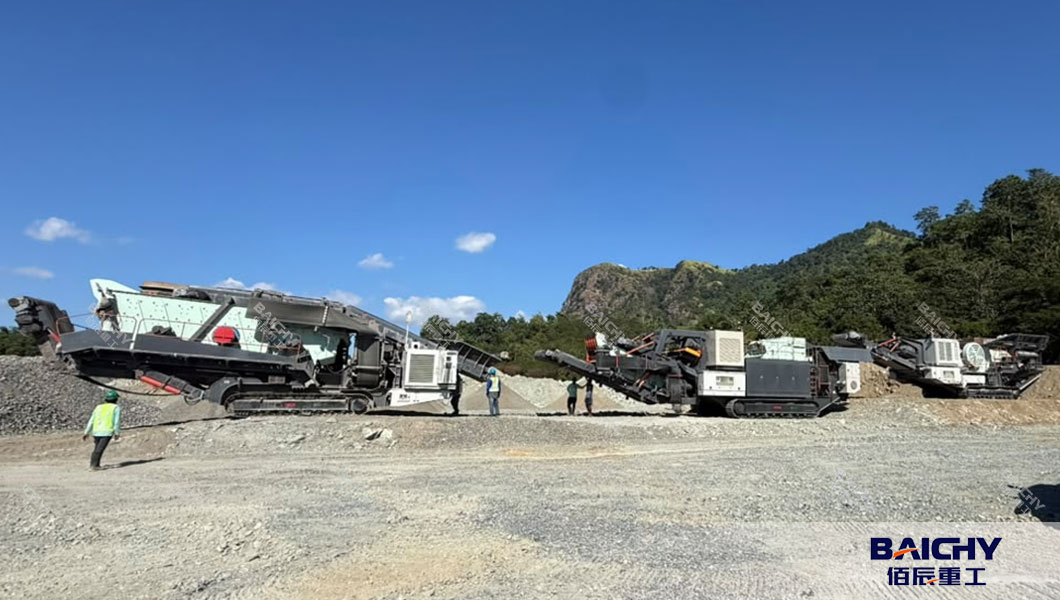
2. Equipment Configuration for a 200 TPH Basalt Crushing Plant
A 200 TPH production target requires the three main machines to be properly matched. Their feed openings, crushing capacities, discharge sizes, and screening capacities all affect the final output.
The following is the equipment configuration used in Baichy's Ethiopian basalt project.
| Equipment |
Quantity |
Processing Stage |
Main Function |
| Tracked Mobile Jaw Crusher |
1 unit |
Primary crushing |
Reduces large basalt rocks |
| Tracked Mobile Cone Crusher |
1 unit |
Secondary crushing |
Further reduces hard basalt |
| Tracked Mobile Screening Plant |
1 unit |
Screening |
Separates crushed aggregate by size |
The three machines perform different jobs, but the output of each stage directly affects the next. A well-matched configuration helps prevent material accumulation, uneven feeding, and unnecessary equipment downtime.
2.1 Tracked Mobile Jaw Crusher – Primary Crushing
The tracked mobile jaw crusher is the first crushing unit in the production line. Blasted basalt from the quarry often contains large blocks that cannot enter the secondary crusher directly. The jaw crusher reduces these rocks to a manageable size using compression between a fixed jaw plate and a movable jaw plate. For basalt applications, three factors deserve attention when selecting the jaw crusher.
Feed opening and maximum feed size
The crusher inlet must accommodate the largest rocks coming from the quarry. If oversized blocks enter the feeding area, they may cause bridging or blockages. The maximum feed size should therefore be confirmed before selecting the machine.
Discharge setting and secondary crushing load
The jaw crusher's closed-side setting (CSS) affects the size of the discharged material. If the discharge is too coarse, the cone crusher has to handle a heavier reduction load. If it is unnecessarily fine, primary crushing capacity may decrease. The setting should be selected according to the cone crusher's feed requirements and the target production capacity.
Jaw plate wear resistance
Basalt can cause significant wear on jaw plates. Suitable manganese steel jaw plates, regular inspections, and timely replacement are important for maintaining stable operation. The tracked chassis is another practical advantage. It allows the primary crusher to move closer to the active quarry face, reducing the need to transport blasted material over long distances.
2.2 Tracked Mobile Cone Crusher – Secondary Crushing
After primary crushing, the basalt is transferred to the tracked mobile cone crusher. Cone crushers are widely used for secondary crushing of hard and abrasive rocks because they reduce material through compression between the mantle and concave. For a basalt quarry, this is an important stage. The cone crusher must reduce the primary crushed material to a size suitable for final screening while maintaining a stable feed rate.
Several operating parameters influence its performance.
Closed Side Setting (CSS)
CSS determines the discharge opening of the cone crusher. A smaller setting generally produces finer material, but it can also affect throughput and crushing pressure. The correct setting depends on the required aggregate sizes, feed characteristics, and equipment operating conditions.
Crushing chamber selection
Different chamber profiles are designed for different feed sizes and product requirements. The chamber should be selected according to the material entering the crusher and the desired discharge gradation.
Consistent feeding
The cone crusher performs best when material is fed evenly into the crushing chamber. Irregular feeding can cause fluctuations in production and affect crushing efficiency.
Wear-part maintenance
The mantle and concave are the main wearing components. When processing basalt, operators should monitor their wear condition and replace them when necessary to maintain the required crushing performance.For highly abrasive basalt, cone crushing is often preferred over impact crushing for secondary reduction because compression crushing can offer more manageable wear-part costs under suitable operating conditions.
2.3 Tracked Mobile Screening Plant – Aggregate Classification
After secondary crushing, the material enters the tracked mobile screening plant. The vibrating screen separates crushed basalt according to particle size. Different screen apertures allow the quarry to produce several aggregate fractions from the same production line. For example, a basalt aggregate plant may target the following product sizes:
| Example Product Size |
Typical Application |
| 0–5 mm |
Manufactured sand and fine aggregate |
| 5–10 mm |
Fine concrete aggregate |
| 10–20 mm |
Concrete and construction aggregate |
| 20–31.5 mm |
Road construction and coarse aggregate |
These are common example specifications. The actual screen arrangement should be based on local market requirements and the customer's product specifications. Screening efficiency depends on the number of screen decks, aperture sizes, screen surface area, material moisture, and feed distribution. If a return conveyor is included, oversized material can be sent back to the cone crusher for further reduction. This creates a closed-circuit process and helps control the final aggregate gradation. The return ratio must also be considered when selecting the cone crusher and screen. Excessive circulating material can overload the system and reduce the amount of finished aggregate discharged per hour.
3. How Does a 200 TPH Basalt Crushing Plant Work?
The production process starts with blasted basalt and ends with separate stockpiles of finished aggregate. Each stage has to be properly coordinated. If one machine becomes a bottleneck, the output of the entire line will be affected.
Step 1: Feeding Raw Basalt
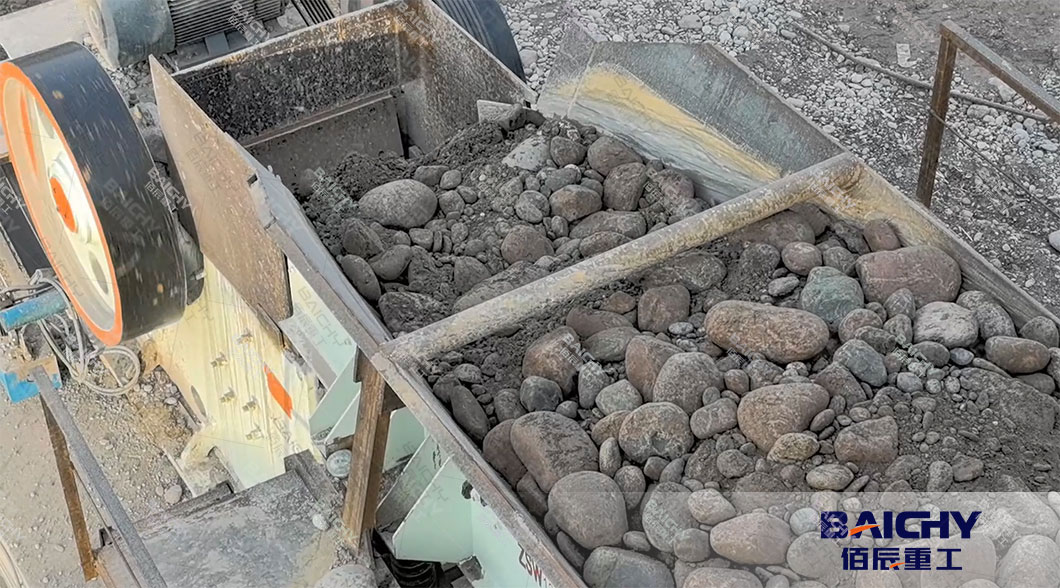
Blasted basalt is transported from the quarry face to the mobile jaw crusher. Before feeding, operators should check the material for oversized rocks and excessive soil or clay. Oversized blocks may require secondary breaking, while excessive fine material can reduce crushing and screening efficiency. A controlled feeding system helps maintain a steady supply of material to the jaw crusher.
Step 2: Primary Crushing
The tracked mobile jaw crusher reduces large basalt rocks into smaller pieces. The discharged material must meet the feed requirements of the cone crusher. The jaw crusher's CSS and feeding rate should therefore be adjusted to suit the downstream equipment. Stable primary crushing prevents sudden fluctuations in the material supplied to the secondary stage.
Step 3: Secondary Crushing
The primary crushed basalt enters the tracked mobile cone crusher. The cone crusher further reduces the material through compression. Its CSS and crushing chamber are selected according to the required product sizes and feed conditions. For basalt aggregate production, controlling the crushing process is important. Excessive crushing can generate unnecessary fines, while insufficient reduction increases the amount of oversized material reaching the screen.
Step 4: Screening and Size Separation
The crushed material is transferred to the mobile vibrating screen. The screen separates the material into different sizes. Qualified aggregate fractions are discharged through separate conveyors and collected in individual stockpiles. If the system includes a return conveyor, oversized particles are sent back to the cone crusher. This closed-circuit arrangement allows the plant to control product grading without requiring a separate crushing line for every aggregate size.
Step 5: Finished Aggregate Stockpiling
Different aggregate fractions are stored separately for transportation and sale. Stockpile management is important because mixing different sizes can affect the final product grading and cause problems when supplying concrete plants or road construction projects. The finished products can be supplied to local construction-material markets, concrete batching plants, infrastructure contractors, and other aggregate users.
4. Baichy Ethiopia Project: Three Tracked Mobile Stations Achieve 200 TPH Basalt Production
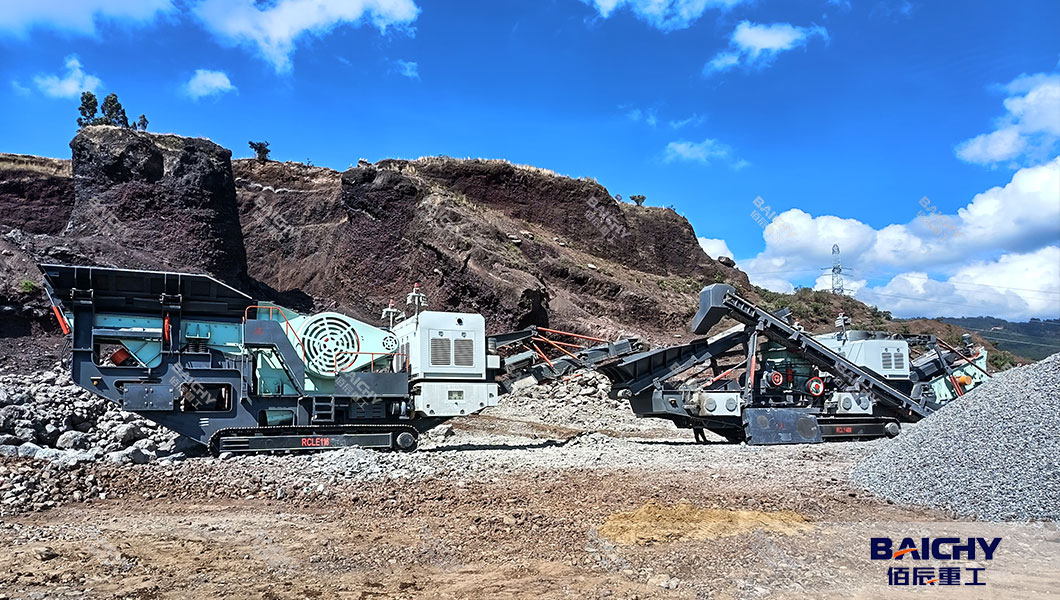
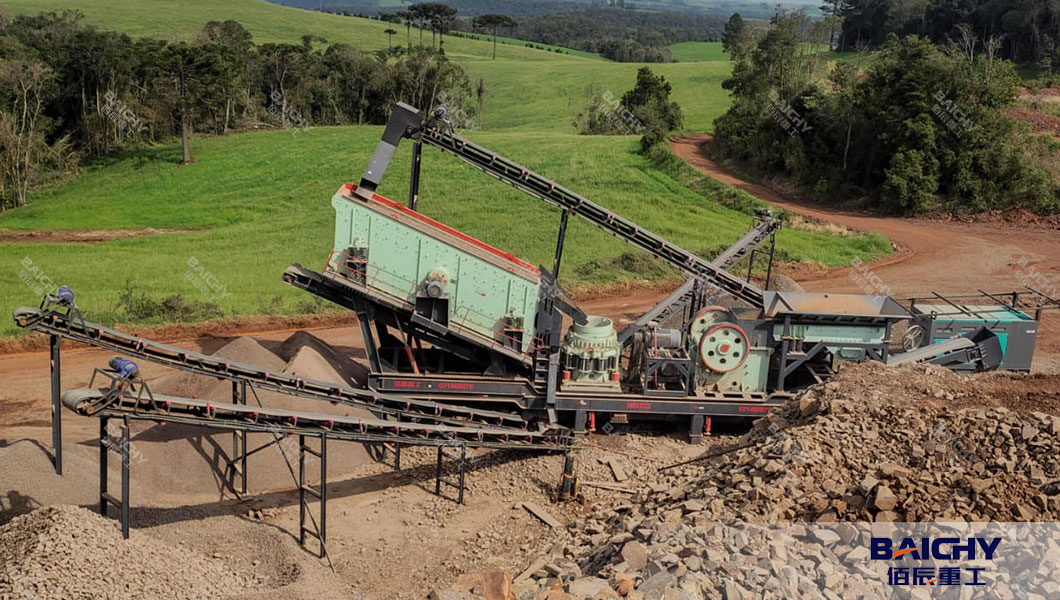
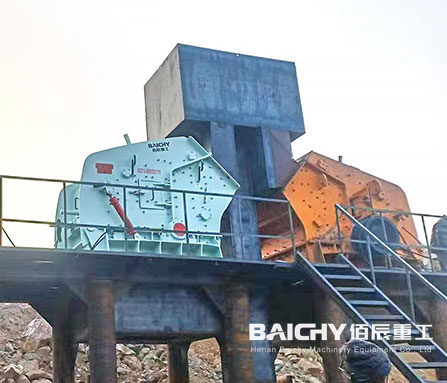
Baichy has supplied three tracked mobile crushing stations for a basalt quarry project in Ethiopia. The equipment is now operating at the customer's site, processing basalt at an approximate production capacity of 200 tons per hour.
<caption>Baichy three tracked mobile crushing stations operating at a basalt quarry in Ethiopia.</caption>
The project consists of three machines:
-
Tracked mobile jaw crusher: Handles primary crushing of large basalt rocks.
-
Tracked mobile cone crusher: Performs secondary crushing and further reduces the material.
-
Tracked mobile screening plant: Separates the crushed basalt into different aggregate sizes.
The three machines form a complete mobile crushing and screening system.
Customer Feedback: Production Meets Expectations
During operation, the customer confirmed that the plant's actual production capacity had reached expectations, with an overall output of approximately 200 TPH. The customer also reported that the jaw crusher, cone crusher, and screening plant work smoothly together. Material transfer between the three machines is well coordinated, supporting continuous production. Finished aggregate sizes meet the requirements of the local market, allowing the customer to supply products according to local sales demand. In addition to production performance, the customer expressed satisfaction with Baichy's equipment quality, delivery arrangements, and after-sales service.
For Baichy, this project is another practical example of supplying mobile crushing equipment for overseas hard-rock applications. For the customer, the three-machine configuration provides a working solution for processing basalt and producing marketable construction aggregates.
5. Frequently Asked Questions About 200 TPH Basalt Crushing Plants
Q1: What equipment is needed for a 200 TPH basalt crushing plant?
A typical configuration includes a tracked mobile jaw crusher, tracked mobile cone crusher, and mobile screening plant. A suitable feeding and conveying system is also needed to maintain material flow.
Q2: Why is a cone crusher suitable for secondary basalt crushing?
Basalt is hard and abrasive. A cone crusher uses compression between the mantle and concave to reduce material, making it suitable for secondary crushing of hard rock. It is often preferred for highly abrasive materials because it can offer more manageable wear-part consumption than impact crushing under suitable operating conditions.
Q3: Is a mobile basalt crushing plant suitable for a long-term quarry project?
Yes. Tracked mobile crushing equipment can also be used for long-term quarry production, provided the equipment is suitable for the operating conditions and maintenance requirements. It is particularly useful when quarry working areas change or when the customer wants to move the crushing system closer to different extraction locations. For a quarry with a fixed working area and a long-term production plan, a stationary plant may also be worth considering. The decision should be based on total investment, relocation needs, production requirements, and operating costs.




 2026-11-18






 86-15093113821
 86-15093113821