Roller crushers are widely used in mining, coal, metallurgy, building materials, and chemical industries because of their simple structure, low energy consumption, and reliable operation. Among different types of roller crushers, smooth roller crusher and toothed roller crusher are two common designs. Although both use two counter-rotating rollers to crush materials, their crushing methods, suitable materials, and application fields are different. Understanding the difference between smooth roller crusher and toothed roller crusher helps customers select the right equipment for their production requirements.
What Is a Smooth Roller Crusher?
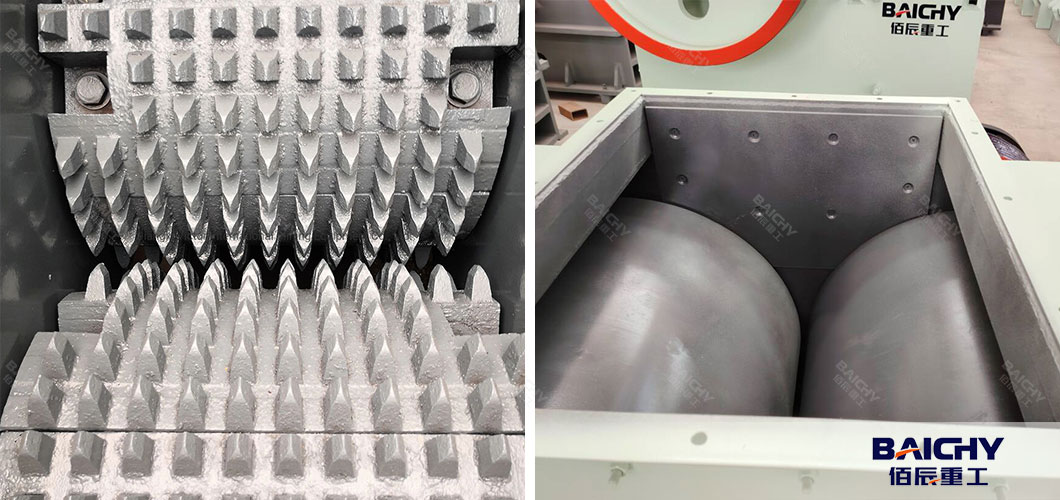
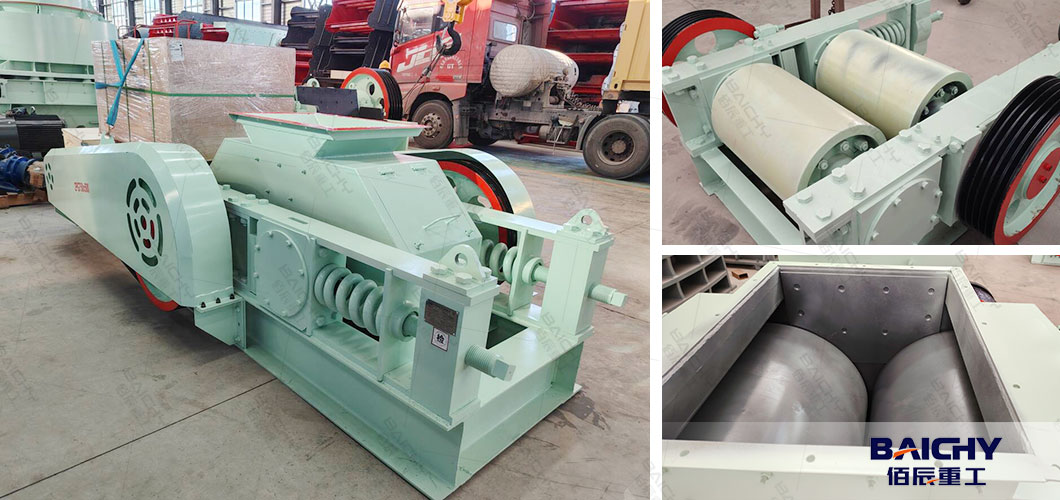
A smooth roller crusher is a type of double roller crusher that uses two rollers with smooth surfaces to compress and crush materials through pressure and friction. During operation, materials enter between two rotating rollers. The rollers gradually reduce the material size through continuous squeezing. The final product usually has a more uniform particle size and better shape.
What Is a Toothed Roller Crusher?
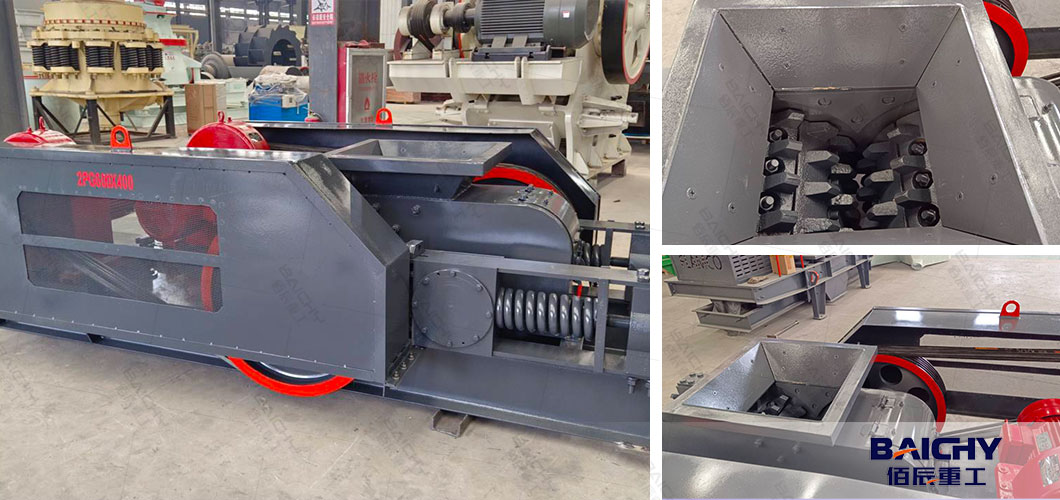
A toothed roller crusher is designed with specially shaped teeth or grooves on the roller surface. These teeth grab, pull, and crush materials during rotation. Compared with smooth rollers, toothed rollers provide stronger feeding ability and higher crushing efficiency, especially for large, soft, and sticky materials.
Key Differences Between Smooth Roller Crusher and Toothed Roller Crusher
1. Crushing Mechanism: Compression vs. Shearing
The most fundamental difference lies in how each machine breaks material down.
● Smooth roller crushers operate on a pure compression principle. Material is fed between two smooth, cylindrical rolls and is crushed through high-pressure static extrusion. The rolls rotate at relatively low speeds, and the reduction occurs as particles are nipped and squeezed in the gap. This action produces a uniform, well-graded product with minimal over-crushing.
● Toothed roller crushers employ a more complex crushing action. The teeth on the roll surfaces grip, penetrate, and shear the material as it passes through. This combines compression with shearing and tensile stresses, allowing the crusher to handle larger feed sizes and more difficult materials. The teeth also provide a self-cleaning effect, which is particularly valuable when processing wet or sticky materials.
2. Feed Size and Reduction Ratio
The two crusher types differ substantially in the size of material they can accept.
● Smooth roller crushers have limited feed capacity. A practical rule of thumb is that the roller diameter should be 20–25 times larger than the maximum feed particle size to prevent slipping. For example, a smooth roll crusher with a 1000 mm diameter roller can typically handle feed up to around 40–50 mm. These machines are generally used for medium to fine crushing applications.
● Toothed roller crushers can accept significantly larger feed. For coarse reduction, the roll diameter needs to be only about 5–10 times the largest feed piece. This makes them suitable for primary crushing of large lumps of limestone, coal, and construction waste. A toothed roll crusher can directly handle run-of-mine material that would need pre-crushing before entering a smooth roll crusher.
4. Product Output and Fines Generation
The output characteristics of each crusher type serve different downstream requirements.
● Smooth roller crushers are designed for fine crushing, typically producing discharge sizes ranging from 1 to 20 mm depending on the gap setting. Because the crushing action is slow compression rather than impact, smooth rolls generate fewer fines and produce a more uniform particle size distribution. This makes them ideal for applications where over-crushing must be minimized, such as preparing feed for ball mills or producing manufactured sand with specific gradation requirements.
● Toothed roller crushers produce coarser output, generally in the 10–100 mm range. The shearing action of the teeth tends to produce more fines than smooth rolls, though still less than impact crushers. The product size is controlled by both the gap between rolls and the size and arrangement of the teeth.
5. Material Suitability
Material characteristics often dictate which crusher type is appropriate.
● Smooth roller crushers work best with dry, hard, and non-sticky materials. They are effective on hard manganese ore, rhodochrosite, high-silicon materials, quartz, cobblestone, and granite. They can also process soft materials like clay and coal fines when the feed is controlled and free of excessive moisture. However, smooth rolls struggle with wet or sticky materials, which can cause slipping and reduced throughput.
● Toothed roller crushers excel where smooth rolls fail. They are the preferred choice for wet, sticky, and clay-bearing materials, including weathered manganese ore, oxidized ore, and materials with moisture content up to 30%. The self-cleaning tooth design prevents clogging and ensures consistent operation even with difficult feed materials. Toothed rolls are also effective on hard rock, coal, coke, limestone, and construction waste.
6. Wear and Maintenance Considerations
Both crusher types experience wear, but the location and nature of that wear differ.
● In smooth roller crushers, wear occurs uniformly across the roll surface. The crushing force is distributed over the contact area, leading to gradual, predictable wear. Depending on the material abrasiveness, smooth rolls may be resurfaced or replaced as a complete shell.
● In toothed roller crushers, wear is concentrated on the teeth, particularly the leading edges that contact material first. Tooth design—including tooth height, spacing, and shape—significantly affects both crushing performance and wear life. Replaceable tooth segments or wear plates allow targeted maintenance, but the higher impact and shearing forces mean teeth generally wear faster than smooth roll surfaces when processing abrasive materials.
Quick Comparison Summary
| Factor |
Smooth Roller Crusher |
Toothed Roller Crusher |
| Crushing Mechanism |
Compression |
Compression + Shear + Penetration |
| Feed Size |
Limited (roll dia. 20–25× feed) |
Large (roll dia. 5–10× feed) |
| Product Size |
Fine (1–20 mm typical) |
Coarse (10–100 mm typical) |
| Fines Generation |
Low |
Moderate |
| Material Moisture |
Dry to slightly damp |
Up to 30% moisture |
| Sticky Materials |
Poor |
Excellent (self-cleaning) |
| Primary Use |
Fine crushing, sand making |
Primary/coarse crushing |
| Wear Pattern |
Uniform roll surface |
Concentrated on teeth |
How to Choose Between Smooth Roller Crusher and Toothed Roller Crusher?
Choosing the correct roller crusher depends mainly on material properties and production requirements.
If your material is relatively soft, has a smaller feed size, and requires a more uniform final product, a smooth roller crusher may be a suitable choice.
If your material contains large lumps, has high moisture content, or tends to block traditional crushers, a toothed roller crusher is usually more effective because the teeth improve material grabbing and crushing efficiency.
Before selecting equipment, consider:
● Material hardness
● Maximum feeding size
● Required output size
● Production capacity
● Moisture content
● Operating environment
A professional crusher manufacturer can help design the most suitable crushing solution based on actual production conditions.
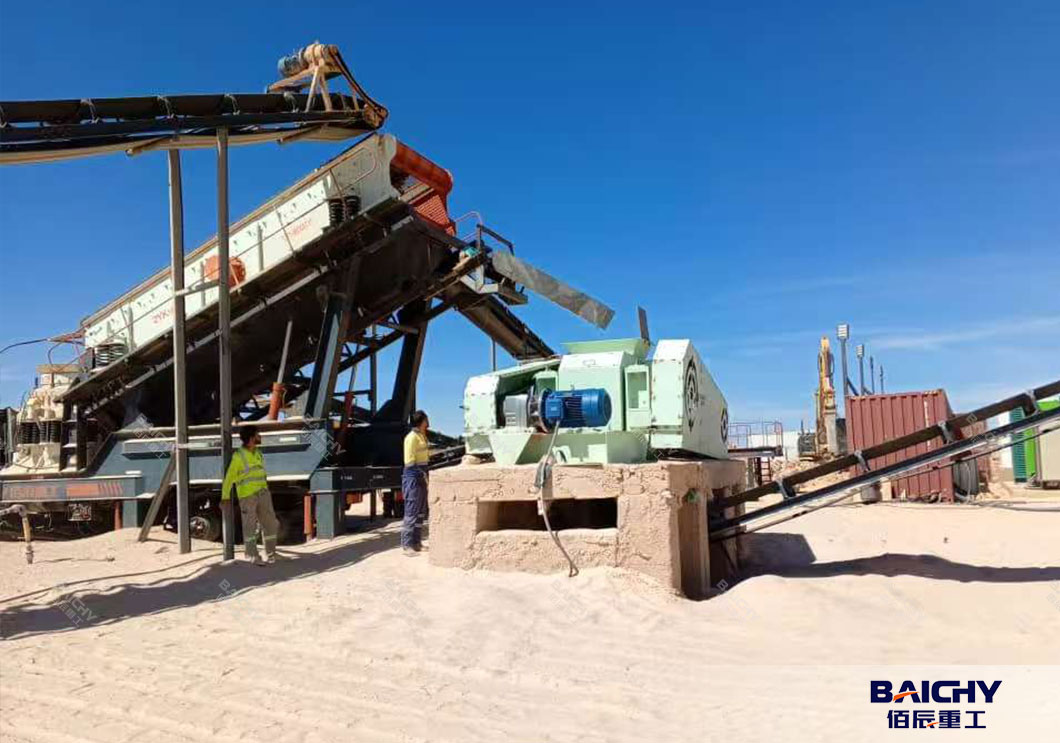
Baichy Double Roller Crusher Solution
Baichy Machinery provides efficient double roller crusher solutions for coal, minerals, and industrial materials.
Baichy roller crushers feature:
● Strong crushing performance with low energy consumption
● Adjustable roller gap for controlling output size
● Simple structure and convenient maintenance
● Reliable operation for continuous production
With different roller designs, including smooth roller and toothed roller configurations, Baichy can provide customized crushing equipment according to different material characteristics and project requirements.
Frequently Asked Questions (FAQ)
1. What is the main difference between smooth roller crusher and toothed roller crusher?
The main difference is the roller surface design and crushing method. Smooth roller crushers mainly use compression force, while toothed roller crushers use teeth to grab and shear materials during crushing.
2. Which roller crusher is better for coal crushing?
For large coal lumps and raw coal with higher moisture content, toothed roller crushers are commonly preferred because they provide stronger feeding and crushing ability.
3. Can a smooth roller crusher crush hard rock?
Smooth roller crushers are generally used for soft to medium-hard materials. For hard rock crushing, jaw crushers, cone crushers, or impact crushers are usually more suitable.
4. How do I choose the right roller crusher?
The selection depends on material hardness, feed size, moisture content, required output size, and production capacity. A crusher manufacturer can recommend the best model after evaluating these conditions.




 2026-09-29





 86-15093113821
 86-15093113821