1.About Quartzite Sand Maker Machine
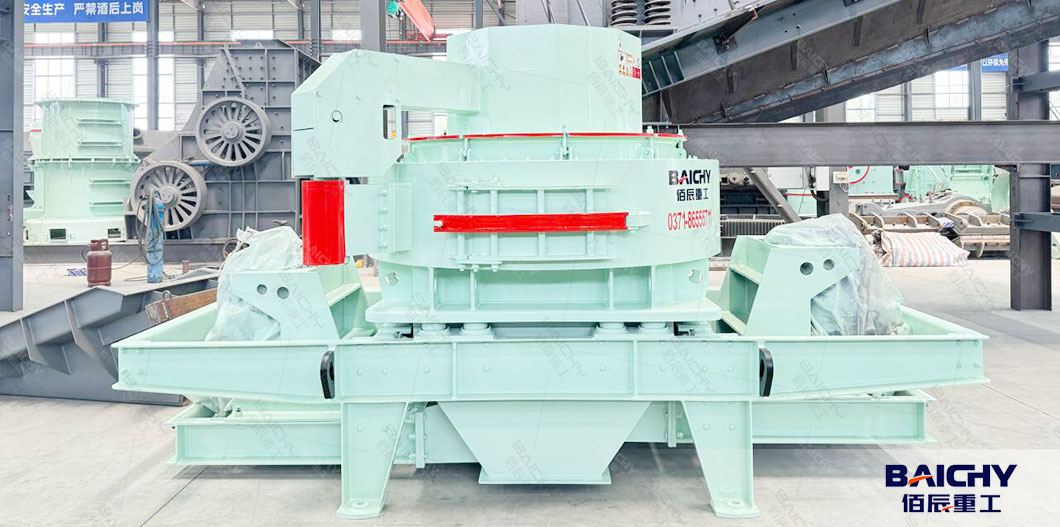
A quartzite sand maker machine is a crushing machine designed to convert hard, abrasive quartzite rock into manufactured sand and fine aggregates. It is commonly used in artificial sand production plants, construction aggregate processing, concrete manufacturing, and infrastructure projects.
Quartzite is a hard metamorphic rock composed mainly of quartz. Its Mohs hardness is typically around 7, and its high silica content makes it highly abrasive during crushing. Unlike limestone or other relatively soft rocks, quartzite requires a crusher with sufficient impact energy, wear-resistant components, and stable particle-size control.
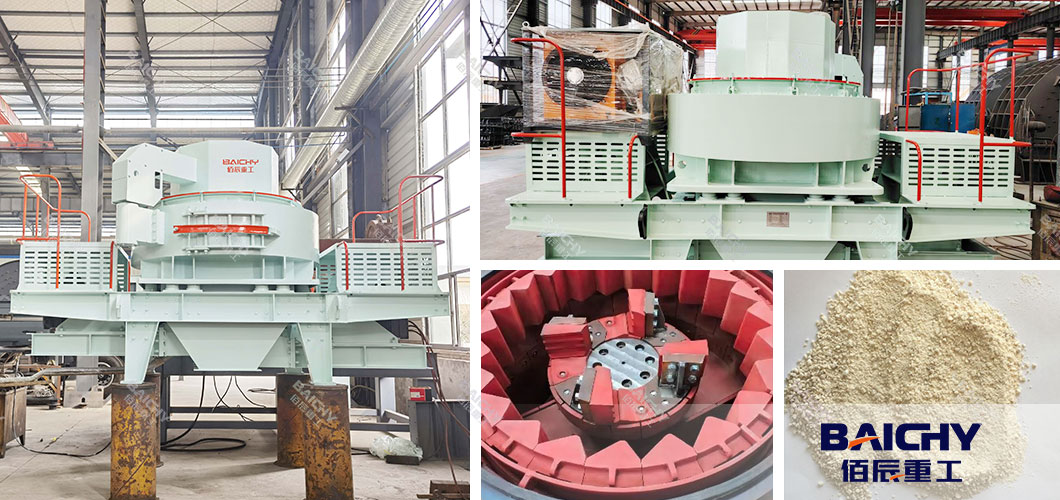
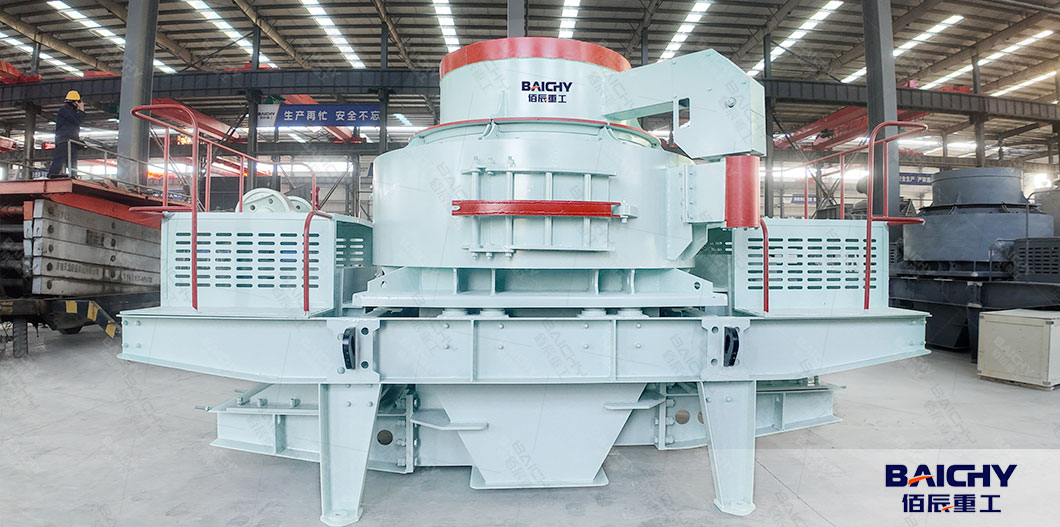
For commercial sand production, a Vertical Shaft Impact (VSI) crusher is one of the most suitable choices for the final sand-making stage. It uses high-speed rotor impact to crush and shape particles, producing relatively cubical sand with adjustable grading.
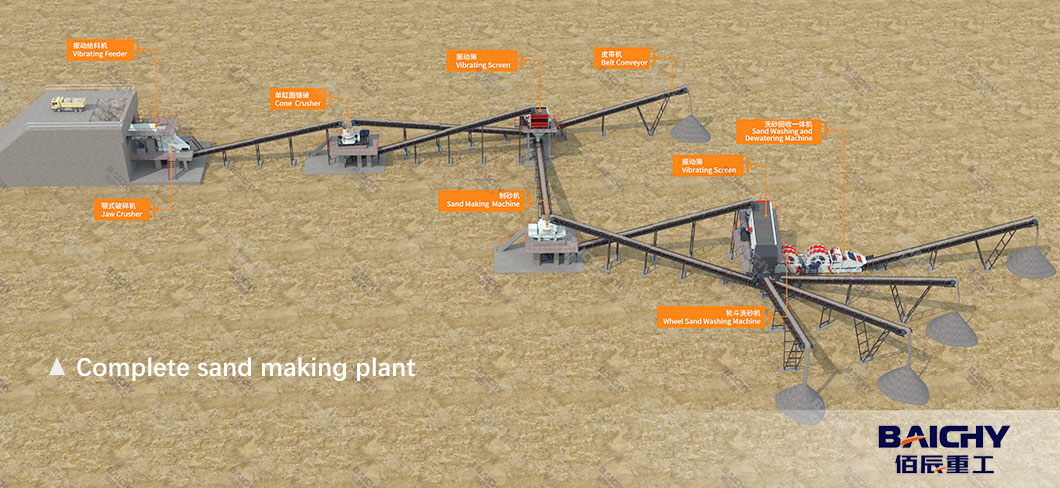
A complete quartzite sand-making system usually includes:
-
Primary crushing: Jaw crusher
-
Secondary crushing: Cone crusher
-
Fine crushing and shaping: VSI sand maker
-
Screening: Vibrating screen
-
Sand washing: Sand washing machine or fine sand recovery system, when required
The objective is not simply to crush quartzite into small particles. It is to produce sand with controlled grading, acceptable particle shape, and a consistent supply for downstream applications.
2. VSI Sand Crusher Is Right Choice for Quartzite Sand Production
Quartzite presents two major challenges: high crushing resistance and significant wear on crushing components. A VSI sand maker is particularly useful when the production target requires manufactured sand in the 0–5 mm range.
High-Efficiency Particle Shaping
VSI crushers use a high-speed rotating rotor to accelerate materials. The particles are thrown against surrounding materials or impact surfaces, causing repeated crushing and shaping. This process helps reduce flaky and elongated particles and improves the particle shape of manufactured sand. For concrete aggregate production, particle shape is important because it influences workability, packing density, and cement demand.
Adjustable Sand Grading
The final product grading can be influenced by:
A vibrating screen separates the finished sand from oversized particles. Oversized materials can be returned to the VSI crusher for further processing. This closed-circuit arrangement helps maintain a more consistent final product.
Suitable for Hard and Abrasive Materials
Quartzite contains a high proportion of hard quartz minerals. Therefore, wear parts are critical to the operating cost of the sand-making plant. When selecting a VSI crusher, pay attention to:
-
Rotor tip material and replacement cost
-
Wear-resistant lining
-
Bearing protection and lubrication
-
Rotor balance and operating speed
-
Availability of replacement parts
For particularly abrasive quartzite, the actual wear rate should be established through material testing and operating records rather than relying on a general service-life estimate.
3. Quartzite Sand Maker Machine Specifications
Different VSI models are available for different production requirements. The appropriate model depends on the required output, feed characteristics, and final sand grading.The following table provides representative VSI model specifications for preliminary equipment selection. Actual configurations and capacities should be confirmed against the manufacturer's technical quotation.
| Model |
Maximum Feed Size |
Capacity (Reference) |
Motor Power |
| VSI7611 |
30 mm |
70–150 TPH |
110 kW |
| VSI8518 |
40 mm |
100–260 TPH |
180 kW |
| VSI9526 |
45 mm |
160–360 TPH |
264 kW |
| VSI1140 |
50 mm |
300–520 TPH |
2 × 200 kW |
Important: These are preliminary reference figures, not guaranteed quartzite production rates. Actual capacity depends on rock hardness, feed grading, rotor configuration, moisture, and the required finished product.
Before purchasing, request a technical confirmation covering:
-
Maximum feed size and recommended feed grading.
-
Expected 0–5 mm product yield.
-
Power consumption per ton of finished sand.
-
Wear-part consumption under quartzite conditions.
-
Required screen area and circulating load.
A manufacturer should evaluate the actual quartzite sample before confirming production capacity.
4. How Does a Quartzite Sand Making Production Line Work?
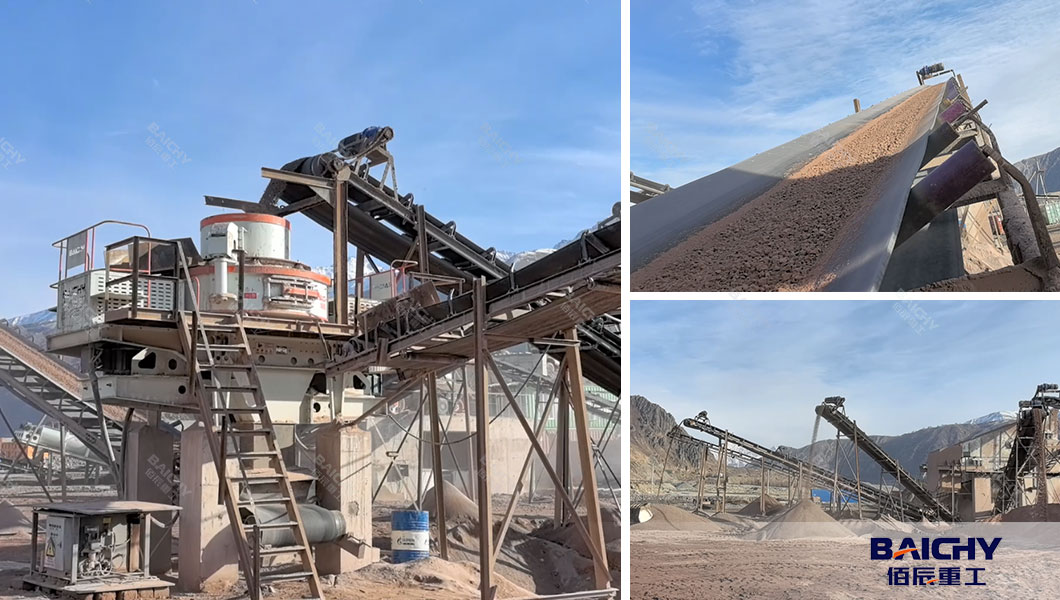
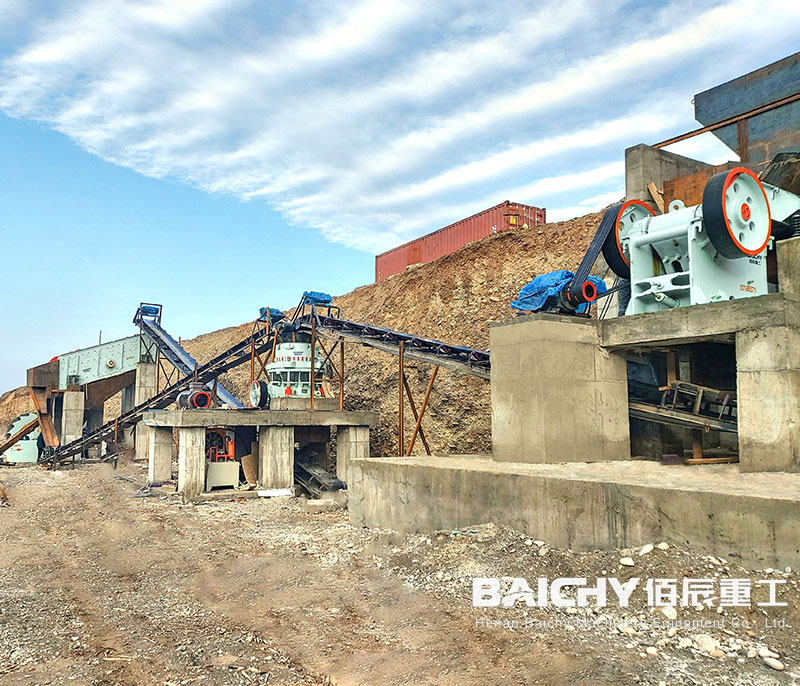
A commercial quartzite sand production line normally adopts a three-stage crushing and screening process.
Stage 1: Primary Crushing – Jaw Crusher
Large quartzite rocks are fed into a jaw crusher for primary size reduction. For example, if the raw material has a maximum feed size of 500 mm, a properly selected jaw crusher can reduce it to a smaller size suitable for secondary crushing. The primary crushing stage should maintain a stable feed rate and avoid excessive fines production.
Stage 2: Secondary Crushing – Cone Crusher
After primary crushing, the material enters a cone crusher for further size reduction. A cone crusher is suitable for hard and abrasive rocks because it uses compression crushing between the mantle and concave. The target is to produce a relatively uniform intermediate product, generally within the recommended VSI feed range. For a VSI with a maximum feed size of 30–50 mm, the secondary crushing and screening system must ensure that oversized particles do not enter the sand maker.
Stage 3: Fine Crushing and Shaping – VSI Sand Maker
The VSI crusher receives screened intermediate material and produces manufactured sand. The rotor speed and feed rate can be adjusted to influence the final particle shape and grading. A closed-circuit system is recommended when product specifications are strict. Oversized material is returned to the VSI, while qualified sand is discharged to the finished-product storage area.
Stage 4: Screening and Sand Washing
A vibrating screen separates materials into different size fractions. Typical products include:
-
0–5 mm: Manufactured sand
-
5–10 mm: Fine aggregate
-
10–20 mm: Medium aggregate
-
20–31.5 mm: Coarse aggregate
These product sizes are examples. Actual specifications should follow local construction standards and customer requirements. If the quartzite contains clay, dust, or excessive fine particles, a sand washing system may be added. A spiral sand washer or wheel sand washing machine can remove impurities, while a fine sand recovery system helps reduce the loss of useful fine particles.
5. Recommended Quartzite Sand Production Line Configurations
The following configurations illustrate how equipment selection changes with production targets.
| Production Capacity |
Primary Crusher |
Secondary Crusher |
Sand Maker |
Screening |
| 50–80 TPH |
PE400×600 Jaw Crusher |
Cone Crusher |
VSI7611 |
2YK Vibrating Screen |
| 100–150 TPH |
PE500×750 Jaw Crusher |
Cone Crusher |
VSI8518 |
3YK Vibrating Screen |
| 200–300 TPH |
PE600×900 Jaw Crusher |
Cone Crusher |
VSI9526 |
3YK Vibrating Screen |
| 300–500 TPH |
Large Jaw Crusher |
Multiple Cone Crushers |
VSI1140 or suitable larger configuration |
Multi-deck Vibrating Screen |
These are conceptual equipment combinations rather than verified turnkey plant designs. The final equipment models, quantities, motor power, and screening arrangement must be calculated from the feed size, rock properties, circulating load, and product specifications.
For example, a 100–150 TPH quartzite sand plant should not be designed by simply selecting a VSI crusher with a nominal capacity of 150 TPH. The entire production line must account for screening efficiency, return material, product yield, and the proportion of material that actually becomes saleable sand.
6. Practical Example: 100 TPH Quartzite Sand Production Design
Consider a quarry operator planning to process hard quartzite rock into construction sand and aggregates.
The following is an illustrative engineering design for preliminary evaluation, not a documented customer installation.
Project requirements:
| Parameter |
Design Requirement |
| Raw Material |
Quartzite |
| Maximum Feed Size |
500 mm |
| Designed Plant Capacity |
100 TPH |
| Main Finished Sand Size |
0–5 mm |
| Additional Products |
5–10 mm and 10–20 mm |
| Crushing Process |
Jaw + Cone + VSI |
| Production Type |
Stationary Crushing and Sand Making Plant |
Suggested Processing Flow
Raw Quartzite → Vibrating Feeder → Jaw Crusher → Cone Crusher → Vibrating Screen → VSI Sand Maker → Final Screening → Finished Sand Storage
The intermediate screening stage separates material according to the VSI feed requirements. Oversized particles return to the appropriate crusher, while qualified material enters the sand-making stage. The final screening stage separates manufactured sand and other aggregate sizes.
Important Production Considerations
1. Control the VSI Feed Size
Feeding oversized quartzite directly into a VSI can increase impact loads and accelerate wear. The upstream screen should ensure that the feed size remains within the manufacturer's specified limit.
2. Monitor Sand Production Yield
A 100 TPH plant does not automatically produce 100 tons of finished sand per hour. The actual sand output depends on the proportion of feed converted into the target size range, the quantity of coarse aggregate sold separately, and the circulating load.
3. Reduce Unnecessary Recirculation
Excessive return material increases crusher workload and power consumption. Screen aperture, VSI settings, and feed distribution should be optimized together.
4. Manage Dust and Fine Particles
Quartzite crushing can generate considerable dust. Enclosed transfer points, dust collection systems, and appropriate water spraying should be considered according to local environmental requirements.
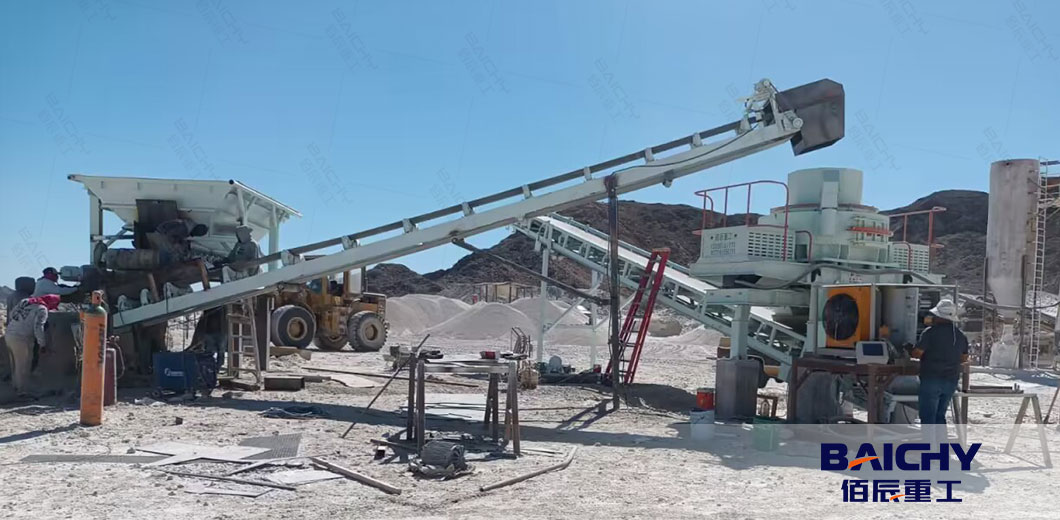
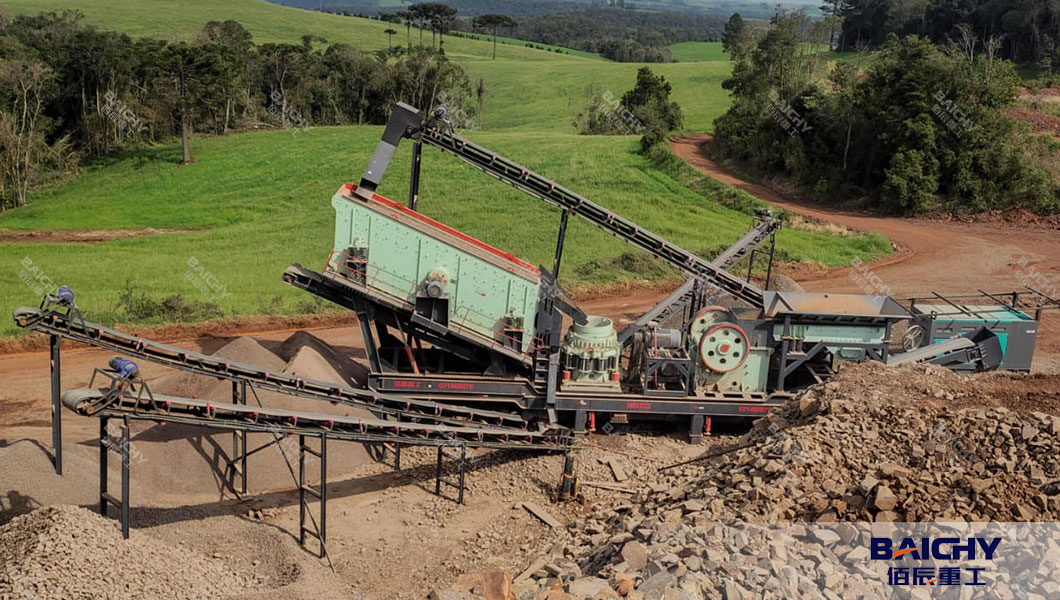
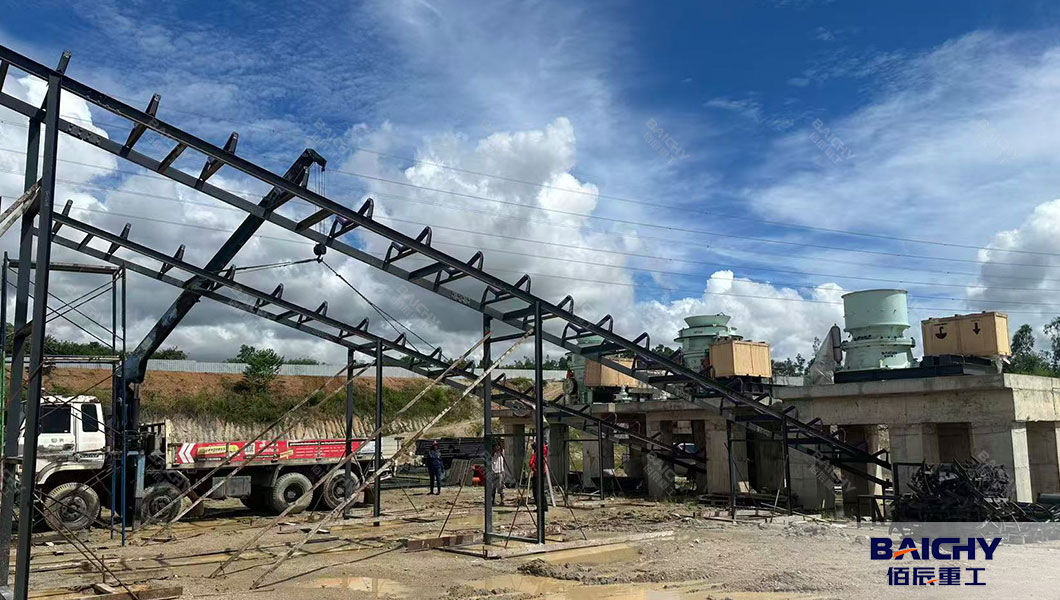
Baichy Machinery provides crushing equipment, sand-making machines, vibrating screens, and complete aggregate processing solutions for quarry and mining applications. For quartzite sand production, the equipment selection process should begin with the customer's actual material and production requirements. Baichy's engineering team can evaluate:
-
Raw quartzite feed size and material properties
-
Required sand and aggregate specifications
-
Target production capacity
-
Stationary or mobile plant requirements
-
Screening and washing requirements
-
Site layout and equipment installation conditions
Based on these details, an integrated crushing and sand-making configuration can be developed. Welcome to contact us to get a special sand making plant solution for you.
Frequently Asked Questions About Quartzite Sand Maker Machines
Q1: Which machine is best for making sand from quartzite?
A VSI vertical shaft impact crusher is a suitable choice for the final sand-making and shaping stage. However, large quartzite rocks usually require jaw and cone crushers before entering the VSI.
Q2: Can a VSI crusher process hard quartzite?
Yes. A properly configured VSI can process quartzite within its specified feed-size and operating limits. However, quartzite's high abrasiveness requires careful selection of rotor tips, wear plates, and other wear components.
Q3: What is the final sand size produced by a quartzite sand maker?
The common target is 0–5 mm manufactured sand. Other sizes can be produced through screening and process adjustment, depending on the required aggregate specifications.
Q4: What capacity quartzite sand maker should I buy?
The appropriate model depends on the required finished-sand output, feed size, material characteristics, and operating conditions. Common plant planning capacities include 50, 100, 150, 200, and 300 TPH. A complete production-line calculation is necessary before confirming the equipment model.
Q5: Does quartzite sand production require a washing machine?
Not always. If the raw quartzite is clean and the finished product meets the required specifications, dry processing may be sufficient. If the material contains clay, dust, or unwanted fine particles, washing equipment may be necessary.




 2026-11-16






 86-15093113821
 86-15093113821