Natural sand is running out. Rivers are being drained faster than they can refill, and many governments have stopped or severely limited sand mining. This creates a big problem for construction. But it also creates a big opportunity. That opportunity is manufactured sand. You can make high-quality sand from leftover crusher dust, quarry waste, or low-value aggregates. However, you cannot do this with standard crushing equipment. Normal crushers produce flaky particles and too much fine dust. Concrete needs sharp, cubical grains with just the right amount of fines.
This guide explains exactly what equipment you need. We will cover the machines that shape the particles, the systems that remove unwanted dust, and the different plant layouts. By the end, you will know how to turn waste stockpiles into a profitable, specification-grade product.
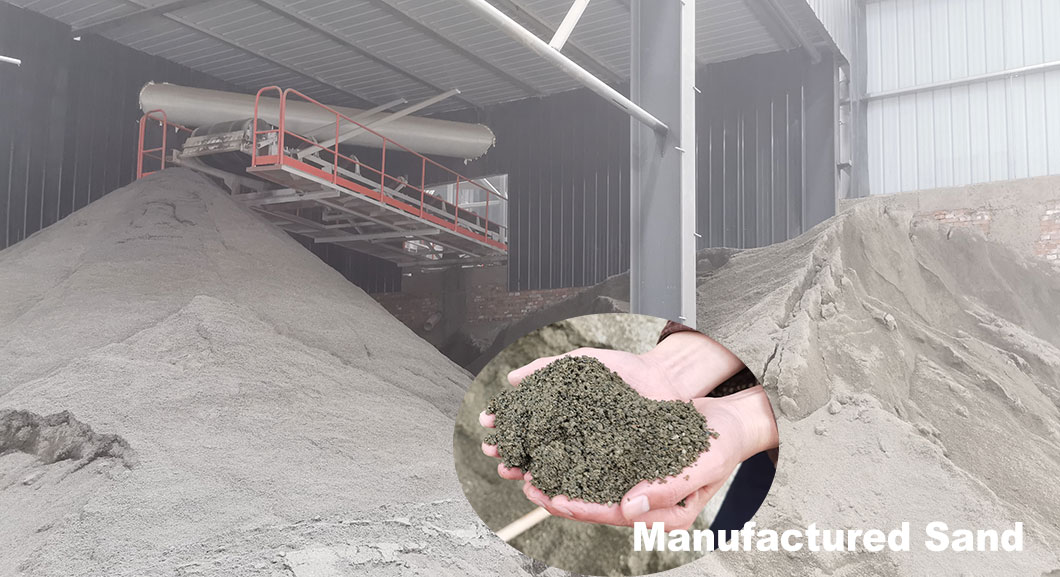
Why Standard Crushers Fail for Sand Making
Most aggregate plants already have jaw crushers and cone crushers. These machines are great for reducing rock size. But they are terrible at making sand.
The first problem is particle shape. Jaw and cone crushers produce elongated or flat particles. Think of them like broken sticks. Concrete made with these particles is weak and hard to work with. Good sand needs cubical particles—almost like tiny cubes or rounded stones. They lock together better and use less cement.
The second problem is gradation. Concrete specifications require a balanced mix of particle sizes, from fine dust up to 4.75 mm. Standard crushers often leave a gap in the middle sizes. They also create too many ultra-fine particles, below 75 microns. Too many fines can ruin concrete by absorbing excess water and admixtures. So you cannot simply crush rock and call it sand. You need special equipment designed for shaping and classification.
Core Equipment #1: The Shaping Stage – Vertical Shaft Impactors (VSI)
The most common machine for making manufactured sand is the vertical shaft impactor, or VSI. It works differently from any crusher you have used before.
A VSI uses a high-speed rotor to throw rock against a hard lining made of the same material. This is called "rock-on-rock" crushing. No metal surfaces touch the rock. The particles break each other. This produces a uniquely cubical shape with sharp edges and consistent gradation.Because shape and gradation do not change as the wear parts age. With a cone crusher, product quality drops quickly when liners wear. With a VSI, the quality stays stable for a long time. Some modern VSI models also offer bi-flow technology. This mixes material falling through the rotor with material thrown from the sides. It can reduce energy use by up to 20 percent while keeping the same output.
For hard, abrasive rocks like granite, quartzite, or basalt, a VSI is usually the best choice. It gives you the lowest cost per ton over the life of the machine.
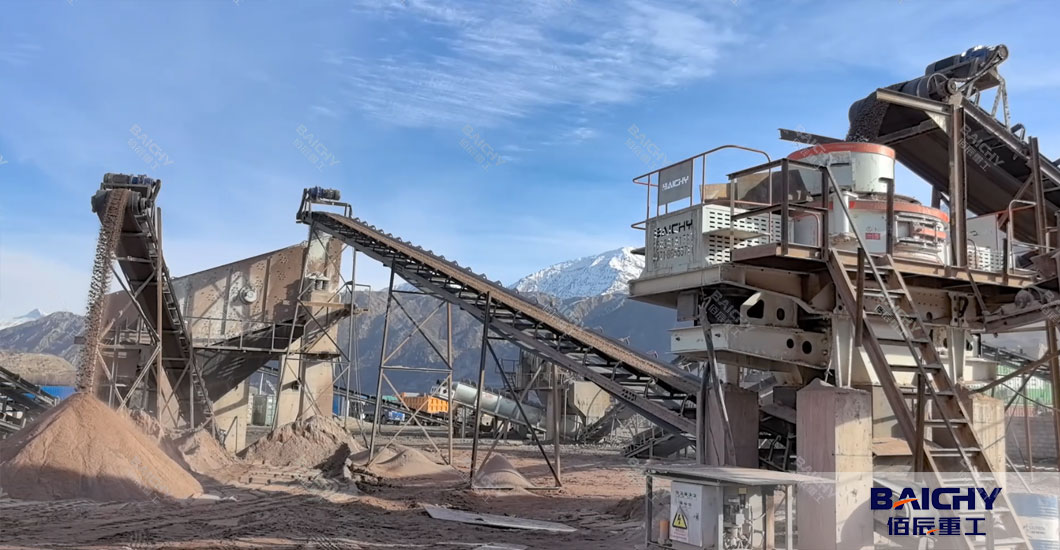
Core Equipment #1 Alternative: High Pressure Grinding Rolls (HPGR)
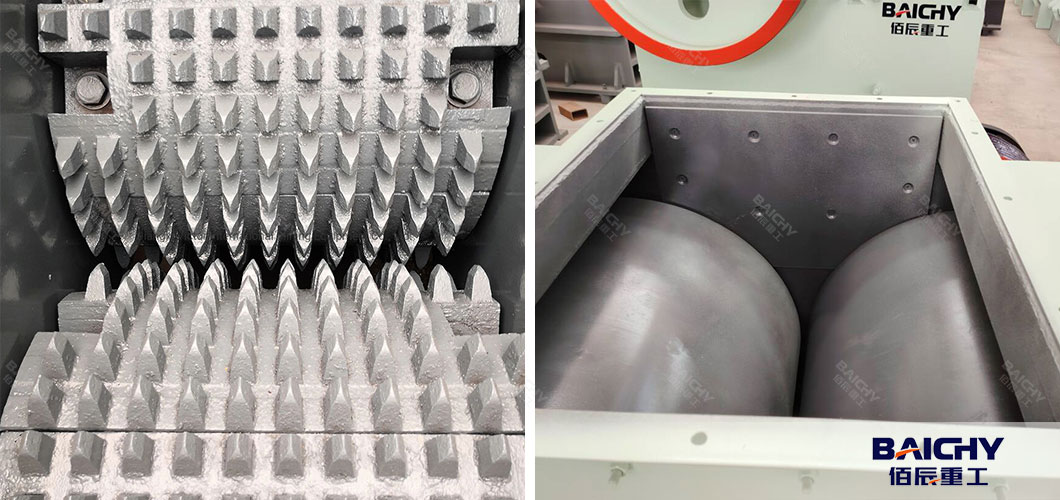
There is a newer player in the sand making market. It is called a high pressure grinding roller crusher, or HPGR. This machine crushes rock between two heavy rollers under very high pressure. The crushing action is different from a VSI. Instead of impact, the rock is squeezed. This creates inter-particle cracking. The result is a product with fewer ultra-fines and a better shape for some applications. The biggest advantage of an HPGR is energy efficiency. One real-world case study showed an HPGR using only 3.8 kWh per ton. A VSI doing the same job used 11 kWh per ton. That is nearly three times more electricity. Over a year, the savings can be huge.
The HPGR also produces less unwanted filler dust—typically 8 percent versus 20 percent for a VSI. This reduces the workload on your classification system. However, HPGRs are less common and generally require more maintenance. They work best for specific materials and larger plants.
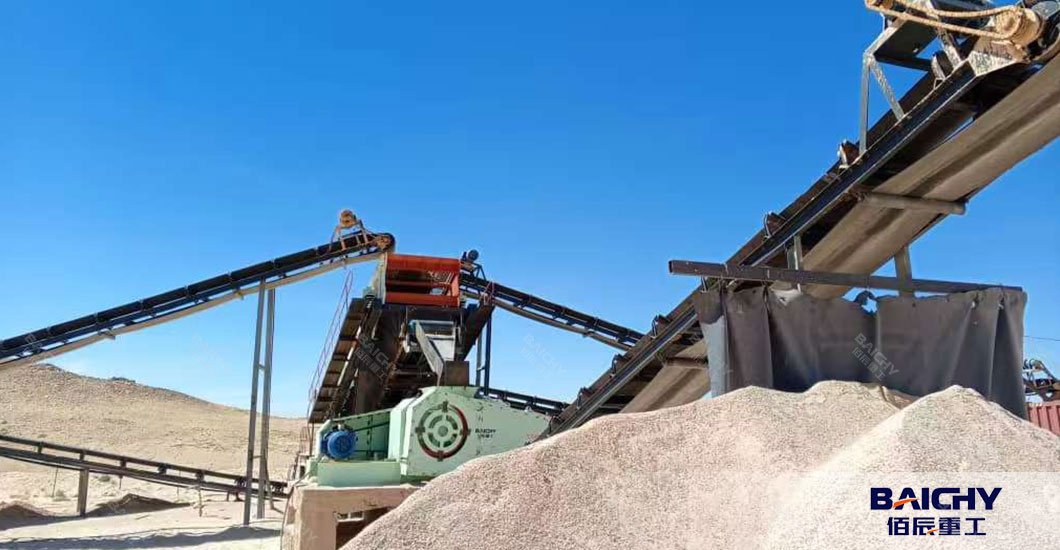
Core Equipment #2: Dry Classification – Air Classifiers
Once you have crushed the material, you must remove the extra fines. Otherwise, your sand will not meet concrete specifications. The cleanest and cheapest way to do this is with dry classification. An air classifier uses air flow and centrifugal force to separate particles by size. You feed the sand into a chamber with spinning rotors and rising air. Fine particles float up and go to a dust collector. Coarse particles fall down as finished sand. You can adjust the cut point very precisely—often right at 75 microns.
The benefits of dry classification are huge. First, you use no water. Second, you produce no wet sludge or settling ponds. Third, your final product is already dry and ready to sell. Fourth, it works perfectly in cold climates where water freezes. And fifth, you collect the ultra-fines as a separate product. You can sell this dust to asphalt plants or cement plants for extra revenue.
For most sand plants today, dry classification is the standard choice. It is simple, clean, and profitable.
Core Equipment #2 Alternative: Wet Washing Systems
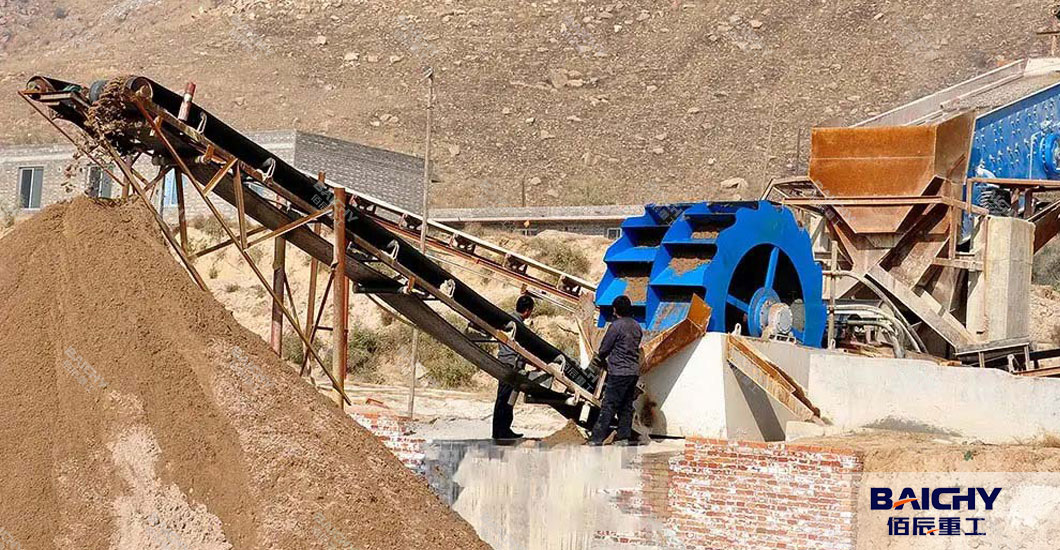
Sometimes dry classification is not enough. If your feed material contains sticky clay or organic matter like lignite, air classifiers cannot remove it. The clay is too heavy to blow away, but it still contaminates the sand. In this case, you need a wet washing system. The typical setup uses a hydrocyclone. Water and sand are pumped into a conical chamber at high speed. The spinning action forces heavy, clean sand particles to the outside and down the cone. Light, dirty fines go up the center and out the overflow. The clean sand then goes to a dewatering screen. This removes most of the water. The final product is damp but clean. The downside is that you need a reliable water source and a way to handle the slurry. You also need settling ponds or a filter press to recover water and dispose of sludge.
Wet washing works very well for certain applications. Plaster sand, for example, often requires washing to remove clay. But for most manufactured sand plants, dry classification is the first choice.
Core Equipment #3: High-Frequency Screens
Before and after crushing, you need to screen the material. Standard vibrating screens work fine for coarse aggregates. But for sand, you need something better: high-frequency screens, also called banana screens. These screens vibrate at a much higher frequency than normal screens. This allows them to separate fine materials down to 150 microns or even smaller. They are often used in a closed circuit with a VSI or HPGR. Material that is already the right size goes directly to classification. Oversize material goes back to the crusher.
Banana screens also offer more active area than traditional screens. You can get about 20 percent more screening capacity in the same footprint. This makes the whole plant more efficient. Without good screening, your crusher will waste energy re-crushing material that is already fine enough.
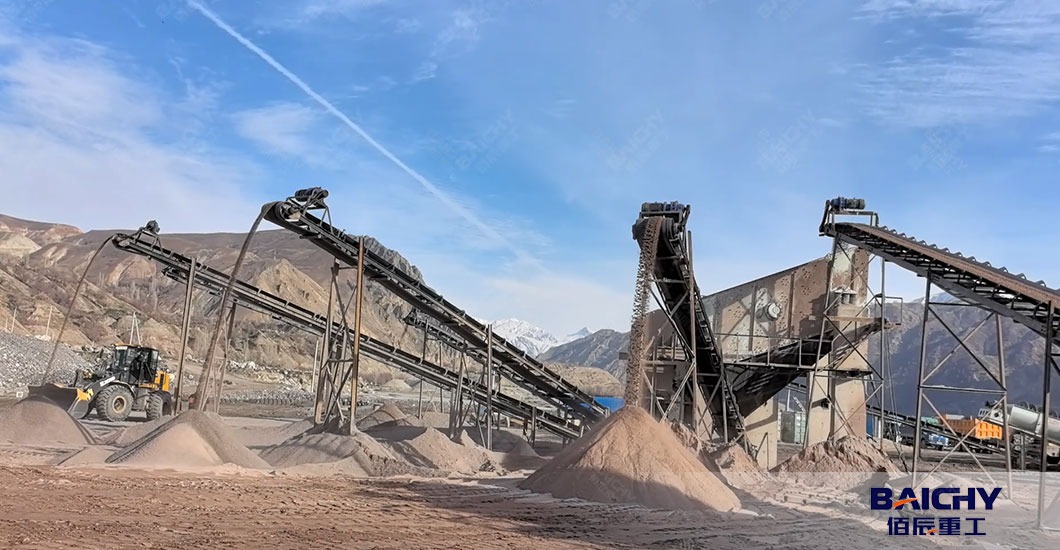
Complete Dry Sand Making Plant Layout
Now let us put all the pieces together. A typical dry sand plant follows a logical sequence.
First, a feeder and conveyor deliver the feed material to the primary screen. This removes fines before crushing. Next, the oversize material goes to a VSI or HPGR for shaping. After crushing, the material goes to a high-frequency screen. The screen splits the stream into three sizes: coarse, medium, and fine. The coarse material returns to the crusher. The medium and fine material go to an air classifier. The air classifier removes the ultra-fines (below 75 microns). The remaining product is your manufactured sand. The dust collector stores the filler for separate sale.
This whole system uses no water. It produces no waste. And it runs automatically with minimal labor. For most aggregate producers, this is the ideal solution.
Complete Wet Sand Making Plant Layout
A wet plant follows a similar logic, but water replaces air. After crushing, the material goes to a wet screen with water sprays. The undersize material goes to a sump. A pump feeds this slurry to a hydrocyclone. The cyclone separates the clean sand from the dirty fines. The clean sand discharges onto a dewatering screen. The dirty fines and water go to a settling pond or a thickener.
The dewatering screen produces a damp sand product. You must stockpile it for a few days to let it dry before sale. The pond water can be recycled back to the plant. But you will still lose some water to evaporation and the sludge.
This layout works well when clay is present. But it costs more to operate and maintain than a dry plant. Always consider dry classification first.
How to Choose the Right Manufactured Sand Equipment
Choosing the right equipment depends on three main factors: your rock type, your water availability, and your target market.
Start with your feed material. For hard, abrasive rocks like granite or quartzite, choose a VSI or HPGR. For soft rock like limestone, a horizontal shaft impactor (HSI) or VSI works well. Do not use a cone crusher for sand making. It will produce poor shape and inconsistent gradation.
Next, consider water. If you have no water or you operate in a cold climate, dry classification is your only practical option. Even if you have water, dry classification is usually cheaper and cleaner. Only choose wet washing if you have sticky clay or lignite contamination.
Finally, look at your market. High-grade concrete sand requires precise grading and low fines. A VSI plus air classifier is the proven solution. For plaster sand, you may need wet washing to remove the last traces of clay. For general fill or less demanding applications, a simpler circuit may be enough.
You cannot make specification sand with standard crushing equipment. You need a dedicated system that includes shaping, screening, and classification. For most plants, the best combination is a VSI crusher for shaping and an air classifier for fines removal. This dry system uses no water, produces no waste, and gives you a saleable filler byproduct. If you have very hard rock and high energy costs, consider an HPGR instead of a VSI. Only switch to wet washing if you have sticky clay that air cannot remove. The market for manufactured sand is growing fast. Natural sand is becoming harder to find every year. If you have waste crusher dust or low-value aggregate stockpiles, you are sitting on a valuable resource. The right equipment can turn that waste into a profitable product.
Ready to upgrade your plant? Contact our engineers for a free material test and equipment recommendation. We will help you design a sand making system that fits your rock, your budget, and your market.
Frequently Asked Questions
1. What is the best crusher for manufactured sand?
For hard, abrasive rocks, a vertical shaft impactor (VSI) or high pressure grinding roll (HPGR) is best. Both produce cubical particles. For soft rock like limestone, a horizontal shaft impactor (HSI) is also a good choice.
2. How do you remove dust from manufactured sand?
You can use an air classifier for dry removal or a hydrocyclone for wet removal. Dry classification is cheaper and cleaner for most applications. Wet washing is only needed for sticky clay.
3. Is manufactured sand cheaper than river sand?
Production cost can be higher due to electricity. But transportation is often cheaper because you can make sand close to the city. And the price is stable, unlike river sand which is affected by mining bans and shortages.
4. What is the difference between concrete sand and plaster sand?
Concrete sand has a wider range of particle sizes, from fine dust up to 4.75 mm. Plaster sand is finer, usually below 2.36 mm, with very strict limits on ultra-fines. Too many fines in plaster sand can cause cracking.




 2026-09-29





 86-15093113821
 86-15093113821