It is common for actual jaw crusher throughput to fall short of nameplate capacity (e.g., 300 TPH vs. 200 TPH on site). This gap between theoretical specs and field performance can be reduced with proper adjustments. This guide explains the key factors controlling output and provides seven low-cost, actionable strategies to improve tons per hour immediately—no unnecessary theory, just practical advice for real-world operations.
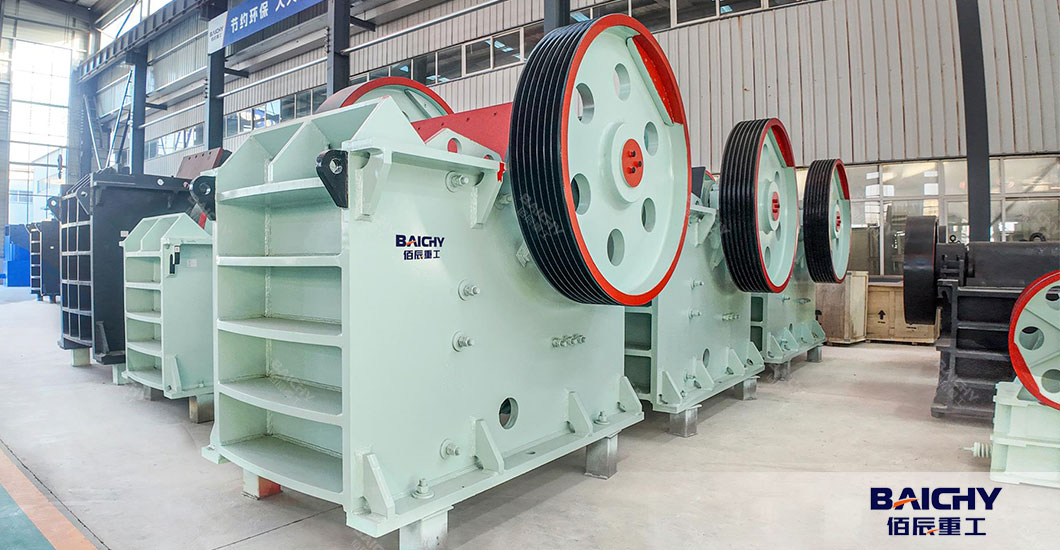
What Is Jaw Crusher Output?
Jaw crusher output means the amount of material that passes through the crusher in one hour. We measure it in tons per hour (TPH).
But here is a key point: there are two types of "output."
● Theoretical output: What the factory says on a sticker. This assumes perfect conditions. Perfect feed. Perfect material. Perfect weather.
●Real output: What you actually get on your site. This is always lower. Sometimes 20-30% lower.
Also note: output can mean "material going in" or "material coming out." This matters because crushing makes material denser. One ton of big rocks becomes less than one ton of small rocks in volume. But weight stays the same. So always talk about tons, not cubic meters.
Simple formula to remember:
Output (TPH) ≈ Speed × Discharge opening size × Material density × How full the crusher is
You do not need to calculate this every day. But understanding the pieces helps you know what to adjust.
The 5 Key Factors That Control Your Crusher Output
1. Crusher Settings (Speed and Discharge Opening)
Speed (RPM)
Faster speed gives you finer material. But finer is not always better. If you go too fast, the crusher cannot discharge material quickly enough. Throughput drops.
Simple rule: Match speed to your target product size. Do not just max it out.
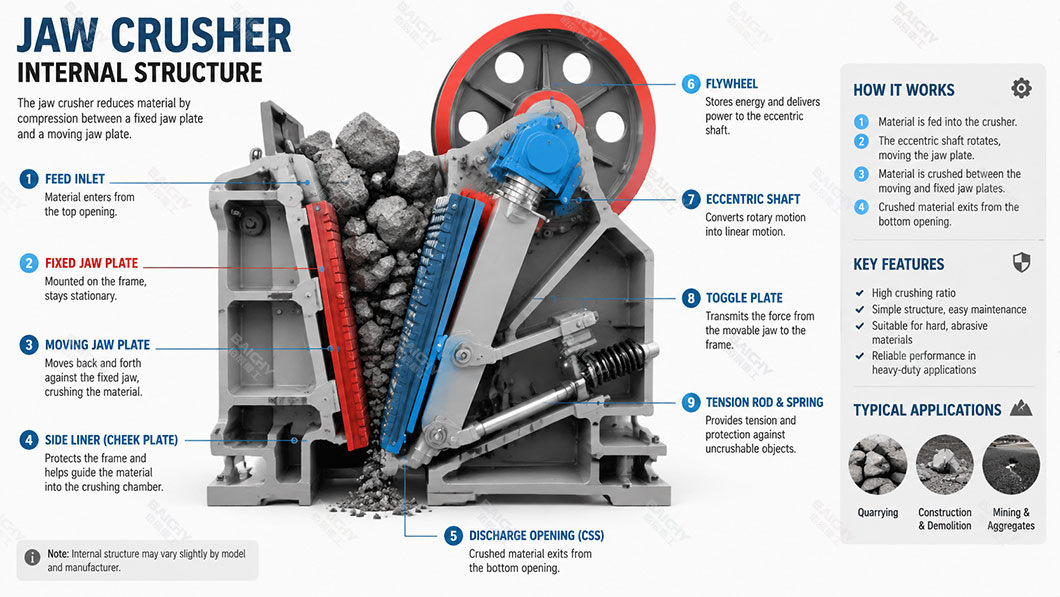
Discharge opening (CSS - Closed Side Setting)
This is the smallest gap between the moving and fixed jaw plates.
● Smaller gap = finer product but lower output.
● Larger gap = coarser product but higher output.
Example: Opening a CSS from 100mm to 150mm can double your TPH on some crushers. But your rock will come out bigger. That trade-off is always there.
2. Feed Conditions (How You Load the Crusher)
Feed size matters a lot.
The golden rule: maximum feed size should be 80% of the crusher's feed opening.
Let us say your jaw opening is 1000mm wide and 800mm high (the gape). The biggest rock you put in should be no more than 640mm (80% of 800mm). Go bigger, and the crusher will choke. Output plummets.
Feed uniformity matters too.
A steady, continuous feed is better than big dumps followed by empty periods. Why? Because the crusher works best when it is always "full but not overloaded." A vibrating feeder does this job well.
Fines (small material) in the feed can help or hurt.
A small amount of fines is fine. Too many fines will pack the crusher. They take up space that big rocks need. If your feed has a lot of small stuff, screen it out first. You can recombine it later.
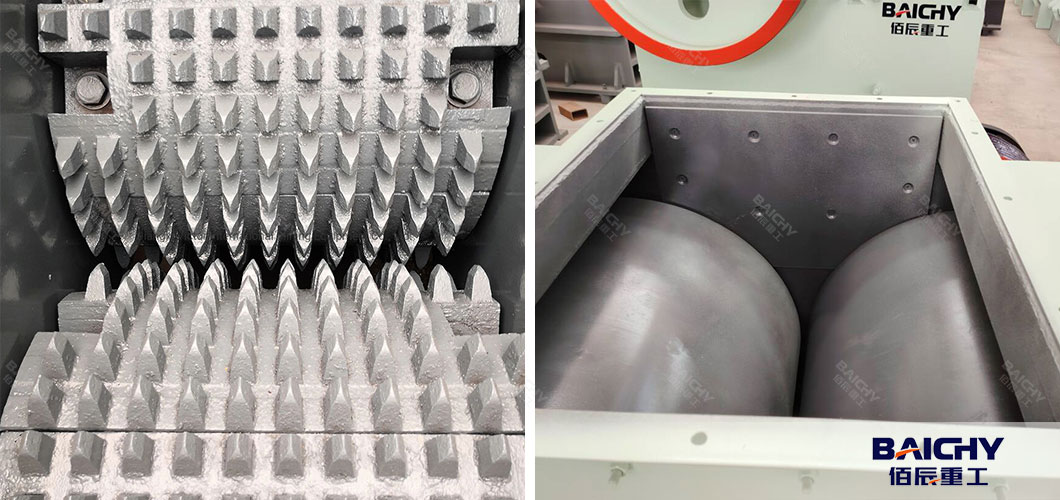
3. Wear Parts Condition (Your Jaw Plates)
This is the factor people forget. New jaw plates have sharp teeth and the correct profile. Worn plates are smooth and rounded. What happens then?
● The crusher cannot grab the rock as well.
● Throughput drops.
● You might think the crusher is too small. But really, you just need new plates.
Pro tip: Most jaw plates can be flipped. When the bottom wears out, turn them upside down. The top wears slower. Double the life. And watch your output come back.
4. Material Properties (What You Are Crushing)
Different rocks behave differently.
| Material |
Effect on Output |
| Hard, tough rock (granite, basalt) |
Lower output. Needs more crushing force. Slower. |
| Medium rock (limestone) |
Good output. Standard. |
| Soft or brittle material |
Higher output. But can create too many fines. |
| Wet, sticky clay |
Very low output. Clogs everything. |
Honest advice: If your material is wet and sticky, a jaw crusher may not be the right choice. Consider an impactor or a scalping screen first.
5. Downstream Equipment (What Comes After)
Your crusher might be able to do 300 TPH. But if your conveyor only handles 200 TPH, you have a bottleneck. Similarly, if you have a secondary cone crusher that can only take 150 TPH, your jaw cannot run faster than that. The whole line runs at the slowest machine's speed. So when output is low, check everything after the crusher too.
How to Measure Your Current Output (Simple Methods)
You do not need expensive equipment. Here are three easy ways:
Method 1: Belt cut test
Stop the conveyor belt for exactly 60 seconds. Collect all the material that falls off. Weigh it. Multiply by 60 to get TPH. Do this three times and average the results.
Method 2: Loader bucket count
Count how many loader buckets go into the crusher in 15 minutes. Multiply by 4 to get hourly buckets. Multiply by the average weight per bucket. Simple and close enough.
Method 3: Motor current (amps) method
Most jaw crushers have an amp meter on the control panel. When the crusher runs at its best output, the amps are high but stable. Low amps mean low load (you can feed faster). Wildly swinging amps mean feed problems. This takes practice but becomes very useful.
7 Simple Tips to Increase Jaw Crusher Output
Here is the practical list you came for. Try these in order.
Tip 1: Check and adjust the CSS
At the start of every shift, measure your closed side setting. If it has closed up due to wear, open it back to your target. This alone can restore 10-20% lost output.
Tip 2: Use a vibrating feeder
If you are still dumping rocks directly into the crusher with a loader, stop. A feeder gives you steady, controlled feed. Output improves immediately. And wear parts last longer.
Tip 3: Pre-screen before the crusher
Put a simple grizzly or vibrating screen before the jaw. Remove material smaller than your CSS. That "fines" bypass goes straight to the product pile. The crusher only sees the big rocks it was meant to crush. Total system output goes up 15-25%.
Tip 4: Choose the right jaw plates
For hard, abrasive rock (granite, river gravel): choose manganese steel with small, sharp teeth.
For concrete and asphalt recycling: choose larger, more aggressive teeth.
Ask your supplier for their recommendation based on your exact material.
Tip 5: Control your maximum feed size
Use a simple rule: no rock bigger than 80% of the jaw's feed opening. Train your loader operators. Put a bar or grid on the feed hopper if needed. Big rocks stop production completely when they jam.
Tip 6: Monitor motor amps
Look at your amp meter. If amps are low, you can feed faster. If amps are maxed out and steady, you are at ideal output. If amps swing up and down, your feed is uneven.
Tip 7: Flip or replace worn jaw plates
When output drops for no other reason, look at your jaw plates. Are the teeth rounded off? Flip them if possible. Replace if not. New plates are cheaper than a whole new crusher.
Quick Reference: Typical Output Ranges
This table gives you real-world numbers. Remember: your actual output will vary based on the factors above.
| Jaw Crusher Model (Feed opening) |
CSS = 100mm |
CSS = 150mm |
| 900mm x 600mm |
90 - 140 TPH |
140 - 200 TPH |
| 1200mm x 750mm |
160 - 240 TPH |
220 - 350 TPH |
Source: Typical data from manufacturers like McLanahan and Retsch
Common Myths About Jaw Crusher Output
Myth 1: Higher speed always gives higher output
Not true. Higher speed gives finer material. But if the crusher cannot discharge fast enough, output drops. There is an optimal speed for every application.
Myth 2: Smaller closed side setting is always better
Also false. A very small CSS gives you a nice fine product. But your tons per hour will crash. Always balance product size against production rate.
Myth 3: If it fits in the feed opening, it is fine to crush
Wrong. A rock that barely fits will get stuck. Then you have to stop the line and clear the jam. That kills output for 30 minutes. Stick to the 80% rule.
Myth 4: New crushers do not need adjustments
New crushers need more adjustments, not fewer. Everything settles in the first weeks. Check settings daily.




 2026-09-29





 86-15093113821
 86-15093113821