Manufactured sand (M-Sand) is an artificial, high-quality, fine aggregate produced by crushing, screening, and washing hard rock (like granite or limestone) to specific sizes for construction, particularly in concrete and asphalt. It is made from a Vertical Shaft Impact (VSI) crusher—industrial equipment that crushes, shapes, and grinds rocks (such as granite, basalt, or limestone) into fine, cubical, angular sand particles. VSI sand crusher uses high-speed impact technology to produce high-quality, consistent sand for construction, concrete, and asphalt, acting as a sustainable alternative to natural river sand.
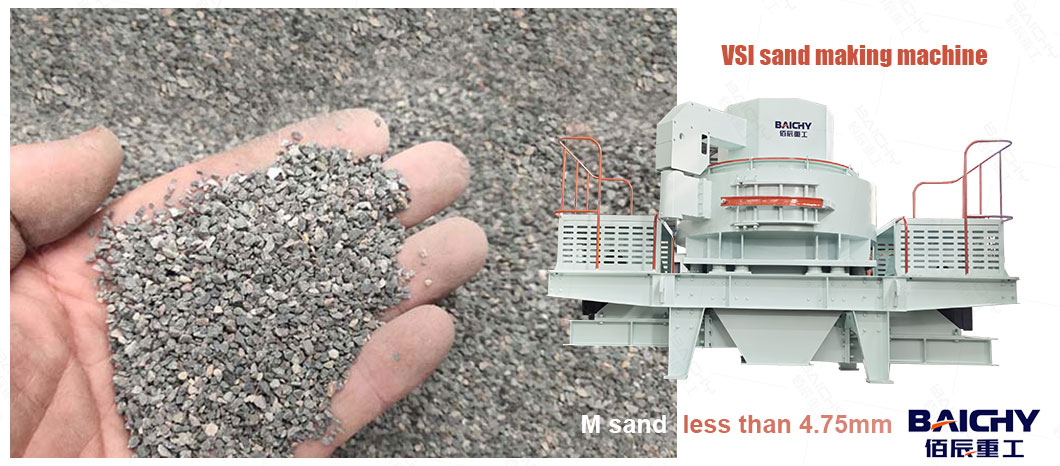
What is artificial sand (M-Sand)?
Artificial sand is also known as manufactured sand. It is made from hard granite or quarry stone. The hard stone is crushed into angular particles of uneven sand size, then swept and washed to make it finely graded so that it can be more easily used as construction aggregate. The production of M-Sand is divided into three stages: First, a vertical shaft impact crusher crushes the stones of different sizes into aggregate. This material is then fed into a machine to be crushed into sand. The particle size can be determined and adjusted as needed. Finally, dust particles are removed during the screening process.
What are the advantages ofartificial sand (M-Sand)?
Due to the scarcity of natural sand resources worldwide, M-Sand is the perfect alternative. The procurement of natural sand is becoming increasingly difficult and expensive. In addition, many countries prohibit sand mining or impose heavy taxes on sand mining.
● M-Sand has high compressive and flexural strength and is free of clay, silt and dust.
● M-Sand has balanced physical properties, is strong and can withstand harsh climatic conditions.
● The cube-shaped particles have better durability and higher strength. M-Sand also has excellent workability.
Are there any disadvantages of M-Sand?
Due to its manufacturing process, M-Sand may contain more fine particles than natural sand. This in turn may affect strength and workability. To ensure that the sand produced is of good quality, the final product should undergo a series of quality tests. It is also important to use high-quality and professional machines during the screening process. To obtain the highest quality product, we recommend using RHEWUM screening machines.
Quick Information - Advantages of M-Sand
● More cost-effective than natural sand
● Less damaging to the environment
● It has good working properties
Relative crusher machine to make M sand
A relative crusher machine for making M - sand (Manufactured Sand) is the vertical shaft impact crusher (VSI). Advantages of VSI sand making machine for M - sand production
1.Shape and gradation: The VSI crusher can produce M - sand with a more consistent and cubical shape. The cubical shape of the sand particles provides better workability and packing characteristics, which is beneficial for concrete production. It also helps in achieving a better gradation of sand particles, ensuring that the voids between the particles are minimized, leading to more dense and stronger concrete.
2.High - quality output: It can produce M - sand that meets the strict quality requirements for construction purposes. The sand produced has a low content of fine powder and a high proportion of particles in the desired size range (usually between 0.15 - 4.75mm), which is suitable for use as a substitute for natural sand in concrete and mortar applications.
3.Versatility: It can handle a wide range of raw materials, including hard rocks such as granite, basalt, and limestone. This versatility allows it to be used in different regions where the available stone resources may vary.
Excecept VSI sand making machine, other crusher types that can be involved in the M - sand production process (as part of the overall system)
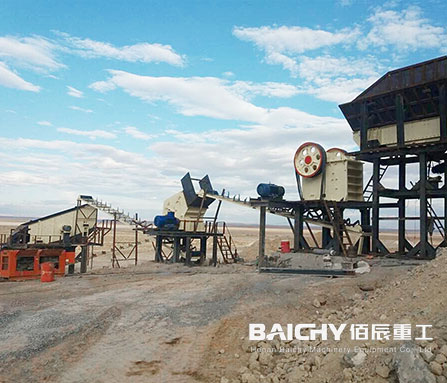
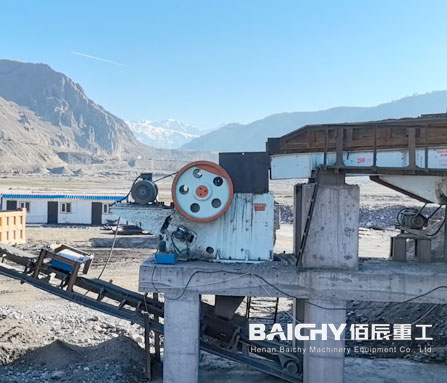
1.Jaw crusher: Often used as a primary crusher. It breaks the large stones into smaller pieces. The crushed material from the jaw crusher can then be further processed in a VSI crusher to produce M - sand.
2.Cone crusher: It is usually used as a secondary or tertiary crusher. It further reduces the size of the material crushed by the jaw crusher and helps in achieving a more precise particle size distribution before the material is sent to the VSI crusher for the final shaping and production of M - sand.
In the process of M - sand production, these crushers work together in a sequential manner to transform large - sized stones into high - quality manufactured sand. The proper selection and combination of crusher machines depend on factors such as the type of raw material, the desired output capacity, and the quality requirements of the M - sand.
People Also Frequently Asked - FAQ
Q1: What materials can be processed into manufactured sand?
Answer: These machines are very versatile. They can process hard rocks like granite, basalt, and river pebbles, as well as softer materials like limestone. They are also widely used to recycle construction waste (concrete blocks) into usable aggregate, saving costs and protecting the environment.
Q2: Is the quality of manufactured sand suitable for construction?
Answer: Yes, it is excellent. Our machines use VSI (Vertical Shaft Impact) technology, which operates on a "stone-hitting-stone" principle. This produces sand with a cubical shape (not flaky) and reasonable gradation. It meets high standards for concrete strength and is often preferred over natural river sand.
Q3: What is the difference between Dry and Wet sand making?
Answer: It depends on your local environment.
Wet Process: Uses water to wash away mud and dust. It is ideal if you have a cheap water source and the raw stone is dirty.
Dry Process: Uses a Powder Separator to remove dust via air. It is the best choice for water-scarce areas or cold regions where water might freeze.




 2026-10-16





 86-15093113821
 86-15093113821