Achieving a 10:1 reduction ratio—transforming a 200mm feed size into a 20mm aggregate—is a common yet critical challenge in the stone crushing plant industry. Choosing between a hydraulic cone crusher and a gyratory crusher depends on more than just the machine type; it requires an understanding of the maximum effective reduction ratio to balance stone crusher capacity with operational costs. In this technical guide, we analyze which crusher machine stone setup offers the best performance for this specific 200mm-to-20mm requirement.
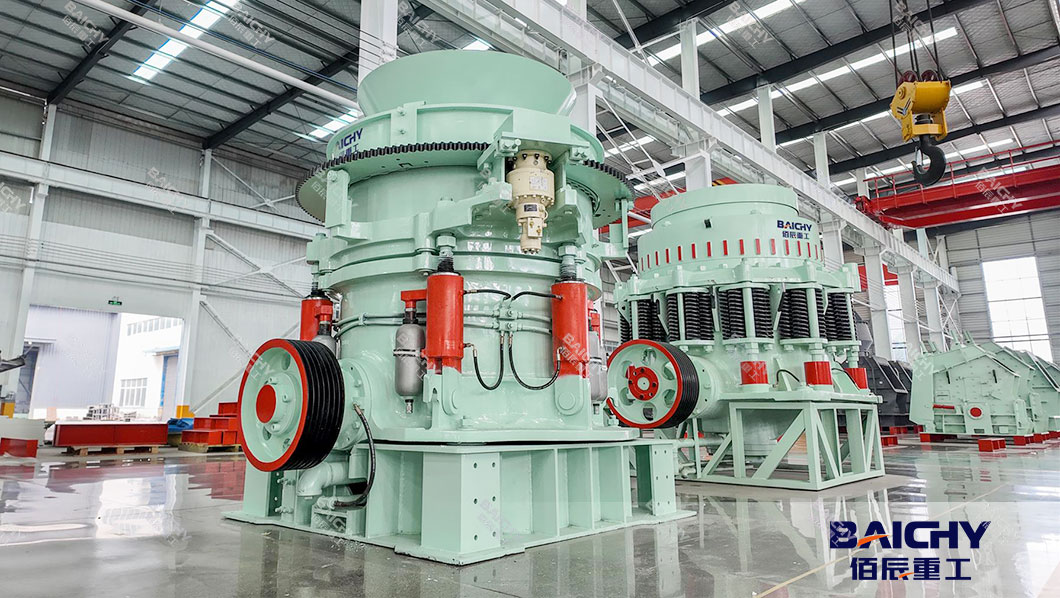
What is the Reduction Ratio in Stone Crushing?
The reduction ratio is defined as the ratio of the size of the input material to the size of the output product. It is usually calculated using the formula:
Reduction Ratio = Feed Size / Product Size
For a process converting 200mm feed to 20mm aggregate, the required total reduction ratio is 10:1. In industrial crushing machines, attempting to achieve a 10:1 ratio in a single pass often leads to high wear, increased energy consumption, and poor grain shape.
Gyratory Crusher: Primary Powerhouse
A gyratory crusher is a heavy duty stone crusher typically used for primary crushing. specifically engineered for massive throughput in heavy-duty mining and large-scale quarrying operations. Structurally, it features a steep conical head situated within a cylindrical bowl, crushing material through an eccentric motion that provides a continuous crushing action. While it offers a respectable reduction ratio between 4:1 and 7:1, it is typically oversized for a 200mm feed. Its true strength lies in processing boulders over 1000mm, where it maintains high stone crusher capacity and structural stability under extreme compressive stress from hard, abrasive ores. Summery as below:
● Effective Reduction Ratio: Typically ranges from 4:1 to 7:1.
● Performance on 200mm Feed: Most gyratory crushers are designed for feed sizes exceeding 1000mm. Processing 200mm feed in a large gyratory crusher is inefficient and underutilizes the stone crusher machinery.
● Best Use Case: Large-scale mining where high stone crusher capacity is needed for the first stage of breaking.
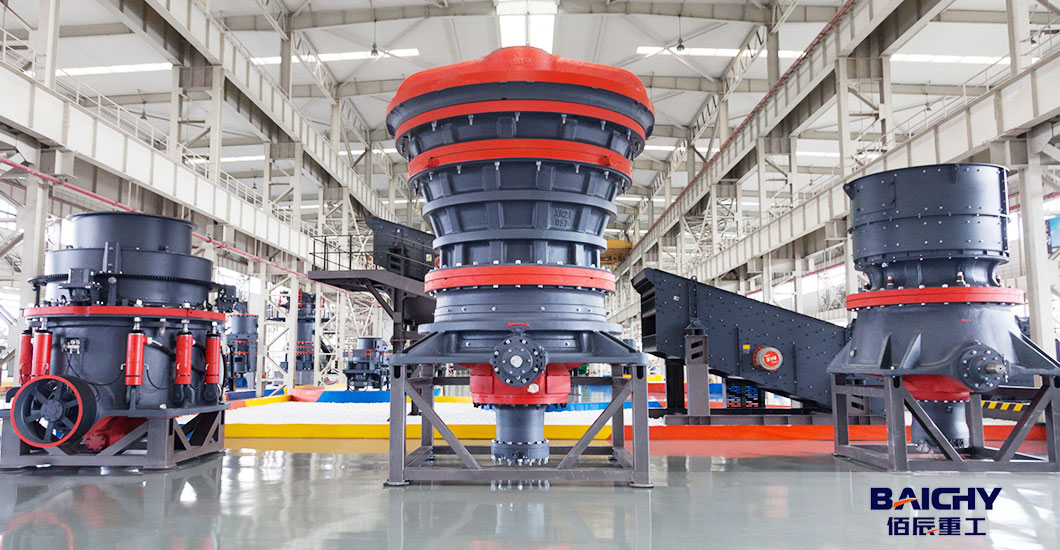
Hydraulic Cone Crusher: Secondary Precision
The Hydraulic Cone Crusher is the industry’s preferred machine for secondary and tertiary stages, excelling at refining material into high-quality aggregates. Unlike older models, modern hydraulic versions utilize advanced "layer crushing" or inter-particle crushing technology to produce a superior cubic grain shape. With an effective reduction ratio of 3:1 to 6:1, it is perfectly scaled for a 200mm feed size. Its integrated hydraulic systems allow for real-time adjustments of the closed-side setting (CSS) and provide automatic tramp iron release, ensuring continuous operation and lower maintenance costs in hard stone crusher applications. Summery as below:
● Effective Reduction Ratio: Typically ranges from 3:1 to 6:1.
● Performance on 200mm Feed: A multi-cylinder hydraulic cone crusher is ideal for 200mm feed. Using the "inter-particle crushing" (layer crushing) principle, it produces a superior cubic shape for aggregate crushing.
● The 10:1 Challenge: Achieving 20mm from 200mm (10:1) in a single cone crusher is possible in a closed-circuit system (where oversized material is returned), but it is often more efficient to split this into two stages.
Comparison Table: Reduction Ratio & Performance
To optimize your stone crusher plant, refer to the following data comparison for processing 200mm feed:
| Technical Metric |
Gyratory Crusher |
Hydraulic Cone Crusher |
Two-Stage Crushing System |
| Max Effective Ratio |
4:1 – 7:1 |
3:1 – 6:1 |
10:1 – 15:1 |
| Primary Input Size |
>600mm |
150mm – 300mm |
200mm (Optimized) |
| Target Output |
100mm – 200mm |
20mm – 50mm |
20mm (Final) |
| Grain Shape Quality |
Average |
Excellent (Cubic) |
Excellent |
| Energy Efficiency |
Low (for 200mm feed) |
High |
High (Balanced Load) |
Strategic Recommendation: How to achieve 20mm efficiently?
For a Strategic Recommendation, achieving a 200mm to 20mm reduction—a total 10:1 ratio—should ideally be split into a two-stage process rather than pushed through a single machine. While a high-performance cone crusher can technically achieve this in a closed circuit, the excessive recirculating load increases energy consumption and accelerates the wear of mantles and liners. Baichy Machinery suggests a balanced plant layout where a primary unit reduces the feed to 60mm, followed by a fine-head hydraulic cone crusher. This strategy optimizes stone crusher capacity, extends equipment life, and ensures the highest ROI by maintaining quality.
Partner with a Leading Stone Crusher Manufacturer
Selecting the right crushing machines requires balancing the physical limits of the equipment with your production goals. Whether you need a large stone crusher machine or a precision sandstone crusher, understanding the reduction ratio is the first step toward a profitable operation.
Contact Baichy Machinery today for a customized stone crushing plant design and a detailed quote on the latest industrial crushing machines.
FAQ: Optimizing Your Crushing Plant
Q: Can a single hydraulic cone crusher reach a 10:1 reduction ratio?
A: Technically, yes, in a closed-circuit setup with high recirculation. However, it is not recommended as the "effective" ratio for long-term production, as it leads to excessive heat and mechanical stress.
Q: Which machine is better for hard stone crusher tasks?
A: For hard rocks like basalt or granite, the hydraulic cone crusher is superior to impact crushers due to its compressive crushing method, which handles abrasive materials with less wear.
Q: Does moisture content affect the reduction ratio?
A: Yes. High moisture can cause "clogging" in the crushing chamber, effectively reducing the throughput and the achievable reduction ratio for both gyratory and cone crushers.




 2026-10-16





 86-15093113821
 86-15093113821