Quick Answer: The 300 TPH Rule of Thumb
To achieve a consistent net output of 300 TPH, the primary stone crusher machine should have a nameplate capacity of 375 to 450 TPH.
In the aggregate and mining industries, you must account for a Stone Crushing Plant Availability Factor (usually 80-85%) and a Surge Factor (usually 20-25%). Relying on a crusher machine rated exactly at 300 TPH will result in an actual average production of only 210–240 TPH due to inevitable operational gaps.
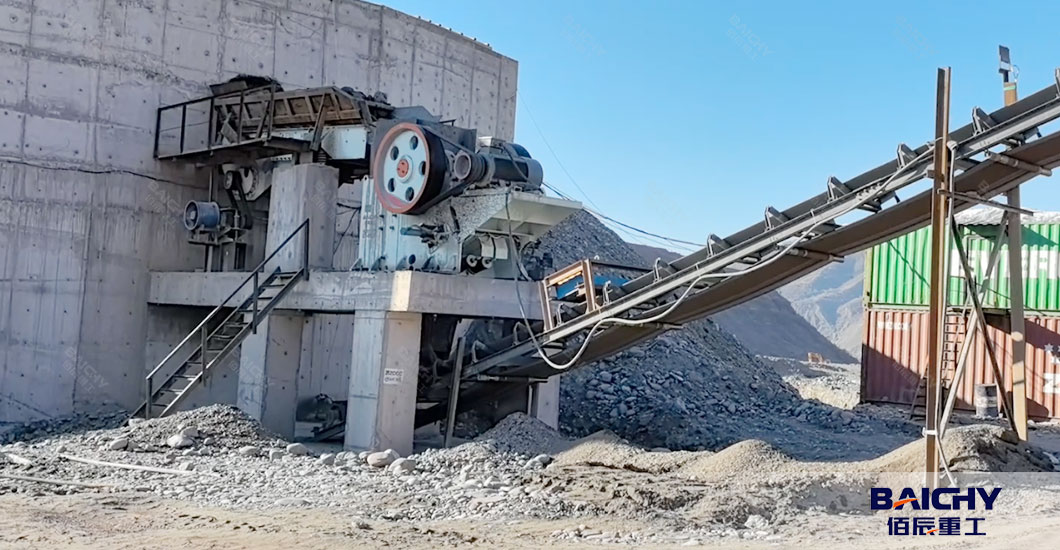
1. The Capacity Gap: Nameplate vs. Actual Production
The "Nameplate Capacity" on stone crusher provided by manufacturers represents the theoretical maximum throughput under ideal conditions: continuous feed, perfectly graded dry material, and optimal settings. In the real world, several factors erode this number:
● Mechanical Availability: No machine runs 60 minutes of every hour. Time is lost to belt adjustments, clearing blockages, and lubrication.
● Operational Efficiency: This accounts for the gap between truck loads and the time it takes for the feeder to respond to an empty hopper.
● The "Surge" Reality: Primary crushers often experience "slug feeding"—where a large dump of material exceeds the instantaneous capacity, followed by a brief period of empty running.
2. The Sizing Formula
According to the technical standards outlined in the SME Mineral Processing Design and Operation Guide, the nominal design capacity of a primary comminution unit must be calculated by applying specific utilization coefficients to the net production objective. This methodology ensures that the jaw crusher equipment can compensate for inherent operational variances, such as intermittent feed cycles and scheduled mechanical maintenance.
Research into plant optimization indicates that the relationship between the required net throughput and the equipment’s instantaneous nominal capacity is defined by the following industry-standard formula:
Required Capacity = Target Net Output / (Availability x Surge Factor)
Where:
● Required Capacity : Nominal Design Capacity (The required manufacturer rating).
● Target Net Output : Required Net Hourly Production (The target output for downstream processes).
● Availability : Mechanical Availability Coefficient (Accounting for maintenance and unplanned downtime).
● Surge Factor: Utilization Factor (Accounting for feed surge variance and material flow inconsistencies).
Based on empirical data from global mining operations, for a facility requiring a consistent net average throughput of 300 TPH, the calculation is structured as follows:
● Required Net Throughput: 300 TPH
● Mechanical Availability : 0.80 (A standard industry benchmark for primary jaw crushers in hard rock applications).
● Utilization Factor 0.90 (To account for the "surge factor" inherent in truck-and-shovel loading cycles).
● Calculated Nominal Capacity: 300÷(0.80×0.90)=416.67 tph
Studies demonstrate that failing to incorporate these factors leads to a "bottleneck effect" at the primary stage, which cascades through the secondary and tertiary circuits. Therefore, to sustain an average of 300 TPH, the primary crusher must be specified with a nominal instantaneous throughput rate of approximately 417 TPH.
3. The Influence of Material Rheology: Moisture and Interstitial Fines
According to mineral processing research, the presence of moisture and "fines" (particles already smaller than the target discharge size) significantly alters the internal dynamics of the crushing chamber. When moisture content exceeds a critical threshold—typically 3% to 5% by weight—the material transitions from a free-flowing solid to a semi-cohesive mass.
● Chamber Packing and Volumetric Efficiency: High moisture levels cause fine particles to adhere to the crusher liners, a phenomenon known as "packing." This effectively reduces the cross-sectional area of the crushing chamber, restricting the flow of material and causing a localized bottleneck. Research suggests that for every 1% increase in moisture above the threshold, actual throughput can decrease by up to 10-15%.
● Mechanical Overload and Power Consumption: Sticky material increases the internal friction within the crushing zone. As the material resists discharge, the primary unit may experience "power spikes" or high-pressure trips, necessitating an even larger nameplate capacity to handle the increased mechanical stress without triggering safety shutdowns.
● Mitigation through Scalping: To compensate for these effects, industry best practices recommend the use of a Vibrating Grizzly Feeder (VGF). By removing minus-size material (fines) before they enter the primary unit, the effective "work" of the crusher is reserved only for rock that requires reduction, thereby reclaiming lost nameplate capacity.
4. Recommended Capacity Scenarios for 300 TPH Output
| Environment |
Recommended Nameplate Capacity |
Reason |
| Dry / Ideal Conditions |
360 - 380 TPH |
Minimal downtime; steady feed flow. |
| Standard Quarry Ops |
400 - 420 TPH |
Accounts for truck cycles and routine maintenance. |
| Wet / Sticky Material |
450+ TPH |
Compensates for "packing" and slower material flow. |
| Recycling (Concrete/Asphalt) |
400 TPH |
Accounts for irregular feed sizes and rebar interference. |
5. System Integration and Feed Regulation: Engineering Pro-Tips
Studies in comminution circuit design demonstrate that the primary crusher does not operate in isolation; its performance is intrinsically linked to the feed system and the downstream conveyor capacity.
● Dynamic Feed Control (VFD Integration): To stabilize the 300 TPH net output, the use of Variable Frequency Drives (VFDs) on the primary feeder is essential. This allows for real-time adjustment of the feed rate to compensate for surges in truck-dumping cycles. By maintaining a "choke-fed" condition (keeping the crushing cavity consistently full), the machine achieves optimal laminated crushing, which maximizes throughput and minimizes eccentric shaft wear.
● The CSS-Throughput Correlation: It is a fundamental principle of stone crushing mechanics that the Closed Side Setting (CSS) is inversely proportional to throughput. As the CSS is narrowed to achieve a finer product, the "void space" in the discharge area decreases, lowering the TPH. When sizing for a 300 TPH target, engineers must evaluate the nameplate capacity at the minimum anticipated CSS, not the maximum, to avoid capacity shortfalls during production shifts requiring finer grades.
● Scalping and Bypass Efficiency: Research indicates that bypass efficiency—the percentage of fines correctly diverted away from the crusher—can range from 60% to 90% depending on grizzly bar spacing and material dampness. If a circuit is designed with a high bypass rate, the primary crusher's nameplate requirement may be slightly reduced; however, a conservative buffer is always recommended to account for grizzly "blinding" (clogging) in adverse weather conditions.
6. Final Verdict: The Technical Rationale
In conclusion, achieving a consistent 300 TPH net output requires more than selecting a machine with a matching label. Based on the SME Mineral Processing methodology, engineers must account for a mechanical availability of 0.80 and a utilization/surge factor of 0.90. Calculated Requirement: 300÷(0.80×0.90)=417 TPH
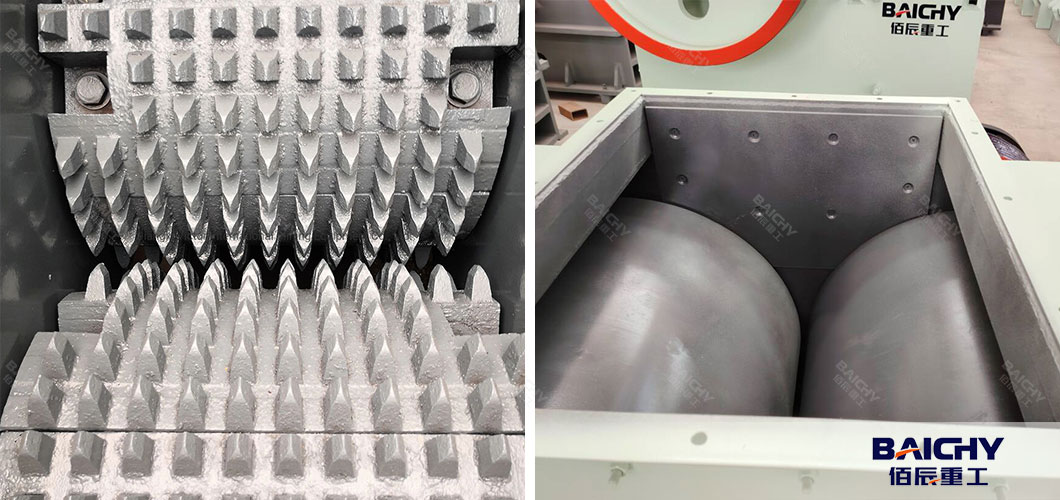
To ensure long-term operational stability, the primary crusher—typically a heavy-duty Jaw Crusher—should be specified with a nominal instantaneous capacity of approximately 420 TPH. This strategic "over-sizing" provides the necessary headroom to manage high-moisture events, feeding surges, and the inevitable reduction in throughput when operating at tighter discharge settings.




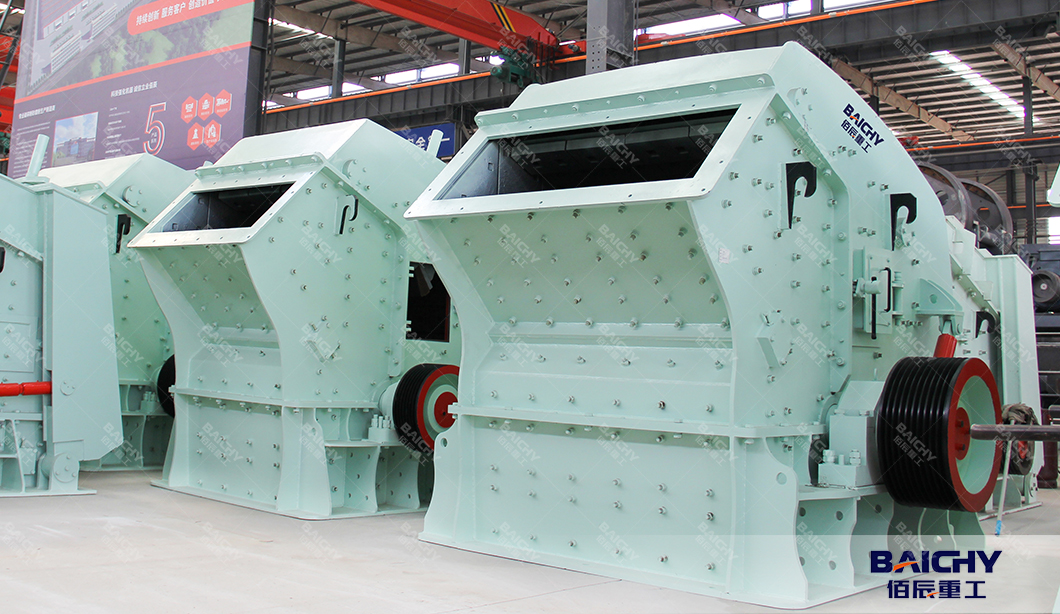
 2026-10-10





 86-15093113821
 86-15093113821