Hammer crushers are widely used in mineral processing, construction, and recycling due to their simple structure and high crushing efficiency. However, their performance varies significantly based on material properties (e.g., hardness, moisture, clay content). Below is a concise, professional analysis of their key advantages and disadvantages
Hammer Crusher Advantages:
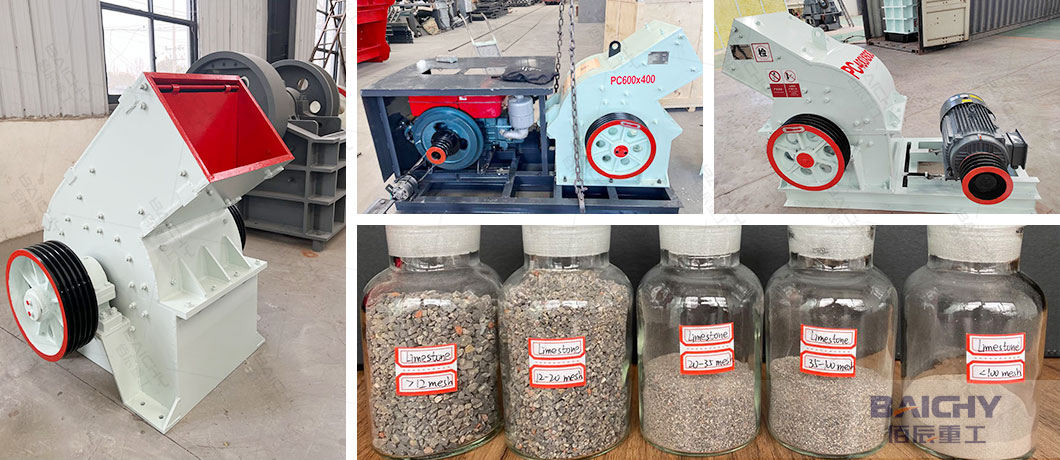
1.High crushing ratio: Generally, the crushing ratio of hammer crushers can reach 10 to 25, and in some cases, it can be as high as 50. This means they can effectively reduce large pieces of material into smaller particles in a single crushing process, improving work efficiency and reducing the need for multiple crushing stages.
2.High production capacity: PC Hammer crushing machine are designed to handle a large amount of material in a short period of time, making them suitable for high-volume production applications. Their high-speed rotation of the rotor and the impact force of the hammers enable efficient crushing, resulting in high output.
3.Uniform product size: The crushing action of hammer crushers ensures that the resulting product has a relatively uniform particle size distribution. This is beneficial for subsequent processing steps such as grinding, mixing, and separation, as it provides a more consistent feed material.
4.Simple structure and low cost: The structure of hammer crushers is relatively simple, consisting of a rotor, hammers, a casing, and a screening mechanism (in some cases). This simplicity leads to lower manufacturing and maintenance costs compared to some other types of crushers, such as cone crushers or gyratory crushers, which have more complex structures and require more expensive components.
5.Versatility: Hammer crushers can handle a wide variety of materials, including soft and medium-hard materials such as limestone, coal, gypsum, and shale. They are also suitable for crushing materials with different moisture contents, although the moisture content should generally not exceed a certain limit (usually around 10%).
6.Selective crushing: hammer crusher mills have the ability to selectively crush materials based on their density. Materials with higher density are more likely to be crushed into smaller particles, while those with lower density may remain relatively larger. This selective crushing can be useful in separating different components of a material or in achieving a specific particle size distribution.
7.Light weight and easy installation: Due to their relatively simple structure and lightweight design, hammer crushers are easier to install and transport compared to some heavier and more complex crushers. This makes them suitable for use in various locations, including small-scale mining operations or construction sites where mobility is important.
Disadvantages Of Hammer Crushers :
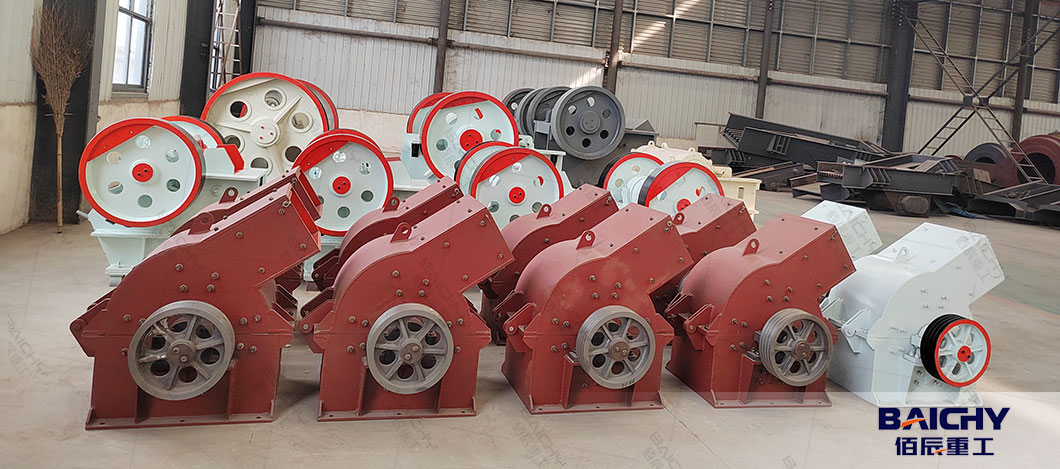
1.Hammer head wear: The hammers in hammer crushers are the main wearing parts and are subject to significant wear and tear during operation, especially when crushing hard materials. The wear of the hammer head not only affects the crushing efficiency and product quality but also requires frequent replacement, increasing maintenance costs and downtime.
2.Not suitable for hard materials: Although PC hammer crushers can handle a variety of materials, they are not as effective in crushing extremely hard materials compared to some other crushers, such as jaw crushers or cone crushers. Crushing hard materials can cause excessive wear on the hammer head and other components, reducing the service life of the equipment.
3.Viscous material handling issues: When dealing with sticky or viscous materials, hammer crushers may experience problems such as clogging of the grate or screen. This can lead to reduced production capacity and even equipment breakdowns. Therefore, the moisture content and stickiness of the material need to be within a certain range for the hammer crusher to operate effectively.
4.Noise and vibration: The high-speed rotation of the rotor and the impact of the hammers can generate significant noise and vibration during the operation of the hammer crusher. This not only creates a noisy working environment but also may cause damage to the equipment and adjacent structures if not properly controlled.
5.Limited control over product size: While hammer crushers can produce a relatively uniform product size, the adjustment of the product size is not as precise as some other crushers, such as impact crushers or cone crushers. The discharge size of a hammer crusher is mainly determined by the gap between the hammers and the grate or screen, and the adjustment range may be limited.
Baichy Machinery has a history of more than 20 years. It not only produces a full set of crushing and sand making equipment, but also provides EPC project general contracting services, including plant site selection and construction, production line design and installation, and production and operation technical training. Welcome to consult online to get your exclusive hammer mill crusher solution.
Clike Here to Reald More About Hammer Crusher
1. Hammer Crusher PC800X800: Heavy-Duty Hammer Mill for Industrial Crushing Needs
2. Heavy hammer crusher applied in Sand making plant
3. Hammer Crusher- The Key to Building A Low Cost Stone Crushing Plant
4. Small Diesel Gold Hammer Crusher in Tanzania: Portable Power for Small-Scale Gold Mining
5. Jaw Crusher VS Hammer Mill: Which Crusher Is Best for Your Material?
6. Impact crusher VS hammer crusher
7. How to maintenance hammer mill crusher
8. Comparing PCZ Hammer Crusher vs. PC Hammer Crusher: Which Stone Crushing Machine is Right for You?
9. What Is The Difference Between Ball Mills And Hammer Mills?




 2026-09-16





 86-15093113821
 86-15093113821