Raymond millis a widely used grinding machine for producing fine powder from various non-metallic minerals and industrial materials. Because of its stable operation, adjustable fineness, and relatively simple structure, it is commonly used in industries such as mining, construction materials, chemical processing, and mineral fillers.
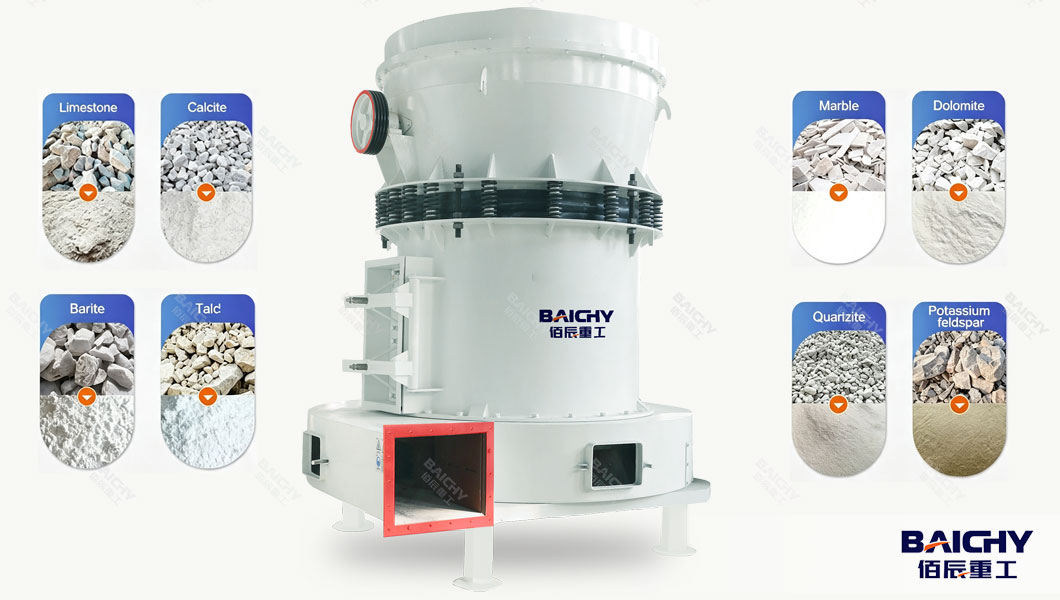
However, not every material is suitable for Raymond mill grinding. The material hardness, moisture content, abrasiveness, and required powder fineness all affect the selection of the grinding equipment. In general, Raymond mills are mainly used for processing soft to medium-hard materials with Mohs hardness below 7. Common materials include limestone, calcite, barite, dolomite, gypsum, talc, and many other mineral resources.
The Gold Standard: Hardness and Moisture Limits
Before diving into the specific materials, every operator must adhere to two core technical constraints:
● Mohs Hardness: Below 9.3 (Materials between 3-7 are ideal).
● Moisture Content: Below 6% (to prevent clogging and "paste" formation in the air ducts).
Categorized List of Materials Processed by Raymond Mills
Limestone is one of the most common materials processed by Raymond mills. Limestone powder is widely used in cement production, construction materials, chemical industries, and environmental applications.
A Raymond mill can grind limestone into different fineness levels according to application requirements. Coarse powder can be used as building material filler, while fine limestone powder is commonly used in industries such as calcium carbonate production and desulfurization.
Because limestone has moderate hardness and good grindability, it is one of the ideal materials for Raymond mill processing.
Calcite is an important calcium carbonate mineral and is widely used in plastics, coatings, paint, rubber, and paper industries.
A Raymond mill can process calcite into fine powder with controlled particle size distribution. The finished powder usually requires good whiteness, purity, and stable fineness.
For applications requiring higher powder quality, a Raymond mill equipped with an efficient classifier can provide more accurate particle size control.
Barite is a high-density mineral mainly used in oil and gas drilling fluids, chemical products, and industrial fillers.
Because barite has relatively high density but moderate hardness, it can be processed by Raymond mills for producing barite powder.
The grinding system should be properly configured according to the required fineness and production capacity. A stable air circulation system and efficient powder separation help improve grinding efficiency.
Dolomite is a calcium magnesium carbonate mineral used in glass production, metallurgy, agriculture, and construction materials.
Raymond mill is suitable for grinding dolomite into fine powder because of its good adaptability to carbonate minerals.
The produced dolomite powder can be used as a raw material for fertilizers, refractory materials, and industrial fillers.
Gypsum is widely used in building materials, especially in gypsum board, plaster, and cement production.
Raymond mills can grind gypsum into fine powder with uniform particle size. The low-temperature grinding process helps maintain the quality of gypsum powder during production.
For gypsum processing, proper moisture control is important because excessive moisture may affect feeding and grinding efficiency.
Talc is a soft mineral with excellent lubricity, chemical stability, and heat resistance. It is commonly used in ceramics, cosmetics, plastics, coatings, and paper industries.
Due to its low hardness, talc is suitable for Raymond mill grinding. The mill can produce fine talc powder with stable particle size, meeting different industrial requirements.
Bentonite is a clay mineral with strong absorption and swelling properties. It is widely used in drilling mud, foundry materials, cat litter, and environmental applications.
Raymond mills can process bentonite into fine powder. However, because bentonite may contain moisture and has strong adsorption characteristics, the grinding system should be designed according to the material condition.
Some Raymond mill models can also process coal and petroleum coke for applications such as activated carbon production, fuel preparation, and industrial materials.
When grinding these materials, explosion protection and temperature control are important considerations. The equipment configuration should be selected according to safety requirements and production conditions.
Other Materials Suitable for Raymond Mill
Besides the materials mentioned above, Raymond mills can also process many other non-metallic minerals, including:
Kaolin
Mica
Fluorite
Potassium feldspar
Quartz
Marble
Attapulgite
Phosphate rock
The final application depends on the material characteristics and required powder specifications.
How Does a Raymond Mill Process These Materials?
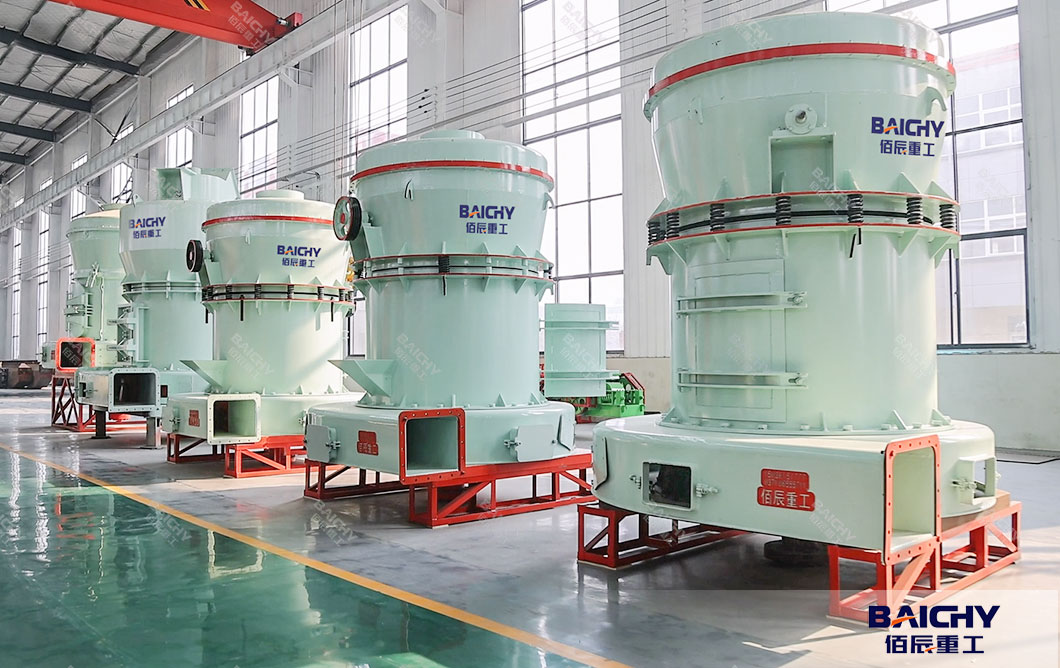
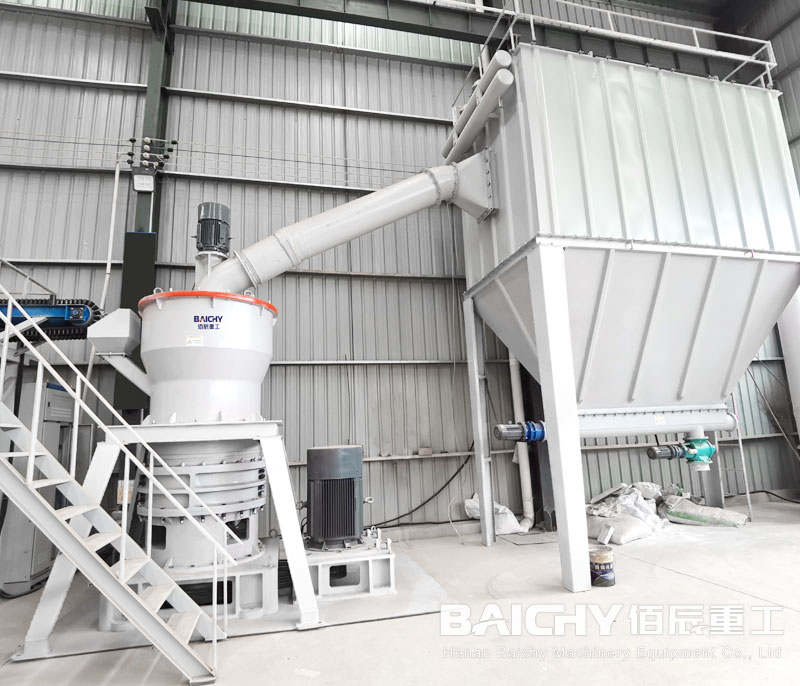
A typical Raymond mill grinding system includes a feeder, grinding chamber, classifier, fan, cyclone separator, and dust collector.
The working process is:
Raw material is fed into the grinding chamber through the feeder. The grinding rollers rotate and apply pressure to crush and grind the material between the roller and grinding ring. The airflow carries the fine powder to the classifier, where qualified particles are collected as finished products, while coarse particles return for further grinding.
This closed-loop grinding process helps achieve stable product quality and efficient powder production.
Baichy provides customized Raymond mill solutions for different mineral processing applications. With professional engineering support and complete grinding system design, Baichy helps customers select suitable equipment for efficient and reliable powder production.




 2026-09-18






 86-15093113821
 86-15093113821