Which Vibrating Screen Is Best for Your Job Site?
The right vibrating screen depends on where you work, how often you move equipment, and how much material you need to process.
A wheeled mobile vibrating screen suits projects that require relocation between accessible sites. A tracked mobile screen is often more practical on rough terrain or where the machine must move around a job site. A fixed vibrating screen is generally worth considering for long-term production at a permanent quarry or processing plant.
Before choosing a machine, compare four factors: site conditions, relocation frequency, required capacity, and total operating cost. These factors usually matter more than mobility alone.
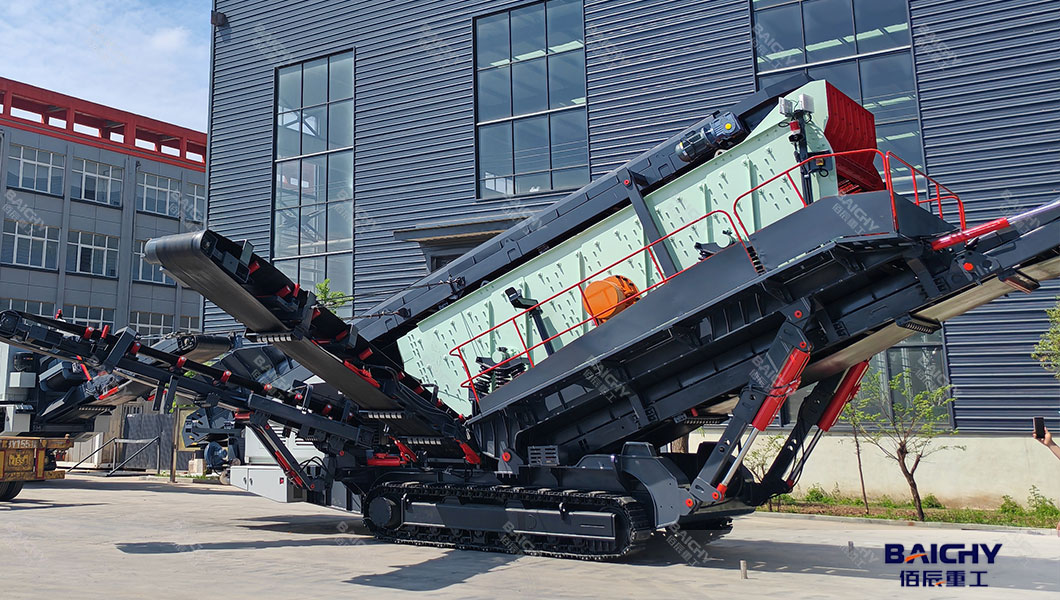
1. Wheeled vs. Tracked Mobile Vibrating Screen
Both designs screen materials such as crushed stone, gravel, and selected construction waste. The main difference is how they move and operate on site.
| Comparison |
Wheeled Mobile Screen |
Tracked Mobile Screen |
| Movement |
Typically towed or transported between sites |
Moves under its own crawler drive within site limits |
| Road access |
Needs suitable transport access and towing arrangements |
Usually transported on a suitable trailer between distant sites |
| Working terrain |
Best on accessible sites with suitable positioning areas |
Often better suited to uneven or changing job-site conditions |
| Setup |
Requires positioning and any specified supports |
Requires suitable ground and setup according to the machine design |
| Typical applications |
Aggregate projects, contractors, and multi-site screening |
Quarries, construction sites, and operations needing frequent on-site movement |
| Main cost factors |
Towing, transport, setup, and operating costs |
Transport, crawler maintenance, fuel, and operating costs |
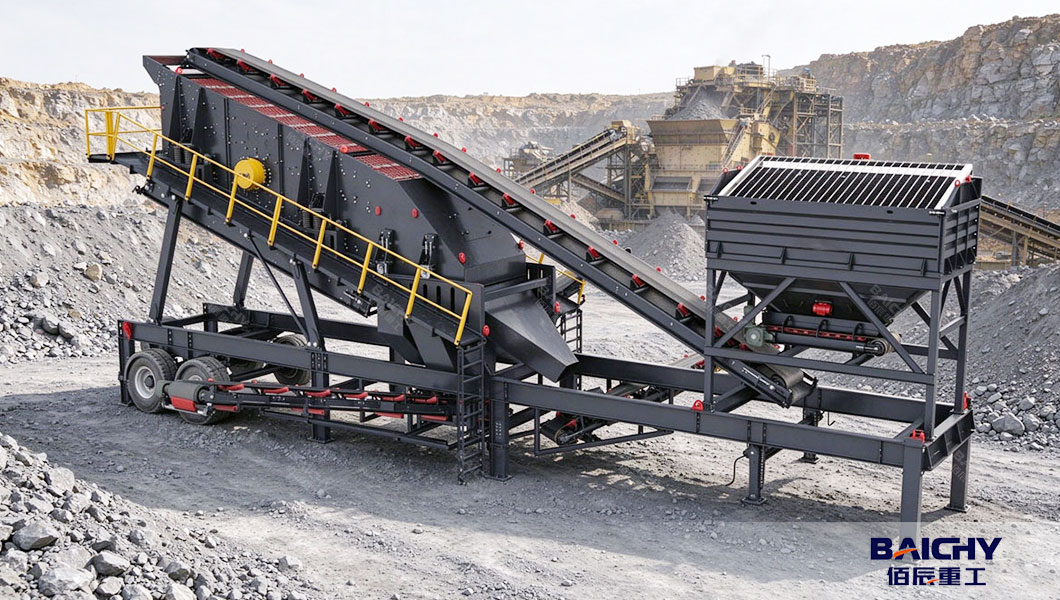
When Should You Choose a Wheeled Mobile Screening Plant?
Choose a wheeled design when you need to move between projects with suitable road access and relatively straightforward setup conditions.
For example, an aggregate contractor working at several accessible sites may prefer a wheeled screening plant that can be relocated as project requirements change.
Before purchasing, confirm transport dimensions, axle loads, towing requirements, and local road regulations. A wheeled machine is not automatically cheaper or easier to move in every situation.
When Is a Tracked Mobile Screening Plant Better?
A tracked screen is worth considering when work involves uneven ground, frequent repositioning within a quarry, or changing material stockpiles.
Crawler mobility allows the machine to move around the working area without being towed each time. However, tracks do not eliminate ground-pressure limits, transport requirements, or the need for proper positioning.
If your project involves rough terrain and frequent on-site movement, compare tracked models first. If the equipment mainly moves between accessible sites, a wheeled option may be sufficient.
2. Mobile vs. Fixed Vibrating Screen
The second decision is whether you need a mobile or stationary screening system.
| Factor |
Mobile Screening Plant |
Fixed Screening Plant |
| Installation |
Usually requires less permanent infrastructure |
Often needs foundations, structural supports, and fixed conveyors |
| Relocation |
Designed for movement between working positions or sites |
Not intended for routine relocation |
| Site flexibility |
Suitable for temporary and changing projects |
Best for a stable, long-term production layout |
| Production layout |
Can operate independently or within a mobile circuit |
Can integrate with multiple crushers, conveyors, and stockpiles |
| Investment considerations |
Equipment, transport, setup, and relocation costs |
Equipment, civil works, installation, and infrastructure costs |
| Best fit |
Contractors and projects with changing locations |
Permanent quarries and continuous processing operations |
Choose Mobile Screening for Flexible Projects
A mobile screening plant is suitable when the work location changes or when building a permanent processing line is impractical.
Typical applications include road construction, temporary aggregate production, selected demolition waste recycling, and quarry operations that need to reposition screening equipment.
Mobile equipment can reduce the need for permanent infrastructure, but the actual savings depend on transport, setup, maintenance, and production requirements.
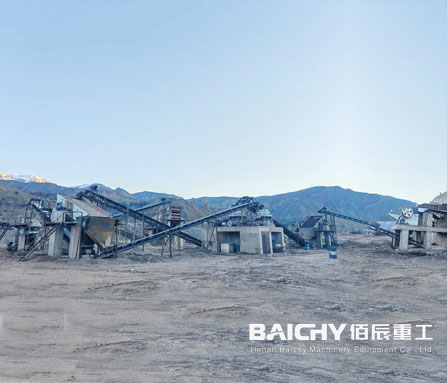
Choose Fixed Screening for Long-Term Production
A fixed vibrating screen is often a better fit for a quarry that operates at one location and requires a coordinated production line.
A stationary layout can support multiple screening stages, longer conveyor systems, and several product stockpiles. It may also provide a more practical arrangement for high-volume, continuous production.
The trade-off is that foundations, installation, and fixed infrastructure increase initial project requirements. If your site and production plan are stable for years, compare the total lifecycle cost rather than the equipment purchase price alone.
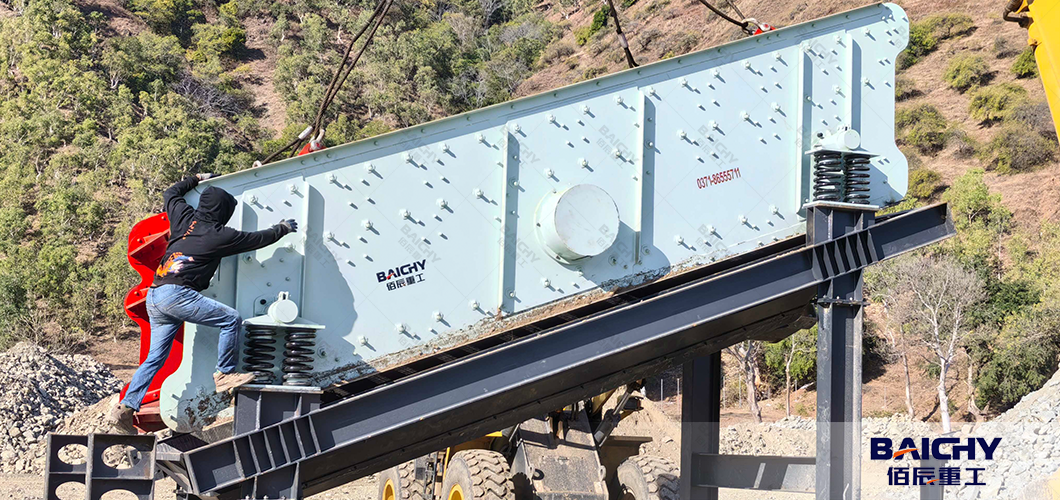
3. How to Choose the Right Screen for Your Material
Mobility is only one part of equipment selection. Screening performance also depends on the feed and the products you need.
For hard rock and crushed aggregates: Check the maximum feed size, particle shape, target fractions, and required throughput. Ensure the screen can handle the crusher's actual discharge rate.
For sand and gravel: Consider moisture, fines content, and the number of size fractions required. Damp material may block screen openings and reduce efficiency.
For construction and demolition waste: Evaluate feed variability, oversized pieces, and the need to remove unwanted materials before screening. The complete process may require a crusher, feeder, magnetic separator, or additional sorting equipment.
For wet or sticky materials: Ask about suitable screen media, deck configuration, and measures to reduce blinding. A standard vibrating screen may not perform well if the material is highly cohesive.
For all applications, specify the required finished sizes and the target throughput in tons per hour. A machine's nominal capacity does not guarantee the same output under every material condition.
4. Four Questions to Ask Before Buying
Before requesting a quotation, prepare answers to these questions:
-
How often will the plant move? Frequent repositioning around rough terrain favors considering a tracked design. Movement between accessible sites may suit a wheeled machine.
-
Will the plant stay in one location? If so, compare the long-term economics of a fixed screening line.
-
What are the feed and output requirements? Provide material type, maximum feed size, target product sizes, moisture, and required throughput.
-
What infrastructure is available? Check road access, working space, ground conditions, electricity or fuel arrangements, and existing crushers and conveyors.
These details help a manufacturer recommend a suitable screen size, deck arrangement, drive system, and plant configuration.
A Baichy Mobile Crushing and Screening Project in the Philippines
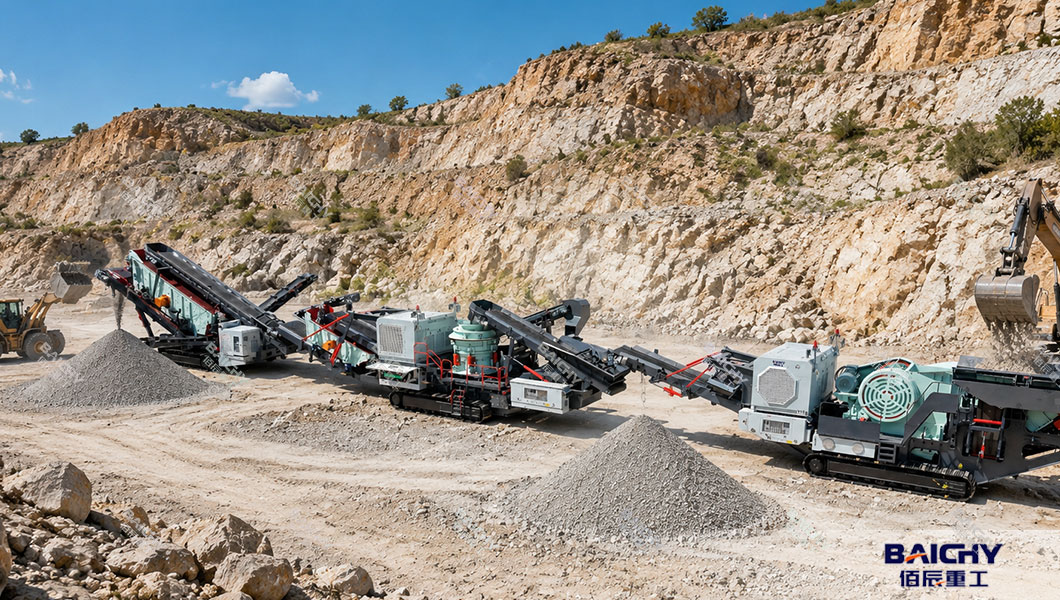
A real project in the Philippines demonstrates how mobile crushing and screening equipment can support aggregate production where flexibility and site access matter.
According to Baichy's published report, the company recently exported a crawler mobile crushing and screening station to the Philippines. Because the equipment was large and heavy, the shipment required careful planning, including confirmation of transport dimensions, weight, loading arrangements, and delivery conditions.
This case highlights an important consideration for buyers: selecting mobile equipment involves more than screening capacity. Transport logistics, site access, equipment configuration, and coordination between crushing and screening stages also affect project planning.
The Philippine shipment involved a tracked mobile system, not a wheel-type screening plant. However, it provides a practical example of Baichy's experience supplying mobile crushing and screening equipment to the local market.
For buyers comparing wheel-mounted and tracked screening solutions, the next step is to assess road access, ground conditions, relocation frequency, material type, and required output sizes. These details help determine which configuration is appropriate for the project.
Read more about the Baichy crawler mobile crushing and screening station shipped to the Philippines.
Choose a wheeled mobile vibrating screen when relocation between accessible sites is important. Consider a tracked mobile screen when frequent movement over rough working areas is a priority. Choose a fixed vibrating screen when you need a permanent production line for long-term operations.
The best choice is the one that matches your site, material, production target, and operating plan. Before buying, compare the complete system rather than the screen alone, and ask the manufacturer to confirm capacity and configuration against your actual working conditions.
Baichy Machinery supplies crushing and screening equipment for aggregate production and mineral processing. Share your material type, target capacity, finished sizes, and site conditions to help identify a suitable screening solution.
Frequently Asked Questions
1. Is a wheeled or tracked mobile vibrating screen better?
Neither is universally better. Wheeled models suit projects with appropriate transport access and straightforward relocation. Tracked models are often more suitable for frequent movement around rough job sites.
2. Is a mobile vibrating screen cheaper than a fixed screen?
Not always. Mobile equipment may reduce permanent installation costs, while fixed equipment may be more economical for stable, long-term production. Compare the complete project cost, including installation, transport, maintenance, labor, and expected utilization.
3. Can a mobile vibrating screen work with a stone crusher?
Yes. A mobile screen can work with a separate crusher or as part of a coordinated crushing and screening circuit. The crusher's output, screen capacity, conveyor arrangement, and required product sizes must be compatible.
4. What capacity should I choose?
Start with your required hourly production, then consider feed gradation, material moisture, screen area, mesh sizes, and the number of products. Allow for real operating conditions rather than selecting a machine by its maximum advertised capacity alone.
5. Can one screening plant produce several aggregate sizes?
Yes, if the screen has a suitable deck arrangement and mesh configuration. The number of saleable fractions depends on the machine design, material characteristics, and required separation sizes.




 2026-10-29







 86-15093113821
 86-15093113821