Concrete production requires a stable supply of high-quality sand with suitable particle size, grading, and cleanliness. However, natural sand resources are becoming limited in many regions, making manufactured sand (M-sand) an important alternative for concrete mixing plants. A sand making production line for concrete mixing is designed to process hard rocks such as granite, basalt, limestone, and river stone into artificial sand that meets concrete production requirements. The complete plant usually includes crushing, screening, sand making, shaping, and washing equipment to produce consistent fine aggregate. For concrete manufacturers, the key challenge is not only producing sand but also controlling particle size distribution, powder content, and grain shape to improve concrete strength and workability.
What Is a Sand Making Production Line for Concrete?
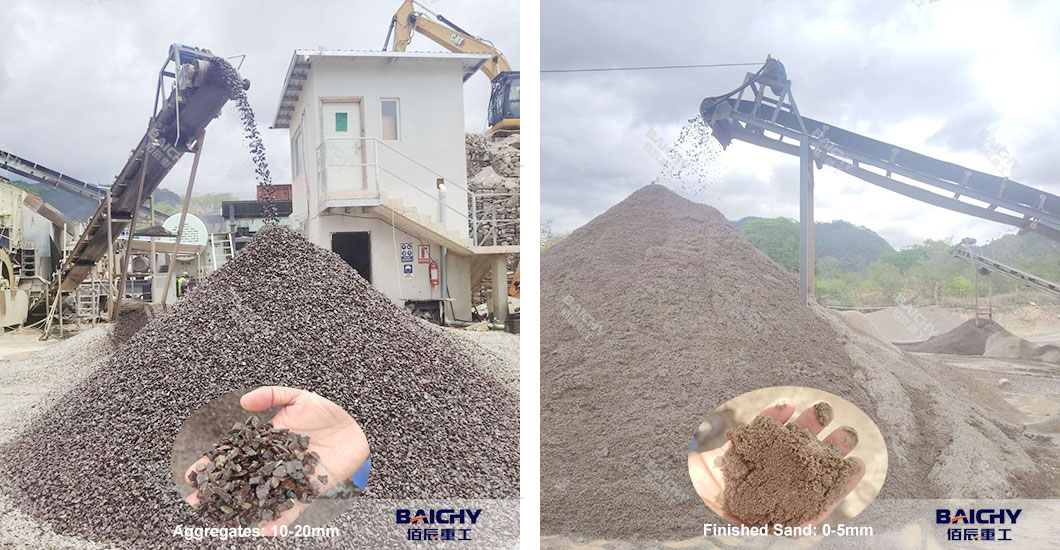
A sand making production line is a complete processing system that converts large stones into manufactured sand through multiple crushing and shaping stages.
Unlike traditional natural sand, artificial sand produced by a sand making plant can be controlled according to concrete requirements. By adjusting the crushing process and screening system, the final sand can achieve a more stable gradation and better particle shape.
Typical applications include:
● Commercial concrete mixing plants
● Construction aggregate production
● Highway and railway projects
● Infrastructure construction
● Precast concrete production
A well-designed sand production line helps concrete producers reduce dependence on natural sand while maintaining stable raw material quality.
Sand Making Process for Concrete Production
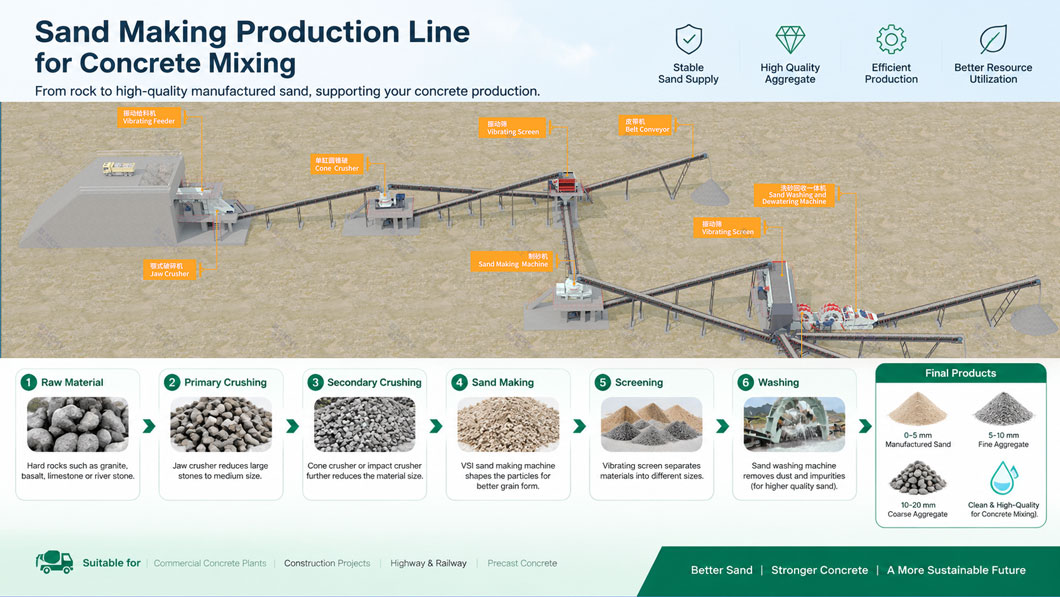
The production process depends on the hardness and size of the raw material. A typical concrete sand making plant includes four main stages.
1. Raw Material Crushing
Large rocks cannot directly enter the sand making machine. The first step is reducing the feed size through primary crushing.
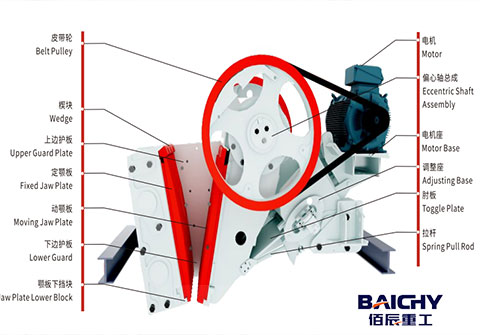
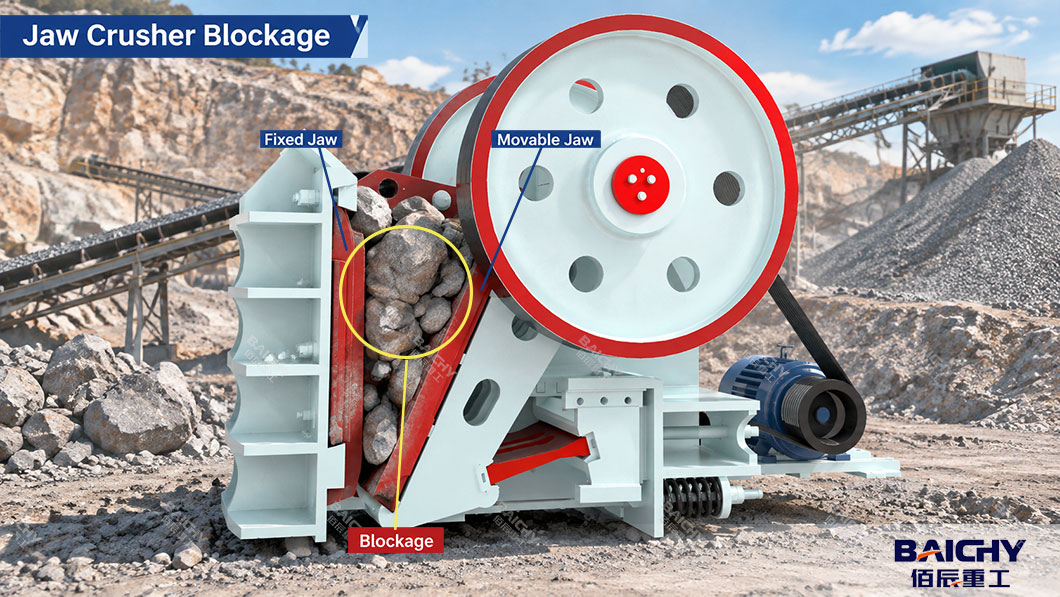
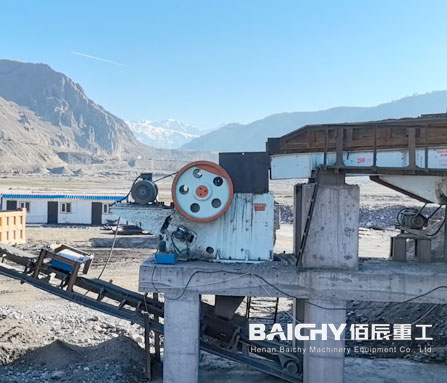
A jaw crusher is commonly used for primary crushing because it can handle large stones with high compressive strength. The crushed material is then transported to the secondary crushing stage.
For example:
Raw stone → Jaw crusher → Medium-sized aggregate
The crushing stage provides suitable feed material for the sand making process and improves overall production efficiency.
2. Secondary Crushing and Particle Size Control
After primary crushing, impact crushers or cone crushers are usually used to further reduce material size.
The secondary crushing stage mainly focuses on:
● Reducing oversized particles
● Improving crushing efficiency
● Preparing material for sand shaping
For medium and hard stones such as granite and basalt, a combination of jaw crusher and cone crusher is often selected because of its high wear resistance and stable output.
3. Sand Making and Particle Shaping
The core equipment of a manufactured sand production line is the sand making machine, commonly known as a VSI crusher.
The VSI sand making machine uses high-speed impact crushing to reshape crushed stone particles. Compared with traditional crushing methods, it can produce sand with better cubic shape and fewer elongated particles.
High-quality manufactured sand for concrete requires:
● Proper particle size distribution
● Good grain shape
● Controlled fine powder content
● Stable production quality
The sand making stage directly affects the performance of the final concrete mixture.
4. Screening and Sand Washing
After sand making, vibrating screens separate materials according to different sizes.
Typical final products include:
● 0–5 mm manufactured sand
● 5–10 mm fine aggregate
● 10–20 mm coarse aggregate
If the raw material contains dust, clay, or impurities, a sand washing machine can be added to improve cleanliness.
Clean manufactured sand helps improve:
● Concrete strength
● Mixing performance
● Surface quality of finished structures
Main Equipment in a Concrete Sand Making Plant
A complete sand production line usually consists of the following equipment:
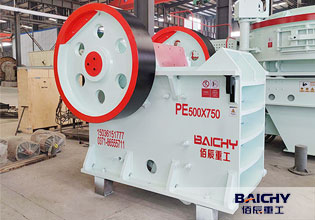
Jaw Crusher
Used for primary crushing of large stones. It provides reliable performance and is suitable for granite, basalt, limestone, and other materials.
Cone Crusher or Impact Crusher
Used for secondary crushing and improving crushing efficiency.
VSI Sand Making Machine
The key equipment for producing artificial sand. It improves particle shape and creates high-quality fine aggregate for concrete.
Vibrating Screen
Separates different sizes of aggregate and ensures accurate product grading.
Sand Washing Machine
Removes dust and impurities from manufactured sand when higher-quality concrete aggregate is required.
Belt Conveyor
Connects different processing stages and provides continuous material transportation.
Advantages of Manufactured Sand for Concrete Mixing
● Stable Supply of Construction Sand
Manufactured sand production is not affected by seasonal changes in natural sand availability, providing a more reliable material source.
● Adjustable Sand Quality
The crushing and screening process allows producers to control particle size and grading according to concrete requirements.
● Better Resource Utilization
Hard rocks, quarry waste, and stone dust can be processed into valuable construction materials.
● Suitable for Large Infrastructure Projects
A complete sand making plant can provide continuous aggregate production for roads, bridges, buildings, and commercial concrete plants.
Example Configuration of a Sand Making Plant for Concrete
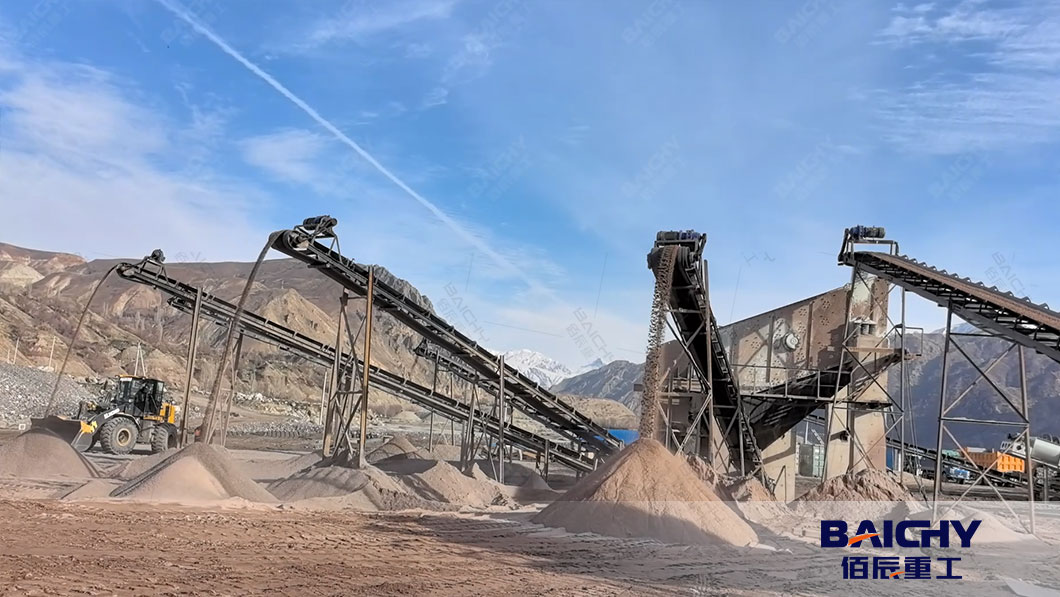
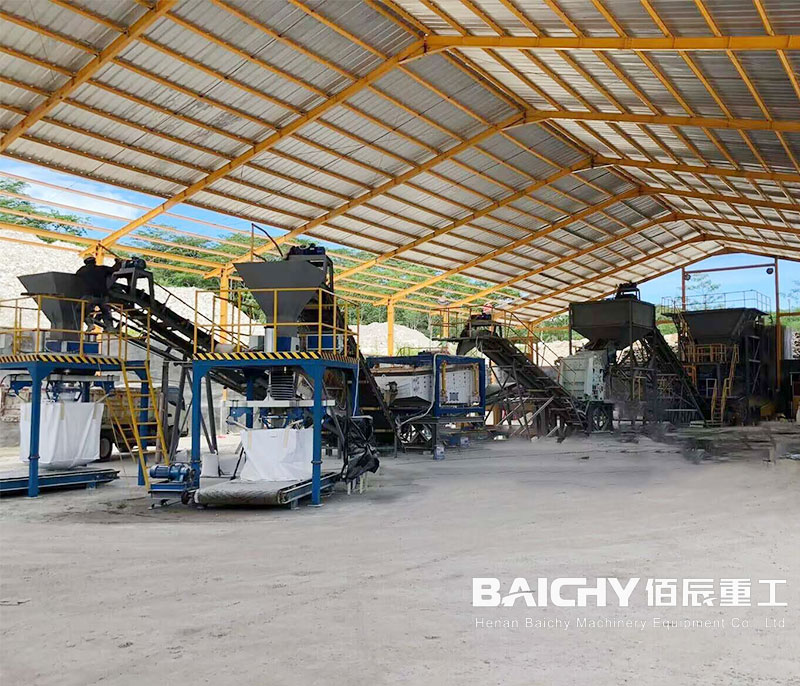
A customer in East Africa invested in a Baichy sand making plant to produce manufactured sand for concrete mixing. The project uses local hard rock as raw material and adopts a process of jaw crushing, single cylinder cone crusher, VSI sand making, screening, and washing.
The plant produces high-quality 0–5 mm manufactured sand with stable grading, providing a reliable aggregate supply for local construction projects.
Customer feedback:
"The Baichy sand production line runs smoothly and helps us reduce dependence on natural sand. The manufactured sand quality meets our concrete production requirements."
For concrete manufacturers, choosing the right equipment configuration is essential to achieve consistent sand quality, reliable production, and reasonable operating costs. Welcome to contact Baichy Machinery to get customized sand making plant price and flowchart.
FAQ About Sand Making Production Line for Concrete
1. Can artificial sand replace natural sand in concrete?
Yes. Properly produced manufactured sand can replace natural sand in many concrete applications. The key is controlling particle size, shape, and cleanliness during production.
2. What stone is suitable for making concrete sand?
Common materials include granite, basalt, limestone, river stone, and other hard rocks with suitable physical properties.
3. Which machine is used to make sand?
A VSI sand making machine is commonly used for producing manufactured sand because it can improve particle shape and produce cubical sand particles.
4. How much does a sand making plant cost?
The cost depends on capacity, equipment selection, raw material type, and final product requirements. A customized solution is usually required for accurate estimation.




 2026-10-12





 86-15093113821
 86-15093113821