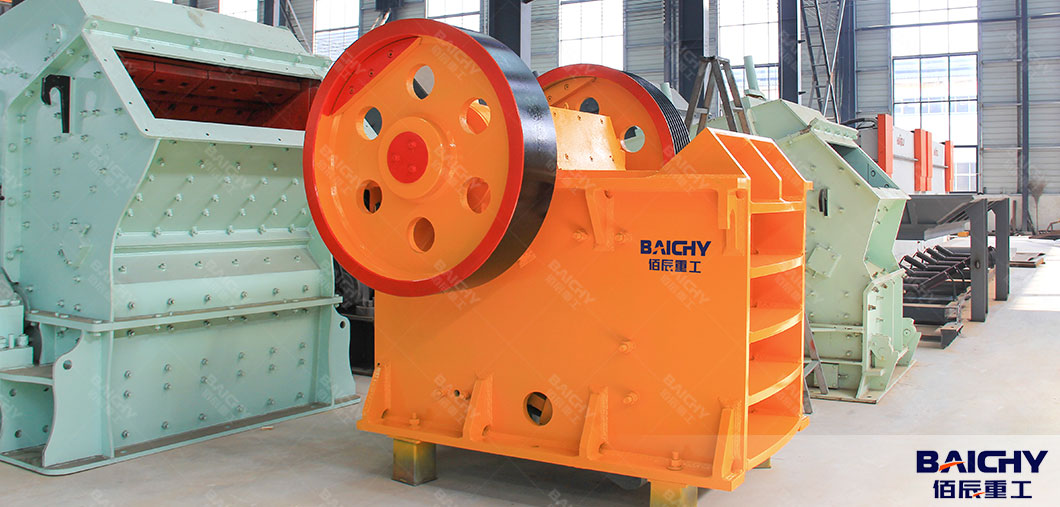
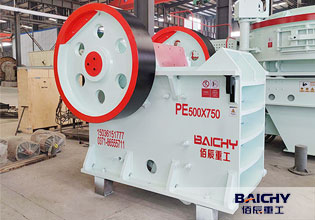
The PE500X750 jaw crusher is a medium-size primary crushing machine designed for processing various hard and abrasive materials, including limestone, granite, basalt, and other types of stone. With a 500×750 mm feed opening, this model is commonly used as the first crushing stage in small and medium-sized stone crushing plants.
For quarry owners and mining operators, choosing the right jaw crusher model is important because it directly affects production capacity, energy consumption, and the stability of the entire crushing process. The PE500X750 jaw crusher provides a practical solution for projects requiring reliable primary crushing performance and easy maintenance.
What Is the PE500x750 Jaw Crusher?
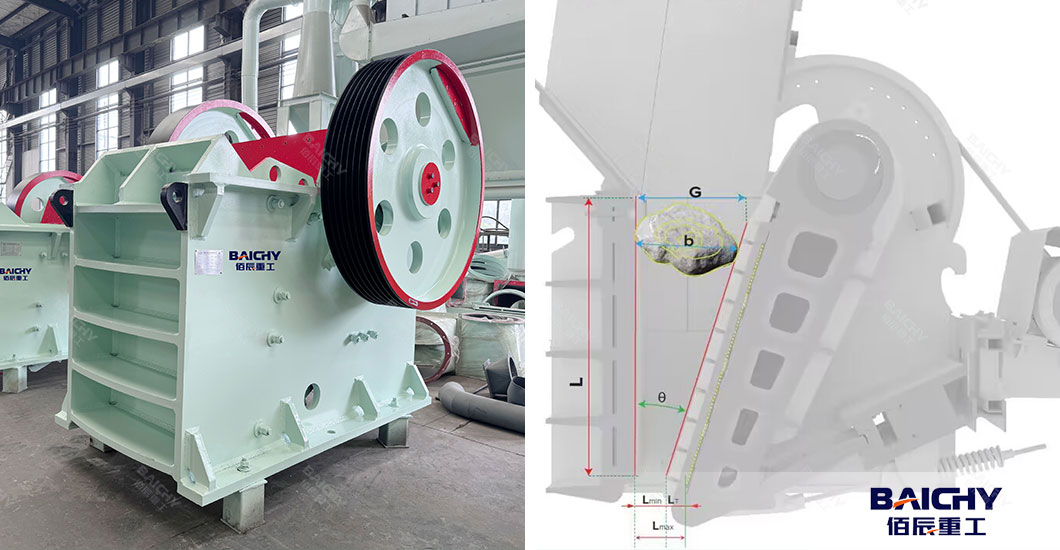
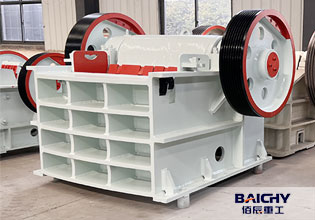
PE500X750 jaw crusher is a traditional primary crushing equipment that uses compressive force between a fixed jaw plate and a movable jaw plate to reduce large rocks into smaller sizes. It accepts feed material up to 425 mm and reduces it to a coarse product typically between 50 mm and 100 mm, depending on the discharge setting.
The model name represents its main specifications:
● PE: traditional jaw crusher series
● 500 mm: jaw opening width
● 750 mm: jaw opening length
During operation, raw materials enter through the feed opening, and the movable jaw repeatedly compresses the material against the fixed jaw plate. The crushed material is discharged from the bottom outlet and transported to the next processing stage. Because of its simple structure, strong crushing ability, and stable operation, PE500X750 jaw crusher is widely used in aggregate production, mining, and quarry applications.
Jaw crusher PE 500X750 technical parameters
| Parameter |
Specification |
| Model |
PE500x750 |
| Feed opening size (width × length) |
500 × 750 mm |
| Max. feeding size |
425 mm |
| Discharge opening range |
50–100 mm (adjustable) |
| Capacity |
40–110 t/h (varies by discharge setting and material) |
| Motor power |
55 kW |
| Eccentric shaft speed |
Approx. 275 rpm |
| Total weight |
12 t |
| Overall dimensions (L × W × H) |
1980 × 2080 × 1870 mm |
| Jaw plate material |
High manganese steel (Mn18Cr2 available) |
| Applications |
Limestone, granite, basalt, river pebble, iron ore, construction waste |
Note on capacity: The 40–110 t/h range reflects the difference between the tightest and widest discharge settings, combined with material hardness. The table below gives a more practical reference.
PE500x750 Capacity at Different Discharge Settings
This table is based on continuous, evenly distributed feeding with a vibrating feeder. Values assume medium-hard rock unless otherwise noted.
| Discharge setting |
Limestone (60–150 MPa) |
Granite / Basalt (150–250 MPa) |
Typical product size |
| 50 mm |
55–70 t/h |
40–50 t/h |
0–50 mm |
| 65 mm |
70–85 t/h |
50–65 t/h |
0–65 mm |
| 80 mm |
85–100 t/h |
65–80 t/h |
0–80 mm |
| 100 mm |
100–110 t/h |
80–95 t/h |
0–100 mm |
Why this matters: Many buyers compare crushers using the headline maximum capacity of 110 t/h. In practice, if you are crushing hard granite at a 50 mm setting, realistic output is closer to 40–50 t/h. Planning the plant around the actual working discharge setting prevents production shortfalls and mismatched equipment downstream.
Factors That Affect PE500x750 Capacity
Jaw crusher output is not a fixed number. It changes with the following conditions:
1. Material Hardness and Toughness
Hard and brittle materials fracture more readily than hard and tough materials. Limestone at 60–150 MPa crushes faster than granite at 200 MPa or above. Tough materials also increase jaw plate wear.
2. Feed Size Distribution
A feed composed of mixed particle sizes crushes more efficiently than a feed of uniform large particles. Flake-shaped material breaks more easily than rounded, spherical material.
3. Moisture Content
Wet, sticky feed material can bridge in the crushing chamber and reduce throughput. In high-rainfall regions, covering the feed hopper or using a vibrating feeder with a grizzly section helps maintain consistent flow.
4. Feeding Method
The single most important factor. Uneven feeding causes the most common performance problems:
Feeding too fast fills the chamber and causes blockage
Feeding too slowly leaves the chamber partially empty, reducing output and increasing wear on one side
Feeding material larger than 425 mm causes bridging and possible damage
For efficient operation, the PE500x750 should be paired with a vibrating feeder that provides a continuous, evenly distributed feed. A grizzly feeder can also scalp out fines before they enter the crusher, increasing effective capacity.
5. Discharge Setting
A wider discharge opening increases capacity but produces a coarser product. A narrower setting reduces capacity but produces finer output. The operator must balance these against the requirements of the next crushing stage.
Limestone vs. Granite: How Material Affects PE500x750 Performance
| Factor |
Limestone |
Granite / Basalt |
| Compressive strength |
60–150 MPa |
150–250 MPa |
| Abrasiveness |
Low to medium |
High |
| Capacity at 80 mm setting |
85–100 t/h |
65–80 t/h |
| Jaw plate life |
12–18 months |
6–10 months |
| Recommended secondary crusher |
Impact crusher |
Cone crusher or fine jaw crusher |
| Product shape |
Good cubical shape with impact crusher |
Good shape with cone crusher |
Practical takeaway: The PE500x750 handles both limestone and granite, but the plant design around it should differ. For limestone, an impact crusher secondary stage is often more economical. For granite or basalt, a cone crusher or fine jaw crusher secondary stage gives lower wear cost per ton.
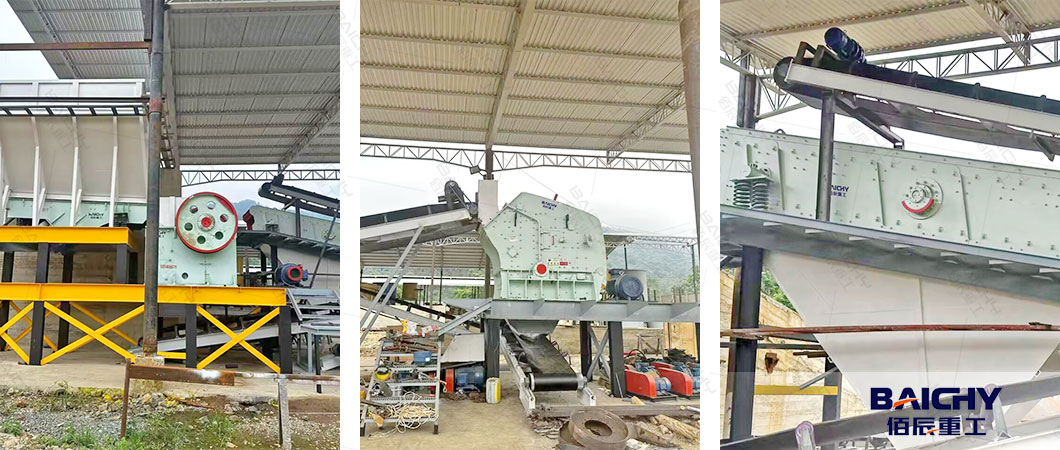
PE500X750 Jaw Crusher in 100tph Limestone Crushing Plant
A PE500X750 jaw crusher is often selected as the primary crusher in limestone crushing projects with production requirements around 100 tons per hour.
In a typical limestone crushing plant, the process includes:
Feeding → Primary Crushing → Secondary Crushing → Screening → Finished Aggregate
The PE500X750 jaw crusher is responsible for reducing large limestone rocks into smaller particles for further processing.
For example, in a limestone quarry project, the equipment selection depends on:
● Raw limestone size
● Required output size
● Production capacity
● Working environment
● Subsequent crushing equipment
Baichy provides complete crushing solutions according to customers' actual production requirements. We alos customize mobile jaw crusher plant and skid-mounted jaw crusher PE500X750 for mining, quarrying, construction waste industry.
Why Choose Baichy PE500X750 Jaw Crusher?
1. Stable Crushing Performance
Baichy jaw crushers are designed with strong crushing structures to handle continuous primary crushing operations in quarry and mining applications.
2. Optimized Design for Easy Maintenance
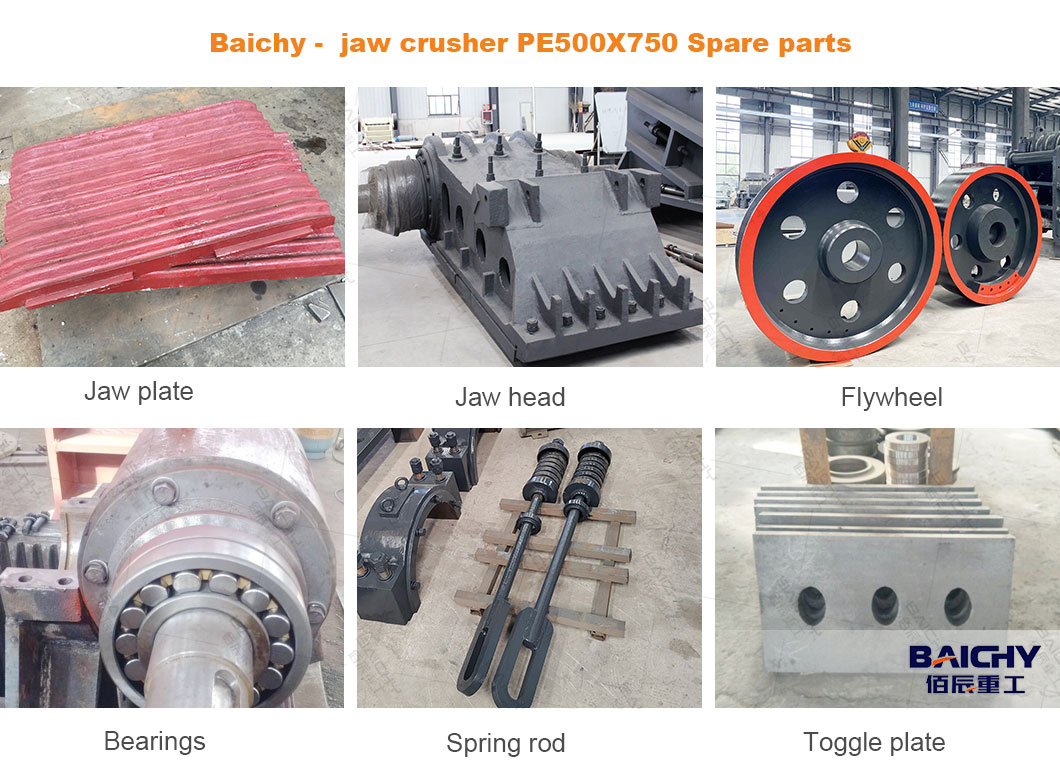
The equipment structure is designed for convenient inspection, replacement of wearing parts, and daily maintenance.
3. Complete Crushing Plant Support
Baichy provides not only individual jaw crushers but also complete solutions including feeders, crushers, screens, conveyors, and customized plant design.
4. Professional Technical Service
Baichy engineers provide equipment selection, installation guidance, and technical support according to different customer requirements.
Frequently Asked Questions About PE500X750 Jaw Crusher
1. What is the maximum feed size for the PE500x750?
The maximum feed size is 425 mm. In practice, a feed of 350–400 mm gives smoother operation and more consistent output. The general rule is that the maximum feed size should not exceed 80% of the feed opening width (500 mm × 0.8 = 400 mm).
2. What is the capacity of the PE500x750?
Capacity ranges from 40 t/h to 110 t/h depending on discharge setting and material hardness. At an 80 mm discharge setting, expect approximately 85–100 t/h in limestone and 65–80 t/h in granite. See the capacity table above for details at each setting.
3. Can the PE500x750 be used as a secondary crusher?
Technically it can, but it is designed as a primary crusher. For secondary crushing, a fine jaw crusher (PEX series), cone crusher, or impact crusher is generally more efficient because these are designed for finer output and better product shape.
4. What is the difference between the PE500x750 and the PE600x900?
The PE600x900 has a larger feed opening (600 × 900 mm) and higher capacity (90–180 t/h). It is suitable for larger plants or where the quarry produces larger boulders. The PE500x750 is a better fit for plants in the 40–110 t/h range with feed material under 425 mm.
5. How much does a PE500x750 jaw crusher cost?
Price depends on configuration, jaw plate material, motor specification, and whether a complete plant package is included. For a specific quotation including shipping and spare parts, contact the manufacturer directly with your feed material, required capacity, and target product size.




 2026-10-09





 86-15093113821
 86-15093113821