Phosphate rock is the cornerstone of the global fertilizer industry, providing the essential phosphorus needed for crop production and food security worldwide. Before this vital mineral can be transformed into fertilizers, it must undergo a critical processing step: grinding. Among the various grinding technologies available, the Raymond mill has proven to be one of the most reliable and cost-effective solutions for phosphate rock processing plants.
What Is Raymond Mill for Phosphate Rock?
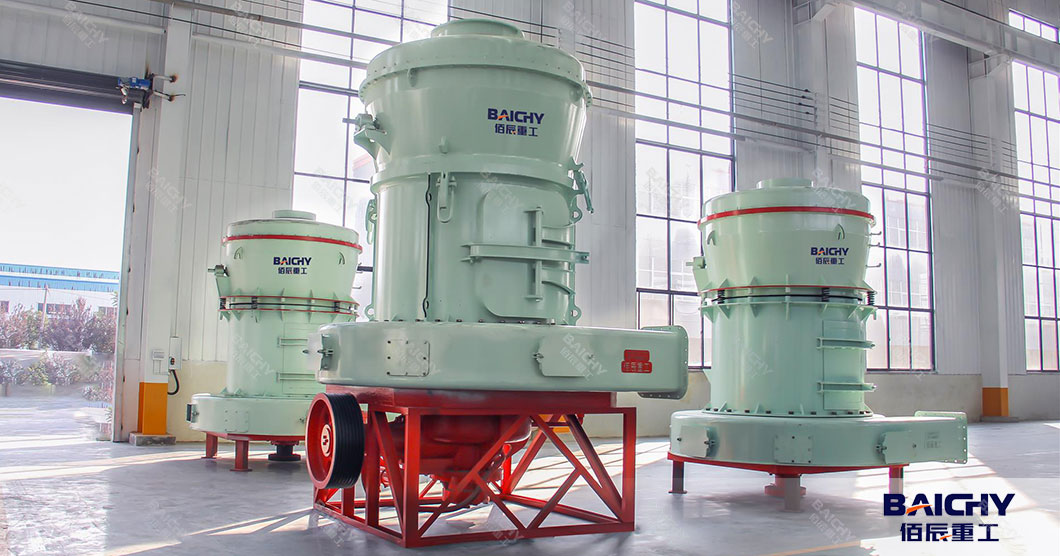
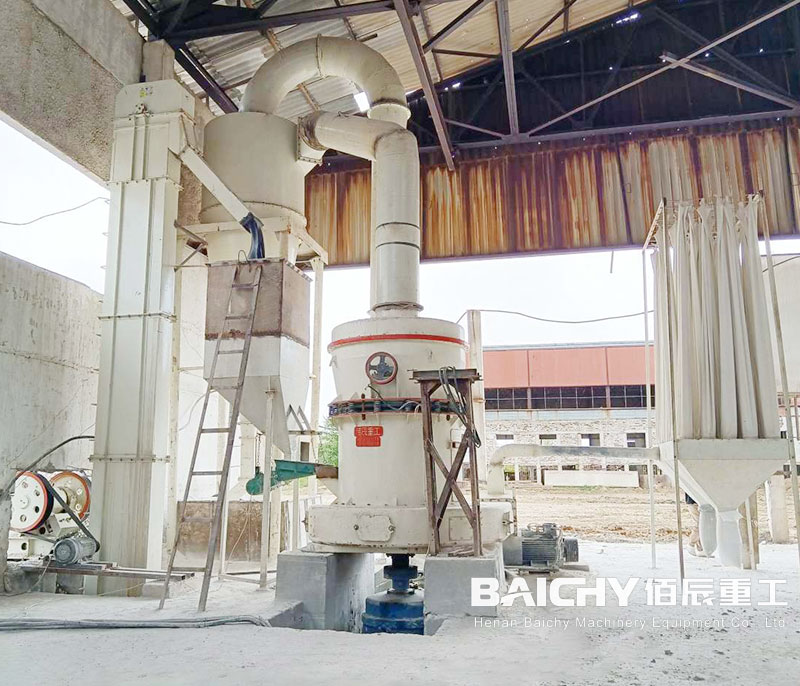
A Raymond mill for phosphate rock is a grinding machine used to process phosphate ore into fine powder. It is widely applied in fertilizer production and chemical industry raw material preparation. The system uses grinding rollers and a grinding ring to crush and grind phosphate rock under controlled pressure, producing uniform powder with stable fineness. Compared with traditional crushing methods, the Raymond mill offers better particle control, lower energy consumption, and more stable continuous operation.
Technical Requirements for Phosphate Rock Grinding
Phosphate rock presents specific challenges that your grinding equipment must handle:
| Parameter |
Typical Value |
| Mohs Hardness |
5 – 5.5 (medium-hard) -7 |
| Moisture Content |
4 |
| Target Fineness |
100 – 200 mesh (149–74 microns) for fertilizer production -7 |
| Material Characteristics |
Abrasive, non-flammable, non-explosive |
The Raymond Mill Advantage for Phosphate Rock
The Raymond mill—also known as a roller mill or ring-roll mill—offers several distinct benefits for phosphate rock processing:
1. Efficient Grinding Mechanism. Raymond mills operate on the pendulum grinding principle. Phosphate rock is fed into the grinding chamber where rotating rollers press firmly against a stationary grinding ring. This mechanical action effectively pulverizes medium-hard materials like phosphate rock .
2. Integrated Air Classification. A built-in air classifier ensures that only particles meeting your specified fineness leave the mill. Oversized particles are automatically returned to the grinding chamber for further reduction—a closed-circuit system that guarantees uniform product quality .
3. Energy Efficiency. Compared to ball mills and other grinding systems, a properly designed Raymond mill offers significant energy savings, especially for producing powders in the 80–400 mesh range .
4. Operational Reliability. With a simpler mechanical structure than complex vertical or ultrafine mills, the Raymond mill is known for:
● Higher uptime
● Easier maintenance
● Lower long-term operational costs
5. Cost-Effectiveness. Raymond mills are particularly suitable for phosphate grinding plants with budget constraints, delivering reliable performance at a competitive price point
Working Principle of Raymond Mill
The phosphate rock is first crushed to small particles and then fed into the grinding chamber. Inside the mill:
● Grinding rollers rotate around the central shaft
● Centrifugal force presses rollers against the grinding ring
● Material is crushed, ground, and milled into fine powder
● Airflow carries qualified powder to the classifier
● Oversized particles return for re-grinding
This closed-loop system ensures high efficiency and consistent output quality.
Typical Application in Phosphate Industry
In phosphate fertilizer plants, Raymond mills are commonly used to prepare raw phosphate powder before chemical processing or granulation. The uniform particle size improves reaction efficiency and final fertilizer quality. This solution is specifically designed for:
● Phosphate rock mining companies
● Fertilizer raw material processing plants
● Chemical phosphate industry manufacturers
● Mineral powder processing enterprises
● Small to medium mining and grinding production lines
These users typically face challenges such as high hardness raw ore, unstable fineness control, high energy consumption, and large-scale continuous production requirements.
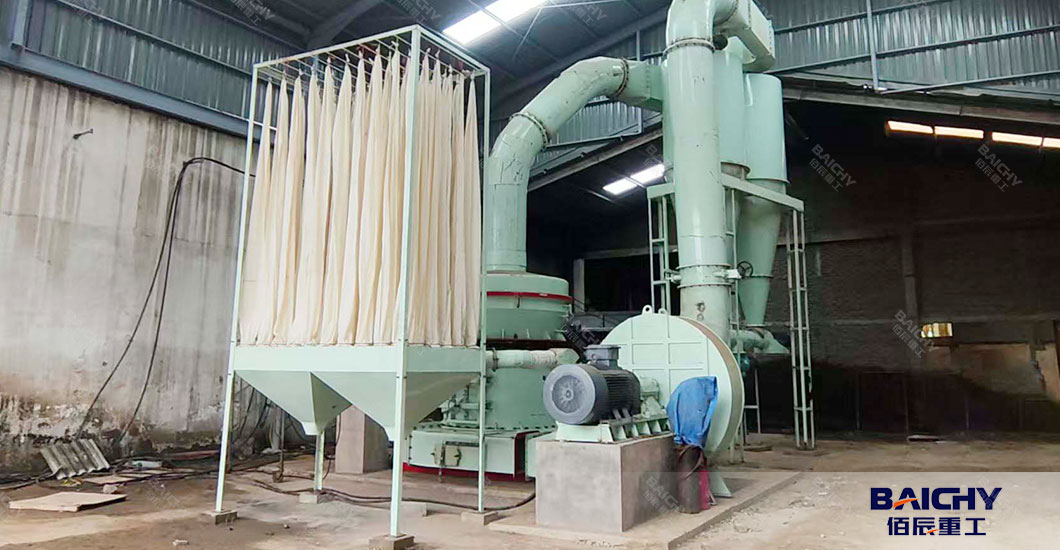
Project Case: YGM160 Raymond Mill for Phosphate Rock in Indonesia
In Indonesia, a phosphate processing company selected Baichy’s YGM160 Raymond mill to upgrade its phosphate rock grinding line for fertilizer production. The raw phosphate ore was highly abrasive and difficult to grind to stable fineness using conventional equipment, which previously caused unstable output and high maintenance downtime.
After installation of the YGM160 system, the plant achieved stable grinding of phosphate rock into 200–325 mesh powder, meeting strict fertilizer-grade requirements. The system delivered consistent output capacity, improved powder uniformity, and significantly reduced energy consumption compared with the previous grinding solution.
The customer particularly highlighted the smooth continuous operation and low wear rate of key components, which reduced unplanned shutdowns and maintenance costs. With Baichy’s technical support and optimized grinding configuration, the production line achieved higher efficiency and more reliable long-term performance, making it a strong upgrade solution for phosphate fertilizer manufacturers.
For phosphate rock processing operations—whether in beneficiation plants or fertilizer manufacturing facilities—the Raymond mill remains an outstanding choice. Ready to optimize your phosphate rock grinding operation? Contact our team for a free consultation to select the right Raymond mill model for your specific requirements.




 2026-09-28





 86-15093113821
 86-15093113821