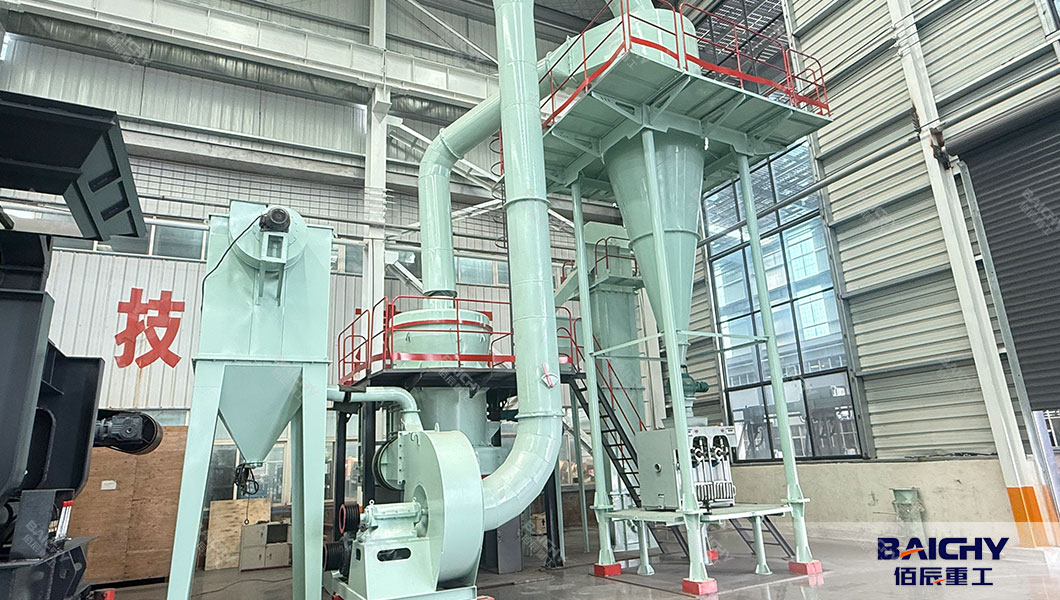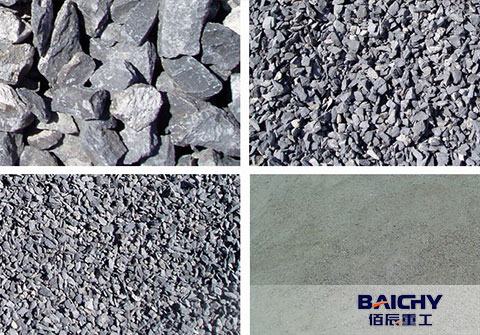
Mica powder is a fine mineral product widely used in construction materials, coatings, plastics, rubber, cosmetics, electrical insulation, and other industries due to its excellent heat resistance, chemical stability, and layered structure. Acomplete mica powder production line mainly includes crushing, grinding, powder classification, and collection systems. Among these processes, the Raymond mill is one of the most commonly used grinding machines for producing fine mica powder because it offers stable operation, adjustable fineness, and high grinding efficiency.

While there are many grinding technologies available, the Raymond Mill is specifically favored for mica processing due to its stable performance in the 80-325 mesh range.
● Adjustable Fineness: Mica applications vary from coarse fillers to ultra-fine pigments. The Raymond Mill’s classifier allows for easy adjustment of particle size.
● High Grading Accuracy: Its centrifugal force-based classification ensures that only particles meeting the mesh requirement move to the collector, preventing over-grinding.
● Closed-Circuit System: The integrated fan and cyclone collector create a dust-free environment, which is critical for maintaining the purity of white mica (muscovite).
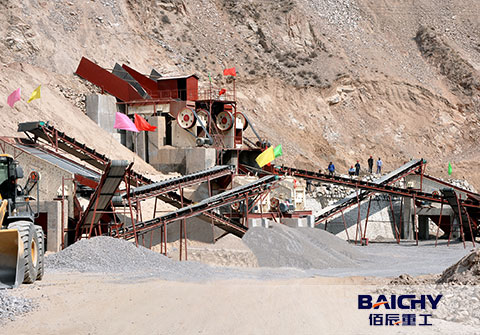
A complete mica powder production line consists of several key stages designed to transform raw mica scrap into high-value industrial powder.
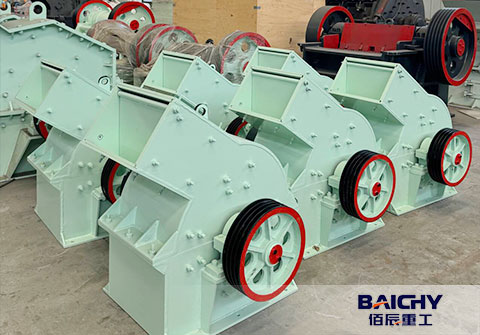
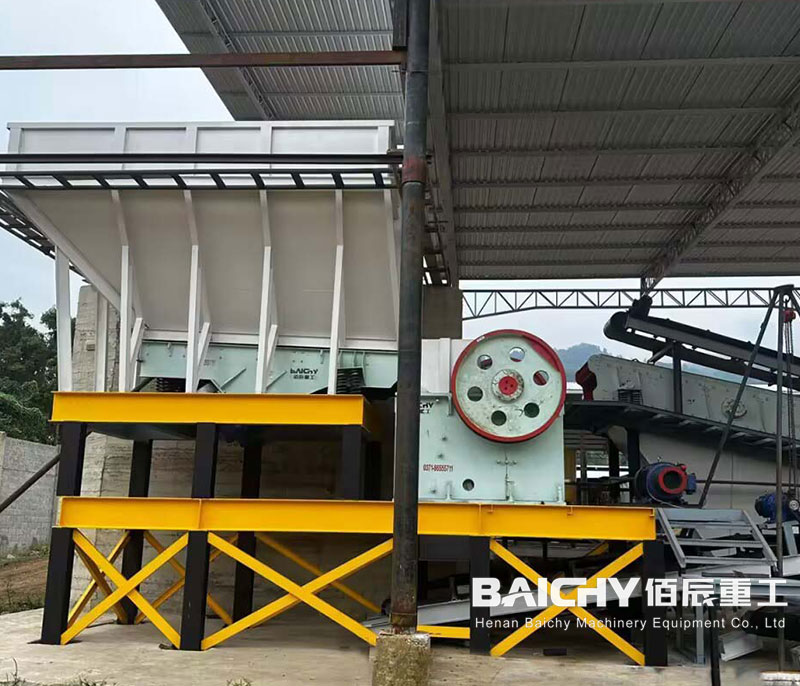
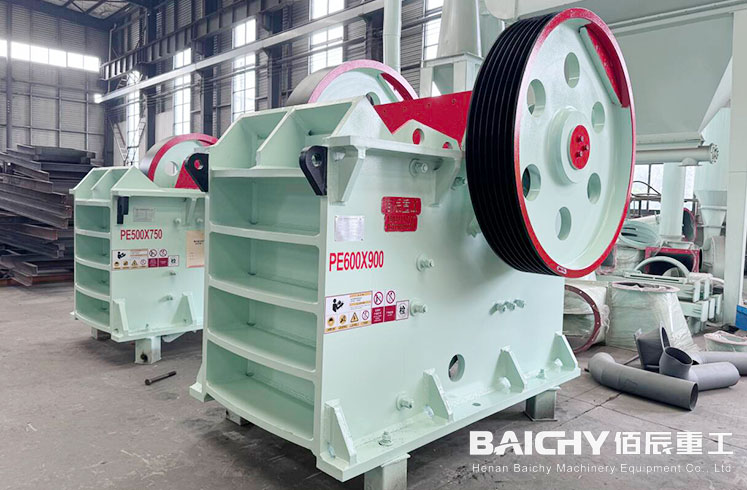
Raw mica is often found in large flakes or clumps. A Jaw Crusher is typically used to reduce the material to a size suitable for the mill feed (usually under 25mm).
The crushed mica is conveyed via an electromagnetic vibratory feeder into the Raymond Mill grinding chamber. Inside, the grinding rollers press against the ring, pulverizing the mica flakes into powder through a combination of impact and attrition.
As the mica is ground, the airflow from the blower carries the powder upward into the analyzer (classifier). Coarse particles fall back for re-grinding, while the fine powder that meets the mesh specification passes through.
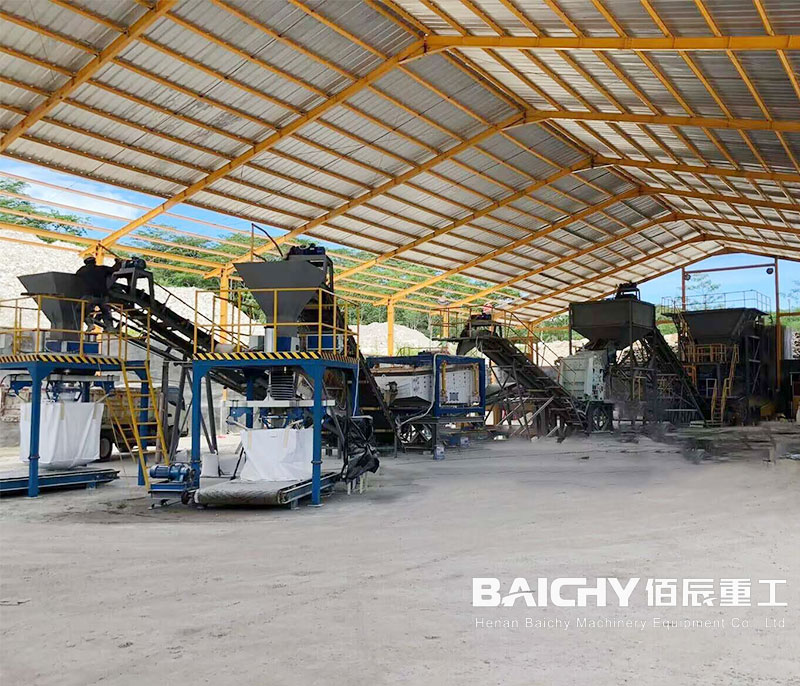
The qualified powder enters the large cyclone collector, where it is separated from the air and discharged through the powder valve into the final packaging system. To ensure environmental compliance, a Pulse Dust Collector is usually added to capture any stray fines.
| Component | Equipment Type | Function |
| Crushing Unit | PE Series Jaw Crusher | Reduces raw mica to <25mm |
| Grinding Unit | YGM Series Raymond Mill | Core grinding (80-325 mesh) |
| Feeding Unit | Vibratory Feeder | Ensures uniform material flow |
| Collection Unit | Cyclone + Pulse Dust Collector | High-efficiency powder recovery |
| Power Range | 15kW - 132kW | Varies by model (e.g., 3R, 4R, 5R) |
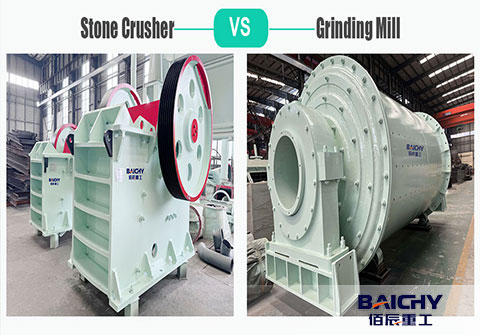
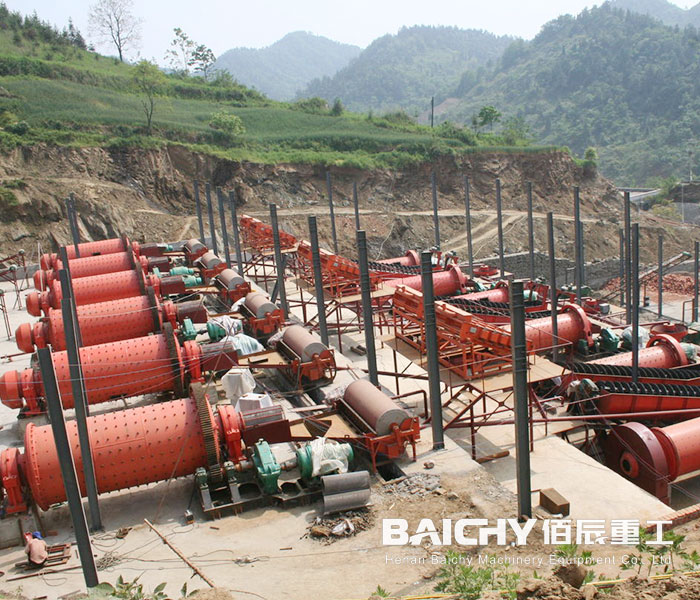
● Low Operational Cost: Compared to ball mills, the Raymond Mill has a smaller footprint and lower initial investment for mica processing.
● Small Footprint: The vertical structure of the Raymond Mill makes it ideal for plants with limited floor space.
● Durability: Using high-manganese steel for rollers and rings ensures a long service life even with continuous 24/7 operation.
● Pearlescent Pigments: Requires high-grade, fine-mesh muscovite powder.
● Electronics: Used as a filler in circuit boards for its insulating properties.
● Construction: Added to fireproof coatings and joint compounds.
● Cosmetics: Provides the "shimmer" effect in eye shadows and foundations.
Building an efficient mica powder production line requires more than just high-speed grinding; it requires a system that respects the mineral's natural properties. By integrating a Raymond Mill, producers can achieve a perfect balance of mesh precision, energy efficiency, and high output. Ready to start your mica processing project? [Contact Baichy Machinery] for a custom mica production line flowsheet and a detailed Raymond Mill quote today.
Save Time! Get A Detailed Quotation Quickly.