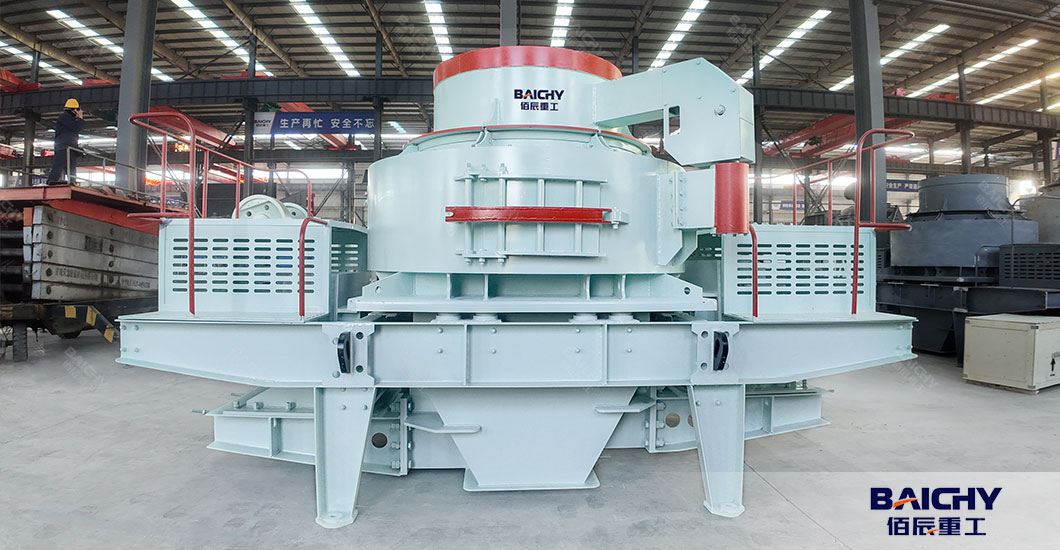
Yes, the output size of a VSI (Vertical Shaft Impact) crusher can be adjusted. Controlling the sand particle size is crucial in manufactured sand production for concrete, asphalt, dry mortar, and other construction aggregates. Proper adjustment ensures the sand meets project requirements while optimizing crusher efficiency and reducing wear.

VSI crushers are versatile machines that can produce sand of varying sizes. Common output ranges include:
● 0–3 mm – fine sand for plaster or dry mortar.
● 0–5 mm – general-purpose manufactured sand for concrete.
● 3–5 mm – medium sand for road base applications.
● 5–10 mm – coarse sand or aggregate shaping.
The actual output depends on feed size, material type, and operating parameters. For instance, smaller feed generally produces finer sand, while coarser feed requires more energy for crushing.
Tip: Most VSI crushers can achieve a sand size below 5 mm, making them ideal for high-quality manufactured sand production.
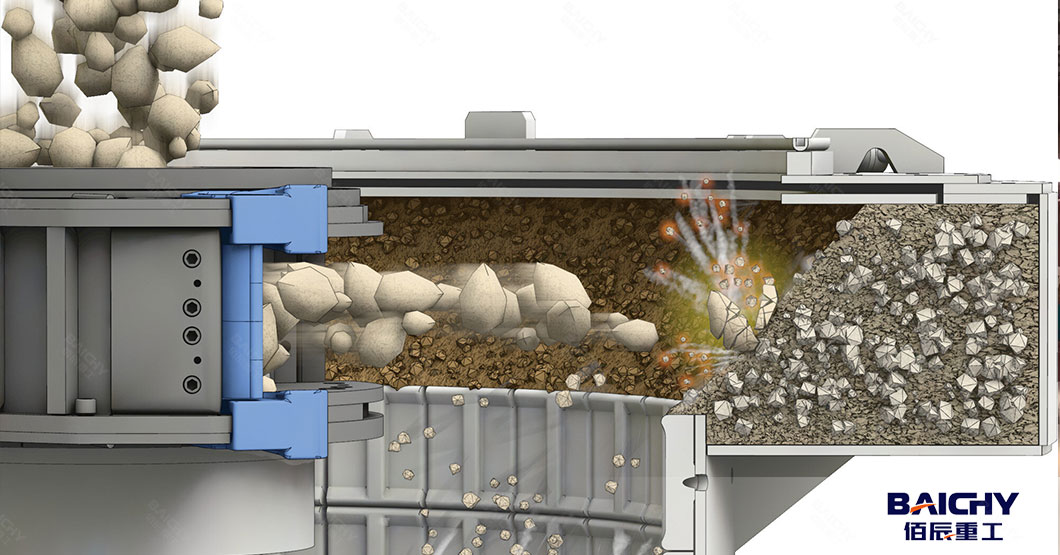
VSI crushers operate using high-speed rotor acceleration combined with impact and attrition crushing. The crushing process follows two main principles:
● Rock-on-Rock Crushing: Material collides with other material inside the crushing chamber for shaping and reduction.
● Rock-on-Iron Crushing: Material hits metal anvils or plates for size reduction, typically producing slightly coarser sand.
When feed enters the rotor, high-speed centrifugal force propels it against the crushing chamber. By adjusting operational parameters, operators can control particle size, shape, and fines proportion.

Rotor speed directly affects the impact force and particle size.
● Higher speed: Produces finer sand with better particle shape.
● Lower speed: Produces coarser sand and reduces fines content.
The correct speed depends on material hardness, feed size, and the desired sand gradation.
VSI crushers allow part of the feed to enter the crushing chamber as cascade feed, impacting the final particle size.
● More cascade feed: Reduces crushing and produces coarser sand.
● Less cascade feed: Increases material breakage, producing finer sand.
Feed size uniformity improves crushing efficiency and particle shape.
● Smaller feed → finer sand.
● Oversized feed → increased wear and uneven product size.
Regular screening and feed monitoring are recommended.
The design of the crushing chamber, anvils, and liners affects particle size and shape:
● Rock-on-Rock: Produces cubical sand with minimal fines.
● Rock-on-Steel: Slightly coarser sand, suitable for shaping aggregates.
Different chamber setups allow operators to customize the product for specific applications.
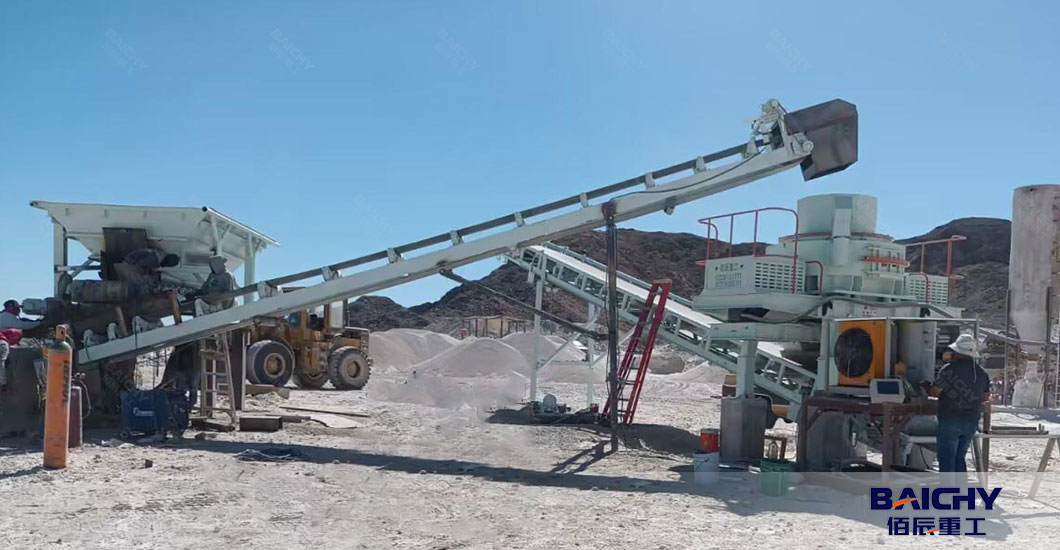
In a 150 TPH sand making plant, a VSI crusher was used to process granite with a feed size of up to 40 mm. The goal was to produce high-quality manufactured sand with specific gradation requirements. After adjustment, the final product consisted of approximately 35% of 0–3 mm fine sand, 45% of 3–5 mm medium sand, and 20% of 5–10 mm coarse sand.
To achieve this, the rotor speed was increased by 10%, which resulted in a higher proportion of fine sand and improved particle shape suitable for concrete production. The cascade feed was also optimized to balance crushing intensity and achieve consistent gradation. As a result, the plant not only produced better-quality sand but also reduced recirculation load, improving overall production efficiency. This project demonstrated how precise adjustments in rotor speed and feed distribution can directly impact product quality, meeting customer requirements for construction-grade manufactured sand.

Solution: Increase rotor speed, reduce feed size, or check for worn rotor components.
Solution: Reduce rotor speed, increase cascade ratio, and optimize feed rate.
Solution: Maintain stable feeding, inspect wear parts regularly, and calibrate operating parameters.
Yes. Rotor speed, feed conditions, and chamber configuration can be adjusted to produce various sand gradations.
Most VSI crushers can efficiently produce sand below 5 mm, with a significant portion in the 0–3 mm range.
Not always. Higher speed generates finer particles but may increase powder content and wear costs.
Granite, basalt, river stone, and limestone are commonly used, producing excellent particle shape after VSI crushing.
Save Time! Get A Detailed Quotation Quickly.