In aggregate processing and mining industry, the impact crusher is essential core equipment in the whole crushing plant. Whether you are producing high-quality road base or preparing material for a grinding mill, the choice of an impact crusher determines your final product's quality and your operation's profitability.
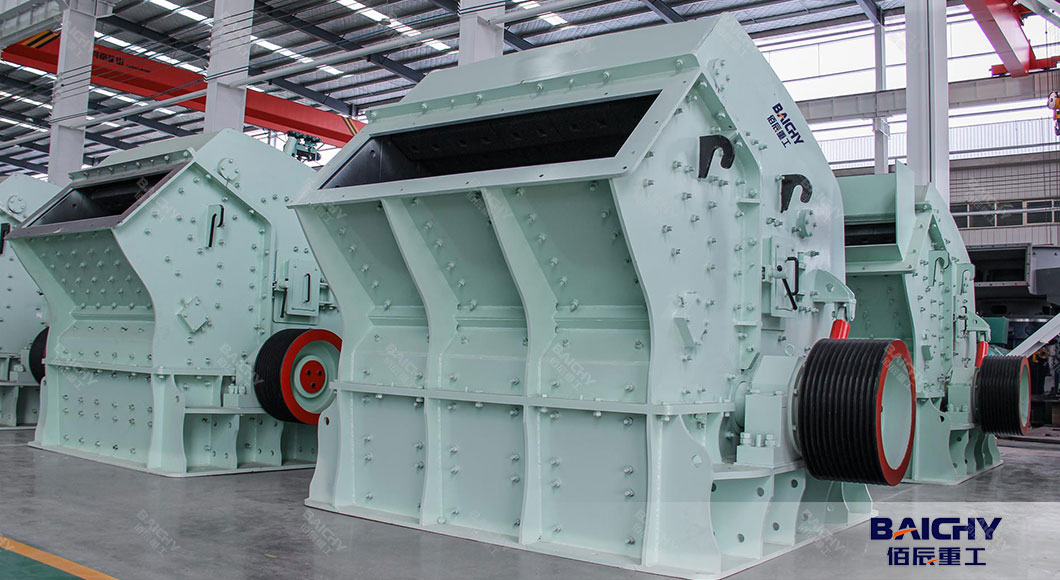
At baichy.com, we believe in technical depth and industrial aesthetics. Choosing a crusher machine isn’t just about buying steel; it’s about investing in a crushing logic that matches your material’s character.
1. Analyze Your Material’s Character
Before looking at machine specs, look at your rock. Impact crushers are "energy-intensive" machines best suited for materials with low to medium abrasiveness.
● Hardness vs. Abrasiveness: While an impact crusher can handle hard limestone, high silica content (abrasiveness) will "eat" your blow bars. If your material has >5% silica, you must factor in higher wear part costs or consider a cone crusher.
● Moisture Content: Sticky, wet materials can clog the crushing chamber. Look for designs with optimized cavity angles if you operate in high-humidity environments.
2. Compare the Rotor: The Engine of Impact
The rotor is the most critical component. When comparing machines, don't just look at the diameter; look at the moment of inertia.
● Heavy-Duty Design: A heavier rotor provides higher rotational inertia, which means more stable crushing force and better energy efficiency.
● Fixing System: How are the blow bars attached? Modern designs (like the PFW Series) use specialized wedge-locking systems that allow for faster replacement and higher security at high RPMs.
3. PF vs. PFW: Standard vs. European Type
At Baichy, we often help clients choose between these two core architectures:
| Feature |
PF Series (Standard) |
PFW Series (European Type) |
| Adjustment |
Manual / Shim adjustment |
Full Hydraulic system |
| Rotor |
3-4 Blow bar design |
Heavy-duty 2-3 curtain design |
| Maintenance |
Basic, reliable |
Fast-access hydraulic top-opening |
| Best For |
Cost-sensitive, stable projects |
High-capacity, multi-shift industrial plants |
The PFW European Type is the gold standard for those prioritizing uptime. Its hydraulic system allows you to adjust the discharge opening (CSS) in seconds and provides "iron-release" protection if a non-crushable object enters the chamber.
4. The Science of Blow Bars
Your operational cost (OPEX) is largely tied to your blow bars. 60-70% of impact crusher wear costs come from this single component.
● High-Chrome (Cr26): Ideal for limestone and medium-hard rock. It offers incredible wear resistance but is brittle.
● Manganese Steel: Best for recycling (concrete with rebar) where high impact toughness is needed to prevent cracking.
● Ceramic Inserts: The "hybrid" choice for maximum lifespan in challenging conditions.
5. Shape Quality: Cubicity is Key
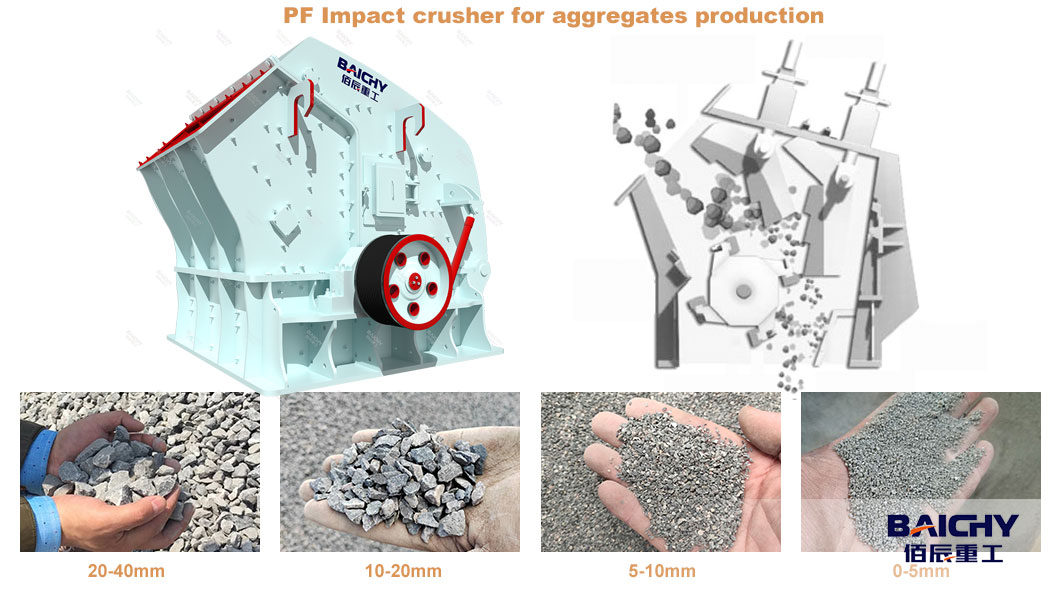
One of the main reasons to choose an impact crusher over a jaw or cone is the cubical shape of the output.
Compare how the machine handles "impact curtains." A three-curtain design (found in PFW models) allows for more "rock-on-rock" interaction, resulting in a more uniform product with fewer elongated particles—critical for meeting strict construction standards.
6. Total Cost of Ownership (TCO)
A cheaper machine often costs more in the long run. When comparing, ask:
● Ease of Service: Can one person change the blow bars, or does it require a crane and a crew?
● Parts Availability: Does the manufacturer (like Baichy) maintain a global inventory of liners and bars?
● Energy Consumption: Does the rotor design allow for high throughput with lower kW per ton?
Impact Crusher Selection Practical Case Study
This practical case study illustrates standard impact crusher selection for aggregate production, helping customers select suitable equipment for real-site conditions.
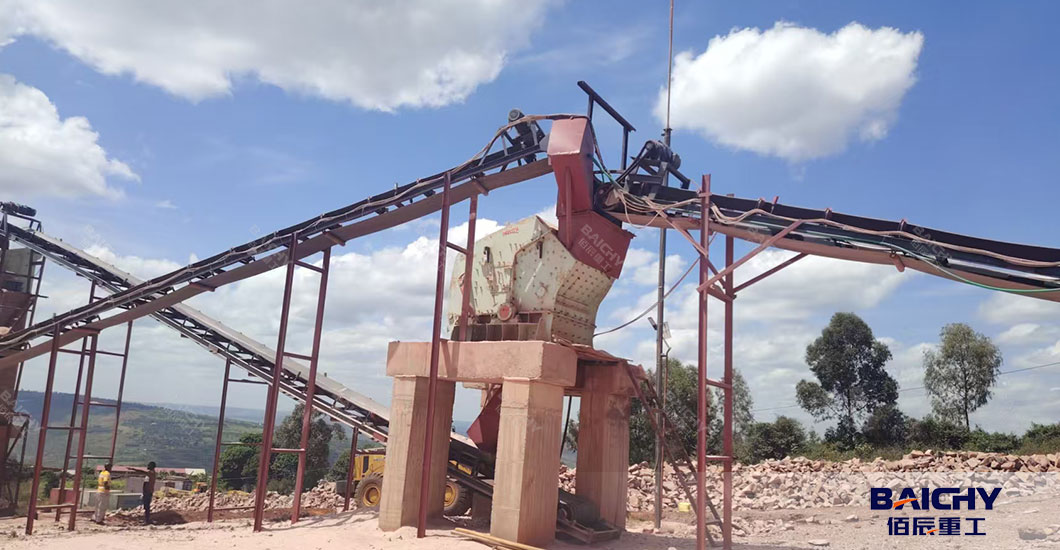
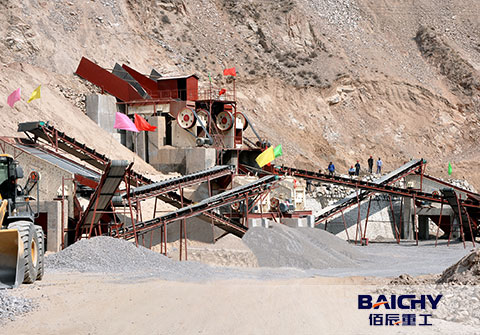
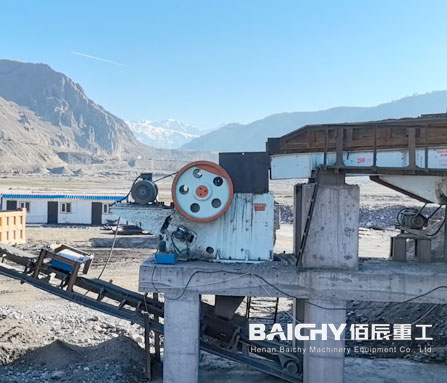
A local aggregate plant located in Africa built a crushing line to process medium-hard limestone with a 500mm maximum feed size. The project required a steady output of 80–100 tons per hour. Since the aggregates were for highway road base, cubical particle shape and high finished product quality were essential, while low operation costs and environmental compliance were also required. During selection, the customer compared different crushers. Cone crushers ensured stable operation but produced irregular flaky particles that failed highway standards. Small crushing machines were low-cost but could not sustain continuous and peak production.
Finally, the customer chose an HSI horizontal shaft impact crusher paired with a jaw primary crusher. The HSI model perfectly suits medium-hard, low-abrasive limestone, reducing wear parts consumption. It delivers a stable 80–120t/h output, offering sufficient capacity margin for peak working conditions.
After commissioning, the production line runs stably without blockage, achieving a 98% qualified aggregate rate that fully meets highway construction standards. The HSI crusher’s simple structure lowers maintenance and operational costs, and the supporting dust removal system ensures full environmental compliance. This case proves that matching crusher type with material features and production demands is key to cost-effective crushing.
Choosing the right impact crusher is a balance between your material properties, your output goals, and your maintenance capabilities. If you are looking for a machine that blends robust engineering with intelligent design, explore the Baichy Impact Crusher Series. Our engineers are ready to analyze your material samples and provide a customized configuration that ensures your project "crushes" the competition.




 2026-10-16





 86-15093113821
 86-15093113821