Cone crusher discharge port detection is a critical technique used to control the particle size of crushed materials and maintain balanced crusher load. By accurately measuring and adjusting the discharge opening, operators can ensure consistent product quality and optimal performance across the crushing process. This detection is particularly essential for hydraulic or electro-hydraulic adjustable cone crushers, where precision adjustments can significantly improve efficiency and reduce wear.
Proper discharge port management not only enhances product uniformity but also protects the crusher from uneven loads that can lead to mechanical failure. With modern detection technologies, continuous monitoring and automated adjustments are now possible, reducing manual intervention and increasing overall operational reliability.
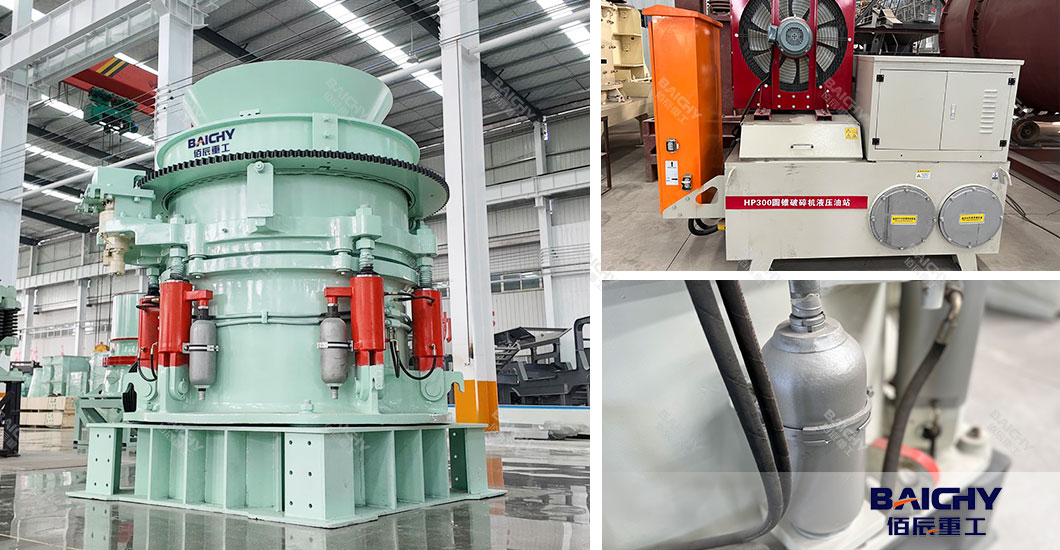
Classification of Crusher Discharge Opening Detection Methods
Crusher discharge opening detection is primarily divided into direct detection methods and indirect detection methods, each with unique working principles, features, and application scenarios—tailored to different production requirements:
1. Direct Detection Method: Traditional but Reliable for Calibration
The direct detection method is a time-tested calibration technique suitable for periodic accuracy verification. Its working principle is straightforward: when the crusher is idle, lead balls (or other deformable materials) matching the feed size are inserted into the crushing chamber. After the crusher compresses the lead balls, the size of the deformed lead blocks is measured to determine the actual discharge opening .
Key Features:
● High Accuracy: Delivers measurement precision within ±0.5mm, making it ideal for calibrating other detection systems.
● •Simple Operation: Requires no complex equipment—only lead balls and measuring tools—with low initial investment.
● Limitations: Mandatory equipment shutdown, unsuitable for continuous production lines; labor-intensive and unable to respond to real-time changes in material properties or equipment wear .
This method is typically used for monthly or quarterly calibration of hydraulic cone crushers, ensuring the long-term accuracy of indirect detection systems.
2. Indirect Detection Method: Mainstream for Intelligent Continuous Production
As the core of modern intelligent crushing lines, indirect detection methods enable non-shutdown, real-time monitoring and automatic adjustment—perfect for 24/7 continuous operation. It is divided into two subtypes, with inductive detection being the most advanced:
A. Hydraulic Detection Method: Cost-Effective Basic Solution
This method leverages the hydraulic adjustment system of cone crushers, reflecting the discharge opening size through the oil level scale of the hydraulic device . Operators can visually check the oil level to estimate the discharge opening and make manual or semi-automatic adjustments via the hydraulic control panel .
Key Features:
● No Shutdown Required: Measurements are taken during operation, avoiding production interruptions.
● Easy Implementation: Integrates with existing hydraulic systems, requiring minimal equipment modification.
● Limitations: Accuracy is affected by oil temperature an
B. Inductive Detection Method: The Future of Intelligent Monitoring
Inductive detection represents the cutting-edge of discharge opening technology, using high-precision electronic sensors (such as LVDT or magnetostrictive displacement sensors) to automatically measure the spindle position in real time . The sensor data is transmitted to a PLC control system, which calculates the exact discharge opening and enables automatic adjustment—forming a closed-loop control system .
Key Features:
● Real-Time Continuous Monitoring: Updates discharge opening data every millisecond, adapting to dynamic changes in material hardness and feed rate.
● High Precision & Automation: Steady-state control accuracy reaches ±0.3mm—an order of magnitude improvement over traditional methods—and integrates with MES/SCADA systems for remote monitoring .
● Safety & Efficiency: Eliminates manual on-site operations, reducing safety risks and enabling adaptive control of particle size distribution .
This method is the preferred choice for intelligent crushing lines, as it supports automatic adjustment of discharge openings based on online aggregate detection results, stabilizing product gradation variance from 34.3 to 14.4 .
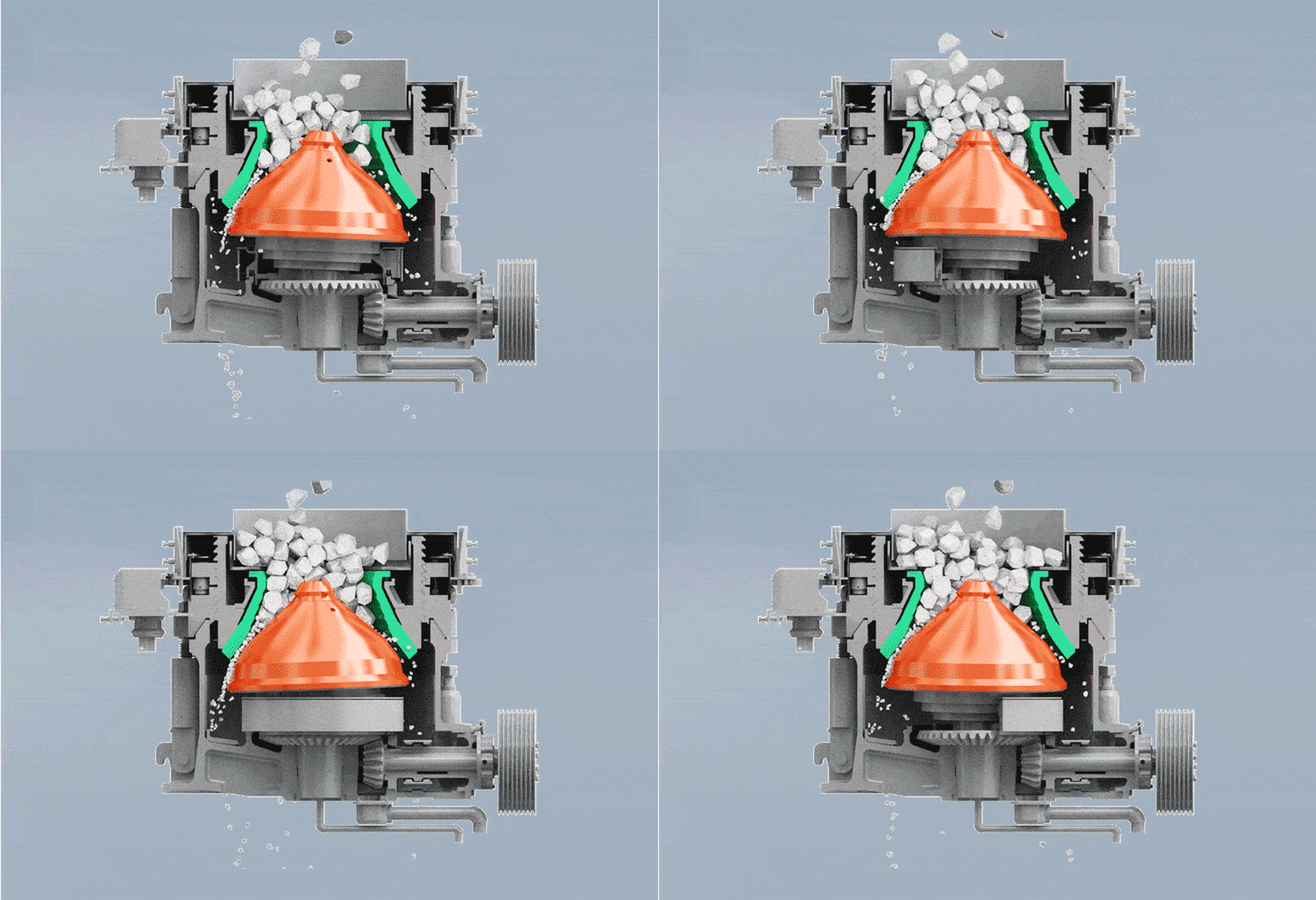
Implementation Considerations
When implementing discharge port detection, it is essential to consider:
● Equipment Requirements: Only hydraulic or electro-hydraulic adjustable cone crushers can support automated monitoring.
● Integration: Sensors or hydraulic indicators must be integrated into the existing control system.
● Calibration and Maintenance: Regular calibration ensures accurate measurements, and periodic maintenance prevents sensor or hydraulic failures.
Careful planning and correct implementation are key to leveraging the full benefits of discharge port detection technology.
Whether you’re looking to improve product consistency, reduce safety risks, or transition to intelligent production, choosing the right crusher discharge opening detection method is critical. For continuous high-efficiency operations, inductive detection systems offer the best balance of precision, automation, and cost savings. Contact our technical team today to get a customized detection solution based on your crusher model (e.g., hydraulic cone crushers, PYY series) and production requirements.




 2026-10-16





 86-15093113821
 86-15093113821