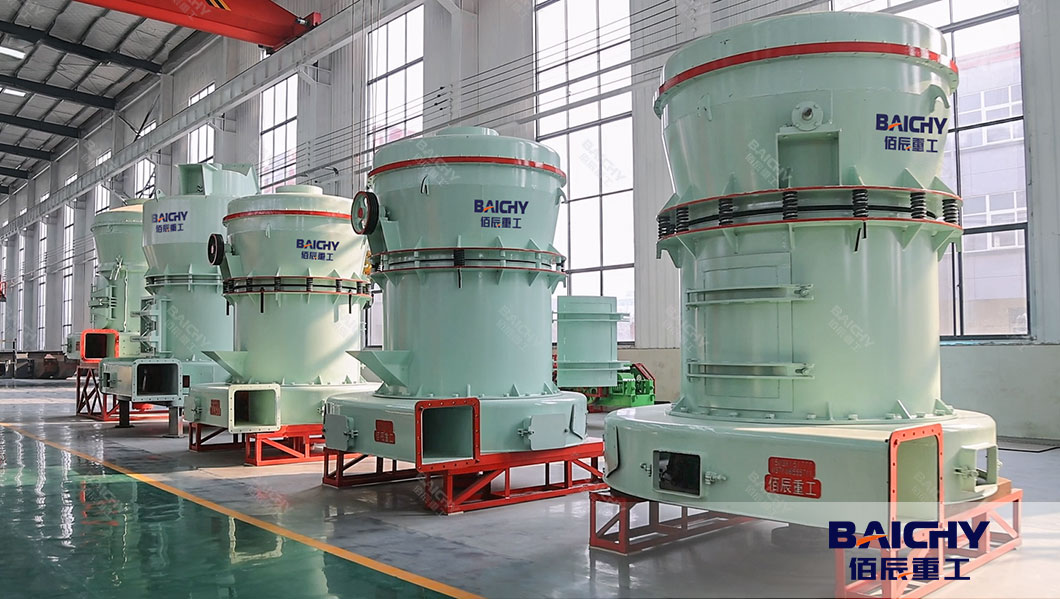
A Raymond mill is an industrial grinding machine used to pulverize non-metallic minerals, chemicals, and building materials into fine powder. It is most commonly used for processing limestone, calcite, barite, gypsum, bentonite, and talc into powders ranging from 80 to 400 mesh. If you need to produce fine powder for construction, chemical manufacturing, or mineral processing, a Raymond mill is likely the most cost-effective choice for medium-scale operations.
Quick Answer: Primary Uses of Raymond Mills
Raymond mills serve three core industrial functions:
● Powder production for construction materials — Grinding limestone into filler for concrete, producing gypsum powder for wallboard and plaster, and processing bentonite for drilling mud.
● Mineral processing for chemical and metallurgical industries — Pulverizing barite for drilling fluids, calcite for plastics and paint fillers, and fluorite for chemical feedstock.
● Specialty applications — Processing phosphate rock for fertilizer, graphite for lubricants and batteries, and even food-grade powders like sugar and cocoa in specialized configurations .
Industries That Rely on Raymond Mills
● Construction and Building Materials
The construction industry is the largest consumer of Raymond mill output. Limestone ground to 200-325 mesh becomes filler for concrete and asphalt, while gypsum processed through Raymond mills becomes the base material for drywall, plaster of Paris, and cement set retarders
. Bentonite clay processing produces drilling mud essential for foundation work and tunnel boring.
● Chemical Manufacturing
Chemical plants use Raymond mills to produce fillers, extenders, and reactive powders. Barite (barium sulfate) is the most prominent example — it is ground for use as a weighting agent in oil and gas drilling fluids. Calcite powder serves as a filler in paints, plastics, and rubber, reducing material costs while improving product properties .
● Mineral Processing and Metallurgy
Raymond mills process industrial minerals for subsequent extraction or use. Sphalerite (zinc ore) is ground before metallurgical processing for zinc recovery . Phosphate rock is pulverized for fertilizer production. Graphite is milled for use in lubricants, batteries, and refractories.
● Emerging Applications
Modern Raymond mill configurations handle specialty materials including petroleum coke for fuel and carbon products, phenolic resins for abrasive manufacturing, and pharmaceutical powders where precise particle size distribution is critical .
Materials Processed by Raymond Mills
Raymond mills are versatile but operate within specific material constraints. The standard rule: Mohs hardness below 7 and moisture content below 6% .
| Material Category |
Examples |
Typical End Use |
| Carbonates |
Limestone, calcite, marble, dolomite |
Construction filler, paint extender |
| Sulfates |
Barite, gypsum |
Drilling mud, wallboard |
| Silicates |
Talc, kaolin, feldspar, mica |
Ceramics, paper coating, cosmetics |
| Oxides |
Iron oxide, titanium dioxide |
Pigments, catalysts |
| Carbonaceous |
Graphite, petroleum coke |
Lubricants, electrodes |
| Specialty |
Fluorite, phosphate rock, bentonite |
Chemicals, fertilizer, drilling |
For materials harder than Mohs 5, wear rates accelerate significantly. The U.S.-based Coperion (formerly Raymond Brothers) recommends limiting Raymond roller mill applications to materials that do not scratch glass or a knife blade — roughly Mohs 5 or below — for economical operation
How Does a Raymond Mill Work?
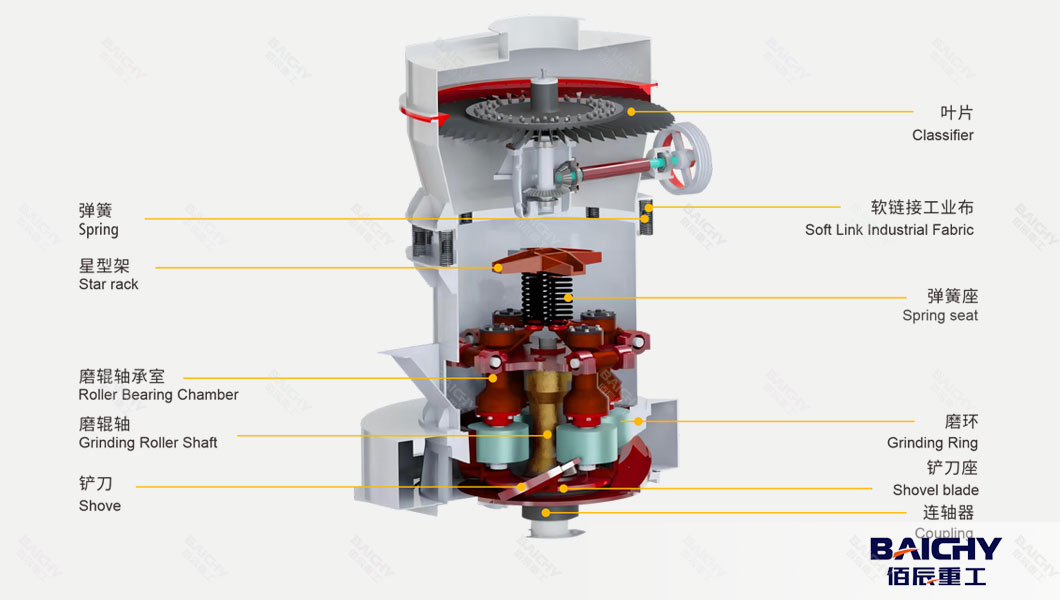
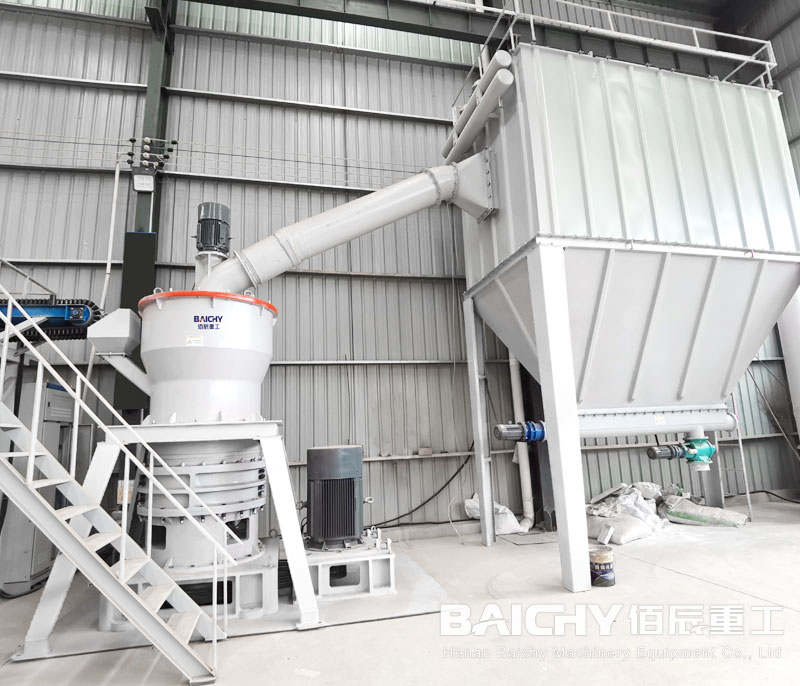
The working process of a Raymond grinding mill includes four main stages:
1. Feeding
Raw materials enter the grinding chamber through a feeder at a controlled rate.
2. Grinding
The grinding rollers rotate and press materials against the grinding ring, reducing particle size through compression and friction.
3. Classification
The airflow system carries fine particles upward. The classifier separates qualified powder from oversized particles.
4. Collection
Finished powder enters the cyclone collector or dust collector, while coarse particles return for further grinding.
Raymond Mill vs. Other Grinding Mills
| Grinding Mill Type |
Best For |
Fineness Range |
Capacity |
| Raymond Mill |
Medium-hard materials, small-medium scale |
80-400 mesh |
Low-medium |
| Vertical Mill |
Large-scale, high-fineness production |
800-3500 mesh |
High |
| Ball Mill |
Hard materials, wet or dry grinding |
Flexible |
Very high |
| High-Pressure Mill |
Ultra-fine medium-hard materials |
Fine range |
Medium |
Raymond mills excel where investment cost matters and production scale is moderate — typically under 10 tons per hour. For small to medium limestone powder plants, they remain the most cost-effective choice
Real-World Case Study: Gypsum Grinding in Ghana
In 2026, Baichy Machinery completed the installation and commissioning of two YGM130 Raymond mills at a gypsum powder production plant in Ghana, West Africa.
Project Background: The client operates a gypsum processing facility supplying powder to the local construction sector, where demand for gypsum-based wallboard, plaster, and cement additives has grown steadily. The raw gypsum required grinding from crushed feed (≤30mm) to a finished product of 200 mesh (0.074mm) with a target output suitable for continuous commercial supply.
Equipment Configuration:
● 2 × YGM130 Raymond Mills (parallel installation for capacity redundancy and maintenance flexibility)
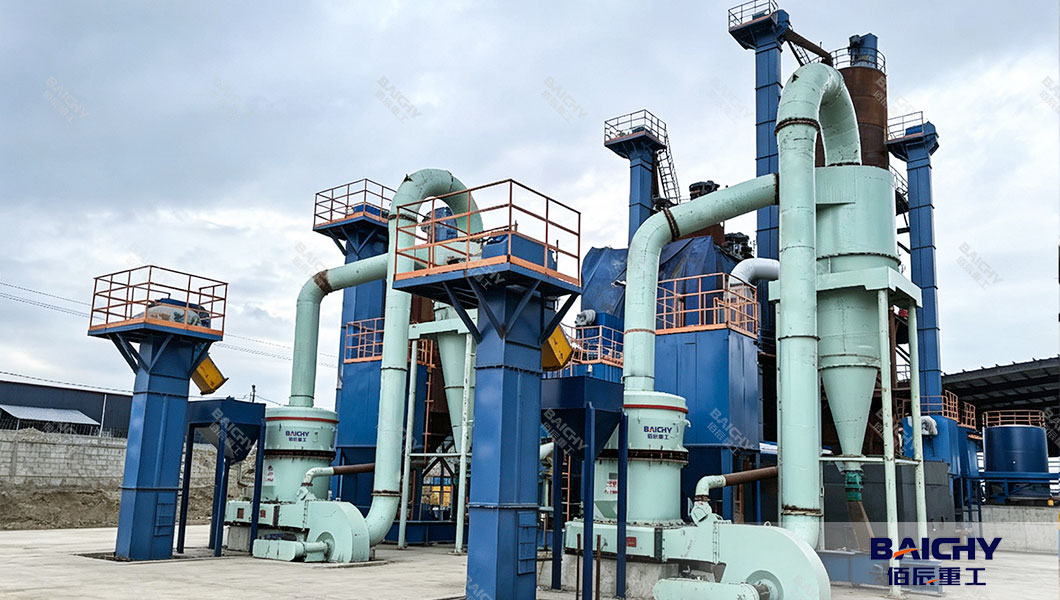
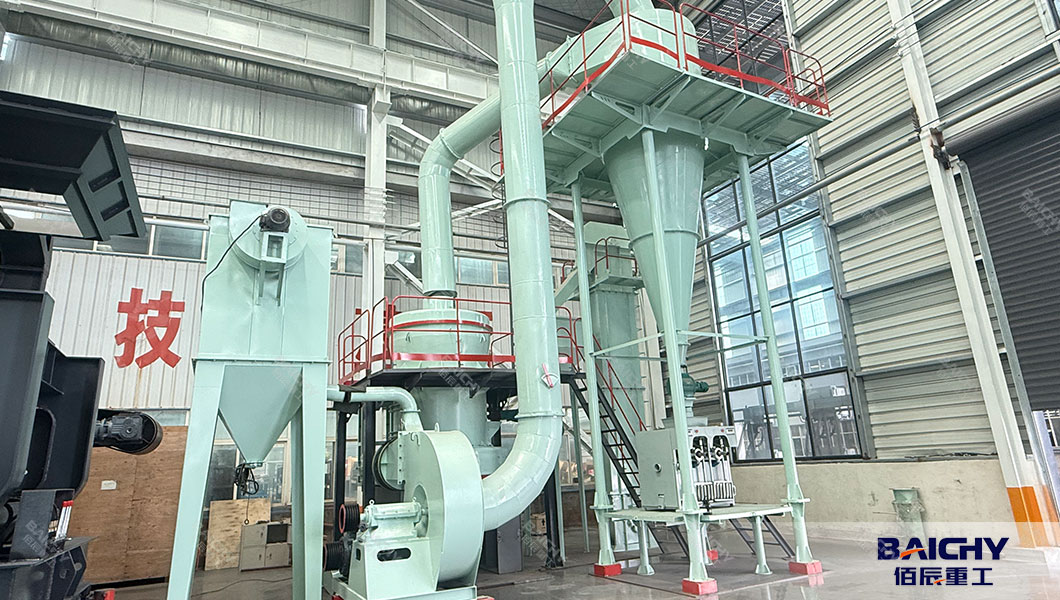
● Complete line: jaw crusher → bucket elevator → hopper → YGM130 mill → cyclone collector → finished powder silo
● Centralized electrical control panel with interlocking safety systems
Technical Parameters:
● Feed size: ≤30mm
● Finished fineness: 200 mesh (adjustable 80-325 mesh)
● Moisture handling: raw gypsum dried to below 6% before grinding
● Configuration: 2 units operating in parallel
Outcome: Both YGM130 units were installed, wired, and commissioned on schedule. The trial run was completed successfully, achieving the target fineness and output. The client confirmed acceptance and began commercial production immediately after commissioning. The parallel configuration allows one mill to continue operating during maintenance on the other, ensuring uninterrupted supply to the client's downstream customers.
Why This Case Matters: Gypsum is one of the most common Raymond mill applications worldwide — it sits well within the Mohs hardness limit (gypsum is Mohs 2), requires moderate fineness (200 mesh is standard for construction-grade powder), and benefits from the mill's integrated drying capability. The Ghana installation demonstrates that Raymond mills remain the practical, cost-effective choice for exactly this type of medium-scale construction material production, particularly in emerging markets where turnkey delivery and commissioning support are critical.
For businesses planning a powder production project, selecting the right Raymond mill model and professional manufacturer is essential for achieving stable production and lower operating costs. Need a customized Raymond mill solution? Contact our grinding experts to select the right model based on your material, capacity, and powder fineness requirements.




 2026-09-14





 86-15093113821
 86-15093113821