Basalt is a classic hard rock — high in silica, highly abrasive, and unforgiving on wear parts and crushing chamber design. Traditional stationary production lines require extensive material hauling between the quarry face and the finished product stockpile. Given basalt's high bulk density, this transport often eats into project margins. At the same time, many basalt deposits are located in mountainous areas or temporary project sites where grid power is unreliable or simply unavailable. A 300TPH crushing plant typically demands over 450kW of installed power, and ordinary diesel generators struggle to drive the crusher and screening system simultaneously with stable output.
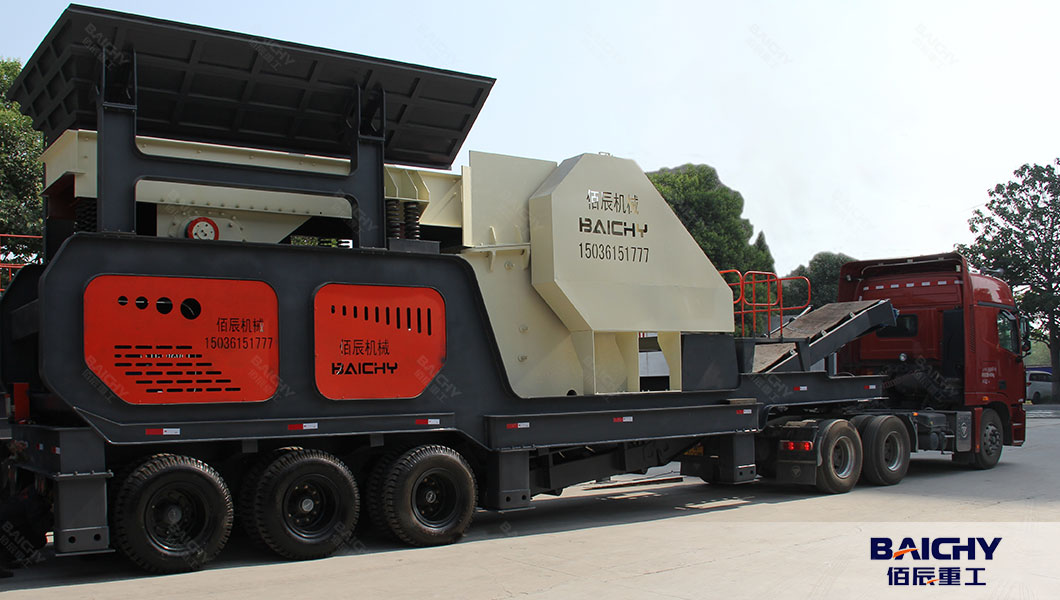
The trailer-type + built-in generator combination mobile stone crusher plant is an engineering response to exactly this scenario: no concrete foundation, no waiting for grid connection. Hydraulic legs unfold, the generator starts, and production can begin within hours of arrival.
1. Core Configuration Of300TPH Basalt Crushing
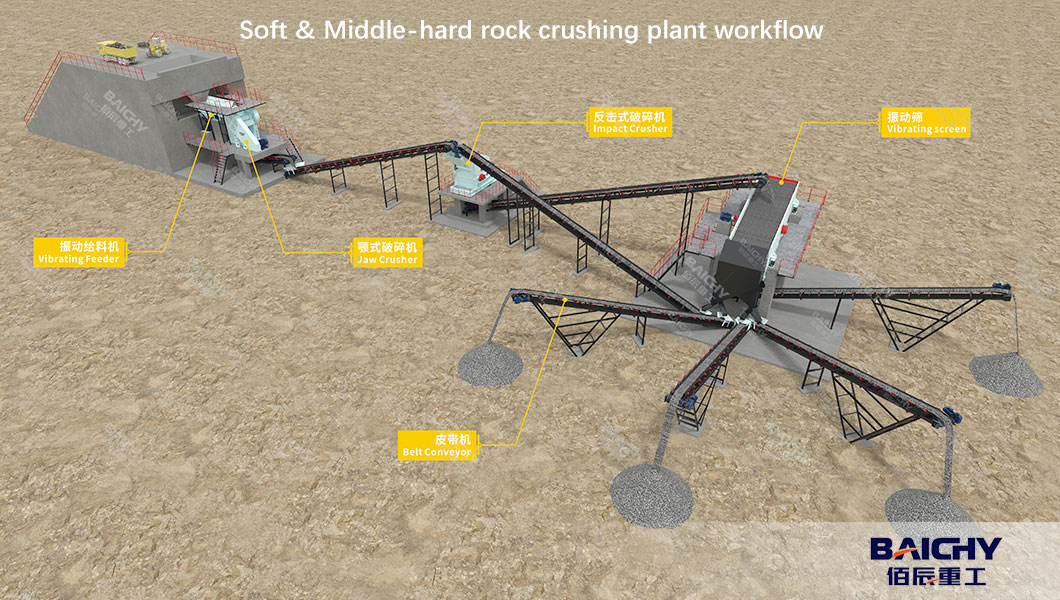
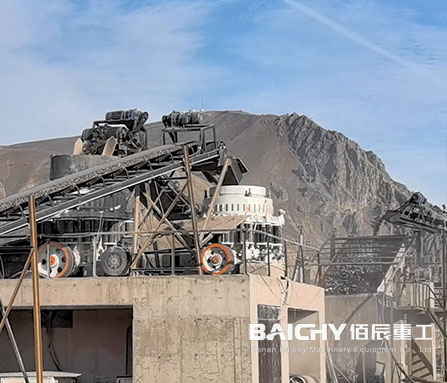
Processing basalt feed material up to 800mm with a requirement for multiple fine product sizes cannot be achieved with a single crusher. A sound process design uses two-stage crushing + closed-circuit screening: a jaw crusher handles primary crushing, reducing 800mm rock to a size suitable for secondary crushing; a cone crusher (or VSI) handles secondary and tertiary reduction, producing cubical aggregates; a multi-deck vibrating screen classifies the material, with oversize returned to the crusher via a return conveyor.
Total motor power for this configuration typically sits around 450kW. The matching diesel generator set needs 600–800kVA to cover startup peaks and continuous load.
For the specified outputs — 0-5mm, 7mm, 13.5mm, 16mm, and 18mm — screen deck selection is critical. Five product sizes require at least three screen decks with carefully matched aperture combinations, or a dual-deck screen plus fine classification setup. The 0-5mm fraction falls into the manufactured sand category; for basalt, this usually means a VSI for shaping, otherwise the flakiness index will be too high for good concrete workability.
The engineering value of the trailer-type structure shows up in two dimensions: a dual- or tri-axle chassis with hydraulic legs — folded for transport to meet road width limits, deployed for stable support during operation; and high integration that combines feeder, crusher, screen, conveyors, and control system onto one or two trailer units, cutting site installation complexity and civil works.
2. Application Scenarios: Where This Setup Fits
● Road and railway aggregate supply. Basalt is a premium material for asphalt mixes and railway ballast. The 0-5mm fraction serves as asphalt filler, while 7mm, 13.5mm, 16mm, and 18mm correspond to different pavement layer gradations. A mobile plant can be deployed near the quarry face and moved as extraction progresses, drastically cutting haul distance.
● Ready-mix concrete plant support. Urban batching plants often face volatile prices for purchased aggregates. A 300TPH mobile plant allows a batching operator to use local basalt resources or recycle basalt-containing demolition waste for partial aggregate self-sufficiency. The trailer design allows rotation between multiple batching sites, improving equipment utilization.
● Overseas or remote infrastructure projects. The built-in generator makes this setup suitable for regions with unstable or non-existent grid power. After port clearance, the unit can be trucked directly to site without waiting for power infrastructure — a good fit for Belt and Road infrastructure projects.
3. Selection Essentials: From Parameter Matching to Long-Term Operation
● First, feed size vs. crushing chamber matching. An 800mm max feed requires a jaw crusher with a feed opening of 850–1100mm. A CJC-110 or equivalent class jaw is a common choice. If the feed contains a high proportion of slabby or elongated material, add a pre-screen before the crusher to prevent chamber blockage.
● Second, wear part economics. Basalt's high abrasivity means jaw plates, cone liners, and blow bars directly determine cost per ton. High-manganese steel works well for jaw crushers, while cone crusher mantle and bowl liners are better in high-chrome iron or composite alloy. Some manufacturers offer ceramic insert options that can extend wear life by 30% or more.
● Third, generator-to-crusher power matching. A 300TPH plant draws roughly 450kW total, but jaw and cone crushers can pull 3–5 times rated current at startup. Size the genset with 25–30% headroom — 600kVA is the minimum, 800kVA provides more stable operating margin.
● Forth, trailer chassis regulatory compliance. Different countries have different axle load, gross weight, and dimension limits for road transport. For export projects, confirm the chassis meets destination road regulations to avoid clearance issues at the port.
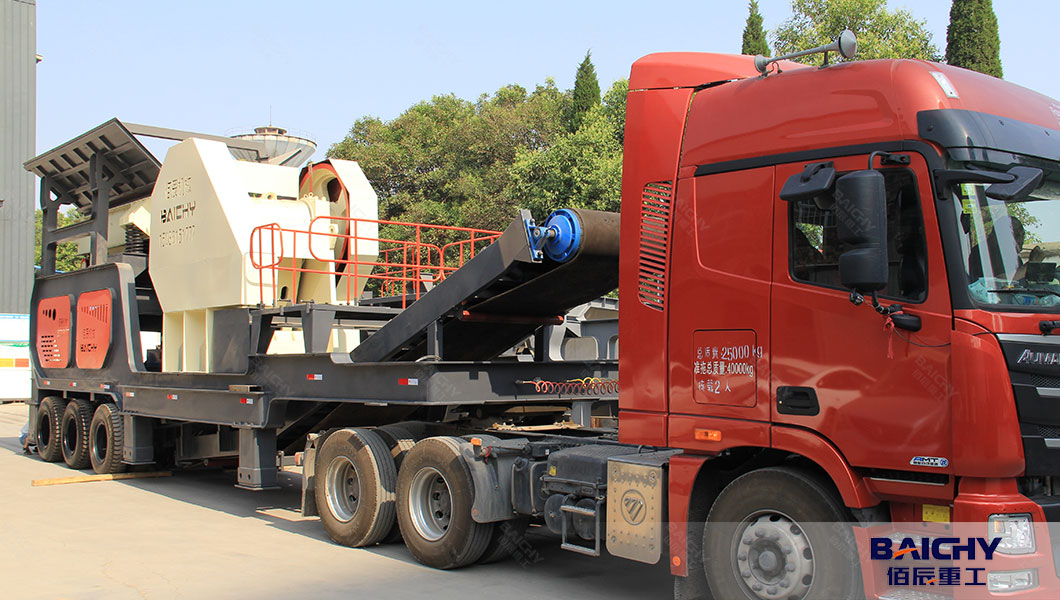
The core value of a 300TPH trailer-type basalt crushing plant is not "mobility" for its own sake — it is the integration of a complete crush-and-screen process system onto a rapidly deployable platform, with onboard power that eliminates infrastructure dependency. For hard rock aggregate production like basalt, process design — especially crushing stages, screen decks, and wear part selection — determines whether the plant actually hits its rated 300TPH in the field, not just in the lab.
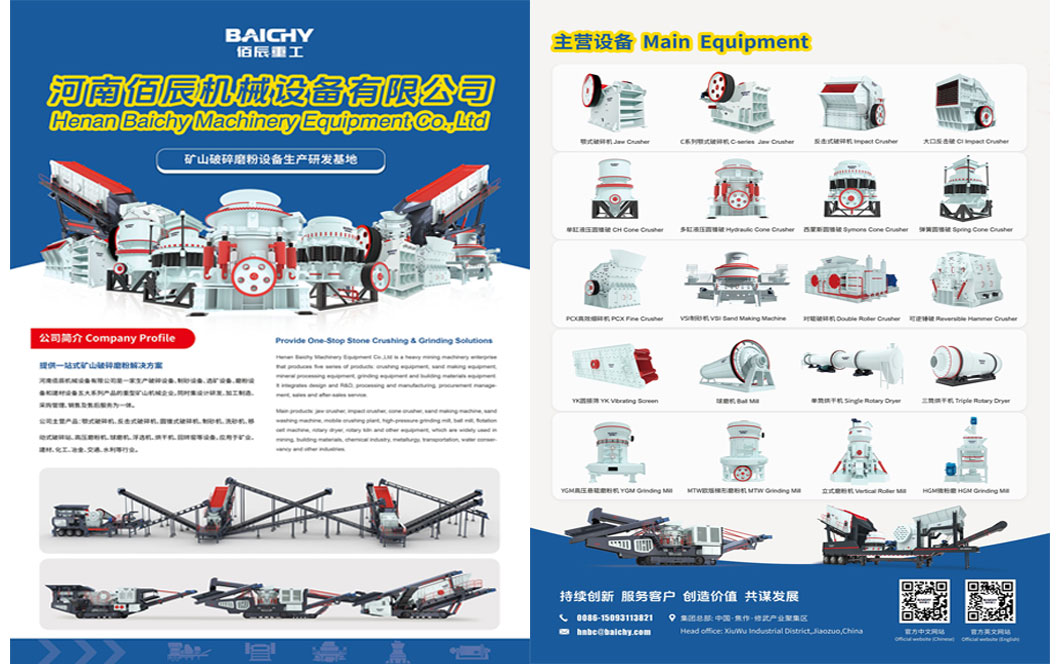
Baichy provides customized mobile stone crusher plants for quarrying, mining, and recycling applications. Based on different materials, capacity requirements, and final product sizes, Baichy engineers design suitable crushing solutions with:
● Reliable impact crusher technology
● Efficient mobile chassis design
● Customized feeding and screening systems
● Professional installation guidance and after-sales support
Whether processing natural stone or recycling construction waste, a properly designed mobile stone crusher plant helps customers achieve stable production with lower operating costs. Welcome to contact us online to get price list and visit our facotory in Zhengzhou, China.
People Also Frequently Asked For - FAQ
Q1: Can a 300TPH trailer-type basalt crushing plant produce both 0-5mm manufactured sand and 18mm aggregate at the same time?
Yes, but the process configuration matters. Producing five sizes simultaneously (0-5, 7, 13.5, 16, 18mm) requires a multi-deck screening system. If the 0-5mm proportion needs to be high (say above 25%), adding a VSI after the cone crusher for shaping is recommended — otherwise the cone crusher's fine fraction will have excessive flakiness and may fail fineness modulus requirements.
Q2: Can the built-in generator support continuous operation for 8+ hours?
It depends on generator capacity and load ratio. A 300TPH plant draws about 450kW; a 600kVA+ genset keeps load ratio under 80%. Fuel consumption runs roughly 80–100 liters per hour, so on-site storage tank capacity must match. For projects longer than 6 months with grid access, switching to mains power lowers cost per ton.
Q3: How long does it take to go from transport mode to production with a trailer-type plant?
Hydraulic legs and folding conveyors keep deployment time within 2–4 hours. If the site is already leveled and the generator is commissioned, trial running with material can happen the same day. Compared to weeks of civil works and installation for a stationary line, the time advantage is significant.
Q4: How long do wear parts last when processing basalt in a trailer-type plant?
Jaw plates typically last 300–500 hours in basalt service; cone liners 400–600 hours, depending on SiO₂ content and chamber profile. High-chrome or ceramic-composite liners can extend life by 50–100%, though at higher upfront cost. Run the economics against total throughput and downtime cost for your specific project.




 2026-09-16





 86-15093113821
 86-15093113821