An integrated aggregate processing system combines crushing, screening, conveying, and optional washing equipment into one coordinated production line. It processes raw materials such as granite, limestone, basalt, and river gravel into commercial aggregates with controlled particle sizes. For quarry owners and aggregate producers, the main challenge is not simply selecting individual crushers. It is designing a complete system in which each machine matches the required capacity, feed size, material characteristics, and final product specifications.
This guide explains the complete aggregate processing workflow, essential equipment, plant configurations, and key factors to consider before investing in an aggregate production system.
1. What Is an Integrated Aggregate Processing System?
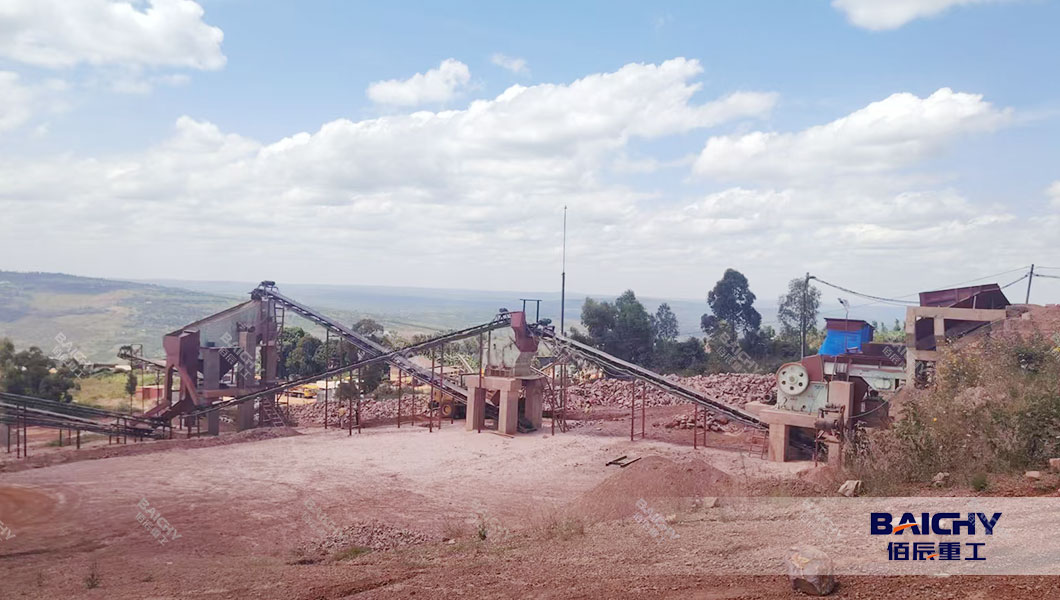
An integrated aggregate processing system is a complete production solution that connects multiple processing stages to produce construction aggregates.
Depending on the raw material and product requirements, the system typically includes:
-
Primary crushing to reduce large rocks.
-
Secondary crushing to achieve the required intermediate particle size.
-
Tertiary crushing or sand making for finer products.
-
Vibrating screens to separate aggregates into different sizes.
-
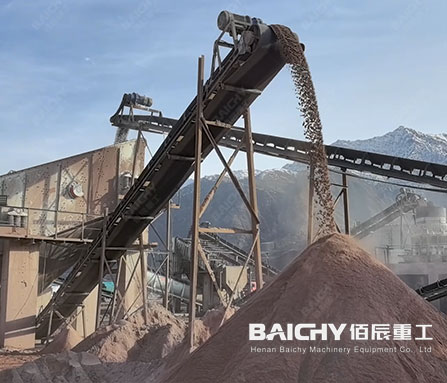
Belt conveyors to transfer materials between processing stages.
-
Washing equipment to remove clay, silt, and other impurities.
-
Electrical control systems to coordinate plant operation.
Unlike purchasing individual machines separately, an integrated system considers the entire production process. Each machine is selected according to the capacity and discharge requirements of the next stage.
Typical applications include:
-
Granite and basalt aggregate production.
-
Limestone crushing for construction materials.
-
River gravel processing and sand production.
-
Quarry development and expansion.
-
Construction aggregate manufacturing.
-
Manufactured sand production.
2. How Does an Integrated Aggregate Processing System Work?
A conventional aggregate processing plant follows a series of connected stages. The exact configuration depends on the material hardness, feed size, required output, and finished aggregate specifications.
Stage 1: Raw Material Feeding and Primary Crushing
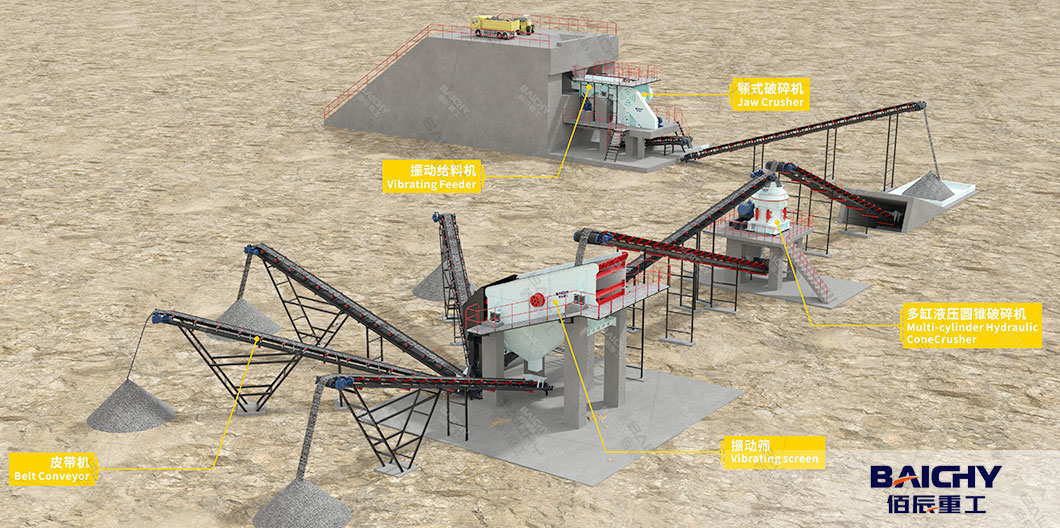
Raw materials are delivered to a receiving hopper and fed into the primary crusher through a vibrating feeder.
A jaw crusher is commonly used for primary crushing because it can handle large feed sizes and reduce hard rock into smaller pieces.
Typical equipment:
-
Vibrating feeder.
-
Jaw crusher.
-
Feed hopper.
-
Discharge belt conveyor.
For example, a PE series jaw crusher can be used for the primary crushing of granite, basalt, and limestone. The actual model should be selected according to maximum feed size and required throughput.
Stage 2: Secondary Crushing
After primary crushing, the material is transferred to a secondary crusher.
The crusher type depends on the rock properties and the required product shape.
| Crusher Type |
Suitable Materials |
Main Application |
| Cone crusher |
Granite, basalt, hard rock |
Secondary and tertiary crushing |
| Impact crusher |
Limestone, medium-hard rock |
Secondary crushing and particle shaping |
| Fine crusher |
Limestone and other suitable materials |
Fine aggregate production |
Cone crushers are generally preferred for hard and abrasive materials. Impact crushers are often suitable for softer and medium-hard materials where particle shape is important.
Stage 3: Vibrating Screening and Material Separation
After crushing, materials enter vibrating screens for size classification.
A multi-deck vibrating screen separates aggregates into different size ranges, such as:
-
0–5 mm: Manufactured sand or fine material.
-
5–10 mm: Fine aggregate.
-
10–20 mm: Medium aggregate.
-
20–31.5 mm: Coarse aggregate.
These sizes are examples only. Actual product specifications depend on local construction standards and customer requirements.
Oversized materials can be returned to the crusher through a closed-circuit conveyor system.
Why is closed-circuit crushing important?
A closed-circuit system helps control maximum product size and reduces the need to process oversized material in a separate operation. However, its actual efficiency depends on screen capacity, crusher settings, feed characteristics, and circulating load.
Stage 4: Sand Making and Particle Shaping
If the plant needs manufactured sand or aggregates with improved particle shape, an additional shaping stage can be installed.
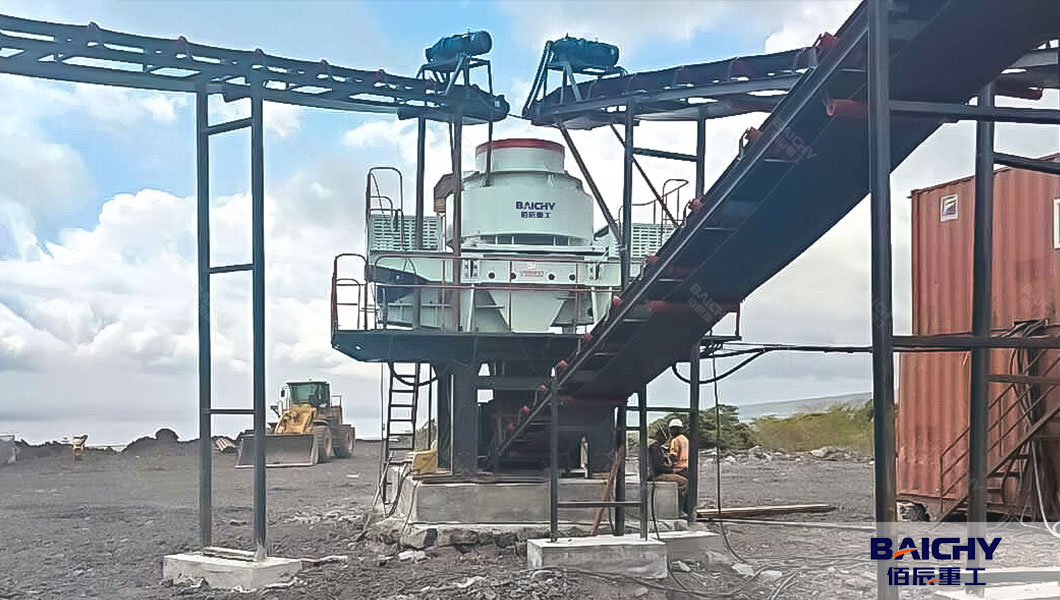
A VSI sand making machine uses high-speed rotor impact to reduce and reshape suitable feed materials.
Typical applications include:
-
Manufactured sand production.
-
Fine aggregate shaping.
-
Reduction of flaky and elongated particles.
-
Production of more consistent aggregate shapes.
Not every aggregate plant requires a VSI crusher. It should be included when the final product specifications justify the additional investment and operating cost.
Stage 5: Aggregate Washing and Dewatering
When raw materials contain clay, silt, or excessive dust, a washing stage may be necessary.
Common equipment includes:
The washing process removes unwanted impurities and improves the cleanliness of finished aggregates.
For river gravel and sand-gravel deposits, washing requirements should be determined by testing the actual clay and silt content.
3. Main Equipment in an Integrated Aggregate Processing System
Selecting equipment based only on its individual rated capacity can lead to production bottlenecks. The entire system must be balanced.
| Processing Stage |
Main Equipment |
Main Function |
| Feeding |
Vibrating feeder |
Regulates raw material supply |
| Primary crushing |
Jaw crusher |
Reduces large rocks |
| Secondary crushing |
Cone or impact crusher |
Further reduces material |
| Fine crushing |
VSI or fine crusher |
Produces finer aggregates |
| Screening |
Vibrating screen |
Separates different sizes |
| Conveying |
Belt conveyor |
Transfers materials |
| Washing |
Sand washer and dewatering screen |
Removes impurities and water |
Important selection factors:
-
Maximum feed size and feed gradation.
-
Rock hardness and abrasiveness.
-
Required hourly production capacity.
-
Finished product sizes and proportions.
-
Moisture content and clay contamination.
-
Available installation space and power supply.
-
Expected operating hours and maintenance requirements.
A well-designed system should avoid excessive crushing, unnecessary material circulation, and bottlenecks between machines.
4. Integrated Aggregate Processing System Configurations
Different materials and production targets require different equipment combinations. The following configurations illustrate common plant designs.
Suitable for: Limestone quarries and medium-hard rock processing.
Typical process:
Vibrating Feeder → Jaw Crusher → Impact Crusher → Vibrating Screen → Finished Aggregate
Optional equipment:
This configuration is suitable for producing several aggregate sizes for road construction, concrete, and general building materials.
Suitable for: Hard rock quarries and high-strength construction aggregates.
Typical process:
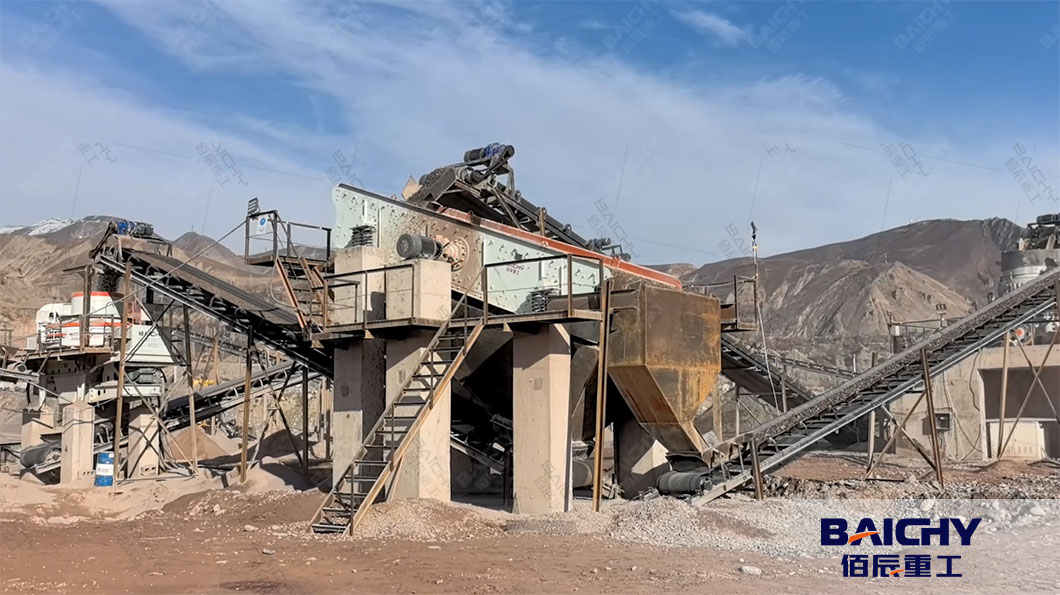
Vibrating Feeder → Jaw Crusher → Cone Crusher → Vibrating Screen → Finished Aggregates
Oversized materials return to the cone crusher for additional crushing.
For plants requiring manufactured sand, a VSI crusher and additional screening stage can be added.
Suitable for: River gravel deposits and natural sand-gravel resources.
Typical process:
Feeding → Primary Screening → Crushing → Secondary Screening → Washing → Dewatering
Depending on the deposit, pre-screening can separate natural sand and fine materials before crushing. This helps reduce unnecessary crusher loading.
5. How to Design an Aggregate Processing Plant Based on Capacity
Production capacity is one of the most important factors in aggregate plant design. However, a plant's nominal capacity does not automatically represent its actual saleable output.
The design should consider raw material conditions, equipment operating rates, product distribution, and the required final specifications.
| Design Capacity |
Typical Application |
Main Design Consideration |
| 50–100 TPH |
Small quarries and local aggregate suppliers |
Compact layout and investment control |
| 100–200 TPH |
Small and medium-sized aggregate producers |
Balanced crushing and screening |
| 200–300 TPH |
Commercial aggregate plants |
Higher screening and conveying capacity |
| 300–500 TPH |
Large quarry operations |
Continuous operation and system coordination |
| Above 500 TPH |
Large-scale aggregate production |
Multiple processing lines and centralized control |
These are indicative project categories, not guaranteed equipment capacities. Actual output must be confirmed through material testing and equipment selection.
How to avoid capacity bottlenecks:
-
Match feeder capacity with the primary crusher.
-
Ensure the secondary crusher can handle the primary crusher's discharge.
-
Size vibrating screens according to feed volume and separation requirements.
-
Provide sufficient conveyor capacity between processing stages.
-
Consider recirculating material in closed-circuit systems.
-
Allow adequate stockpile and finished-product handling capacity.
6. Baichy Aggregate Processing Plant Solutions
Henan Baichy Machinery Equipment Co., Ltd. provides crushing, screening, sand making, and mineral processing equipment for quarry and aggregate production applications.
Its aggregate processing solutions can be configured according to raw material properties, production capacity, and finished product requirements.
Typical equipment options include:
-
PE and C-series jaw crushers for primary crushing.
-
Cone crushers for hard rock crushing.
-
PF series impact crushers for suitable medium-hard materials.
-
VSI sand making machines for manufactured sand.
-
Vibrating screens for aggregate classification.
-
Belt conveyors for material transportation.
-
Sand washing and dewatering equipment.
Example: 100 TPH Granite Crushing Plant
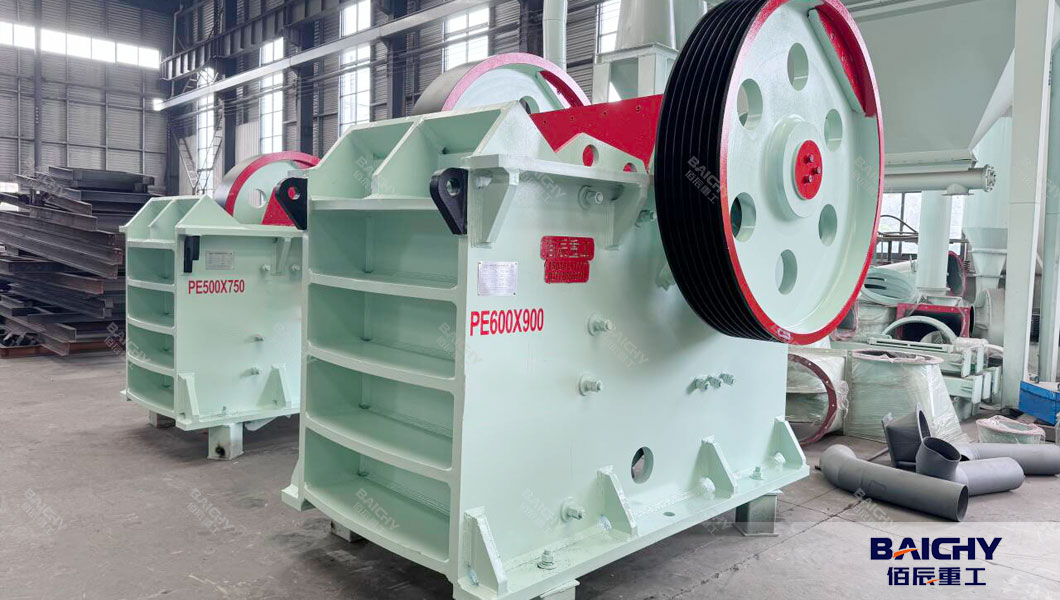
For a granite aggregate production project, a PE600×900 jaw crusher can be used as the primary crushing machine. The plant configuration should also consider secondary crushing, vibrating screening, and closed-circuit material return according to the required finished aggregate sizes.
This actual project configuration is illustrated in Baichy's granite crushing plant case: The PE600×900 jaw crusher is a key reference for primary crushing selection. Secondary equipment and final output specifications should be evaluated against the project's actual operating requirements.
For buyers planning a new aggregate processing plant, the first step is to define the feed material, maximum feed size, hourly capacity, and finished product requirements. Equipment selection should follow the complete process design rather than individual machine quotations.
Conclusion
An integrated aggregate processing system is not simply a collection of crushers and screens. It is a coordinated production line designed to convert raw rock into marketable construction materials. The right solution depends on material properties, production targets, finished product specifications, and operating costs. For quarry owners and aggregate producers, a properly balanced system can reduce unnecessary material handling, improve production consistency, and support long-term plant operation. Contact Baichy Machinery with your material type, feed size, target capacity, and required aggregate sizes to discuss a suitable crushing and screening plant configuration.
Frequently Asked Questions
Q1: What equipment is needed for a complete aggregate processing plant?
A typical plant requires a vibrating feeder, jaw crusher, secondary crusher, vibrating screen, and belt conveyors. Depending on the final products, it may also include a VSI crusher, sand washing machine, and dewatering screen.
Q2: What is the difference between an aggregate crushing plant and an integrated aggregate processing system?
An aggregate crushing plant generally focuses on reducing rock size and separating materials. An integrated aggregate processing system covers the complete production workflow, potentially including feeding, crushing, screening, shaping, washing, conveying, and centralized control.
Q3: Can one aggregate processing system produce multiple aggregate sizes?
Yes. Multi-deck vibrating screens can separate crushed materials into different size ranges. The number of screen decks and crushing stages depends on the required products and production capacity.
Q4: Is a washing system necessary for aggregate production?
Not always. Washing is recommended when raw materials contain excessive clay, silt, or unwanted impurities, or when finished products must meet specific cleanliness requirements.
Q5: How much does an integrated aggregate processing system cost?
The price depends on capacity, raw material hardness, equipment configuration, automation level, and installation requirements. A complete project quotation should include equipment, transportation, installation, and other site-related costs.




 2026-11-06






 86-15093113821
 86-15093113821