A calcite grinding and crushing plant converts natural calcite rock into fine calcium carbonate powder for industrial applications. The right production line combines crushing, grinding, powder classification, dust collection, and finished-product handling. The equipment configuration depends mainly on three factors: raw material size, required powder fineness, and production capacity. For investors planning a new calcite powder factory, selecting a complete processing system is more important than choosing a grinding mill alone.
1. What Is a Calcite Grinding and Crushing Plant?
Calcite is a natural calcium carbonate mineral (CaCO₃) with a Mohs hardness of approximately 3. It is relatively easy to crush and grind compared with many hard rocks.
After processing, calcite powder is widely used in:
-
Plastics and rubber: Mineral filler to improve product properties and reduce raw material costs.
-
Paints and coatings: Filler for controlling texture and other product characteristics.
-
Paper manufacturing: Mineral filler and coating material.
-
Construction materials: Used in putty, mortar, and other building products.
-
Ceramics and chemical industries: Used as an industrial mineral raw material.
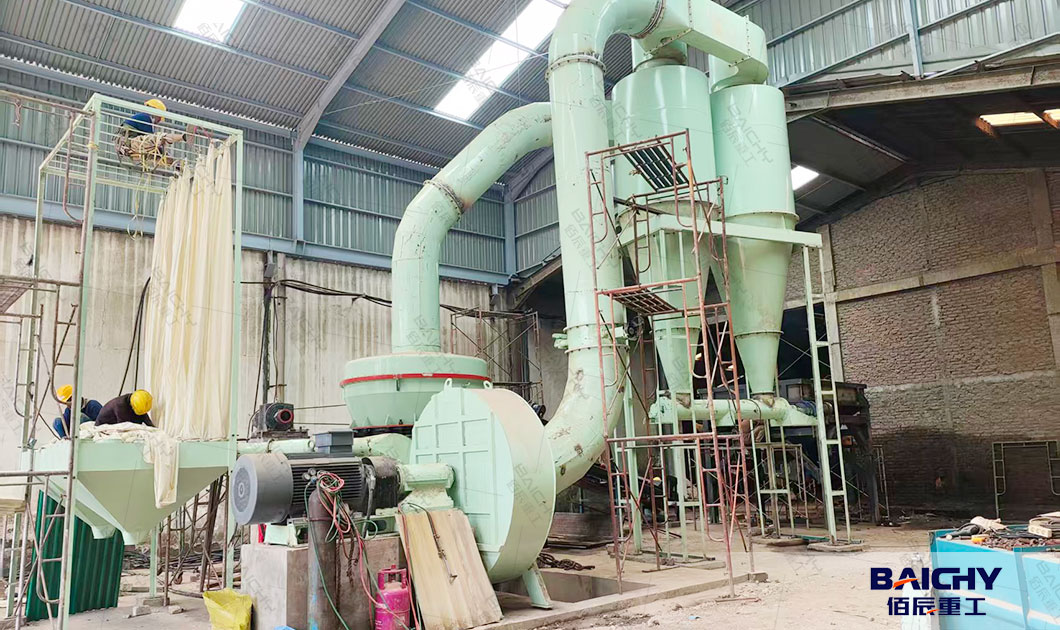
A complete calcite processing plant generally includes:
-
Raw material feeding and crushing.
-
Material conveying and storage.
-
Fine grinding.
-
Powder classification.
-
Dust collection.
-
Finished powder storage and packaging.
The process can be customized according to the customer's production requirements.
2. Calcite Crushing and Grinding Process Flow
The standard process starts with large calcite rocks and ends with classified powder ready for storage or packaging.
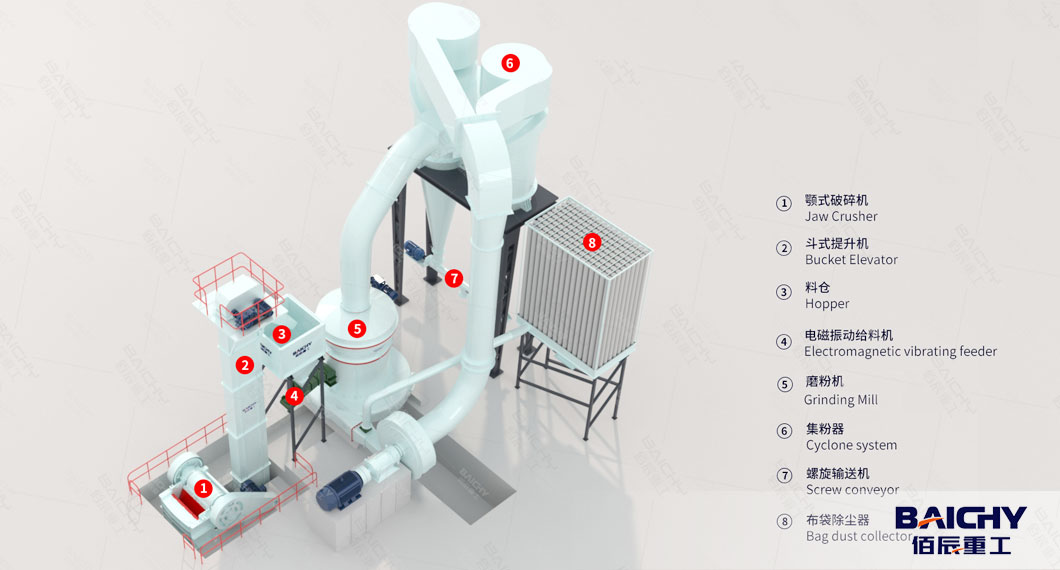
Step 1: Raw Calcite Crushing
Natural calcite blocks from the quarry are usually too large to enter a grinding mill directly.
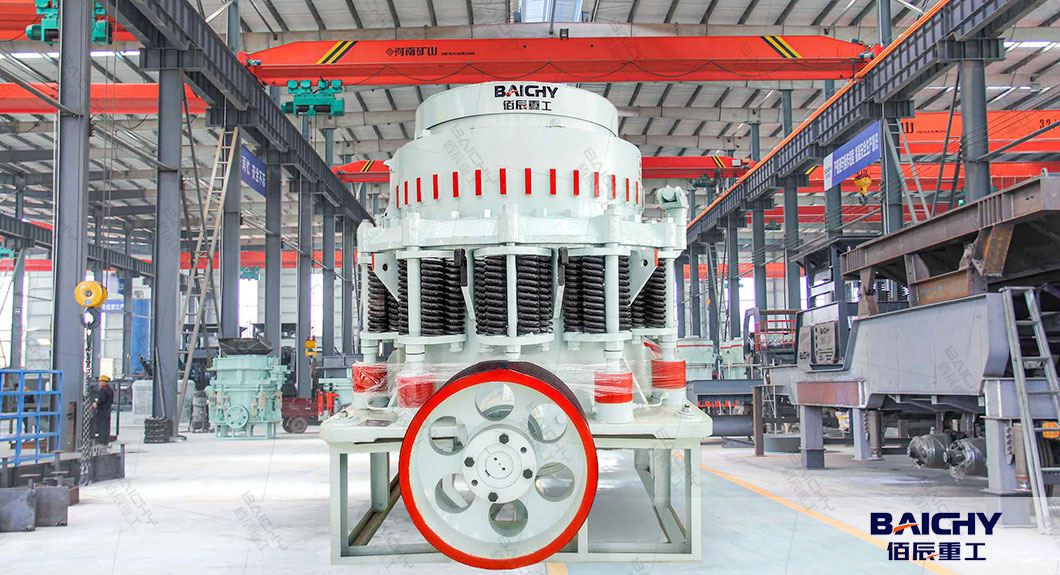
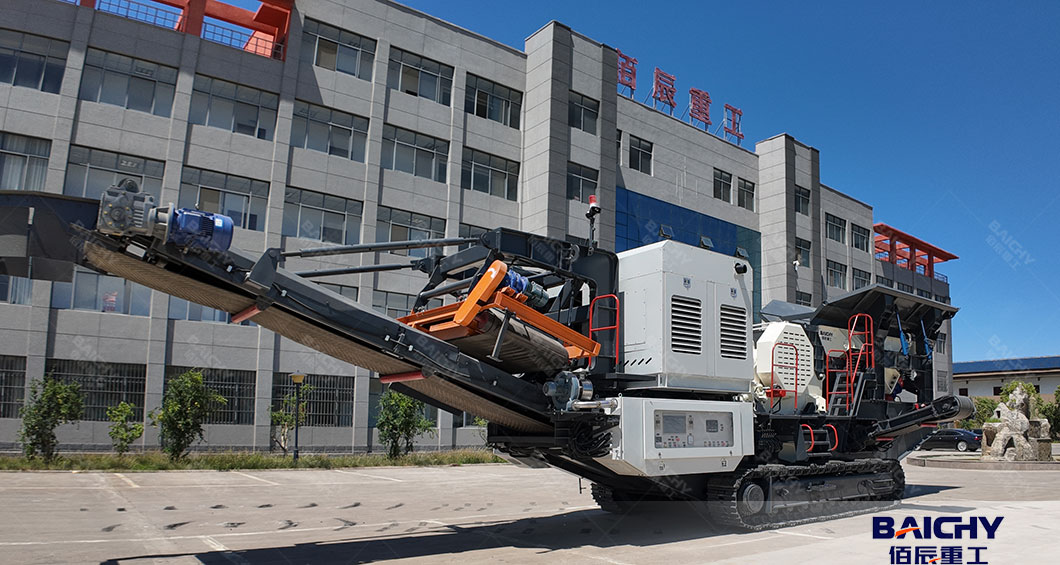
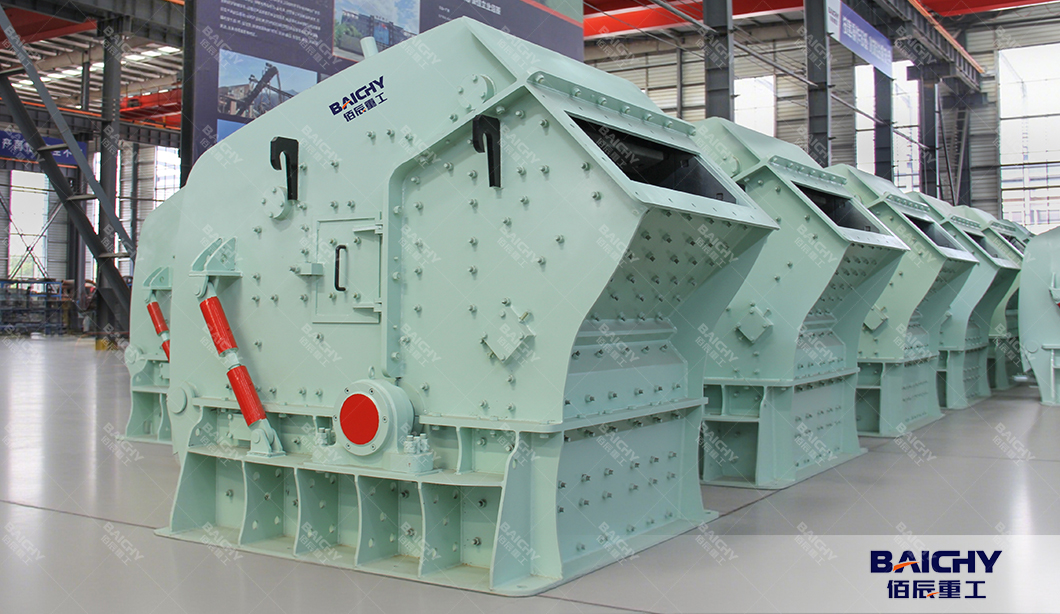
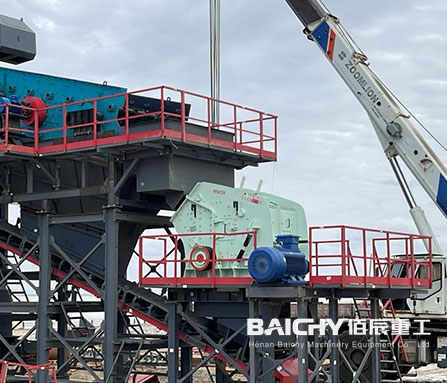
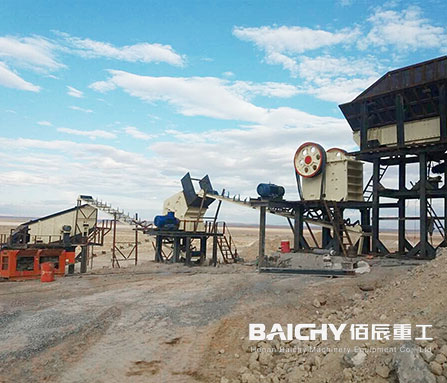
A jaw crusher or hammer crusher can be selected according to the feed size and required discharge size.
-
Jaw crusher: Suitable for primary crushing of large calcite blocks.
-
Hammer crusher: Suitable for reducing relatively soft calcite to smaller particles.
-
Vibrating feeder: Provides continuous and uniform feeding.
For a small or medium-sized grinding plant, the crushing stage should produce a relatively uniform feed suitable for the selected mill.
Step 2: Material Conveying and Feeding
After crushing, the calcite is transported by a belt conveyor or bucket elevator to a storage hopper.
An electromagnetic vibrating feeder or screw feeder then delivers material into the grinding mill at a controlled rate.
Uniform feeding helps maintain stable grinding conditions and reduces unnecessary fluctuations in mill operation.
Step 3: Calcite Grinding
Grinding is the core stage of the production line.
The selection of a grinding mill depends on the required powder fineness, hourly output, and investment budget.
| Grinding Equipment |
Typical Application |
Main Consideration |
| Raymond Mill |
General fine calcite powder |
Suitable for conventional powder production |
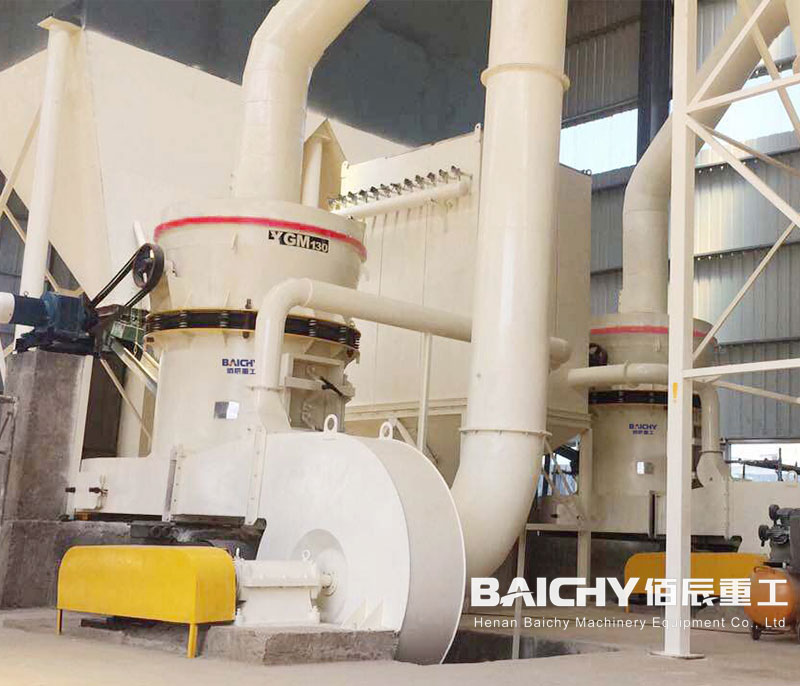
| HGM Micro-Powder Mill |
Fine and ultrafine calcite powder |
Suitable for higher fineness requirements |
| Vertical Roller Mill |
Medium-to-large-scale powder production |
Integrates grinding, drying, and classification |
| Ball Mill |
Continuous grinding and customized powder production |
Requires appropriate classification equipment |
For conventional calcite powder production, a Raymond mill is a practical option. When the target is ultrafine powder, an HGM micro-powder mill may be more suitable.
Step 4: Powder Classification
After grinding, the powder enters a classifier.
Qualified particles are collected as finished products, while oversized particles return to the grinding system for further processing.
The classifier is particularly important when producing calcite powder with a controlled particle-size distribution.
Simply increasing grinding time does not guarantee better powder quality. A suitable classification system helps control the final product.
Step 5: Dust Collection and Packaging
A cyclone collector and pulse bag dust collector collect the finished powder from the airflow system.
The powder is then conveyed to a finished-product silo and packed using an automatic packaging machine.
A properly designed dust collection system also helps reduce material loss and improve the working environment.
3. How to Choose the Right Calcite Grinding Mill?
Different customers have different production targets. The following equipment selection principles can help narrow down the options.
Raymond Mill for Conventional Calcite Powder
Baichy's Raymond mill is suitable for calcite, limestone, dolomite, gypsum, and other non-metallic minerals.
Its finished product fineness can be adjusted through the classifier and airflow system.
Typical application:
-
Feed size: Up to 25 mm, depending on the model.
-
Product fineness: Approximately 30–325 mesh, depending on configuration.
-
Application: General industrial calcite powder production.
It is a suitable option for customers who need conventional fine powder rather than extremely fine particles.
HGM Micro-Powder Mill for Ultrafine Calcite Powder
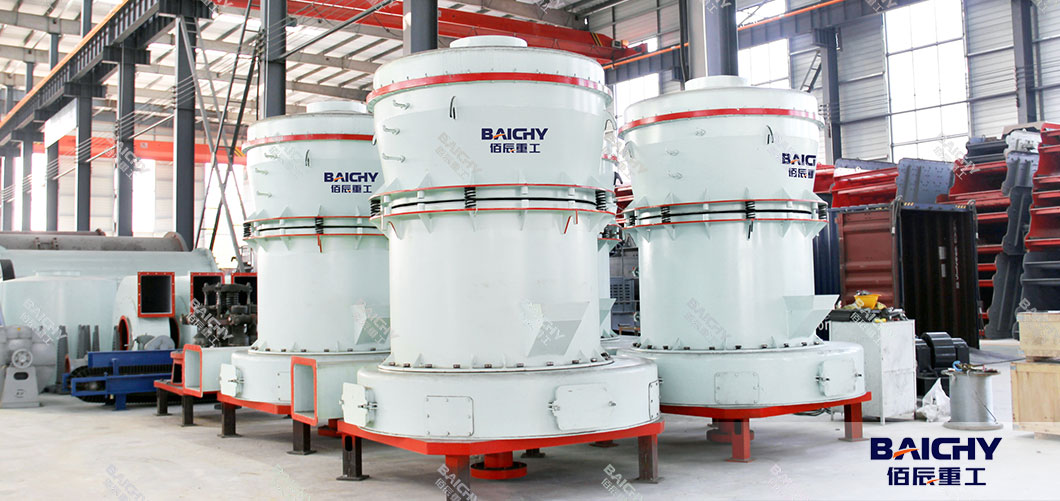
When customers require finer calcium carbonate powder, the HGM micro-powder mill is worth considering.
The HGM series is designed for brittle, medium- and low-hardness materials, including calcite, limestone, dolomite, and marble.
Typical equipment characteristics:
-
Feed size: Up to 20 mm, depending on the model.
-
Product fineness: Approximately 325–3000 mesh.
-
Processing capacity: Approximately 0.2–10 t/h, depending on the model and material.
For ultrafine production, the classifier, grinding configuration, and dust collection system must be matched to the target particle size.
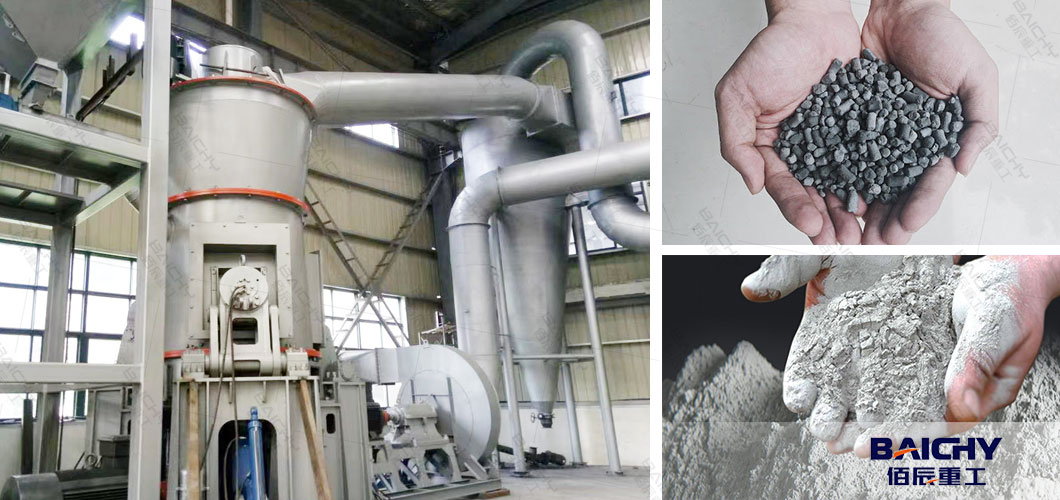
Vertical Roller Mill for Larger Production Capacity
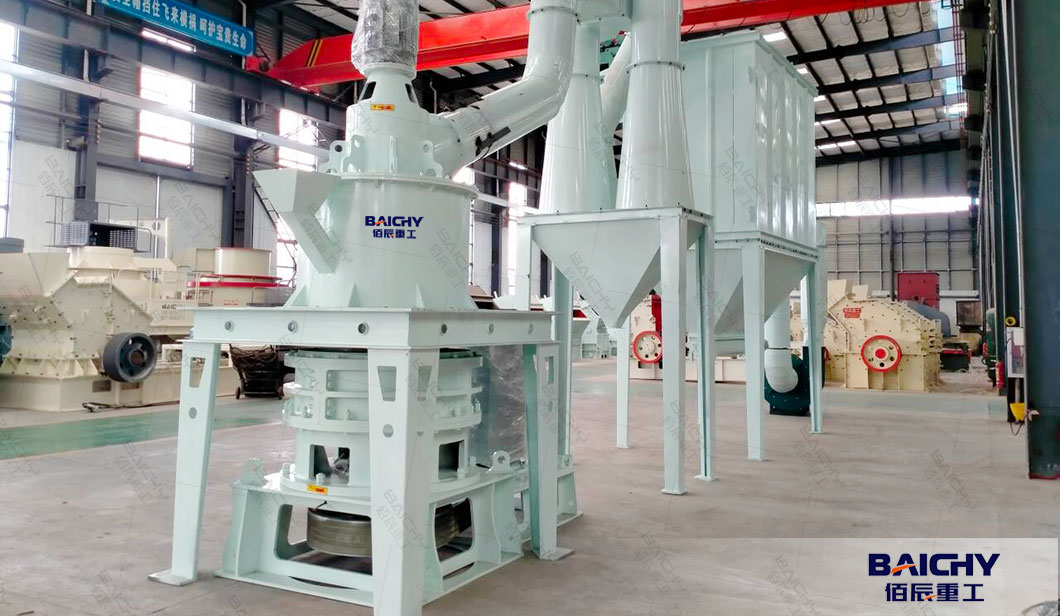
For customers planning a larger calcite powder production line, a vertical roller mill can be considered.
It integrates grinding, drying, classification, and conveying functions into one system.
The SRM series has a published model capacity range of approximately 10–135 t/h, depending on the model and operating conditions.
It is more suitable for projects requiring higher throughput and continuous industrial production.
4. Baichy Calcite Grinding Plant: Real Project References
Actual project experience provides a useful reference when evaluating equipment configuration.
Baichy has published calcite and calcium carbonate grinding project information, including the following examples.
Case 1: Carbon Calcite Grinding Mill Plant in Greece
Baichy's grinding mill project portfolio includes a Carbon Calcite Grinding Mill Plant in Greece.
The project is listed as an application for ultrafine grinding of carbon calcite, a calcium carbonate-based non-metallic mineral.
This project demonstrates Baichy's experience in providing grinding equipment for calcite-related powder processing.
The published project information does not provide verified capacity, feed size, or final mesh specifications, so these figures should be confirmed with the project team rather than assumed.
Case 2: Calcium Carbonate Powder Grinding Plant
Baichy also published a calcium carbonate powder grinding plant configuration suitable for materials such as calcite, limestone, and chalk.
The documented process includes:
-
Raw material selection and feeding.
-
Hammer crusher for preliminary size reduction.
-
Bucket elevator and storage bin.
-
HGM micro-powder grinding mill.
-
Frequency-conversion classifier.
-
Cyclone powder collector.
-
Pulse dust removal system.
-
Finished powder conveying and packaging.
Published project parameters:
| Item |
Project Information |
| Raw material |
Calcium carbonate |
| Feed size |
Below 25 mm |
| Capacity |
0.5–10 t/h |
| Finished product |
325–3000 mesh |
| Main grinding equipment |
HGM micro-powder mill |
The configuration shows how crushing, grinding, classification, and dust collection work together in a complete powder production system.
For calcite powder producers, this is a useful equipment reference when planning a similar processing line.
5. What Determines the Investment Cost of a Calcite Grinding Plant?
There is no fixed price for a complete calcite grinding plant. The investment depends on the following factors:
1. Production capacity
A 2 t/h plant and a 20 t/h plant require different mill models, conveying systems, classifiers, and supporting equipment.
2. Finished powder fineness
Producing 200-mesh powder generally requires a different configuration from producing 800-mesh or ultrafine powder.
Finer products may require a more precise classifier and a different grinding system.
3. Raw material conditions
Feed size, moisture content, impurities, and grindability affect equipment selection and actual production capacity.
4. Plant configuration
A complete quotation should consider the crusher, grinding mill, elevator, feeder, classifier, dust collector, electrical control system, and packaging equipment.
Before purchasing equipment, customers should provide a representative raw material sample and confirm the required finished-product specifications.
This makes it easier to evaluate actual capacity, power consumption, and equipment suitability.
6. How to Get a Suitable Calcite Grinding Plant Solution?
A reliable calcite grinding plant should be designed around the customer's actual production target rather than a standard equipment list.
Baichy Machinery can customize a crushing and grinding configuration based on the following information:
-
Raw calcite feed size.
-
Required finished powder fineness (mesh or μm).
-
Target production capacity (t/h).
-
Raw material moisture and impurity conditions.
-
Available factory space and local power supply.
With these details, engineers can select the appropriate crusher, grinding mill, classifier, and dust collection equipment. Contact Baichy Machinery to discuss your calcite crushing and grinding project and obtain a customized equipment configuration and quotation.




 2026-11-04






 86-15093113821
 86-15093113821