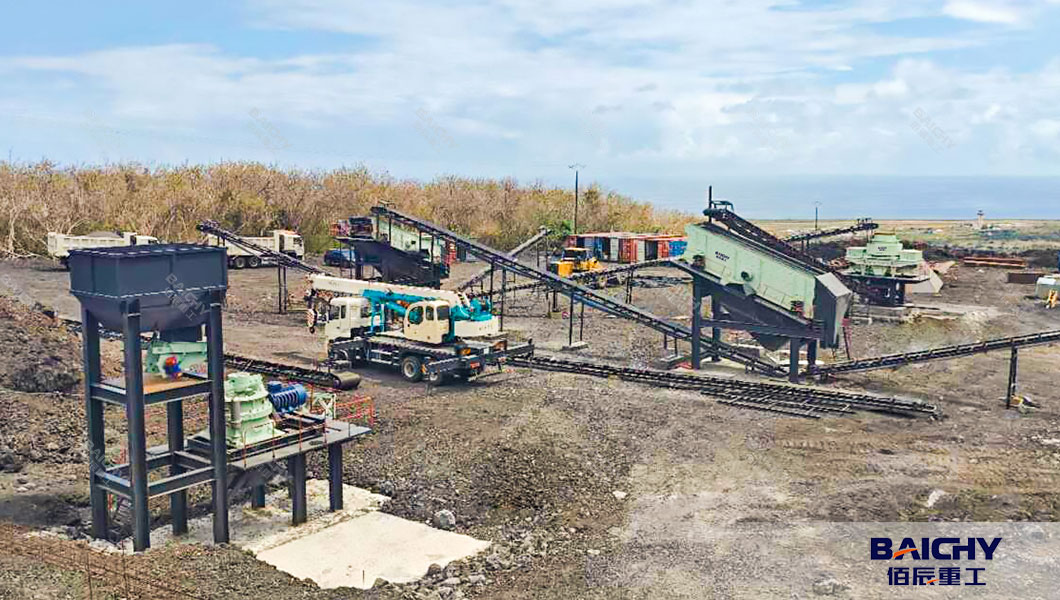
A customer in Guatemala needed a complete sand production line to process locally available quartz stone into high-quality manufactured sand and aggregates for construction applications. Quartz is a hard and abrasive rock. Producing consistent sand from quartz requires a well-matched combination of primary crushing, secondary crushing, shaping, screening, and washing equipment. To meet the customer's production requirements, Baichy designed a 200 TPH quartz stone crushing and sand making plant with a multi-stage crushing process and a dedicated VSI sand-making system.
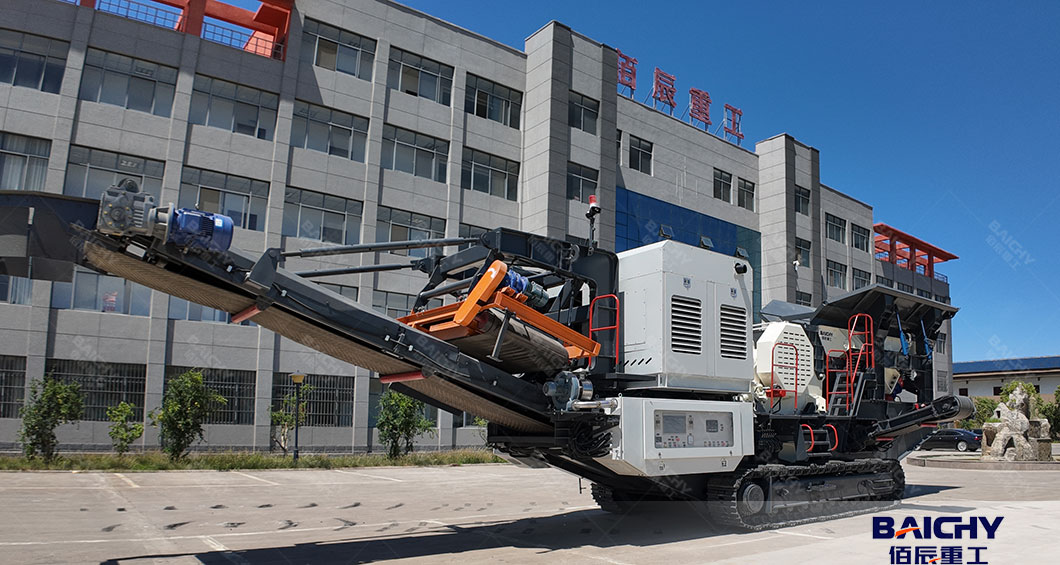
The production line integrates a C Series jaw crusher, single-cylinder hydraulic cone crusher, VSI sand making machine, vibrating screens, sand washing machine, and belt conveyors.
Project Location: Guatemala
Raw Material: Quartz Stone
Max Feeding Size: 500mm
Designed Capacity: 200 TPH
Main Products: Manufactured sand and graded aggregates
Final Porduct Size: 0–5 mm、5–10 mm、10–20 mm、20–30 mm
Process: Primary Crushing → Secondary Crushing → Sand Making → Screening → Washing
1. Equipment Configuration for the 200 TPH Plant
The equipment selection considers quartz's high hardness and abrasive characteristics. Instead of relying on a single crushing machine, the plant uses several crushing stages to distribute the workload and improve overall production efficiency.
| Processing Stage |
Main Equipment |
Function |
| Primary Crushing |
C Series Jaw Crusher |
Reduces large quartz rocks into smaller particles |
| Secondary Crushing |
Single-Cylinder Cone Crusher |
Further reduces particle size |
| Sand Making |
VSI Sand Making Machine |
Shapes particles and produces manufactured sand |
| Screening |
Vibrating Screen |
Separates sand and aggregates by size |
| Sand Washing |
Sand Washing Machine |
Removes clay, dust, and other impurities |
| Material Transfer |
Belt Conveyors |
Connects each processing stage |
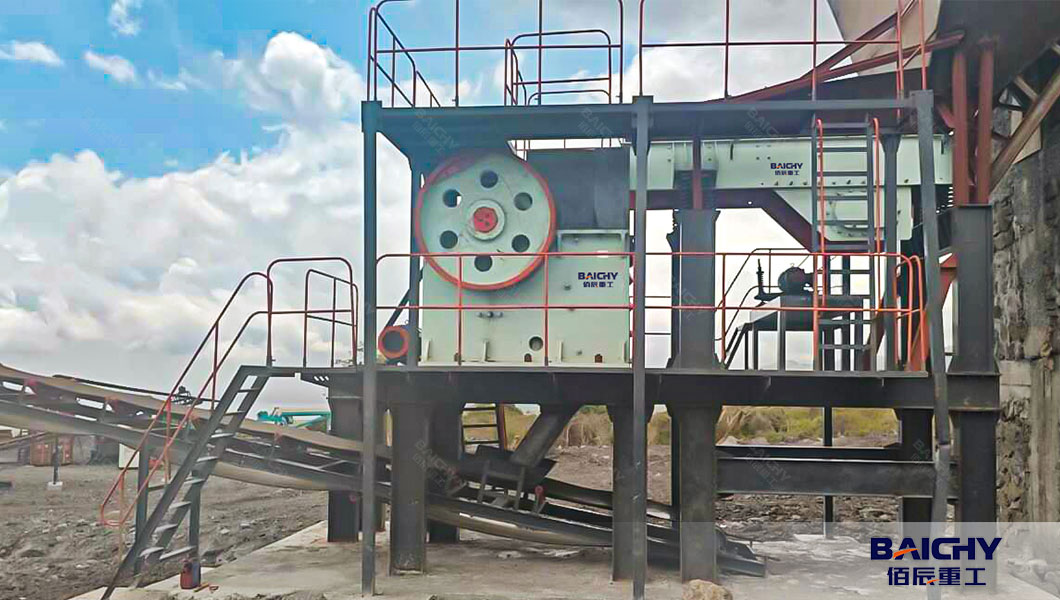
C Series Jaw Crusher: Primary Crushing
The C Series jaw crusher handles large quartz stone directly from the feed hopper. Its main task is to reduce the raw material to a suitable size for the secondary crushing stage. A robust crushing chamber and reliable mechanical structure are important when processing hard and abrasive quartz.
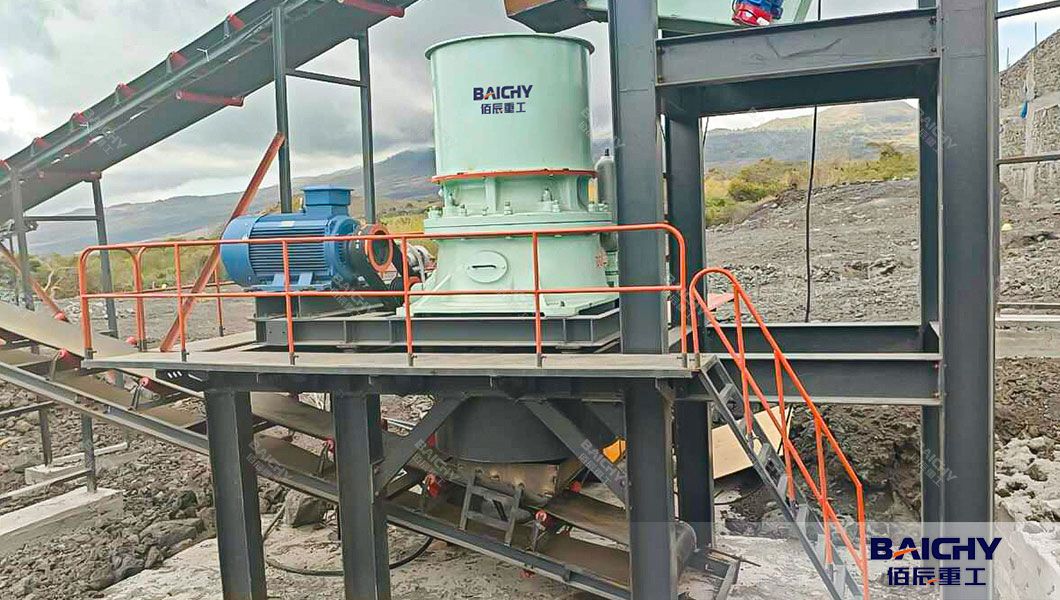
Single-Cylinder Cone Crusher: Secondary Crushing
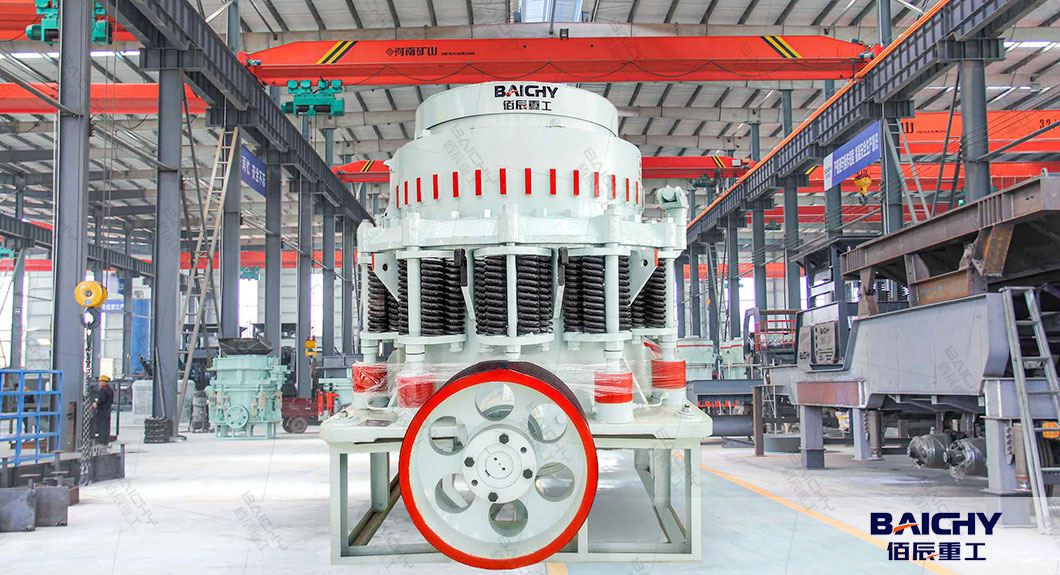
After primary crushing, the material enters the single-cylinder hydraulic cone crusher. This stage reduces the quartz particles further and prepares them for VSI sand making. Cone crushing is suitable for hard and abrasive materials, helping reduce the amount of oversized feed entering the sand-making machine.
The crusher setting should be adjusted according to the required feed size and final product specifications.
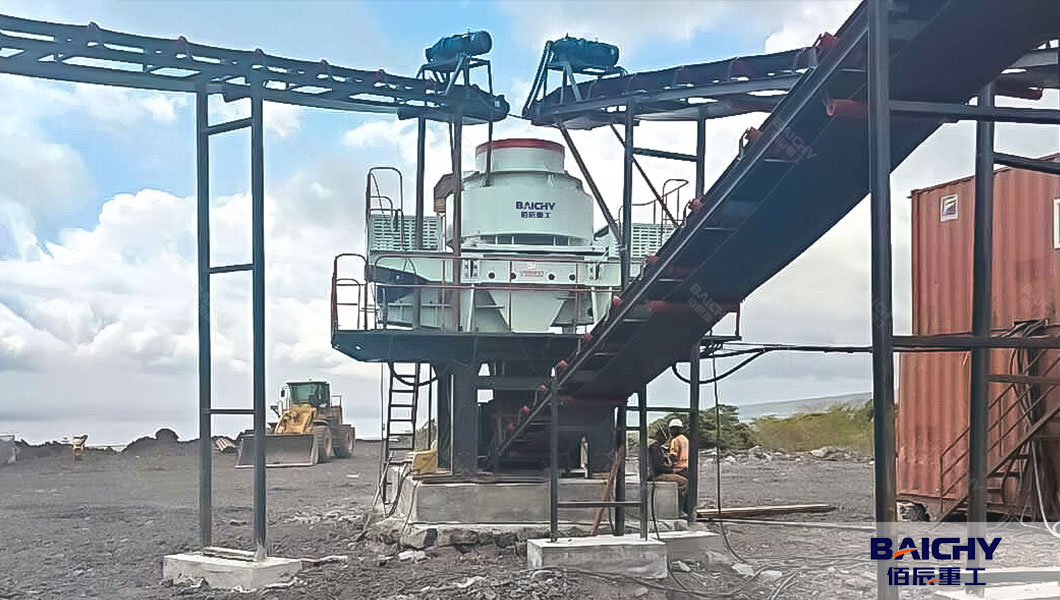
VSI Sand Making Machine: Manufactured Sand Production
The VSI sand making machine is the key equipment for producing manufactured sand.
It uses high-speed rotor impact to crush and shape quartz particles. Compared with conventional crushing alone, VSI processing provides an additional shaping stage, helping improve particle shape and produce more uniform manufactured sand.
For quartz sand production, the rotor speed, feed gradation, and operating conditions should be selected according to the target particle size and sand quality requirements.
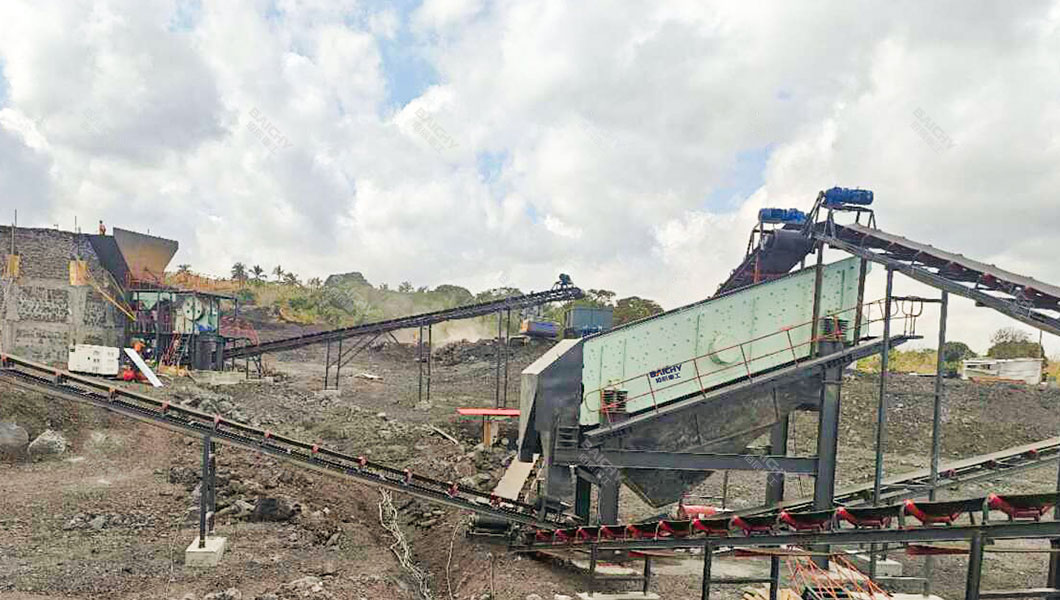
Vibrating Screens: Product Classification
Vibrating screens separate the crushed material into different size fractions.
Oversized particles can be returned to the VSI crusher for further processing, while qualified materials are transferred to the corresponding product stockpiles or washing stage.
A closed-circuit arrangement helps maintain a more stable feed size and reduces unnecessary oversize material in the final products.
Sand Washing Machine: Improving Sand Cleanliness
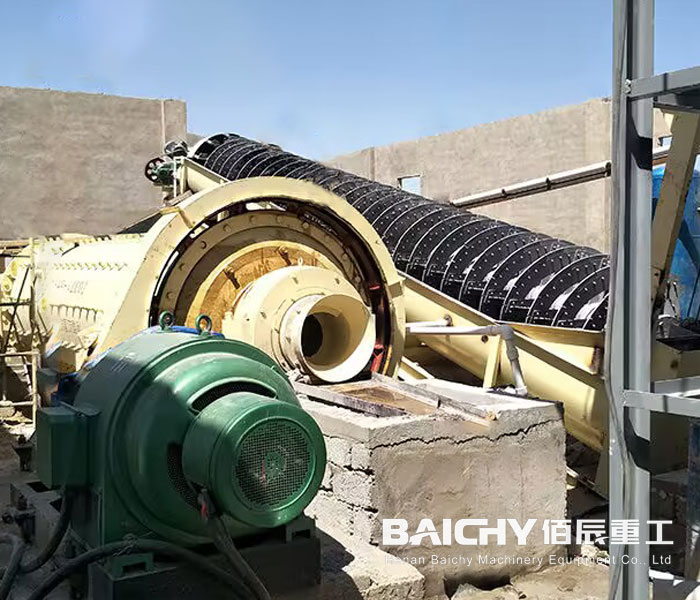
The sand washing machine removes fine clay, dust, and other unwanted impurities from manufactured sand.
This stage is particularly important when the finished sand will be used in concrete and construction applications, where cleanliness and particle-size consistency affect product quality.
The washing configuration should be selected according to the raw material's clay content, fine-particle distribution, and required finished-sand specifications.
2. How Does the Quartz Sand Making Process Work?
The complete production process follows five main steps:
Step 1: Feeding and Primary Crushing
Raw quartz stone is delivered to the feed hopper and enters the C Series jaw crusher. Large rocks are reduced to smaller sizes for further processing.
Step 2: Secondary Crushing
The jaw crusher discharge is conveyed to the single-cylinder cone crusher. The cone crusher reduces the material to a suitable size for sand making.
Step 3: VSI Sand Making
The crushed quartz enters the VSI sand making machine for particle reduction and shaping. This stage produces manufactured sand and smaller aggregate particles.
Step 4: Screening and Size Separation
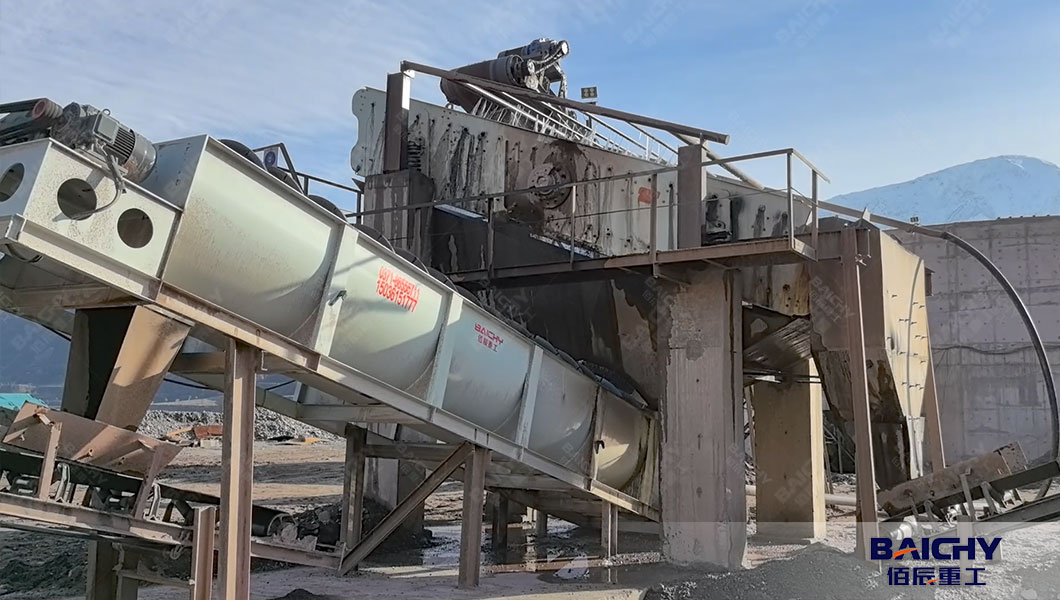
The vibrating screen separates materials according to the required product sizes. Oversized particles can be returned for additional crushing.
Step 5: Sand Washing and Stockpiling
The qualified sand enters the washing system to remove unwanted impurities. After washing and dewatering, the finished sand is conveyed to the stockpile.
The actual screen sizes, crusher settings, and circulating load should be determined through raw material testing and the customer's final product requirements.
3. Why Use a Jaw Crusher, Cone Crusher, and VSI for Quartz?
Quartz has a Mohs hardness of approximately 7, making it more demanding to process than many common aggregate materials.
A three-stage crushing configuration offers several practical advantages:
-
Better distribution of crushing workload: Each machine handles a specific size-reduction task.
-
Suitable for hard rock: Jaw and cone crushers are commonly used for hard and abrasive stone.
-
Improved particle shaping: VSI crushing helps produce more cubical and well-shaped manufactured sand.
-
Flexible product classification: Vibrating screens allow operators to separate different aggregate sizes.
-
Cleaner finished sand: Washing equipment removes unwanted impurities before stockpiling.
For investors planning a quartz sand production project, selecting equipment based on the complete process is more important than choosing individual machines based only on their rated capacity.
4. Complete Quartz Sand Making Solutions from Baichy
Building a quartz sand making plant involves more than purchasing several crushers. The feeding system, crushing stages, screening equipment, washing system, and conveyors must work together.
Baichy provides complete crushing and sand-making equipment configurations for hard rock materials, including quartz, granite, basalt, and other aggregates.
For a 200 TPH quartz sand production project, the final equipment selection should be based on:
-
Raw quartz feed size and material properties.
-
Required manufactured sand and aggregate specifications.
-
Expected hourly production capacity.
-
Site conditions and available installation space.
-
Local power supply and operating requirements.
Planning a quartz sand making plant in Guatemala or another market? Send your raw material information, feed size, target output, and required finished sand specifications. Baichy can help evaluate the crushing process and prepare a suitable equipment configuration.
Frequently Asked Questions
1. Can quartz stone be used to produce manufactured sand?
Yes. Quartz stone can be processed into manufactured sand using jaw crushers, cone crushers, and VSI sand making machines. Screening and washing equipment help control finished particle size and cleanliness.
2. What equipment is needed for a 200 TPH quartz sand making plant?
A typical configuration includes a vibrating feeder, C Series jaw crusher, single-cylinder cone crusher, VSI sand making machine, vibrating screens, sand washing machine, belt conveyors, and supporting electrical systems.
3. Why is a VSI crusher used in quartz sand production?
A VSI crusher provides high-speed impact crushing and particle shaping. It is commonly used in the final crushing stage to produce manufactured sand with a more uniform particle shape.
4. Is sand washing necessary for quartz sand production?
It depends on the raw material and end-use requirements. If the quartz contains clay, dust, or excessive fine impurities, washing can improve the cleanliness of the finished sand.
5. How much space does a 200 TPH sand making plant need?
The required area depends on the equipment layout, conveyor lengths, stockpile capacity, raw material storage, and site conditions. A plant layout should be prepared after confirming the process flow and equipment dimensions.




 2026-11-05






 86-15093113821
 86-15093113821