Baichy's Three Tracked Mobile Crushing Stations Process Basalt in Ethiopia
Baichy Machinery's three tracked mobile crushing stations are now operating at a basalt quarry in Ethiopia, delivering a production capacity of approximately 200 tons per hour (TPH). The complete crushing setup consists of a tracked mobile jaw crusher, a tracked mobile cone crusher, and a tracked mobile screening plant. The project demonstrates how multiple mobile crushing units can work together to process hard and abrasive basalt into marketable aggregates.
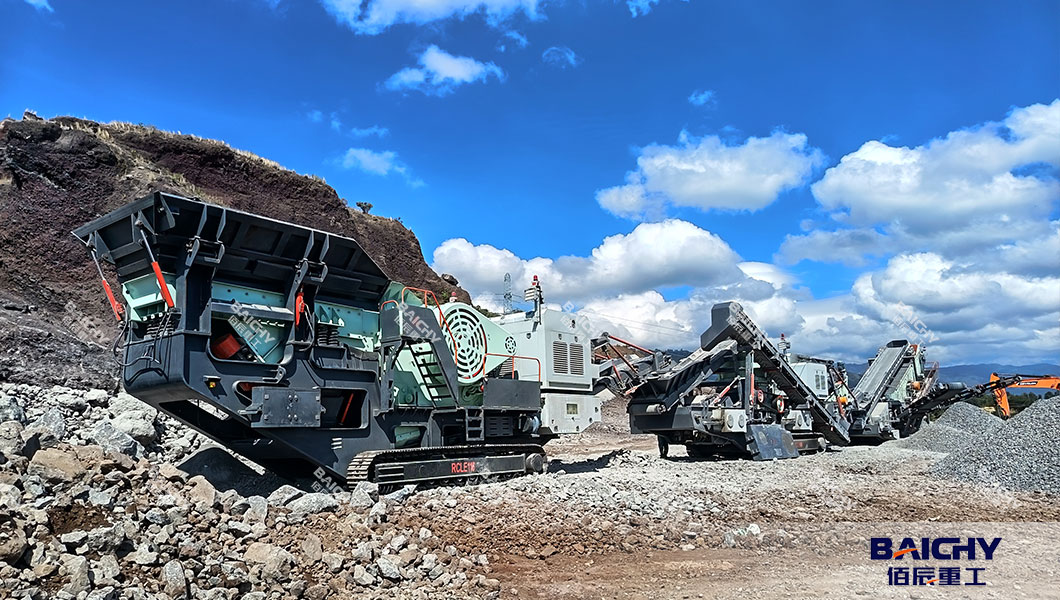
Baichy crawler mobile crushing plant Ethiopia
Three Mobile Crushing Stations Work as an Integrated System
The Ethiopian basalt crushing project uses three tracked mobile crushing stations to establish a complete crushing and screening process. Each machine performs a specific function, while the three units work together to maintain a continuous material flow and achieve an overall production capacity of approximately 200 TPH. This equipment combination allows the quarry to process hard basalt through a coordinated multi-stage operation.
1. Tracked Mobile Jaw Crusher – Primary Crushing of Large Basalt Rocks
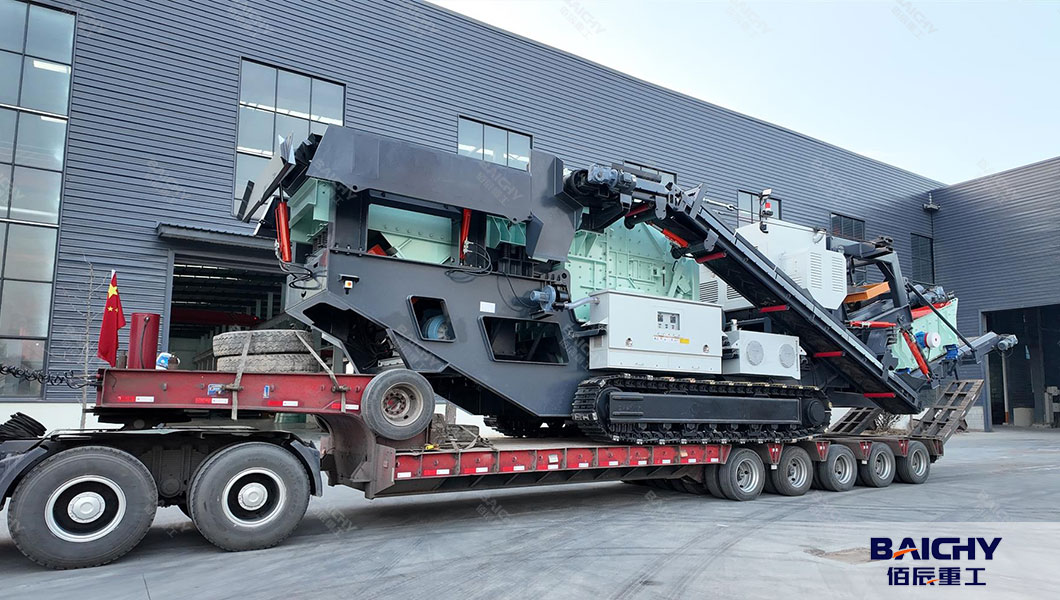
The tracked mobile jaw crusher serves as the primary crushing unit. At the beginning of the production process, large basalt rocks from quarry blasting are fed into the jaw crusher through its feeding system. The machine uses the compression force between the fixed jaw plate and the movable jaw plate to break large rocks into smaller pieces. This primary reduction is essential because raw basalt often contains oversized blocks that cannot be fed directly into secondary crushing equipment. For this project, the tracked jaw crusher performs three important functions:
-
Handles large feed materials: Its jaw crushing chamber is designed for primary reduction of large basalt rocks.
-
Provides a stable feed for secondary crushing: By reducing the initial rock size, it prepares the material for the downstream cone crusher.
-
Supports flexible quarry operation: The tracked chassis allows the equipment to move with changing quarry working areas, reducing dependence on a fixed crushing location.
The discharge material from the jaw crusher is transferred to the next crushing stage for further size reduction.
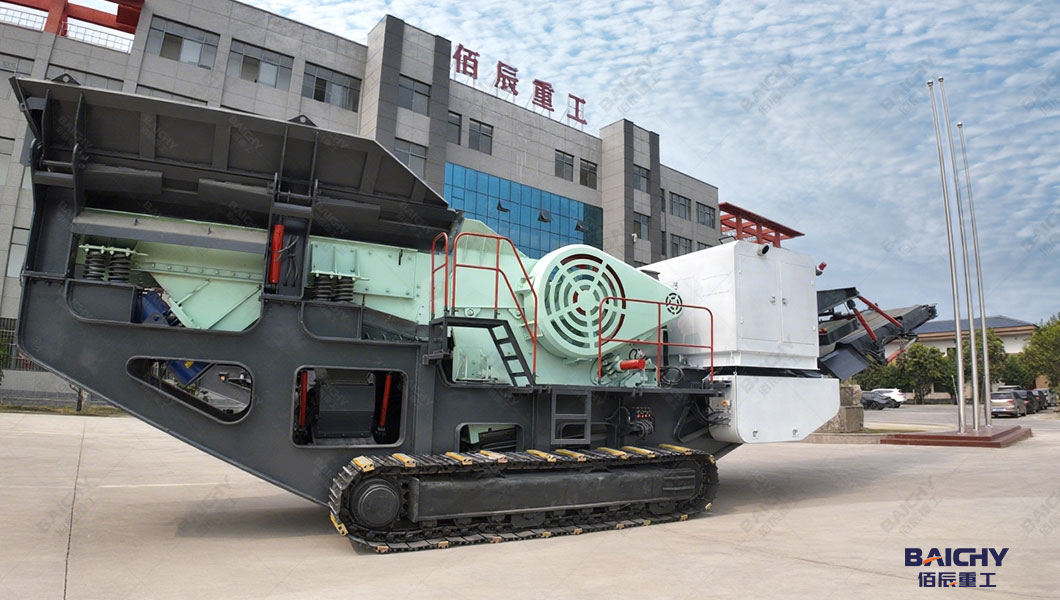
Tracked mobile jaw crusher
2. Tracked Mobile Cone Crusher – Secondary Crushing of Hard Basalt
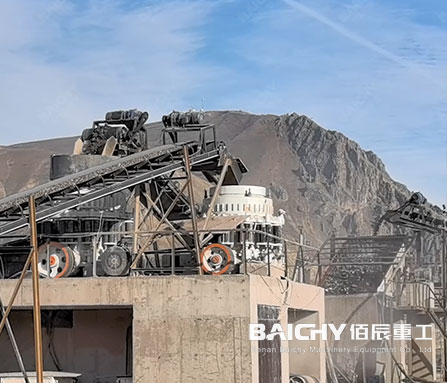
After primary crushing, the reduced basalt enters the tracked mobile cone crusher for secondary processing. Basalt is a hard and abrasive volcanic rock. Compared with softer materials such as limestone, it places greater demands on crushing pressure, wear resistance, and equipment stability. A cone crusher is therefore a suitable choice for secondary crushing in this type of hard-rock application.
The cone crusher reduces material through compression between the mantle and concave. As the material enters the crushing chamber, repeated compression breaks larger particles into smaller aggregate. Its role in the Ethiopian project is not simply to reduce material size. It also helps prepare the crushed basalt for subsequent screening and aggregate classification. The main operational advantages of this configuration include:
-
Suitable for hard-rock crushing: Compression crushing is well suited to hard and abrasive materials such as basalt.
-
Controlled product size: The crusher's closed-side setting (CSS) can be adjusted according to the required discharge size and operating conditions.
-
Continuous secondary processing: It receives the primary crushed material and further reduces its size to meet the screening stage requirements.
-
Coordinated production: Its processing capacity must match the upstream jaw crusher and downstream screening plant to maintain balanced operation.
Proper adjustment of the crushing gap and regular inspection of the mantle and concave are important for maintaining stable production and controlling wear-part consumption.
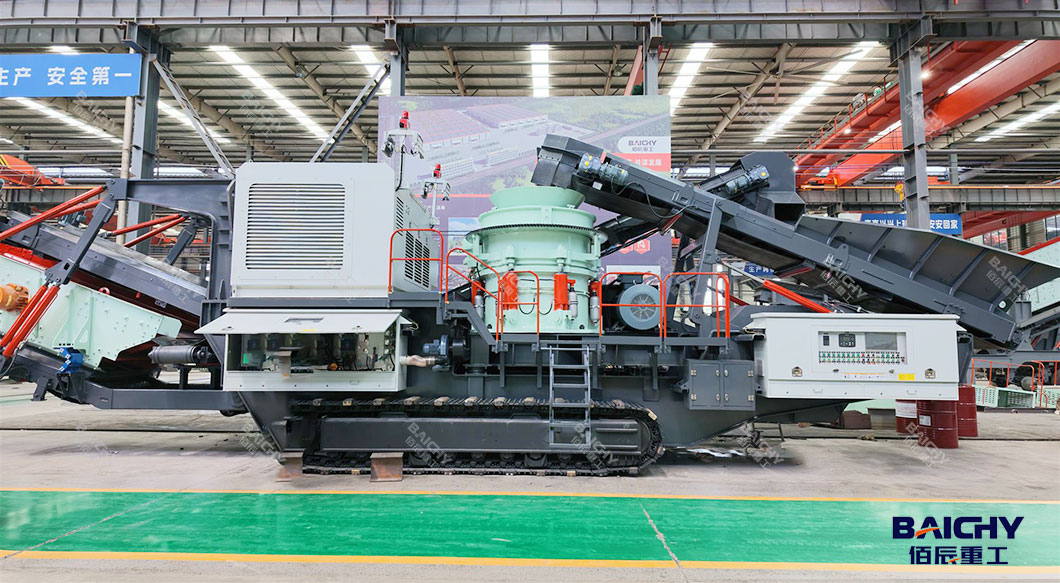
Baichy tracked cone crusher
3. Tracked Mobile Screening Plant – Aggregate Classification
Once the basalt has undergone secondary crushing, the material is delivered to the tracked mobile screening plant for size separation. The vibrating screen uses different screen apertures to classify crushed basalt into separate particle-size fractions. This process is essential for producing aggregates that meet the size requirements of different construction applications. Depending on the screen configuration and customer requirements, the screening plant can separate materials into several product sizes for applications such as road construction, concrete production, and general building materials.
The screening stage also plays an important role in maintaining the overall efficiency of the crushing system. If the process is configured with a closed-circuit return system, oversized particles can be sent back to the cone crusher for further reduction. This helps control the final aggregate gradation and reduces oversized material in the finished products. For the Ethiopian project, the tracked screening station completes the processing chain by separating the crushed basalt into usable aggregate fractions.
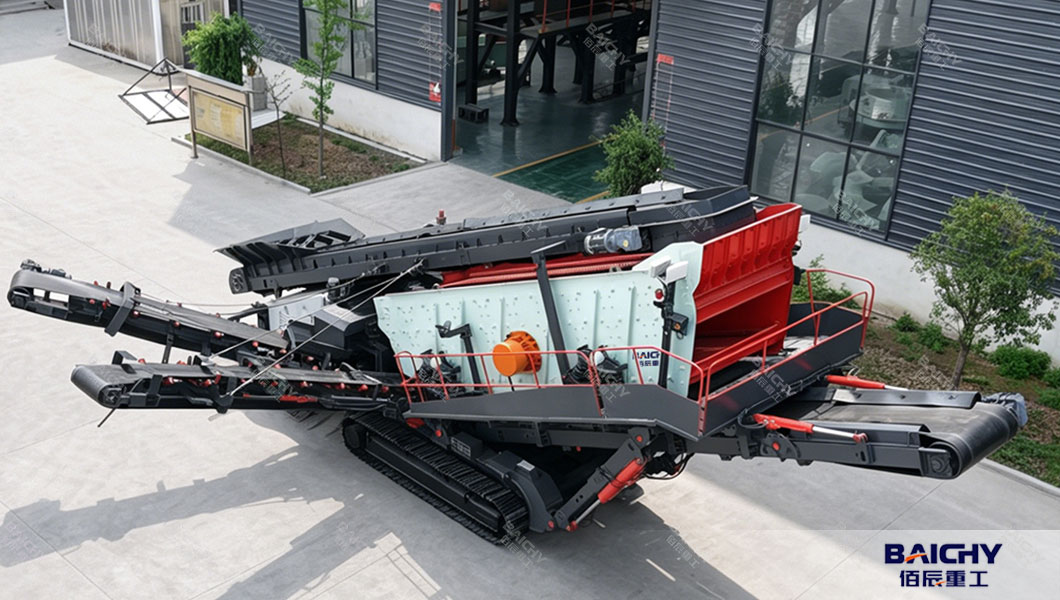
Baichy mobile screening plant
4. How the Three Stations Achieve Coordinated Production
The key to this 200 TPH mobile crushing configuration is the coordination between the three machines.
The tracked jaw crusher handles large feed materials, the tracked cone crusher performs secondary size reduction, and the tracked screening plant separates the final aggregates. Each machine has a different processing responsibility, but the output of one stage directly affects the operating efficiency of the next. If the jaw crusher supplies material faster than the cone crusher can process it, material accumulation may occur between stages. Similarly, insufficient screening capacity can restrict the discharge of the entire production line. Therefore, equipment matching, conveyor transfer capacity, feed consistency, and screen configuration are all important factors in achieving the target production capacity.
In this Ethiopian project, the three tracked mobile stations operate as one coordinated basalt processing system, delivering approximately 200 tons of finished aggregate per hour under the project's operating conditions. This configuration demonstrates how combining specialized mobile crushing and screening equipment can provide quarry operators with a flexible solution for hard-rock aggregate production.
200 TPH Production Capacity for Basalt Aggregate
The complete mobile crushing setup achieves an approximate production capacity of 200 TPH. This configuration combines primary crushing, secondary crushing, and screening without requiring three separate stationary crushing plants.
For basalt quarry operators, the integrated mobile configuration offers several practical advantages:
-
Flexible deployment: Tracked equipment can be repositioned within the quarry as working areas change.
-
Coordinated production: Three specialized machines handle different processing stages.
-
Reduced material handling: The crushing and screening units can be arranged to create a continuous production flow.
-
Adaptable operation: Mobile equipment is suitable for quarry projects where working locations and production requirements may change.
Actual production performance depends on feed size, basalt properties, equipment settings, screening requirements, and material transfer conditions.
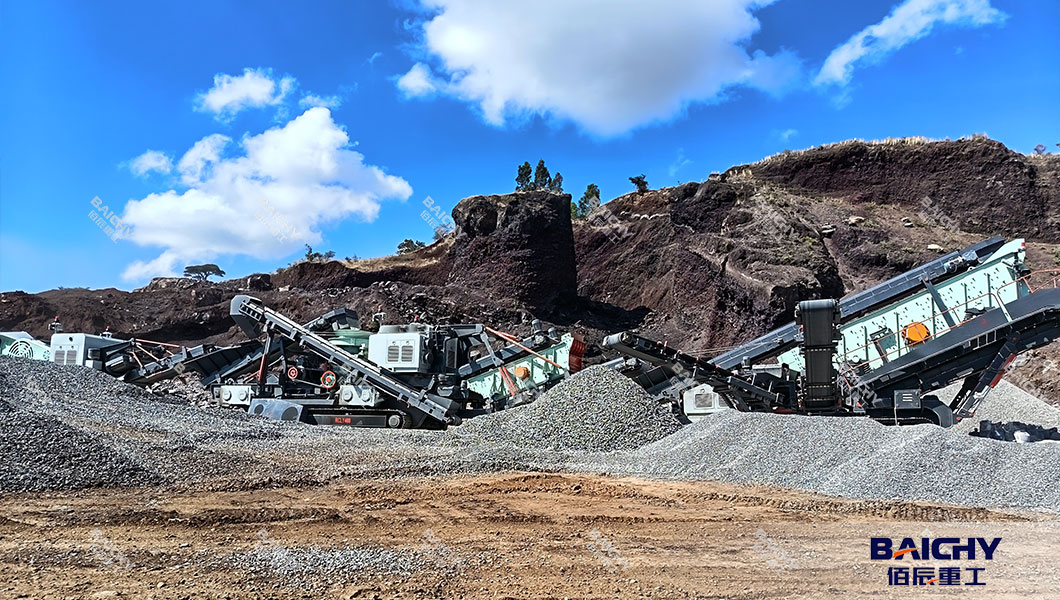
Mobile type basalt crushing plant
Baichy Mobile Crushing Equipment for Overseas Quarry Projects
Baichy Machinery provides mobile crushing solutions for customers processing hard rock, including basalt, granite, and other quarry materials. The Ethiopian project reflects the practical application of a three-stage mobile crushing configuration. Instead of relying on a single machine, the customer uses a coordinated system consisting of a tracked jaw crusher, tracked cone crusher, and tracked screening plant. This combination provides a complete mobile solution for primary crushing, secondary crushing, and aggregate classification.
Baichy continues to serve international customers with crushing equipment and customized production-line solutions for different materials and operating conditions. Looking for a 200 TPH basalt crushing solution? Contact Baichy Machinery with your raw material, feed size, required output sizes, and site conditions to discuss a suitable mobile crushing plant configuration.




 2026-11-18






 86-15093113821
 86-15093113821