The 5TPH gold ball mill is a critical grinding equipment specifically designed for small-to-medium scale gold mining operations. Its primary function is to further refine crushed ore particles, creating favorable conditions for the subsequent separation and recovery of gold minerals. Widely used in mining projects with a daily processing capacity of 120-150 tons, this equipment has become a core asset for small-to-medium mining enterprises to achieve efficient mineral processing, thanks to its compact structural design and stable processing capacity. Its core role is to refine crushed ore materials of 10-20mm to 74-200 microns (70-200 mesh) through the impact and grinding action between steel balls and ore, fully dissociating gold particles encapsulated in the ore lattice and providing qualified raw materials for gravity separation or cyanide leaching processes.
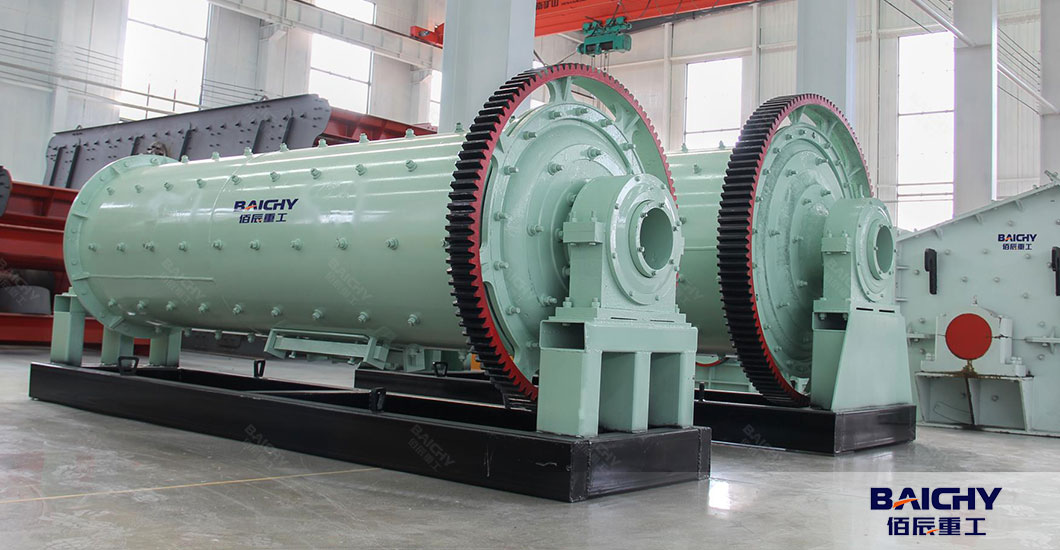
Gold Ball Mill Key Technical Parameters
| Parameter Category |
Specific Indicators |
Supplementary Notes |
| Equipment Specification |
Cylinder Diameter × Length: 1500×3000mm ~ 1500×3500mm |
The mainstream model is a 1500×3000mm wet grid-type ball mill with an effective volume of approximately 5m³ |
| Processing Capacity |
5 tons per hour (TPH) |
Actual capacity is affected by ore hardness and feed size uniformity, with a fluctuation of ±5% under ideal operating conditions |
| Feed Size |
Maximum ≤25mm, Optimal 10-15mm |
Excessive feed size will reduce grinding efficiency by more than 30% and increase energy consumption |
| Product Size |
Adjustable, conventional 74-200 microns (70-200 mesh) |
For high-grade ore, it can be refined to -200 mesh accounting for over 90% to improve gold recovery rate |
| Drive Power |
55-75kW |
75kW motor is selected for hard rock gold mines (e.g., quartz vein gold mines), and 55kW motor for soft ore |
| Grinding Method |
Wet grinding |
Water is used as the grinding medium to form slurry-like materials, facilitating connection with subsequent wet separation processes |
| Liner Material |
High manganese steel or rubber lining |
High manganese steel lining has excellent wear resistance with a service life of about 8000 hours; rubber lining has good noise reduction effect and reduces energy consumption by 10%, suitable for processing low-hardness ore |
| Transmission Method |
Motor + Reducer + Gear Transmission |
Some models are equipped with frequency conversion speed regulation system, which can adjust the cylinder speed (conventional 36-38rpm) according to ore characteristics |
Core Role of Ball Mill in Gold Mining Production Line
1.Core Link of Mineral Dissociation: Most gold particles in gold ore exist as microgold and submicrogold encapsulated in sulfide or gangue minerals. The ball mill achieves physical separation of gold particles from gangue through forced grinding. The dissociation efficiency directly determines the subsequent mineral processing recovery rate (each 10% increase in dissociation degree can improve gold recovery rate by 5-8%).
2.Hub of Process Connection: It undertakes the output materials from the crushing process, forms slurry with uniform concentration through wet grinding, seamlessly connects with the classification circuit of spiral classifier/hydrocyclone, and provides raw materials meeting concentration and particle size requirements for gold separation equipment such as shaking tables and Knelson centrifuges.
3.Key to Energy Consumption Optimization: Compared with large ball mills, the 5TPH model controls the unit energy consumption at 11-15kWh/ton of ore by optimizing the cylinder aspect ratio and grinding medium ratio, which is 20% more energy-efficient than traditional equipment, suitable for cost control needs of small-to-medium mining enterprises.
Detailed Explanation of Core Components of 5TPH Gold Ball Mill System
1. Ball Mill Body
The core component is a 1500×3000mm wet grid-type ball mill, adopting a forced discharge structure design. The qualified ground slurry is discharged in a timely manner through the grid plate to avoid over-grinding. The equipment is equipped with a hydraulic jacking device, which can realize cylinder lifting through hydraulic jacks during maintenance, with a maximum lifting height of 400mm, greatly reducing maintenance difficulty. The grinding medium selects high-chromium alloy steel balls with a diameter of 20-60mm, and the ball loading capacity is about 10 tons. The steel ball ratio is combined according to "large ball: medium ball: small ball = 3:4:3" to ensure balanced grinding effect of ores with different particle sizes.
2. Classification Equipment
The classification system is the key to realizing closed-circuit grinding, which is divided into two configurations: spiral classifier and hydrocyclone, selected according to mine site conditions and process requirements:
•Spiral Classifier: Suitable for coarse particle classification (separation particle size >0.15mm), composed of tank body, spiral blade and driving device, covering an area of about 3-4㎡. Its working principle is to utilize the difference in sedimentation speed of particles in the slurry. Heavy coarse particles settle to the bottom of the tank and are pushed back to the ball mill for re-grinding by the spiral blade, while light fine particles overflow with the slurry and enter the next process. This equipment has simple operation, stable operation and low maintenance cost, suitable for long-term continuous operation.
•Hydrocyclone: Focus on fine particle classification (separation particle size 0.01-0.3mm), composed of working cylinder, feed pipe, overflow pipe and underflow outlet, covering only 1/30 of the area of the spiral classifier. Rapid classification is achieved through centrifugal force, with a classification efficiency of 80-90%, which is 15-20% higher than that of the spiral classifier. It is suitable for production lines with limited space or high requirements for classification accuracy. An application case in an Inner Mongolia gold mine shows that the gold recovery rate increased from 76.08% to 78.82% after adopting the hydrocyclone.
3. Crushing Stage
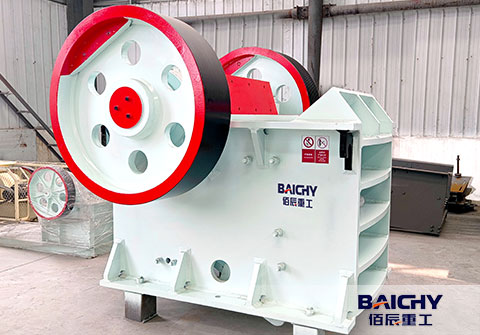
As the pre-treatment link of the ball mill, the core equipment of the crushing stage is a jaw crusher, with the mainstream model being PE250×400 (corresponding to 10"×16"). Its technical parameters and working principle are as follows:
•Equipment Specification: Feed opening size 250×400mm, maximum feed particle size 130mm, discharge opening adjustment range 10-60mm, processing capacity 2-5TPH, matching the feed requirement of the 5TPH ball mill.
•Working Principle: The motor drives the eccentric shaft to drive the moving jaw plate and fixed jaw plate to perform periodic opening and closing movements, and the large raw ore is crushed to and shear force. The jaw plate is made of high manganese steel, which can crush various gold ore with compressive strength ≤320MPa (such as granite-type gold ore and sandstone-type gold ore).
•Key Role: If the raw ore directly enters the ball mill, the grinding efficiency will decrease by more than 50%. The crushing stage can homogenize the ore particle size, control the feed particle size of the ball mill within the optimal range, and reduce unit energy consumption.
4. Concentration Equipment
After being screened by the classification equipment, the ground slurry enters the concentration link to recover free gold. The core equipment includes shaking tables and gold centrifugal concentrators:
•Shaking Tables: Two 5TPH-class shaking tables are usually configured. The effective concentration area of a single table is 7.6㎡, the deck size is 4450×1855mm, and the deck is made of FRP material, which is corrosion-resistant and has a long service life. During operation, through the reciprocating vibration of the bed surface and the action of transverse water flow, separation is achieved by utilizing the density difference between gold and gangue (gold density 19.3g/cm³, gangue 2.6-3.0g/cm³). The equipment can adjust the stroke (16-22mm) and vibration frequency (45-48Hz) to optimize the recovery effect for gold particles of different sizes. The gold recovery rate of coarse sand (0.15-2mm) is over 90%, and that of fine mud (<0.15mm) is 85%.
•Knelson Centrifuge Concentrator: It enhances gravity separation by centrifugal force, which can reach 50-200 times the gravity, especially suitable for the recovery of fine free gold (10-74 microns). The core of the equipment is a conical rotating bowl. The slurry is fed from the top center. Under the action of centrifugal force, gold particles are trapped in the grooves on the bowl wall and collected by periodic flushing with high-pressure water, while gangue minerals are discharged with the overflow. This equipment operates intermittently, completing one concentration and collection every 20-30 minutes. The processing capacity of a single unit is 5TPH, and the gold recovery rate is 10-15% higher than that of traditional equipment.
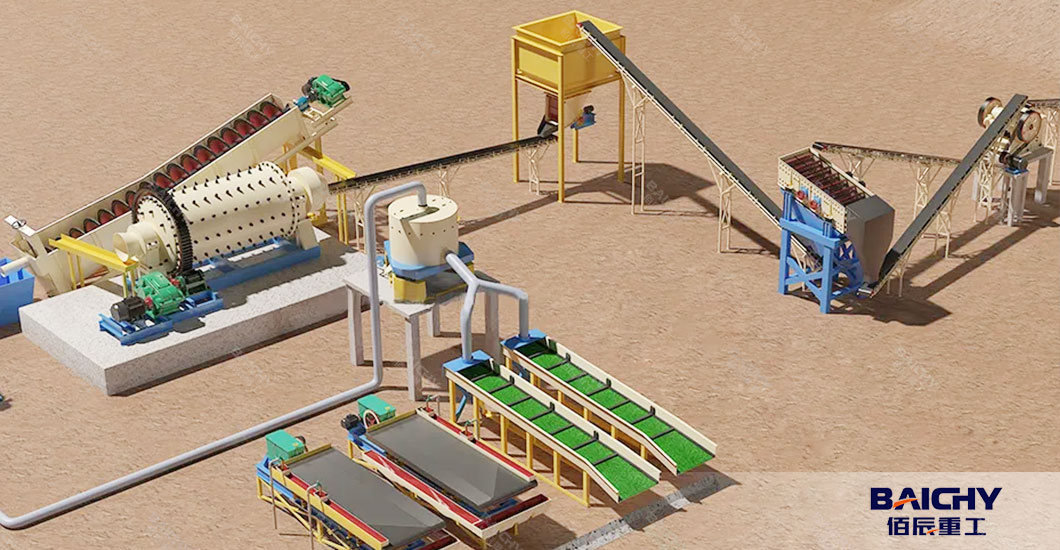
Detailed Explanation of 5TPH Gold Processing Flow
The 5TPH gold production line adopts a closed-circuit flow of "crushing-grinding-classification-concentration", with tight connection between each link to ensure the continuity and efficiency of material processing. The specific flow is as follows:
1. Raw Ore Preparation
•Raw Material Characteristics: The particle size of the mined raw ore is usually 200-500mm, the gold grade fluctuates in the range of 0.5-5g/t, and the main gangue minerals are quartz, feldspar, etc.
•Conveying Method: The raw ore is sent to the feed inlet of the jaw crusher through a loader or belt conveyor, and the conveying capacity matches the processing capacity of the crusher (2-5TPH) to avoid material accumulation or interruption.
2. Crushing Stage
•Core Equipment: PE250×400 jaw crusher (or 10"×16" model), equipped with a 5.5-15kW motor, crushing the raw ore to <25mm through the extrusion of the moving jaw and fixed jaw. The discharge opening of the equipment can be adjusted through gaskets, and the conventional setting is 10-15mm to ensure that the feed particle size of the ball mill meets the standard.
•Auxiliary Facilities: A vibrating screen is installed under the crusher to screen out coarse particles >25mm and return them to the crusher for re-crushing, ensuring the uniformity of the discharge particle size.
3. Conveying & Feeding
•The crushed ore is conveyed to the feed inlet of the ball mill through a belt conveyor. The width of the conveyor belt is usually 500mm, the conveying speed is 1.2m/s, and it is equipped with a frequency conversion speed regulation device, which can adjust the conveying capacity according to the load of the ball mill.
•The feeding device adopts a screw feeder to control the feeding speed stably at 5TPH, avoiding "overload" or "underload" operation of the ball mill (overload will cause motor burnout, and underload will result in reduced grinding efficiency).
4. Grinding & Classification Closed Circuit
•Grinding Process: After the ore enters the 1500×3000mm wet ball mill, it is mixed with steel balls and water to form a slurry with a concentration of about 60-65%. The rotation of the cylinder drives the steel balls to perform falling and cascading movements, and the ore is refined to the target particle size through impact and grinding. The ball mill adopts a forced discharge design, and the slurry is discharged through the grid plate and then enters the classification equipment.
•Classification Separation:
◦If equipped with a spiral classifier: The slurry flows along the tank body of the classifier. Coarse particles (>74 microns) settle to the bottom of the tank and are pushed back to the feed inlet of the ball mill by the spiral blade to realize secondary grinding; fine particles (rons) overflow with the slurry and enter the concentration stage.
◦If equipped with a hydrocyclone: The slurry enters from the tangential inlet. Under the action of centrifugal force, coarse particles settle along the wall and return to the ball mill from the underflow outlet, while fine particles are discharged from the overflow pipe. The classification efficiency is 30% higher than that of the spiral classifier.
•Closed-Circuit Advantage: Through the "screening-recycling" mechanism of the classification equipment, the ball mill only processes unqualified coarse particles, the grinding efficiency is increased by 40%, and energy waste caused by over-grinding is avoided.
5. Concentration
•The fine-grained slurry (concentration 25-30%) after classification is conveyed to the concentration equipment through pipelines, and the process is selected according to the type of gold ore:
◦Shaking Table Concentration: Two 5TPH shaking tables operate in parallel. The slurry is evenly distributed on the bed surface. Through the vibration of the bed surface (frequency 45-48Hz) and the action of transverse water flow (supplementary water volume 80-150t/d), gold particles settle to the concentrate end of the bed surface due to their high density, and gangue minerals are discharged with the tailings. The grade of the shaking table concentrate can reach 20-50 times that of the raw ore, and the gold grade of the tailings is reduced to below 0.1g/t.
◦Centrifugal Concentrator Concentration: The slurry enters the Knelson centrifugal concentrator. Under the centrifugal force generated by high-speed rotation (rotating speed 1200-1500rpm), gold particles are captured in the grooves of the concentration bowl and collected by periodic flushing. This process is suitable for fine gold recovery, and the concentrate recovery rate is 5-8% higher than that of the shaking table, but it needs to be equipped with a high-pressure water pump (water supply pressure 0.6-0.8MPa).
6. Gold Concentrate Collection
•The gold concentrate produced by the shaking table or centrifugal concentrator flows into the concentrate pool through the chute. After dehydration by the plate and frame filter press, the gold concentrate with a moisture content of ≤15% (grade usually 10-50g/t) is obtained, which can be directly transported outward for smelting or further purification.
•The tailings slurry after concentration is precipitated in the sedimentation tank. The supernatant is recycled for ball mill grinding, realizing water recycling (water reuse rate over 85%), and the precipitated tailings can be used for mine backfilling or brick making.
People Also Frequently Asked For - FAQ
1. How do I choose between a Spiral Classifier and a Hydrocyclone for a 5 TPH plant?
Answer: It depends on your plant layout and budget. A Spiral Classifier is a "low-tech," reliable option that doesn't require high-pressure pumps and is very easy to maintain, making it ideal for remote sites. A Hydrocyclone is much more compact and efficient at fine separation, but it requires a consistent slurry pump and more technical monitoring. For a standard 5 TPH setup, a spiral classifier is often preferred for its simplicity and durability.
2. Why is the feed size (10–15mm) so critical for the ball mill?
Answer: Efficiency and cost. A ball mill is designed for grinding, not crushing. If you feed the mill rocks larger than 25mm, the grinding balls will bounce off the ore instead of grinding it, which leads to high power consumption, rapid wear on the liners, and a significant drop in your hourly capacity (falling below 5 TPH). Keeping the feed small ensures the mill hits its target output size faster.
3. How often should I replace the liners and grinding balls?
Answer: This depends entirely on the hardness (Work Index) of your ore. On average:
Grinding Balls: You should "top up" the ball charge daily or weekly to compensate for wear (typically 0.5kg to 1kg of balls per ton of ore processed).
Liners: High manganese steel liners typically last between 6 to 12 months. If you are processing highly abrasive quartz, you should inspect them every 3 months to ensure the shell isn't being damaged.




 2026-10-16





 86-15093113821
 86-15093113821