Iron ore (including Magnetite and Hematite) is a high-hardness mineral that requires robust and efficient crushing systems. Selecting the right iron ore crusher machine is critical for optimizing the steel production supply chain. This guide analyzes the top 4 crushers based on their technical capacity, hardness suitability, and application stages.
Quick Selection Guide: Iron Ore Crushers
Primary Crushing (Hard Ore): Jaw Crusher (Up to 1400mm feed).
Large-Scale Operations: Gyratory Crusher (1200-5000 t/h).
Fine Crushing & Precision: Hydraulic Cone Crusher.
Energy Efficiency & Hardest Ore: Hydraulic Roller Crusher.

1. Iron Ore Crusher Comparison Matrix
Iron ore stone crusher machines play a vital role in breaking down large rocks into smaller particles for further processing. Here are some common types of crushers used in the iron ore crushing process, each with its own advantages and considerationsThis table provides a direct comparison of the technical parameters essential for mine site planning:
| Crusher Type |
Stage |
Max Feed Size |
Capacity (t/h) |
Hardness Suitability |
Maintenance |
| Jaw Crusher |
Primary |
1200 - 1400mm |
1 - 1000 |
All Hardness |
Low |
| Gyratory Crusher |
Primary |
000 - 1200mm |
1200 - 5000+ |
Very Hard |
High |
| Hydraulic Cone Crusher |
Secondary |
200 - 300mm |
50 - 800 |
Medium-Hard |
Medium |
| Hydraulic Roller Crusher |
Fine |
< 30mm |
20 - 500 |
Very Hard |
Low |
2. Detailed Analysis of Leading Iron Ore Crushing Technologies
The Jaw Crusher serves as the primary pillar for most iron ore mining operations, especially in small to medium-scale facilities. Its operational strength lies in its ability to handle massive raw boulders with a feed size of up to 1400mm. By utilizing a high-pressure squeezing motion within its "V" shaped crushing chamber, it achieves a significant reduction ratio. Consequently, it is regarded as the most cost-effective and low-maintenance option for initial size reduction, providing a stable foundation for the entire production line.
● Working principle: The movable jaw plate makes periodic reciprocating motion on the fixed jaw plate. When the movable jaw plate approaches the fixed jaw plate, the material is squeezed, split and bent; when the movable jaw plate leaves the fixed jaw plate, the material that has been crushed to a size smaller than the discharge port is discharged, while the larger particles remain in the crushing chamber and continue to be squeezed and crushed next time.
● Features: simple structure, durable, easy maintenance, low operating cost. It has a large crushing ratio, can initially crush large pieces of iron ore into smaller particles, can handle iron ores of various hardness, has a large feed size, and the maximum feed size can generally reach 1400mm.
● Application scenario: It is commonly used for coarse crushing of iron ore. It is the first process in the iron ore crushing production line, providing a suitable feed size for subsequent crushing, screening and other processes.

In contrast, for ultra-large mining projects and major steel enterprises, the Gyratory Crusher is the superior choice for primary crushing. Unlike the intermittent action of a jaw crusher, the gyratory machine offers a continuous crushing process through the eccentric motion of its conical head. This design allows it to process a massive throughput ranging from 1200 to over 5000 tons per hour. Furthermore, its ability to handle extremely hard and abrasive iron ore with minimal vibration makes it an indispensable asset for high-capacity industrial applications.
● Working Principle: It consists of two truncated cones, a movable cone and a fixed cone. The main shaft of the movable cone is suspended on a fixed suspension point above the beam. Driven by the lower transmission mechanism, its cone head performs continuous eccentric gyratory motion around the main shaft, so that the ore between the two cones is squeezed, broken and ground, and the crushed product is discharged from the discharge port2.
● Features: It works relatively smoothly, the equipment has light vibration, the continuous operation output is high, and the energy consumption is low. The product appearance is relatively neat, and the powder ore produced is less. The feed particle size is large, and the maximum feed particle size can generally reach 1000mm. It is suitable for processing a large amount of iron ore, with large production capacity, and can process more than 1200-5000 tons/hour of materials2.
● Application scenario: It is mainly used for the coarse crushing of iron ore, especially for the iron ore crushing production line of large mines and steel enterprises. It can efficiently crush large pieces of iron ore into smaller particles, providing raw materials for subsequent medium and fine crushing processes.

Moving to the secondary and tertiary stages, the Multi-cylinder Hydraulic Cone Crusher is the industry standard for precision size control. It employs a combination of squeezing and shearing forces to produce a highly uniform final product, which is essential for maximizing the efficiency of downstream ball mills. A critical advantage of this technology is its integrated hydraulic system, which provides automatic tramp iron protection and allows operators to adjust the discharge port size without stopping the machine, thus ensuring continuous productivity and consistent particle distribution.
● Working principle: The motor drives the eccentric sleeve to rotate through the transmission device, so that the mortar wall moves toward the crushing wall to squeeze the ore. The material is crushed by squeezing, bending and shearing between the two walls. The crushed material is discharged from the discharge port under the action of gravity. The hydraulic system can adjust the size of the discharge port and realize overload protection.
● Features: Large crushing ratio: It can crush larger ore into smaller particles, effectively improving production efficiency. High degree of automation: It can automatically adjust the size of the discharge port and realize intelligent control according to the properties of the ore and production needs. Uniform product particle size: The particle size of the crushed ore is relatively consistent, which can meet the particle size requirements of different production processes. Stable and reliable operation: The multi-cylinder hydraulic system provides stable power, the equipment structure is solid, and the failure rate is reduced. Convenient maintenance: The modular design is adopted, and the parts are easy to replace, which can shorten the maintenance time and reduce the maintenance cost.
● Application: Commonly used for secondary crushing and fine crushing of iron ore, especially for iron ore crushing production lines of large mines and steel enterprises, providing raw materials for subsequent screening and ball mill beneficiation and grinding processes

Finally, the Hydraulic Roller Crusher (utilizing High-Pressure Grinding Roll (HPGR) technology) has become the preferred solution for the fine crushing of extremely hard magnetite. This machine operates by passing material between two counter-rotating rollers under immense hydraulic pressure. Not only does this method achieve a superior fine-crushing effect for abrasive minerals, but it also offers excellent noise control and significantly lower energy consumption compared to traditional impact-based crushers. Its wear-resistant alloy rollers are specifically designed to prolong service life even under the harshest mining conditions.
● Working principle: The material is squeezed and ground by two relatively rotating rollers. After the material enters between the rollers, it is squeezed and sheared by the rollers and crushed into smaller particles. The spacing between the rollers can be accurately adjusted by the hydraulic system to control the discharge particle size1.
● Features: Hydraulic drive can accurately control the force, avoid excessive impact, reduce energy consumption, and improve crushing efficiency. The roller wheel is made of special wear-resistant materials with strong wear resistance, which prolongs the service life of the equipment and reduces the cost of frequent replacement of parts. The intelligent control system can dynamically adjust according to the hardness of the iron ore, automatically adapt to various operating conditions, compact structure, excellent noise control, and improved working environment1.
● Application scenarios: Suitable for medium and fine crushing of iron ore, which can further crush the coarsely crushed iron ore into smaller particles to meet the requirements of different production processes, especially for iron ore with higher hardness, it has a good crushing effect.

3. The Multi-Stage Iron Ore Reduction Process
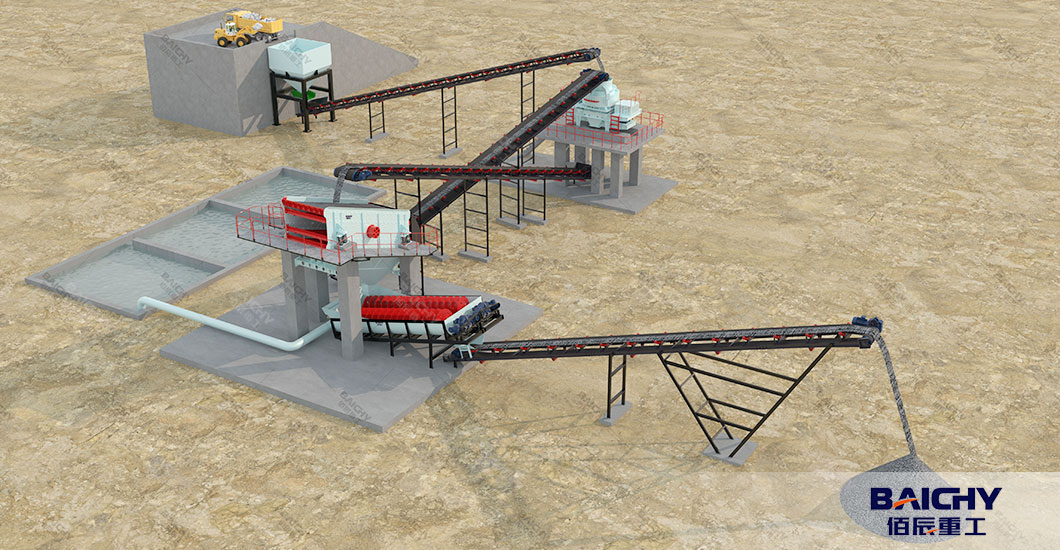
The transformation of raw iron ore into a usable industrial feed follows a rigorous multi-stage reduction sequence designed to ensure maximum efficiency. In the primary stage, massive raw ores are reduced to under 150mm using either a Jaw or Gyratory crusher. Once the initial size reduction is complete, the material enters the secondary crushing stage, where a cone crusher further reduces the particle size to less than 50mm. For applications requiring high-precision beneficiation, a tertiary or fine crushing stage is employed to reach a final output size of less than 12mm. Throughout this process, a vibrating screen is used to filter the materials; any oversized particles are automatically returned to the crushing chamber for regrinding, ensuring that 100% of the output meets the required technical specifications for the grinding mill.
4. Strategic Selection Logic for Mine Operators
Choosing the optimal iron ore crusher requires a strategic evaluation of capacity requirements, material hardness, and long-term operational costs. For mining operations with a production target of less than 800 tons per hour, a Jaw Crusher is typically the most recommended primary equipment due to its lower initial capital expenditure and simplified maintenance. However, for large-scale operations exceeding 1200 tons per hour, the higher investment in a Gyratory Crusher is justified by its superior throughput and lower operating cost (OPEX) per ton. Additionally, when processing high-hardness iron ore, operators should prioritize Hydraulic Cone Crushers to minimize downtime caused by uncrushable materials. Ultimately, the goal is to balance the initial equipment cost with the required final particle size, ensuring that the crushing plant delivers a consistent feed for the subsequent beneficiation and steel-making processes.
The best crusher for iron ore crushing process will depend on the specific requirements of the operation, such as the desired end product size, capacity, operating costs, and the characteristics of the ore. It is important to consider factors such as efficiency, reliability, maintenance requirements, and cost-effectiveness when selecting the right crusher for iron ore crushing in a mining operation. Consulting with industry experts and conducting thorough research can help in making an informed decision on the best crusher for iron ore crushing process.
People Also Frequently Asked For - FAQ
1. Which crusher is best for primary iron ore crushing?
For most iron ore mining operations, the Jaw Crusher is the best primary choice due to its ability to handle large feed sizes (up to 1400mm) and its low maintenance requirements. For ultra-large mines, the Gyratory Crusher is superior for its high capacity (up to 5000 t/h).
2. What is the final product size required for iron ore grinding?
Typically, the iron ore crushing process aims to reduce the ore to a size of 1/2 inch (approx. 12mm) or less before it enters the ball mill for beneficiation and grinding.
3. Why is a hydraulic system important in iron ore crushers?
Iron ore is often hard and may contain uncrushable materials (tramp iron). A hydraulic system provides automatic overload protection and easy adjustment of the discharge size, reducing downtime and preventing machine damage.




 2026-05-07






 86-15093113821
 86-15093113821