Industrial drying is a critical process across countless industries—from agriculture and mining to construction materials and environmental management. Whether you're transforming poultry bedding into fertilizer, drying biomass for energy production, or processing minerals, choosing the right drying equipment directly impacts your product quality, operational efficiency, and bottom line. Among the various drying technologies available, the single pass rotary drum dryer stands out as one of the most reliable, versatile, and cost-effective solutions for high-volume applications. Its simple yet robust design has made it a workhorse in industries worldwide.
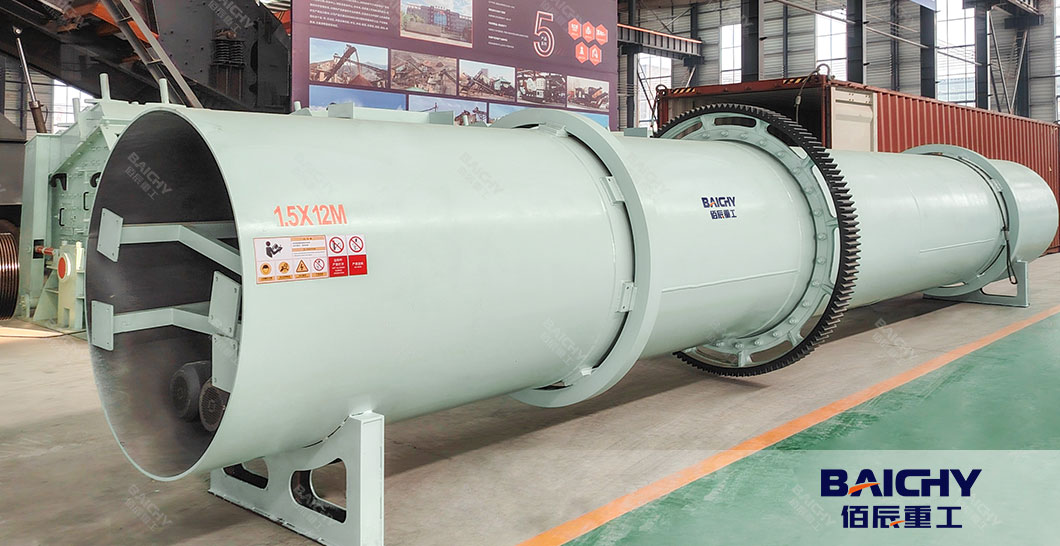
Part 1: What Is a Single Pass Rotary Drum Dryer and How Does It Work?
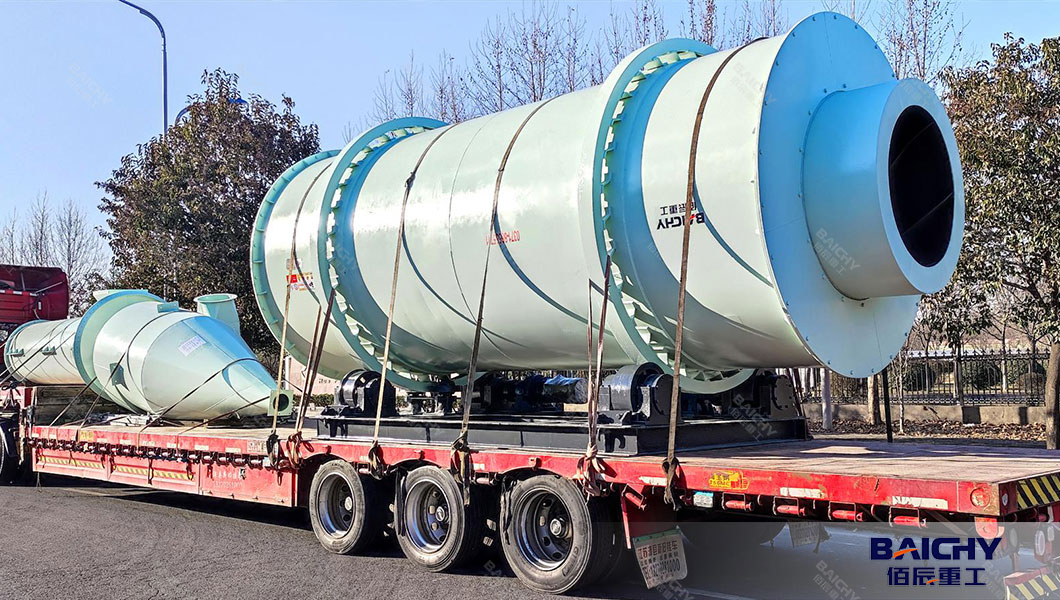
The working principle of a single pass rotary drum dryer is based on direct or indirect heat transfer between the hot drying medium and the wet material.
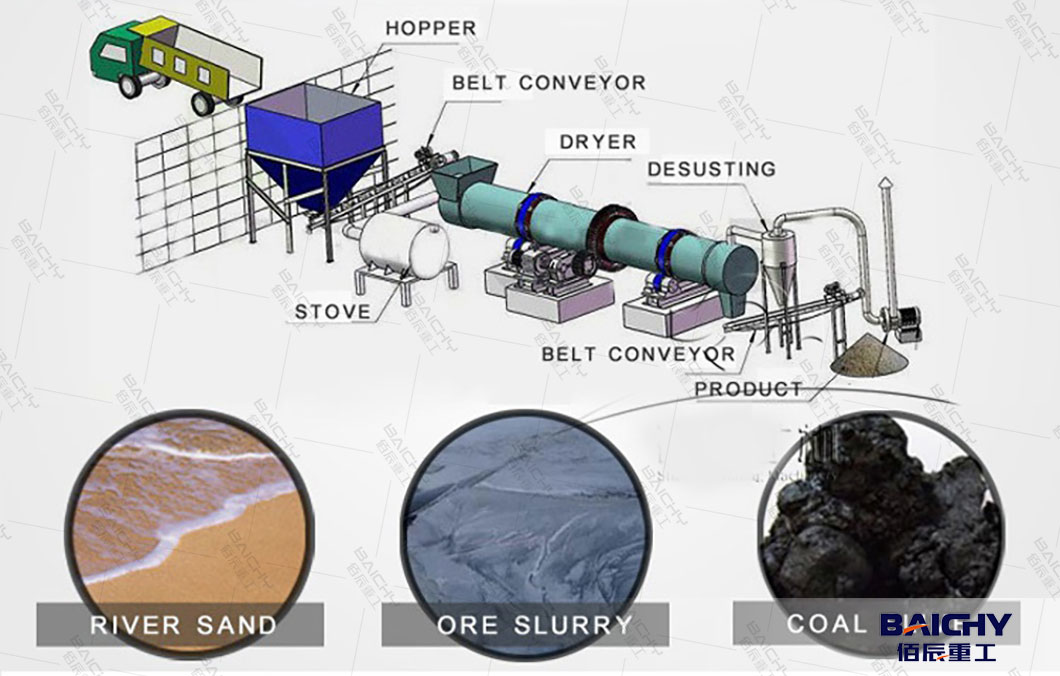
In a typical direct-fired rotary dryer system, a burner or hot air furnace generates high-temperature gas, which enters the rotating drum. At the same time, wet material is continuously fed into the drum through the inlet. As the drum rotates slowly, lifting flights installed inside the drum pick up the material and release it into the hot gas stream. This repeated lifting and falling action increases the contact area between the material and hot air, improving heat transfer and moisture evaporation.
During the drying process, water inside the material changes into vapor and is carried away by the exhaust airflow. The dried material is discharged from the outlet, while dust and humid air are collected through a dust removal system. Because the material passes through the drum only once, the dryer is called a "single pass" rotary drum dryer.
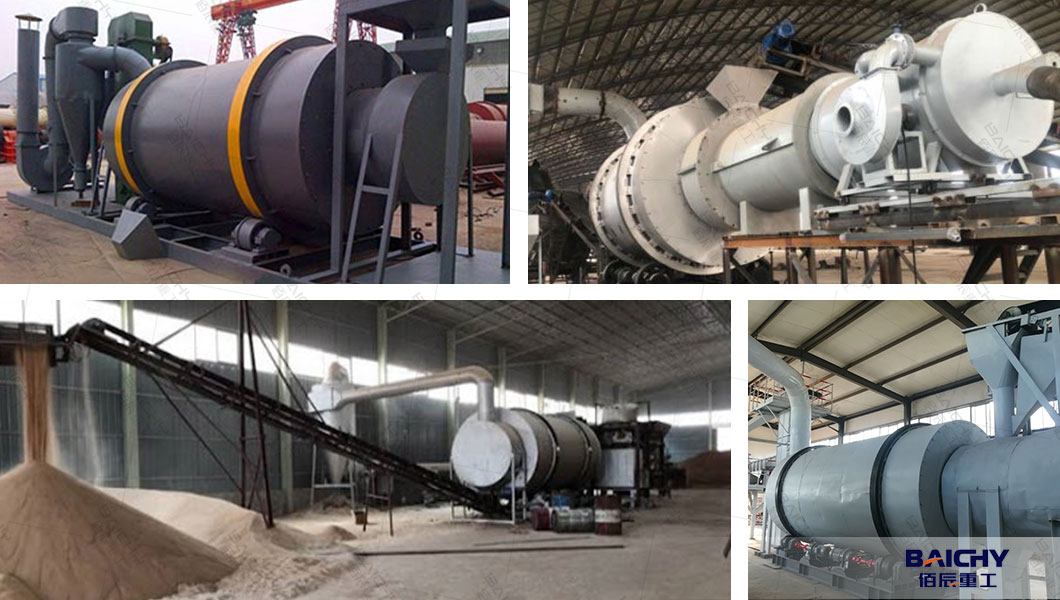
Part 2: Key Benefits of Single Pass Rotary Dryers
● Simple Structure and Easy Maintenance
The single drum design has fewer internal components compared with complex drying systems. This makes inspection, maintenance, and replacement of wear parts easier, reducing downtime.
● Large Processing Capacity
Single pass rotary dryers can handle large volumes of material continuously. They are suitable for industrial production lines where stable and high output is required.
● Strong Material Adaptability
The dryer can process many types of materials with different particle sizes, moisture levels, and physical properties. By adjusting drum speed, airflow, and temperature, the drying process can be optimized for different applications.
● Reliable Continuous Operation
The rotary drum operates continuously, making it suitable for automated production systems. Properly designed equipment can provide long-term stable operation under harsh industrial conditions.
● Lower Initial Investment
Compared with more complicated drying technologies, a single pass rotary dryer generally requires lower equipment investment and has simpler installation requirements.
Part 3: Single Pass vs. Triple Pass Rotary Dryers – A Comprehensive Comparison
One of the most common decisions when selecting a rotary dryer is whether to choose a single pass or triple pass design. While both are effective, they serve different operational needs.
| Feature |
Single Pass Dryer |
Triple Pass Dryer |
| Drum Design |
One large-diameter cylinder |
Three nested cylinders (small → medium → large) |
| Overall Length |
Longer (typically 20-50 feet) |
Shorter (typically ⅓ to ½ the length of a single pass equivalent) |
| Weight |
Heavier, more massive construction |
Lighter, as the inner drums require less steel |
| Complexity |
Simple, straightforward |
More complex, with additional seals and interconnections |
How They Work Differently
Single Pass:
● Material passes once through a single, long drum.
● Hot gases and material travel in the same direction (co-current) or opposite directions (counter-current).
● Retention time is controlled by drum speed and angle, but the material only passes through the drying zone once.
Triple Pass:
● Material passes three times through the nested drums.
● Material flows from the inner drum (first pass) into the middle drum (second pass), and finally through the outer drum (third pass) before exiting.
● This extends the effective drying path length without increasing the physical footprint.
How to Choose the Right Single Pass Rotary Dryer?
Selecting the correct rotary dryer requires considering several key factors.
● The material characteristics are the first consideration. Important parameters include material type, initial moisture content, final moisture requirement, particle size, and heat sensitivity.
● The production capacity determines the dryer size. A larger capacity requires a larger drum diameter, longer drum length, or higher hot air volume.
● The heat source selection should consider fuel availability, energy cost, and environmental regulations. Gas, biomass, coal, and other heating methods can be selected according to specific project conditions.
● The operating temperature and airflow design must match the material properties. Proper temperature control improves drying efficiency while reducing energy consumption.
● The dust control system should also be considered, especially for industries producing fine particles or requiring strict environmental protection.
Single Pass Rotary Drum Dryer Application Example
A sand processing plant producing construction sand may use a single pass rotary drum dryer after washing and screening. The wet sand enters the dryer with high moisture content. Inside the rotating drum, lifting flights spread the sand into the hot air stream, allowing rapid evaporation of surface moisture.
After drying, the sand reaches the required moisture level for storage, transportation, or concrete production. The system improves product quality and reduces problems caused by wet material handling.
Frequently Asked Questions
Q: What is the typical capacity of a single pass rotary dryer?
A: Capacity ranges from 1 ton per hour to over 100 tons per hour, depending on the drum diameter and the initial moisture content of the material.
Q: Can a rotary drum dryer handle materials with 50% moisture?
A: Yes, single-pass dryers are ideal for high-moisture materials (30%–60%) as they provide the residence time and heat volume necessary for significant evaporation.
Q: How long does a rotary dryer last?
A: With proper maintenance of the rollers and lubrication of the girth gear, a high-quality industrial drum dryer (such as those manufactured by Baichy Machinery) can last 15–20 years.




 2026-09-15






 86-15093113821
 86-15093113821