Wet sand can quickly become a costly problem for many industries. Whether you are producing dry-mix mortar, manufacturing aerated concrete blocks, or operating a foundry, high moisture content in sand can affect the entire production process. Common issues include longer drying time, unstable product quality, screen blockage, rejected materials, and higher transportation costs. In many sand processing plants, raw sand moisture can reach around 33%, while applications such as Hebel brick production usually require 10-15% moisture, and high-quality dry mortar production requires moisture below 0.5%.
An industrial sand drying plant provides a practical solution for these challenges. The complete system is designed to remove moisture from wet sand and produce stable, market-ready dry material. With proper heat management and dryer design, modern sand drying systems can reduce moisture from around 15% to below 0.5-1%, achieve thermal efficiency of up to 80%, and lower fuel consumption to less than 9 kg of coal per ton of processed material. This allows wet sand with limited application value to be converted into qualified raw material for construction and industrial uses.
What Is a Sand Drying Plant and Why Does It Matter?
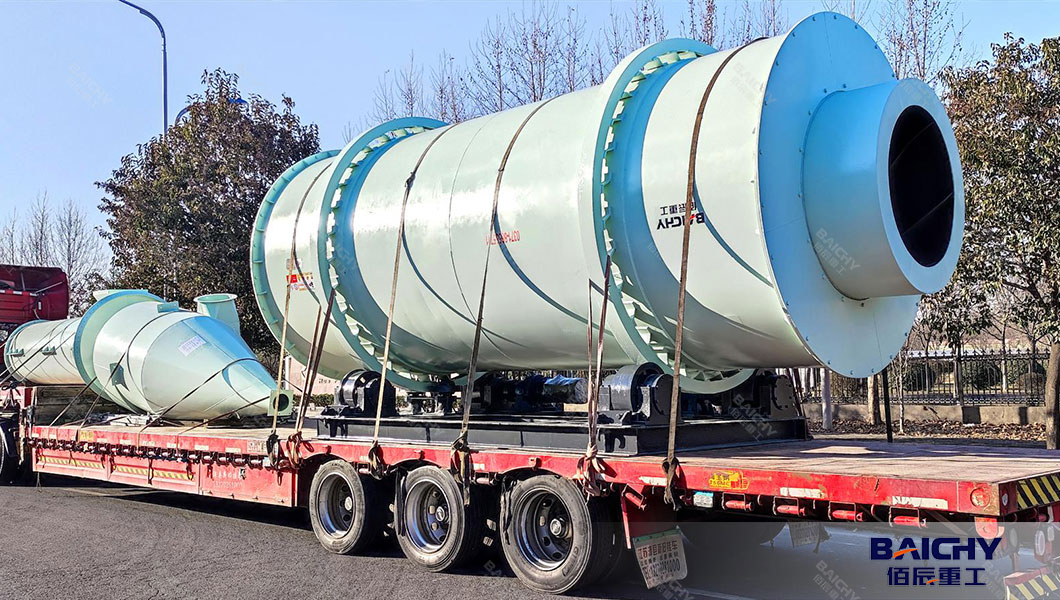
A three-cylinder (triple-pass) rotary dryer uses three concentric drums installed inside one rotating shell. During operation, the material passes through the inner, middle, and outer drums in sequence, creating a longer drying path without increasing the overall equipment length. The multi-pass design improves heat utilization because hot air passes through the drying chamber more effectively. Compared with traditional single-drum dryers, it can reduce fuel consumption by around 30-50% per ton of finished product.
● During drying, the material is continuously lifted, spread, and mixed inside the drum. Hot air contacts the wet material evenly, allowing moisture to be removed gradually. This helps maintain stable final moisture content (usually within ±1%) and avoids problems such as over-drying or uneven drying.
● The compact triple-pass structure provides a longer effective drying area in a smaller installation space. Compared with a single-drum dryer with the same capacity, it can reduce the required footprint by about 50%.
● The system supports continuous feeding and discharge, providing high output with stable operation. It can also handle changes in feed moisture without frequent manual adjustments.
● The dryer features a simple structure with fewer wearing parts. Wear-resistant liners, strong riding rings, and support rollers improve service life and make maintenance easier.
● The closed negative-pressure design works together with cyclone separators and bag filters to reduce dust emissions and maintain a cleaner working environment.
● With PLC control, operators can monitor and adjust key parameters such as inlet temperature, feeding speed, and outlet moisture. The system can be operated efficiently with limited manpower.
● The dryer can use different heat sources, including coal, biomass, natural gas, diesel, and waste heat, allowing customers to choose the most suitable energy option according to local conditions.
● Typical drying materials include silica sand, quartz sand, slag, fly ash, coal powder, mineral powder, clay, gypsum, biomass, and organic fertilizer.
Indonesia 10 TPH Silica Sand Drying Plant Case Study
A silica sand producer in Indonesia faced a common production issue after the sand washing process. The washed silica sand contained high moisture, which caused difficulties during transportation, storage, and further processing. The customer required a stable drying system that could operate continuously while maintaining consistent sand quality.
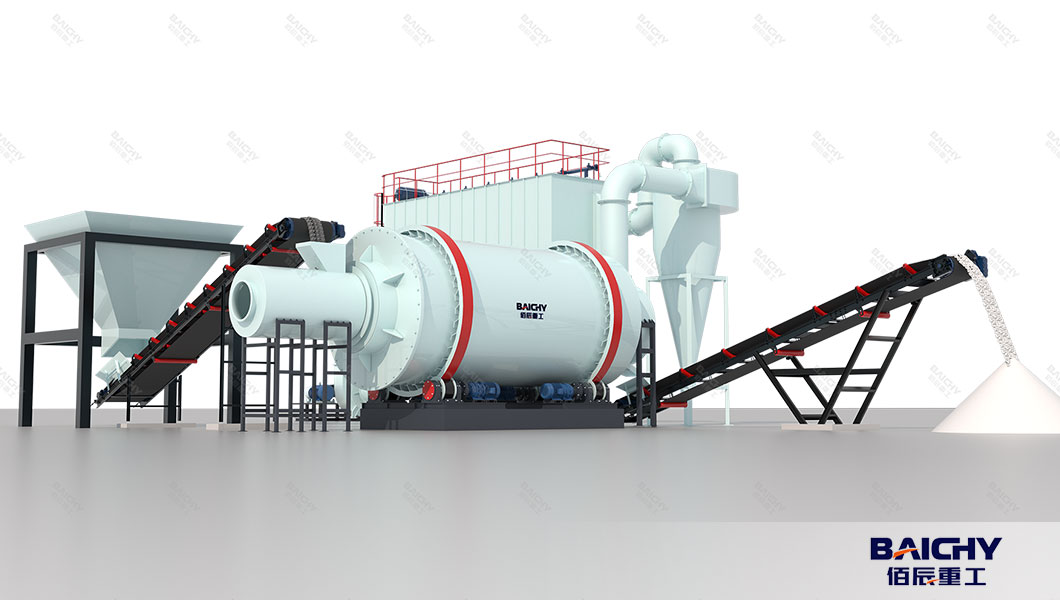
After analyzing the raw material properties and production requirements, Baichy engineers designed a 10 tph silica sand drying plant. The complete system included a rotary sand dryer, heating furnace, dust collection system, and material conveying equipment. The layout was customized according to the customer's site conditions to ensure smooth installation and operation.
After commissioning, the Indonesia silica sand drying plant achieved stable performance. The moisture content of the finished silica sand was reduced to meet the customer's requirements, allowing continuous supply for downstream production. This project showed Baichy's capability in providing complete drying solutions, from equipment selection and system design to installation support and operation guidance.
Complete Industrial Drying System from Baichy
A reliable sand drying project requires more than a single dryer. The heating system, feeding equipment, drying unit, dust collection, and conveying system must work together to achieve stable production. Baichy provides complete industrial sand drying plants, including rotary dryers, hot air furnaces, dust collectors, conveyors, and automatic control systems. Engineers evaluate the complete process and design a solution based on material characteristics, capacity requirements, and site conditions.
Energy cost is one of the key factors affecting sand drying operations. Different fuel options, such as coal, biomass, natural gas, and diesel, can be selected according to availability and operating costs. By improving heat transfer efficiency and optimizing system design, Baichy helps customers reduce energy consumption while maintaining reliable drying performance.




 2026-10-22





 86-15093113821
 86-15093113821