An impact crusher is a good choice for producing well-shaped aggregates from suitable rock and recycled materials. However, its performance depends on material hardness, abrasiveness, feed size, and the required product specification. Understanding the advantages and disadvantages of an impact crusher helps quarry operators and aggregate producers choose equipment that balances product quality, production capacity, and operating costs.
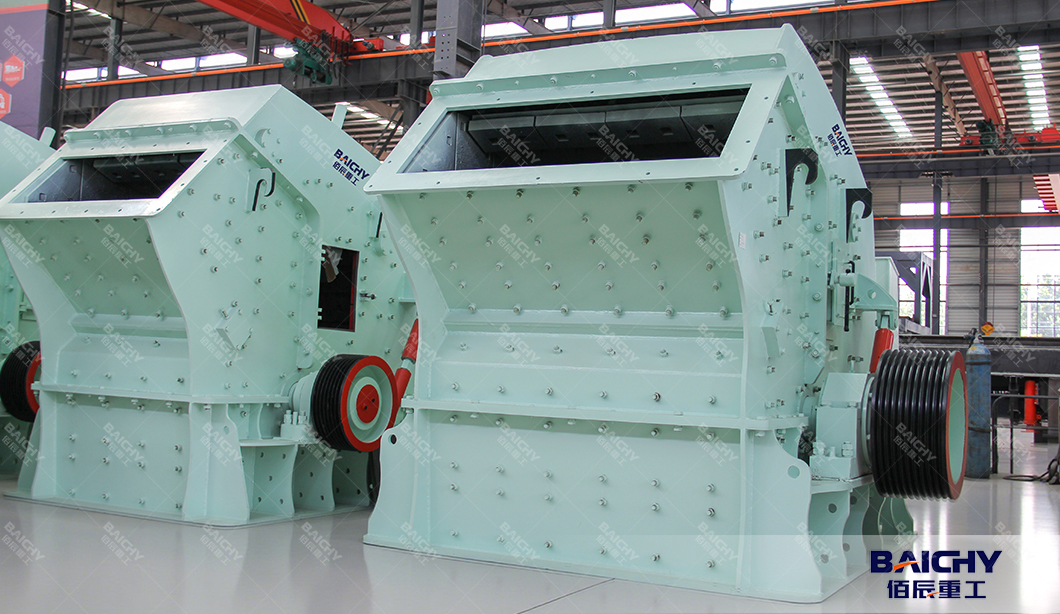
1. What Are the Advantages and Disadvantages of an Impact Crusher?
The main advantages of an impact crusher are its ability to produce cubical particles, achieve a high reduction ratio, and process suitable materials in aggregate production. Its main disadvantages include wear of blow bars and impact plates, higher operating costs when crushing highly abrasive rock, and limitations when processing certain hard or abrasive materials.
The following comparison summarizes the key factors to consider before purchasing an impact crusher.
1. Advantages of an Impact Crusher
1.1 Produces Cubical Aggregates
An impact crusher breaks material through high-speed impact rather than relying mainly on compression. This crushing action can produce more cubical particles and fewer elongated or flaky pieces when the feed material and operating conditions are suitable.
Particle shape matters in concrete and asphalt production because aggregate shape affects workability, packing, and mixture performance. However, the final particle shape also depends on the rock type, feed grading, rotor speed, and crusher settings.
1.2 Achieves a High Reduction Ratio
Impact crushers can reduce material size significantly in a single crushing stage. This makes them useful when a plant needs to turn medium-sized feed into smaller aggregate products without adding too many processing stages.
The actual reduction ratio depends on the feed size, material properties, crusher model, and required discharge size. Operators should verify these factors against the manufacturer's capacity and performance data rather than relying on a general reduction ratio.
1.3 Handles a Range of Suitable Materials
Impact crushers are commonly used for limestone, concrete waste, asphalt rubble, and other materials with suitable crushing and wear characteristics.
In construction and demolition waste recycling, an impact crusher can reduce concrete and masonry into reusable material. Before processing mixed waste, operators should remove unsuitable metal objects and other contaminants, and check whether the feed contains abrasive materials that could accelerate wear.
For hard and highly abrasive rock, such as some basalt and granite deposits, the suitability of an impact crusher should be assessed carefully. A jaw crusher or cone crusher may offer a more economical solution for primary or secondary crushing, depending on the application.
1.4 Supports Flexible Aggregate Production
An impact crusher can produce several aggregate sizes by adjusting suitable operating parameters, such as the impact gap and rotor speed where the machine design permits. Feed grading and screen settings also influence the final products.
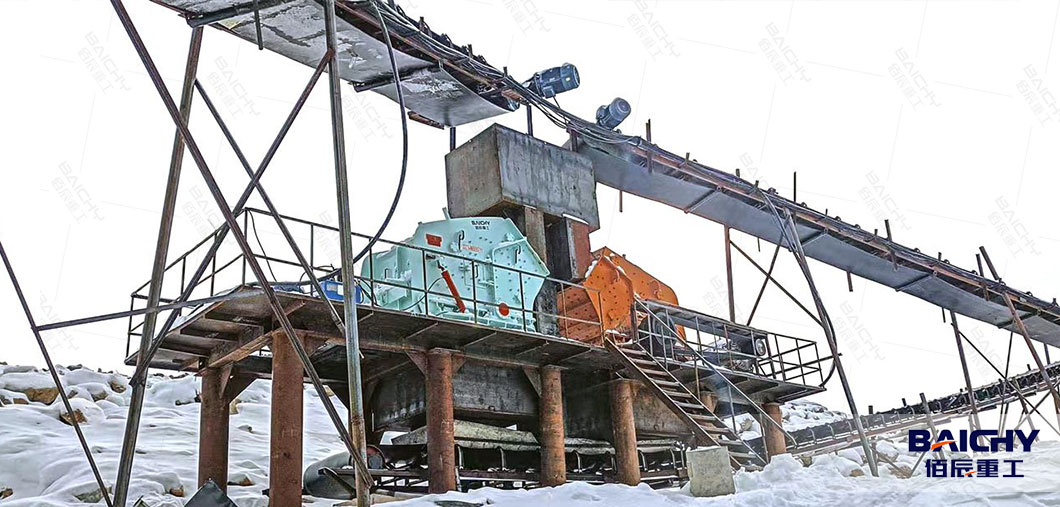
For a stationary crushing plant, the crusher can work with vibrating feeders, conveyors, and screening equipment to produce specified aggregate fractions. A mobile impact crusher can provide similar processing functions for projects that require equipment relocation, provided its capacity and configuration match the site requirements.
1.5 Can Simplify the Crushing Process
Because of its high reduction capability, an impact crusher may reduce the number of crushing stages required for certain materials and product specifications. A simpler process can reduce equipment investment, conveyor requirements, and plant footprint.
This benefit is application-dependent. If the feed is too large, too abrasive, or inconsistent, additional crushing or screening stages may still be necessary. Plant design should be based on the complete process rather than the crusher alone.
2. Disadvantages of an Impact Crusher
2.1 Blow Bars and Impact Plates Wear Out
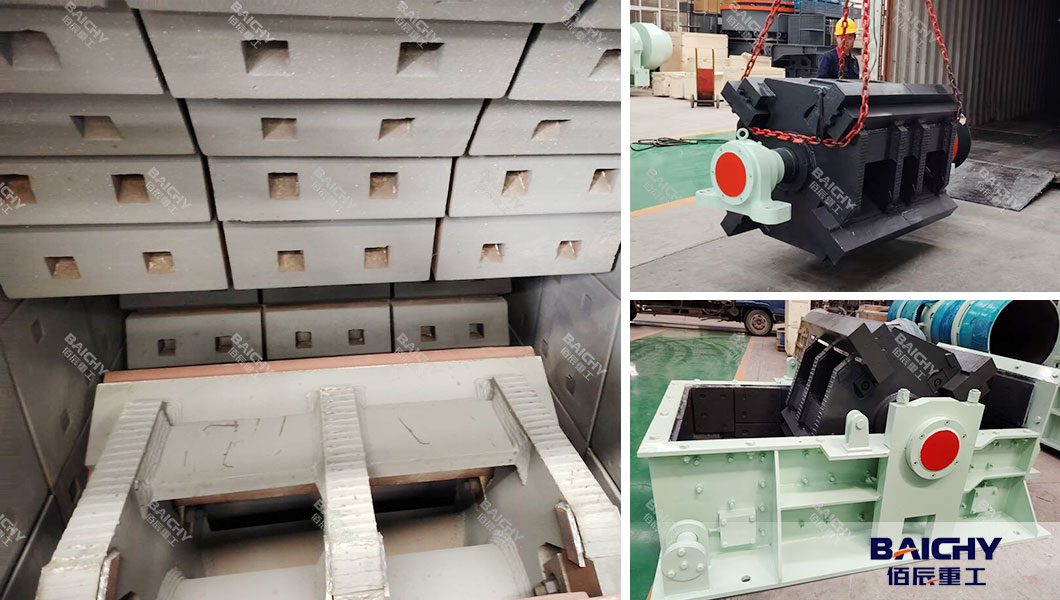
Wear is one of the main operating costs of an impact crusher. Blow bars repeatedly strike the feed material, while impact plates receive material thrown from the rotor. Both components gradually wear and require inspection, adjustment, or replacement.
Wear rates vary significantly with material abrasiveness, feed size, operating conditions, and the selected wear-resistant materials. Crushing clean limestone may produce a very different wear cost from processing abrasive rock or mixed demolition waste.
To control costs, operators should inspect blow bars and impact plates regularly, maintain a consistent feed, and record wear-part consumption per tonne of finished product.
2.2 Not Ideal for Every Type of Rock
An impact crusher is not automatically the best choice for every hard-rock application. Highly abrasive materials can cause rapid wear, increasing downtime and replacement-part expenses.
For abrasive granite or basalt, a jaw crusher is often considered for primary crushing, while a cone crusher may be suitable for secondary crushing. An impact crusher can still be evaluated where product shape or reduction requirements justify its operating costs, but material testing and a cost comparison are recommended.
The decision should consider both the purchase price and the total cost per tonne over the expected operating period.
2.3 Operating Costs Depend on Feed Conditions
The cost of running an impact crusher depends on more than its motor power. Wear parts, energy consumption, maintenance labor, downtime, and feed preparation all contribute to the total operating cost.
Oversized feed, inconsistent material flow, and unsuitable feed composition can reduce efficiency or increase wear. For recycled construction waste, steel reinforcement and other contaminants also require appropriate separation before crushing.
A reliable cost estimate should use the expected feed material, operating hours, production target, wear-part life, and required product sizes.
2.4 Requires Regular Inspection and Maintenance
Impact crushers contain rotating components and wear parts that require routine maintenance. Operators should inspect blow bars, impact plates, fasteners, bearings, lubrication systems, and other components according to the manufacturer's instructions.
Uneven wear, loose components, abnormal vibration, or unusual noise can indicate a developing problem. The machine must be isolated and made safe before maintenance or internal inspection. Operators should never enter a crusher while it is running or while stored energy remains uncontrolled.
A planned maintenance schedule helps reduce unexpected downtime and maintain stable production.
2.5 Product Size and Capacity Can Vary
An impact crusher's output depends on feed size, feed rate, material strength, moisture, rotor speed, impact gap, and wear condition. Excessive or inconsistent feeding may affect throughput and product grading.
If the finished aggregate must meet a strict grading specification, the plant should include appropriately sized screens and a suitable recirculation arrangement where required. Capacity estimates should be based on the actual feed and finished product requirements rather than the maximum capacity stated for a machine under different conditions.
3. Impact Crusher vs. Jaw Crusher vs. Cone Crusher
The three crusher types perform different roles in a crushing plant. The right choice depends on the material, feed size, desired particle shape, and operating costs.
| Comparison Factor |
Impact Crusher |
Jaw Crusher |
Cone Crusher |
| Crushing method |
Impact |
Compression |
Compression |
| Common role |
Secondary crushing and aggregate shaping; primary crushing in suitable applications |
Primary crushing |
Secondary or tertiary crushing |
| Product shape |
Often produces cubical aggregates |
May produce more elongated particles depending on conditions |
Generally produces well-shaped particles when properly selected and operated |
| Suitable materials |
Many less-abrasive rocks and recycled materials |
Broad range of rocks, including hard feed |
Often suitable for hard and abrasive rock |
| Main wear concern |
Blow bars and impact plates |
Jaw plates |
Mantle and concave liners |
| Key selection factor |
Product shape and reduction needs |
Large feed acceptance and primary reduction |
Hard-rock processing and operating economy |
These are general comparisons, not absolute rules. Crusher performance varies by model, feed conditions, and circuit design. Some plants use a jaw crusher for primary crushing and an impact or cone crusher for the next stage.
4. When Should You Choose an Impact Crusher?
An impact crusher is worth considering when the project requires a combination of high reduction, well-shaped aggregates, and manageable wear costs.
Choose an impact crusher when:
-
You need cubical aggregates for concrete, asphalt, or road construction.
-
You process limestone or other materials with suitable abrasiveness.
-
You recycle concrete or asphalt and need to produce reusable aggregate.
-
The required output size can be achieved efficiently with an impact-crushing circuit.
-
The expected wear-part and maintenance costs fit the project's operating budget.
Consider another crusher type when:
-
The feed is highly abrasive and wear costs are likely to be excessive.
-
The primary feed size exceeds the selected impact crusher's permitted feed size.
-
The project prioritizes economical processing of hard, abrasive rock.
-
The required capacity or product grading cannot be achieved with the proposed configuration.
Before making a final decision, confirm the feed's maximum size, hardness, abrasiveness, moisture content, target capacity, and finished aggregate specifications.
5. Real Case: Impact Crusher for Limestone Aggregate Production in the Philippines
A limestone quarry in the Philippines required a crushing solution with a capacity of 100–120 tons per hour. The project needed to produce several aggregate sizes for construction while maintaining a compact plant layout and controlling equipment investment.
Crushing Plant Configuration
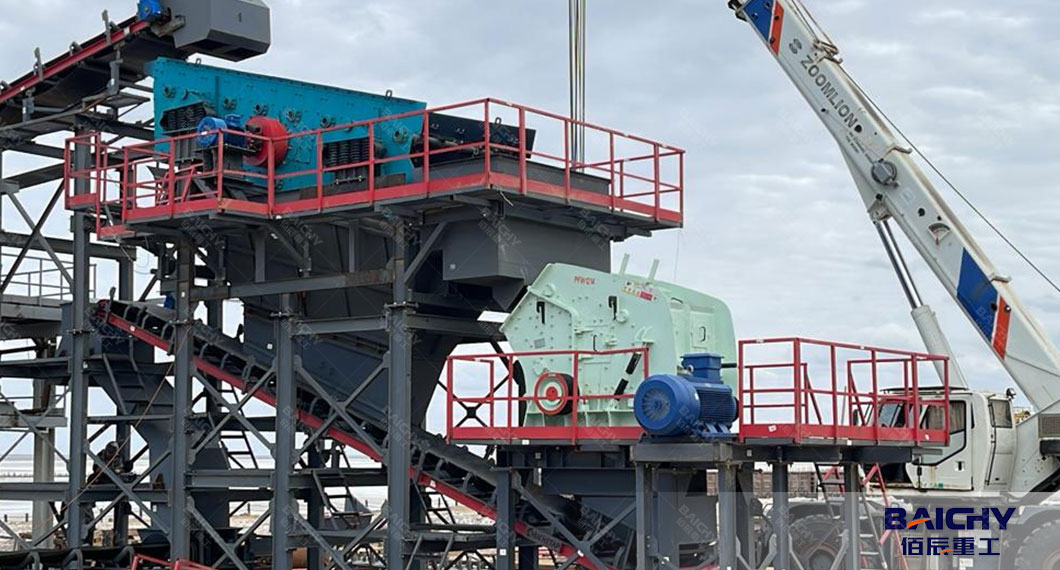
Baichy supplied a two-stage crushing and screening solution consisting of a vibrating feeder, a jaw crusher, a PF1210 impact crusher, a vibrating screen, and belt conveyors.
-
Raw material: Limestone and rock
-
Production capacity: 100–120 TPH
-
Primary crusher: PE500×750 jaw crusher
-
Secondary crusher: PF1210 impact crusher
-
Screening equipment: 3YK1860 vibrating screen
-
Finished aggregate sizes: 0–5 mm, 5–10 mm, 10–20 mm, and 20–40 mm
Why Was an Impact Crusher Selected?
The PE500×750 jaw crusher handles primary size reduction, while the PF1210 impact crusher performs secondary crushing. This arrangement reduces the limestone to the required size and helps produce well-shaped aggregates for concrete and other construction applications.
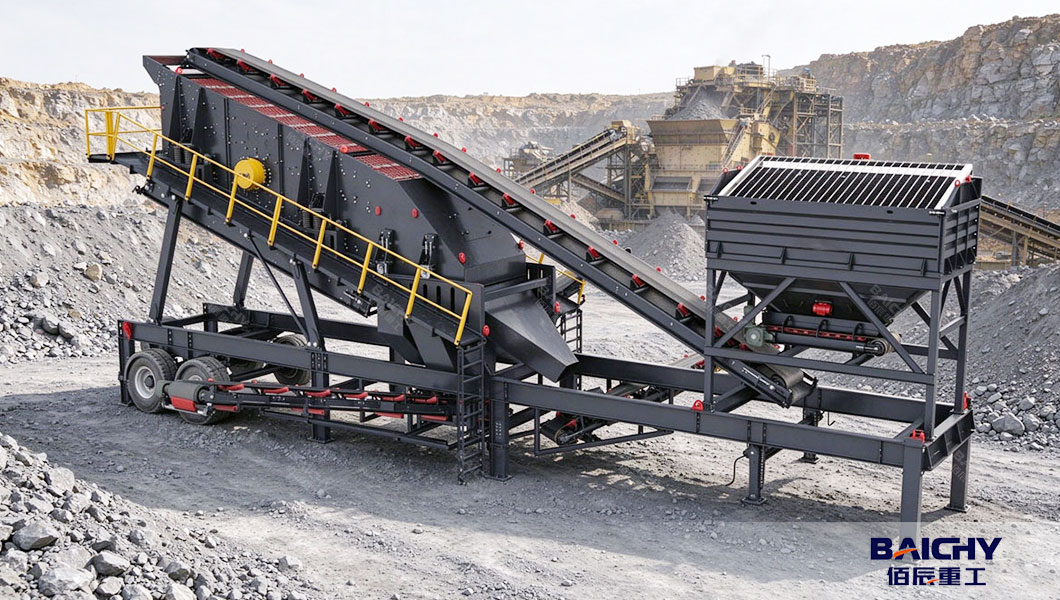
The vibrating screen separates the crushed material into different size fractions. Material that does not meet the required grading can be returned for further crushing when the circuit is configured for recirculation.
Key Takeaway
This project illustrates how an impact crusher can work with a jaw crusher and screening system to produce multiple aggregate sizes from limestone. For similar projects, buyers should evaluate feed size, material abrasiveness, target capacity, and finished product requirements before selecting an impact crusher model.
Source: 100 t/h Limestone Crusher Plant in the Philippines – Baichy Machinery
Frequently Asked Questions
1. Is an impact crusher better than a jaw crusher?
Neither is universally better. An impact crusher is often preferred when particle shape and high reduction are important, while a jaw crusher is commonly used for primary crushing and handling large feed. The better choice depends on the rock, feed size, production target, and operating budget.
2. What are the main disadvantages of an impact crusher?
The main disadvantages are wear of blow bars and impact plates, potentially high wear costs for abrasive materials, maintenance requirements, and sensitivity to feed conditions. These factors should be evaluated alongside the machine's reduction capability and aggregate quality.
3. Can an impact crusher crush granite and basalt?
Yes, some impact crusher models can process granite and basalt, but their abrasiveness can cause rapid wear. A comparison with jaw and cone crushing options is important before selecting equipment for continuous production.
4. Is an impact crusher suitable for construction waste recycling?
Yes. Impact crushers are used to process suitable concrete and asphalt waste into reusable aggregate. Feed preparation and removal of unsuitable contaminants are important, and the machine must be selected for the waste composition and required output.




 2026-10-30







 86-15093113821
 86-15093113821