1. What Is a Construction Waste Crushing Plant?
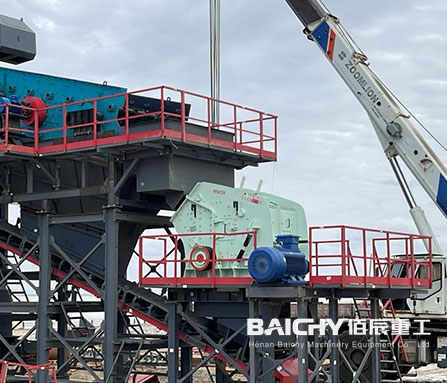
A construction waste crushing plant is a system designed to process demolition debris, waste concrete, bricks, and other suitable construction materials into reusable aggregates. Depending on the feed material and product requirements, the plant may include sorting equipment, feeders, crushers, magnetic separators, vibrating screens, conveyors, and dust control systems.
For contractors, demolition companies, and recycling businesses, a properly configured plant can reduce the volume of waste sent to disposal sites and recover valuable materials for reuse in construction projects.
The right configuration depends on three main factors: the type of construction waste, the required processing capacity, and the specifications of the final products.
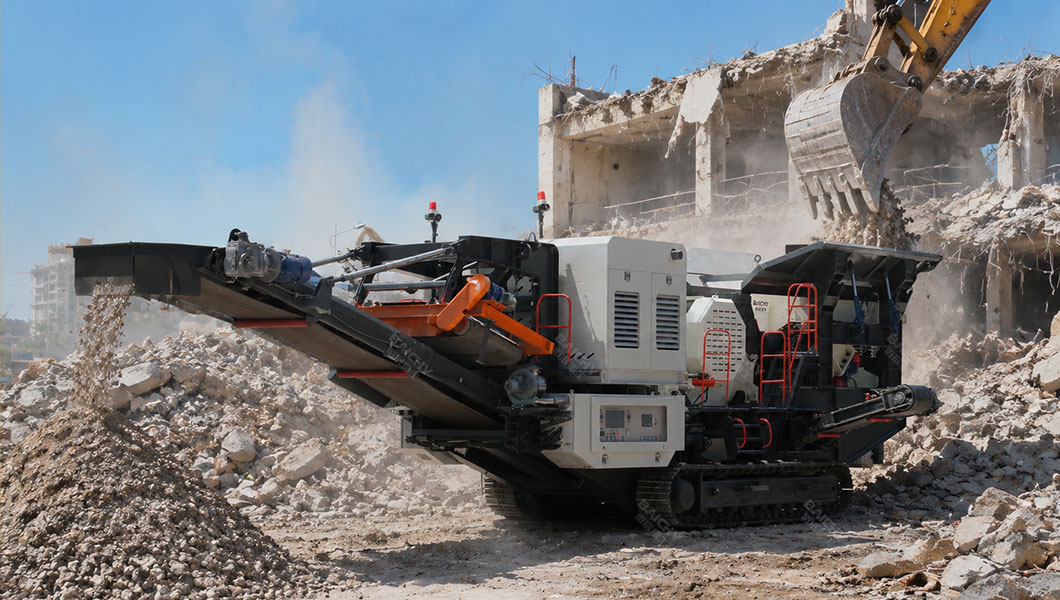
1.1 How Does a Construction Waste Crushing Plant Work?
A typical construction waste recycling process involves several stages:
-
Pre-sorting: Remove unsuitable materials such as wood, plastic, gypsum, and other contaminants where necessary.
-
Feeding: Transfer suitable waste materials into the crushing system at a controlled rate.
-
Crushing: Reduce large concrete blocks, bricks, or other suitable materials to smaller sizes.
-
Metal separation: Use magnetic separation to recover accessible ferrous metals, including steel fragments and rebar.
-
Screening: Separate the crushed material into different particle-size ranges.
-
Final product handling: Convey the finished aggregates to storage areas or subsequent processing stages.
Depending on the feed material and required product quality, the plant may use one or more crushing stages. Oversized material can be returned for further crushing when a closed-circuit configuration is required.
1.2 What Materials Can a Construction Waste Crushing Plant Process?
A construction waste crushing plant can process several types of mineral-based demolition waste, provided the equipment is selected for the material properties.
-
Waste concrete: Concrete blocks, slabs, and reinforced concrete from demolition projects.
-
Bricks and masonry: Broken bricks, concrete blocks, and suitable masonry debris.
-
Asphalt waste: Removed road surfaces and reclaimed asphalt materials, subject to the required processing method.
-
Mixed construction debris: Selected mineral materials after unsuitable contaminants have been removed.
Not all construction waste can be fed directly into a crusher. Large steel components, wood, plastic, gypsum, and other unwanted materials may require separate handling. Feed moisture, material size, contamination, and abrasiveness should also be evaluated before equipment selection.
1.3 What Products Can the Plant Produce?
The primary products are recycled aggregates in different size ranges. Depending on the crushing and screening configuration, the plant may produce coarse recycled aggregate, fine aggregate, and graded materials for suitable construction applications.
The final product sizes depend on the crusher settings, screen openings, feed characteristics, and desired grading. Applications may include road base, backfill, and other uses permitted by local engineering specifications.
Recycled aggregate quality is not determined by particle size alone. The proportion of attached mortar, unwanted contaminants, water absorption, and other material properties may affect whether the product meets the requirements of its intended application.
2. Construction Waste Crushing Plant Process Flow
The process flow should be designed around the incoming waste and the required recycled products. A straightforward system may use a feeder, crusher, magnetic separator, vibrating screen, and belt conveyors. More complex projects may require additional sorting, secondary crushing, or washing equipment.
Typical process flow:
Construction Waste → Pre-Sorting → Feeding → Primary Crushing → Magnetic Separation → Screening → Recycled Aggregate
Secondary crushing, return conveyors, and additional separation equipment can be added when the required product specifications call for them.
2.1 Pre-Sorting and Feeding
Pre-sorting removes materials that could interfere with crushing or reduce the quality of recycled aggregates. Excavators, loaders, manual sorting stations, or dedicated sorting equipment may be used, depending on the waste composition and plant scale.
A vibrating feeder or another suitable feeding system delivers the prepared material to the crusher at a controlled rate. Feed size must remain within the crusher's specified limits to avoid blockages and unnecessary mechanical stress.
2.2 Primary Crushing and Secondary Crushing
Primary crushing reduces large pieces of concrete, bricks, and other suitable demolition materials to a manageable size. A jaw crusher is commonly considered for this stage because of its ability to handle large feed material.
Secondary crushing is used when the primary product does not meet the required particle size or shape. An impact crusher can be suitable for processing concrete and masonry waste where particle shape and size reduction are important.
The final arrangement depends on material characteristics, the required output, and the expected wear cost. Not every plant needs both primary and secondary crushing.
2.3 Magnetic Separation and Screening
Reinforced concrete may contain steel bars and other ferrous metal components. A magnetic separator installed at an appropriate point in the process can recover accessible ferrous material from the crushed stream.
A vibrating screen then separates the aggregates into different size fractions. If the plant produces several product grades, the screen configuration should match the requested specifications. Oversized material may be returned to the crusher for additional size reduction.
Effective separation depends on the size and condition of the metal, the degree of material liberation, and the layout of the equipment.
2.4 Dust Control and Optional Washing
Crushing and screening can generate airborne dust, especially when handling dry concrete and masonry. Dust suppression sprays, enclosed transfer points, or dust collection systems can help control emissions according to site conditions and applicable regulations.
Washing may be considered when the final product requires additional cleaning or when the feed contains removable fine contaminants. However, washing is not necessary for every construction waste crushing plant. Water availability, wastewater treatment, and the intended use of the recycled aggregate should be evaluated before adding this stage.
3. Key Equipment in a Construction Waste Crushing Plant
Selecting the right equipment is essential for maintaining stable production, controlling wear costs, and meeting recycled aggregate specifications. The plant should be designed as an integrated system rather than as a collection of individual machines.
3.1 Jaw Crusher for Primary Crushing
A jaw crusher is commonly used as the primary crusher when construction waste contains large concrete blocks or other suitable materials that require substantial size reduction.
Its selection depends on the maximum feed size, feed opening, required capacity, discharge setting, and material properties. Reinforced concrete also requires attention to steel handling and the potential for blockages.
Before choosing a jaw crusher, confirm that the machine can accommodate the actual feed material and that downstream equipment can handle its discharge size.
3.2 Impact Crusher for Recycled Aggregate Production
An impact crusher uses impact energy to reduce material size and can produce relatively well-shaped aggregates from suitable concrete and masonry waste.
It is often considered for secondary crushing, although some mobile systems use an impact crusher as the main crushing unit when feed conditions allow. Its suitability depends on feed size, material abrasiveness, moisture, and the required product grading.
Concrete with high abrasiveness or substantial contamination may increase wear or complicate operation. Comparing expected wear-part consumption with the required product quality is therefore an important part of equipment selection.
3.3 Vibrating Screen, Magnetic Separator, and Conveyors
Supporting equipment directly affects the efficiency of the complete crushing line.
-
Vibrating screens classify crushed material into the required size ranges.
-
Magnetic separators recover accessible ferrous metals from the material stream.
-
Belt conveyors transfer material between processing stages and move finished products to stockpiles.
-
Return conveyors send oversized material back to the crusher when a closed circuit is used.
The capacity and layout of these components should match the crusher output. An undersized screen or conveyor can restrict the entire plant, even when the crusher itself has sufficient capacity.
3.4 Supporting Equipment and Optional Modules
Additional equipment may include sorting stations, feed hoppers, dust collectors, water spraying systems, washing equipment, and wastewater treatment units.
The need for these modules depends on waste composition, local environmental requirements, available utilities, and the required quality of the recycled products.
For example, a project processing relatively clean concrete may need a simpler configuration than a facility receiving mixed demolition waste. Designing around the actual feed material helps avoid unnecessary equipment costs while ensuring that essential treatment stages are not overlooked.
4. Mobile vs. Fixed Construction Waste Crushing Plant
The choice between a mobile and a fixed construction waste crushing plant depends mainly on where the waste is generated, how long the project will operate, and how much material must be processed.
| Comparison factor |
Mobile crushing plant |
Fixed crushing plant |
| Installation |
Generally requires less permanent civil infrastructure, depending on the model |
Usually requires planned foundations, site layout, and utility connections |
| Relocation |
Designed for movement between suitable job sites |
Intended for long-term operation at one location |
| Feed supply |
Suitable for waste generated at changing or dispersed sites |
Suitable for a stable, centralized waste supply |
| Plant expansion |
Limited by the mobile configuration and available modules |
Often easier to expand with additional processing stages |
| Initial site preparation |
Often simpler, but site access and setup remain important |
Usually requires more detailed site engineering |
| Best-fit scenario |
Temporary projects and on-site recycling |
Long-term recycling facilities and centralized processing |
Actual investment and operating costs vary by configuration. A mobile plant is not automatically cheaper, and a fixed plant is not necessarily more productive in every application.
4.1 Mobile Construction Waste Crushing Plant
A mobile construction waste crushing plant integrates the main processing equipment on a track-mounted or wheeled chassis. It can be moved to suitable work areas, reducing the need to transport all demolition waste to a distant centralized facility.
A tracked mobile crusher may be useful for demolition contractors, road reconstruction projects, and temporary construction sites where waste generation locations change frequently.
Before selecting a mobile plant, evaluate site access, ground conditions, transportation restrictions, setup requirements, feed size, and the availability of supporting equipment. Relocation does not eliminate the need for proper site preparation or safe operation.
4.2 Fixed Construction Waste Crushing Plant
A fixed construction waste crushing plant is installed at a dedicated processing site. It can incorporate multiple crushing stages, larger screening systems, sorting equipment, and additional treatment modules as required.
This configuration is worth considering when a recycling facility receives a steady supply of construction waste and needs to produce several aggregate grades over an extended operating period.
The project design should account for land availability, truck circulation, stockpile management, electrical supply, dust control, drainage, and future expansion. These factors can have a substantial effect on the total project investment.
4.3 How to Choose the Right Plant Type
Use the following questions to guide the initial selection:
-
Where is the waste generated? Waste collected at multiple temporary sites may favor a mobile solution, while centralized waste reception may favor a fixed plant.
-
How long will the project operate? Short-term contracts and frequently changing sites may justify mobility.
-
What is the required production capacity? Match the plant configuration to the expected feed supply and daily production target.
-
How many product grades are needed? Multiple aggregate specifications may require additional screening and return circuits.
-
What are the site and environmental constraints? Consider access, foundations, dust control, noise, power supply, and applicable permits.
-
What is the total cost over the project life? Compare equipment, transport, installation, labor, energy, maintenance, and relocation where relevant.
A reliable decision should be based on the complete project requirements rather than on the crusher purchase price alone.
5. How to Choose the Right Construction Waste Crushing Plant Capacity
Plant capacity should be determined by the volume of waste available, the required finished output, and the number of operating hours. Selecting a crusher solely by its advertised tons-per-hour rating may lead to an undersized or unnecessarily expensive system.
5.1 Determine Required Capacity in Tons per Hour
Start by estimating the amount of waste the plant needs to process each day.
A preliminary calculation is:
Required average throughput (TPH) = Daily feed requirement (tons) ÷ Effective operating hours per day
For example, if a project needs to process 600 tons of waste per day over 8 effective operating hours, the required average throughput is 75 TPH.
This is a planning calculation, not a guaranteed equipment rating. The selected plant must also account for interruptions, feed variability, material handling, screening efficiency, and maintenance. The actual equipment capacity should be confirmed against the manufacturer's technical data and the project's operating conditions.
5.2 Match the Crusher to Feed Size and Material Type
The incoming material directly affects the choice of crusher and supporting equipment.
Important parameters include:
-
Maximum and typical feed size.
-
Material type, hardness, and abrasiveness.
-
Proportion of reinforced concrete and steel.
-
Moisture content and the presence of sticky fines.
-
Contamination from wood, plastic, soil, and other unwanted materials.
-
Required discharge size and downstream screening needs.
For example, large concrete blocks may require primary crushing before entering an impact crusher. Mixed demolition waste may also need more extensive sorting than relatively clean concrete rubble.
Providing accurate feed information helps prevent equipment mismatch, blockages, excessive wear, and unstable production.
5.3 Define Final Aggregate Sizes and Product Quality
Before finalizing the plant layout, identify the size fractions required by the end user. Different products may require different screen openings, crusher settings, and return arrangements.
A project producing several grades of recycled aggregate may need a multi-deck vibrating screen and additional conveyors. A project requiring only one primary size fraction may be able to use a simpler arrangement.
Product specifications should cover more than particle size. Depending on the intended application, the buyer may also need to verify grading, contamination limits, water absorption, and other relevant aggregate properties.
The final configuration should be based on the actual product requirements and applicable local standards.

6. Construction Waste Crushing Plant Cost and Investment Factors
The cost of a construction waste crushing plant depends on its capacity, equipment configuration, degree of mobility, site conditions, and environmental requirements. A meaningful quotation should specify what equipment and services are included.
6.1 What Affects Construction Waste Crushing Plant Cost?
Several factors influence the total equipment price:
-
Processing capacity: Higher throughput requirements may call for larger crushers, screens, feeders, and conveyors.
-
Plant type: Mobile and fixed systems have different chassis, installation, and infrastructure requirements.
-
Crushing stages: Additional crushers and return circuits increase equipment and operating complexity.
-
Separation requirements: Magnetic separation, sorting, washing, or other treatment stages may be needed.
-
Environmental controls: Dust collection, noise control, water treatment, and site-specific compliance measures can affect the project budget.
-
Automation and control: Monitoring systems and automated controls may add initial cost but can support more consistent operation.
Because project requirements vary considerably, buyers should request a configuration-specific quotation rather than rely on a generic price estimate.
6.2 Equipment Cost vs. Total Project Cost
The purchase price of the machinery is only one part of the investment. A complete project budget may include:
| Cost category |
Items to consider |
| Equipment |
Crushers, feeders, screens, separators, conveyors, and control systems |
| Transportation |
Shipping, inland delivery, and any required transport permits |
| Installation |
Assembly, commissioning, and technical assistance |
| Civil works |
Foundations, site preparation, drainage, and access roads |
| Utilities |
Electrical connections, fuel, water, and related infrastructure |
| Environmental controls |
Dust suppression, collection systems, and wastewater treatment where required |
| Operating expenses |
Labor, wear parts, energy, fuel, maintenance, and material handling |
When comparing supplier quotations, confirm whether installation, commissioning, spare parts, and technical support are included. Two quotations with different scopes cannot be compared fairly by price alone.
6.3 How to Improve Operating Efficiency and Return on Investment
The economic performance of a recycling plant depends on both processing efficiency and the value of its finished products.
First, establish a stable feed supply and remove unsuitable materials before crushing. Consistent feeding and appropriate equipment settings can help reduce interruptions and unnecessary wear.
Second, match the crushing and screening stages to the required products. Excessive crushing can increase energy consumption and generate unwanted fines, while inadequate screening can result in inconsistent product sizes.
Third, plan preventive maintenance, inspect wear parts regularly, and maintain sufficient stocks of critical components. Unexpected downtime can reduce effective production even when the equipment has adequate nominal capacity.
Finally, evaluate the market for recycled aggregates, transportation costs, disposal fees where applicable, and the costs of sorting and quality control. A realistic investment assessment should use local operating data rather than assume a fixed profit margin or payback period.
7. How to Select a Reliable Construction Waste Crushing Plant Manufacturer
Choosing a supplier involves more than finding a crusher that meets the required feed size. The manufacturer should be able to explain how the equipment works together as a complete system and how the configuration addresses the project's material and production requirements.
7.1 Evaluate Equipment Configuration and Engineering Support
Review whether the supplier can recommend an appropriate combination of crushers, screens, conveyors, and separation equipment based on the actual waste characteristics.
Ask for technical specifications covering feed size, expected throughput, discharge size, installed power, wear parts, and operating requirements. Where possible, request a process flow diagram and equipment layout to clarify how material moves through the plant.
Also confirm the scope of installation guidance, commissioning support, operator training, spare parts supply, and after-sales service. Clear technical documentation makes it easier to evaluate suppliers on comparable terms.
7.2 Review Project References and Technical Documentation
Project references can help buyers understand how a proposed configuration performs under similar conditions. Look for examples involving comparable feed materials, capacity requirements, product specifications, and site constraints.
A useful case study should identify the equipment configuration, material processed, and relevant operating results. Any production figures or customer feedback should be supported by verifiable project records.
Buyers should also check the manufacturer's business credentials, applicable product certifications, warranty conditions, and service arrangements. These checks provide a stronger basis for supplier selection than promotional claims alone.
7.3 Get a Customized Construction Waste Crushing Plant Proposal
Before requesting a quotation, prepare the following project information:
-
Raw material: Concrete, bricks, mixed demolition waste, or other materials.
-
Feed size: Maximum and typical dimensions of incoming waste.
-
Required capacity: Target throughput in tons per hour or tons per day.
-
Finished products: Required aggregate sizes, grading, and intended applications.
-
Site conditions: Project location, available space, power supply, and access requirements.
-
Plant preference: Mobile or fixed, if already determined.
-
Environmental requirements: Applicable dust, noise, and wastewater controls.
With these details, the supplier can evaluate the necessary processing stages and propose a more suitable equipment configuration.
Baichy Machinery provides crushing equipment and customized plant solutions for different material-processing requirements. Contact the technical team with your project details to discuss a suitable construction waste crushing plant configuration and request a quotation.
Get a Construction Waste Crushing Plant Solution for Your Project
A well-designed construction waste crushing plant can turn suitable demolition materials into reusable aggregates while improving material recovery and reducing reliance on disposal. The most suitable solution depends on feed characteristics, target capacity, finished product requirements, site conditions, and operating costs.
Baichy Machinery can help evaluate these requirements and identify a suitable combination of crushing, screening, and separation equipment.
Ready to plan your construction waste recycling project? Contact Baichy Machinery with your feed material, required capacity, target aggregate sizes, and project location to discuss a customized solution and equipment quotation.
Frequently Asked Questions About Construction Waste Crushing Plants
1. How Much Does a Construction Waste Crushing Plant Cost?
The cost depends on processing capacity, mobile or fixed configuration, crushing stages, supporting equipment, and installation requirements. Transportation, civil works, dust control, and other site-specific costs may also affect the total investment. To obtain a meaningful quotation, provide the material type, required capacity, final product sizes, and project location.
2. What Is the Best Crusher for Construction Waste?
There is no single best crusher for every type of construction waste. A jaw crusher is commonly used for primary crushing of large concrete blocks, while an impact crusher can be suitable for further processing and producing well-shaped recycled aggregates. The right choice depends on feed size, material abrasiveness, steel content, target output, and expected wear costs.
3. Is a Mobile or Fixed Construction Waste Crushing Plant Better?
A mobile plant is generally worth considering when waste is generated at changing locations or needs to be processed directly on-site. A fixed plant may be more suitable for a centralized recycling facility with a stable feed supply and long-term production requirements. The decision should account for site conditions, capacity, relocation needs, installation, and total operating costs.
4. Can a Construction Waste Crushing Plant Separate Steel from Concrete?
Yes. A suitably configured plant can use pre-sorting, crushing, and magnetic separation to recover accessible ferrous metals from reinforced concrete waste. Separation efficiency depends on the size and condition of the steel, how well it is liberated during crushing, and the position and design of the magnetic separator. Additional sorting may be necessary for complex or heavily contaminated feed material.




 2026-11-23






 86-15093113821
 86-15093113821