Purchasing a new concrete crusher is a major investment for demolition contractors, construction waste recycling companies, and aggregate producers. The right machine can turn waste concrete into valuable recycled aggregates while reducing transportation and disposal costs. However, choosing equipment based only on its purchase price or advertised capacity can lead to unexpected operating expenses and production problems.
Before purchasing a concrete crusher, buyers should evaluate its processing capacity, maximum feed size, crushing performance, finished product quality, mobility, metal separation system, and maintenance requirements. These features directly affect whether the machine can handle reinforced concrete efficiently and produce aggregates that meet local market requirements. This guide explains the key features to check when buying a new concrete crusher and how to select equipment that matches your project conditions and long-term production goals.
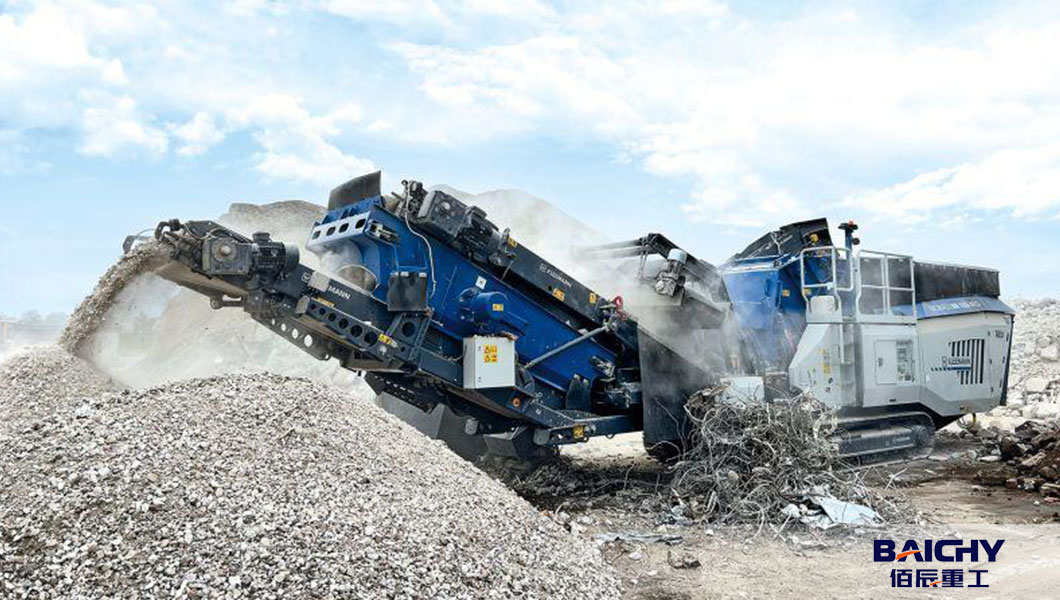
1. Crushing Capacity: Can the Machine Meet Your Production Requirements?
Processing capacity is one of the first specifications to evaluate when purchasing a concrete crusher. It is generally measured in tons per hour (TPH) and indicates how much material the equipment can process under specified operating conditions. However, the rated capacity provided by a manufacturer does not always represent the actual production output at your job site. Concrete strength, feed size, reinforcement content, moisture, feeding consistency, and discharge settings can all affect throughput.
For example, a crusher rated at 100 TPH capacity may not consistently achieve this output if it receives oversized reinforced concrete blocks or irregularly fed material. Steel bars can interfere with material flow, while excessive fine materials may reduce crushing efficiency or increase unnecessary wear.
Buyers should therefore calculate their required capacity based on the actual volume of concrete waste generated or collected each day. If a recycling facility needs to process 600 tons of concrete during an 8-hour shift, its required average throughput is 75 TPH. Additional operating allowance should be considered for feeding interruptions, maintenance, and material variability.
Choosing an undersized crusher can create production bottlenecks and increase labor costs. On the other hand, purchasing an oversized machine may increase the initial investment, power consumption, and maintenance expenses without generating additional revenue. The best approach is to provide the manufacturer with your expected hourly production, material characteristics, and working schedule before requesting an equipment quotation.
2. Maximum Feed Size and Crushing Chamber Design
The maximum feed size determines whether a concrete crusher can accept the waste material directly from demolition or whether additional breaking and preparation are required. Concrete waste from demolition projects often contains large, irregular blocks. A crusher with an undersized feed opening may require a hydraulic breaker or another machine to reduce the material before crushing. This adds equipment costs, labor requirements, and processing time. When comparing different models, check the feed opening dimensions, maximum allowable feed size, and crushing chamber design. The maximum feed size must be evaluated against the actual dimensions of the incoming concrete blocks rather than simply the excavator bucket capacity.
Handling Reinforced Concrete
Reinforced concrete presents an additional challenge because steel rebars are embedded inside the concrete. During crushing, exposed steel bars can become entangled with moving components, obstruct material discharge, or increase the risk of blockages. A suitable crusher should have a chamber design and operating configuration appropriate for the expected reinforcement content. Buyers should also discuss whether long or protruding steel bars need to be cut or removed before feeding. For heavily reinforced concrete, proper material preparation and downstream magnetic separation are particularly important. No crusher should be assumed to handle every type of reinforced concrete without limitations.
Feeding System and Material Flow
A reliable feeding system is another important feature. A vibrating feeder can deliver concrete waste into the crushing chamber at a more consistent rate, reducing sudden loading fluctuations. Some configurations use a grizzly feeder or pre-screening section to separate smaller particles before they enter the crusher. This prevents material that does not require further crushing from unnecessarily occupying the crushing chamber. A properly designed hopper and feeding conveyor also help maintain continuous production. When evaluating a machine, ask the manufacturer whether the feeding system is included in the quotation and whether its capacity matches the crusher.
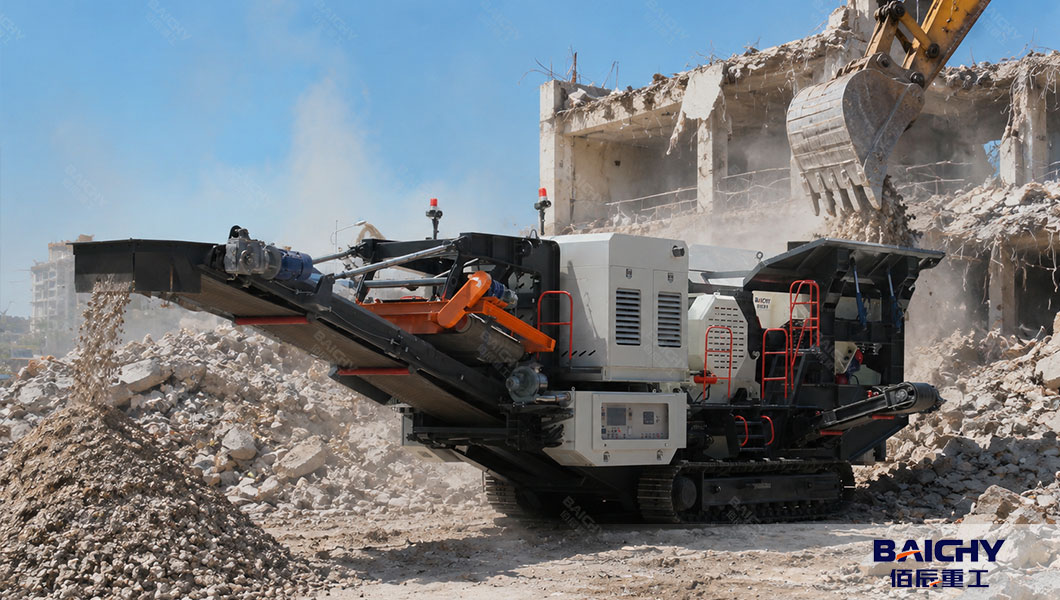
3. Adjustable Output Size and Final Aggregate Quality
The purpose of concrete recycling is not simply to reduce large concrete blocks into smaller pieces. The final objective is to produce recycled aggregates that can be reused or sold for applications such as road base, construction fill, and other suitable building-material applications. Therefore, discharge size adjustment and finished product quality should be considered before purchasing a concrete crusher.
Check the Adjustable Discharge Size
Different construction applications require different aggregate sizes. Some projects need relatively coarse recycled concrete, while others require smaller particles for road construction or further processing. The crusher's discharge setting determines the approximate product size distribution. For jaw crushers, the closed-side setting (CSS) is an important parameter because it affects both the discharge size and processing capacity. A smaller setting generally produces finer material but may reduce throughput and increase equipment loading. A larger setting can improve production capacity but may require additional secondary crushing. Buyers should ask for the recommended operating range and expected product distribution under their actual feed conditions rather than relying on a single maximum or minimum discharge specification.
Evaluate Recycled Aggregate Quality
The quality of recycled concrete aggregate depends on the original concrete, crushing process, screening configuration, and subsequent material treatment. Particle size distribution, particle shape, excessive fines, and contamination can all influence the final product's market value. A vibrating screen is commonly used after crushing to separate different aggregate sizes. For projects requiring multiple finished products, a closed-circuit crushing and screening system may be more appropriate. Oversized material can return to the crusher for further reduction, while correctly sized aggregates are discharged into separate stockpiles. This configuration provides better control over final product specifications and reduces the need for manual material sorting.
4. Crusher Type: Jaw Crusher or Impact Crusher?
Selecting the correct crushing technology is essential when purchasing a concrete crusher. Jaw crushers and impact crushers are two common options, but they work differently and serve different processing requirements. A jaw crusher reduces concrete through compression between a fixed jaw plate and a moving jaw plate. An impact crusher uses high-speed impact from blow bars and impact plates to break the material.
When Should You Choose a Jaw Crusher?
A jaw crusher is commonly used for primary crushing when the recycling plant receives large concrete blocks. Its relatively large feed opening and compression-based crushing action make it suitable for reducing bulky demolition waste. For example, a jaw crusher can process prepared reinforced concrete rubble into smaller material before secondary crushing or screening. It is often a practical choice for projects where large feed size and primary reduction are the main concerns. However, the final particle shape and product distribution depend on the crusher model, discharge setting, and feed characteristics. Additional processing may be required when the finished aggregate must meet specific grading requirements.
When Is an Impact Crusher a Better Option?
An impact crusher uses impact energy to break concrete into smaller particles. It can produce a more cubical particle shape in suitable applications, making it attractive for recycling projects where aggregate shape is important. However, its suitability depends on the concrete's feed size, reinforcement content, and abrasiveness. The presence of exposed steel bars must be carefully evaluated to avoid operational problems. Impact crushers also use wear components such as blow bars and impact liners. Their replacement frequency and cost should be included when calculating the total operating expenses.
Is a Two-Stage Crushing System Necessary?
For some concrete recycling projects, a single crusher can achieve the required output. Other projects may need a jaw crusher for primary reduction followed by an impact crusher or another suitable secondary crusher. A two-stage system provides greater control over particle size and production capacity. However, it also requires additional equipment, conveyors, space, and investment. The decision should be based on the required finished aggregate specifications and actual production economics rather than simply installing more crushing equipment.
5. Mobility: Stationary, Wheeled, or Tracked Concrete Crusher?
The working location is an important factor when selecting a new concrete crusher. Some recycling businesses operate at permanent processing facilities, while demolition contractors need equipment that can move between different construction sites. The choice between stationary, wheeled mobile, and tracked mobile crushers directly affects transportation, installation, and operating flexibility.
Stationary Concrete Crusher
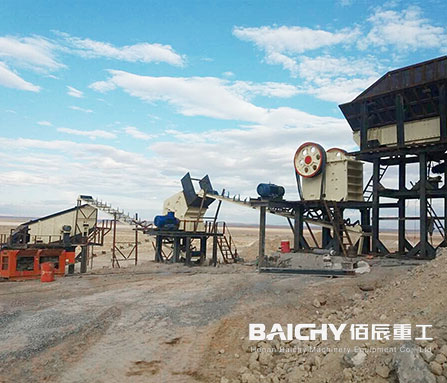
A stationary concrete crusher is suitable for long-term recycling operations with stable material supplies. It can be integrated with vibrating feeders, conveyors, screens, magnetic separators, and other processing equipment to form a complete recycling plant. Stationary systems are generally appropriate for larger facilities where consistent production and centralized material handling are important. However, they require installation space, foundations, and suitable material transportation arrangements.
Wheeled Mobile Concrete Crusher
A wheeled mobile concrete crusher offers greater flexibility than a stationary plant. It can be transported between suitable job sites and arranged relatively quickly for different processing tasks. This type of equipment is worth considering for contractors who handle multiple projects but have suitable access roads and transportation arrangements. Before purchasing, check the overall transport dimensions, total weight, towing requirements, and setup time.
Tracked Mobile Concrete Crusher
A tracked mobile concrete crusher is particularly useful for on-site concrete recycling. Its crawler undercarriage allows the machine to move around demolition sites and construction areas without requiring a separate towing vehicle for normal site movement. This arrangement can reduce the need to transport large quantities of concrete waste to an off-site recycling facility. It is especially useful for projects where waste is generated continuously and recycled aggregates can be reused nearby. However, buyers should also consider the machine's working weight, ground conditions, transport restrictions, and maintenance requirements for the crawler system. The most suitable mobility option depends on how frequently the equipment needs to move, how accessible the working site is, and whether the crusher will operate at one permanent location or several temporary sites.
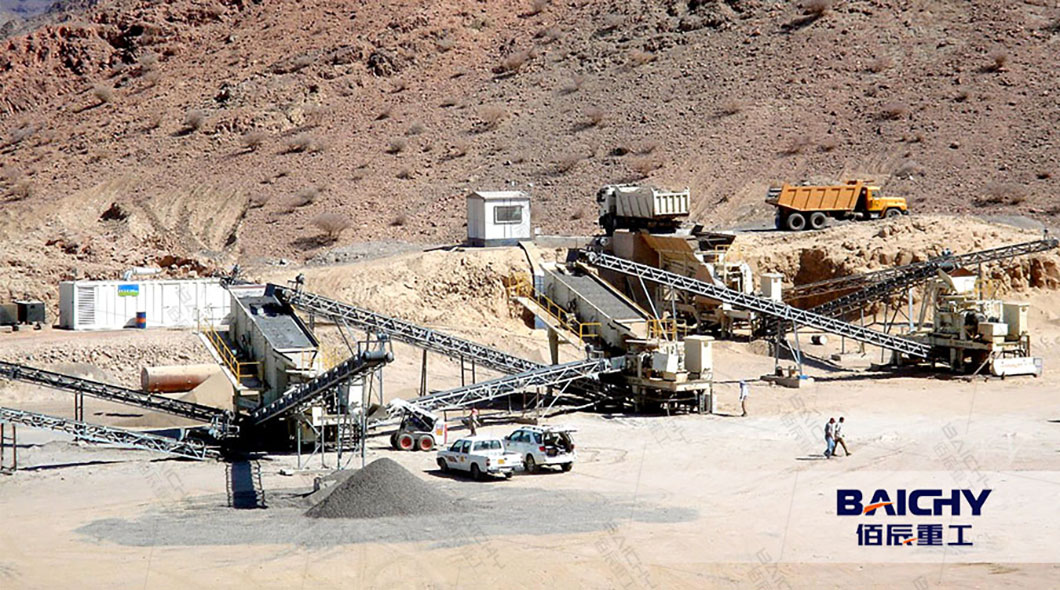
6. Built-in Metal Separation and Recycling Features
One of the most important differences between concrete crushing and ordinary stone crushing is the presence of steel reinforcement. During concrete recycling, steel rebars must be separated from the crushed material to improve aggregate quality, reduce contamination, and recover valuable scrap metal. A magnetic separator is therefore an important feature to consider when purchasing a concrete recycling plant.
Magnetic Separator for Steel Removal
An overband magnetic separator is commonly installed above a conveyor belt to remove ferrous metals from the crushed material. As the material passes underneath the magnet, steel pieces are attracted and separated from the aggregate flow. Depending on the plant configuration, the magnetic separator can be installed after the primary crusher or above a downstream discharge conveyor. For projects with significant reinforcement content, buyers should discuss the magnet's installation position, magnetic strength, belt arrangement, and capacity with the manufacturer.
Prevent Metal-Related Damage and Blockages
Magnetic separation helps remove exposed steel after crushing, but it does not eliminate every risk associated with reinforced concrete. Long steel bars may become entangled inside the crushing chamber before reaching the magnetic separator. Therefore, oversized reinforcement and protruding steel should be identified during material preparation. The crushing system should also have appropriate overload protection and safe maintenance access. Operators must follow lockout procedures before clearing blockages or inspecting the crushing chamber.
Improve Material Recovery Efficiency
A well-designed concrete recycling system separates recovered steel from reusable aggregate. The steel can be collected for scrap recycling, while the remaining concrete material continues through screening and stockpiling. This improves resource utilization and helps reduce contamination in the finished recycled aggregate. When comparing equipment quotations, confirm whether the magnetic separator, discharge conveyor, and associated electrical controls are included or supplied as optional components.
7. Wear Resistance and Easy Maintenance
Concrete is a highly abrasive material, and crushing operations place considerable stress on wear components. Equipment durability and maintenance accessibility directly influence long-term production costs. A crusher with a low initial purchase price may become expensive to operate if its wear parts require frequent replacement or if routine maintenance takes too long.
Check Wear Parts and Replacement Costs
For jaw crushers, jaw plates are the main wear components. For impact crushers, blow bars and impact liners are important replacement parts. Their service life depends on concrete strength, aggregate hardness, reinforcement content, operating settings, and daily production hours. Buyers should request information about wear-part materials, replacement procedures, and spare-part prices. It is also useful to confirm whether replacement parts are readily available from the manufacturer.
Evaluate Maintenance Accessibility
Easy maintenance access reduces downtime and improves operator efficiency. Check whether the crusher provides convenient access to the crushing chamber, lubrication points, hydraulic systems, and electrical components. Some models use hydraulic opening systems to simplify inspection and maintenance. However, buyers should confirm the actual configuration rather than assuming every machine includes this feature. The conveyor system, vibrating screen, and crawler undercarriage should also have accessible inspection and maintenance points.
Reduce Unplanned Downtime
A suitable crusher should include appropriate overload protection and operating controls for its design. Lubrication monitoring and timely replacement of wear components can help prevent unexpected equipment failures. Before purchasing, ask the manufacturer for a recommended maintenance schedule based on operating hours and material conditions. For commercial recycling operations, the availability of critical spare parts can be just as important as the crusher's rated capacity.
8. Engine, Power System, Fuel Consumption, and Safety Features
The power system affects operating flexibility and the overall cost of concrete recycling. Buyers should choose between diesel, electric, or hybrid configurations based on site conditions and available energy sources. Diesel-powered mobile crushers are suitable for sites without a reliable external power supply. They provide operational independence and are useful for temporary demolition and construction projects. Electric-powered crushers can be attractive for permanent recycling facilities with stable electricity supplies. Their operating costs depend on local electricity prices, motor efficiency, and the overall plant configuration. Some mobile plants offer hybrid or dual-power arrangements, allowing operators to use different power sources depending on site conditions. Buyers should verify whether this option is available for the specific model.
Important Safety Features
Safety should never be overlooked when purchasing a concrete crusher. The equipment should have appropriate emergency stop controls, protective guards, safe maintenance access, and electrical and hydraulic protection. Dust suppression systems are also important because crushing concrete generates airborne dust. Water spraying or other suitable dust-control arrangements can help reduce dust emissions around feeding, crushing, and discharge areas. Noise levels, operator visibility, conveyor guarding, and safe access platforms should also be considered during equipment evaluation. Operators must follow the manufacturer's safety procedures, particularly when clearing blockages or replacing wear parts.
Calculate the Total Operating Cost
The purchase price is only one part of the investment. A more accurate evaluation considers the total cost of ownership over the expected operating period. Fuel or electricity, wear parts, maintenance labor, transportation, downtime, and spare parts all contribute to the cost per ton of finished recycled aggregate. Comparing these costs between different crusher models provides a more realistic basis for purchasing decisions.
9. Manufacturer Reputation, Warranty, and After-Sales Support
A concrete crusher is a long-term production asset. Choosing a manufacturer with reliable production capabilities and technical support can reduce purchasing risks and improve equipment availability. Before placing an order, buyers should evaluate the manufacturer's actual manufacturing facilities, production experience, quality control procedures, and ability to supply complete crushing systems.
Evaluate Manufacturing Capability
A professional equipment manufacturer should be able to explain the crusher's technical specifications, configuration, and application limitations. Buyers can request factory photographs, equipment inspection records, manufacturing information, and videos showing similar machines operating under real production conditions. If possible, a factory visit or equipment inspection before shipment can provide additional confidence.
Check Warranty and Spare Parts Availability
Warranty terms should clearly explain the coverage period, covered components, exclusions, and procedures for handling equipment problems. Buyers should also ask about the availability and delivery time of critical wear parts such as jaw plates, blow bars, screen meshes, and conveyor components. For international customers, technical support, installation guidance, remote troubleshooting, and spare-parts logistics are particularly important.
Ask for Real Project References
Previous projects can help buyers understand whether a manufacturer's equipment is suitable for their specific application. When reviewing project references, pay attention to the processed material, feed size, production capacity, equipment configuration, and finished product requirements. A reference involving ordinary limestone crushing does not necessarily demonstrate that the same machine will perform equally well with heavily reinforced concrete. The most useful reference is one involving similar concrete waste, operating conditions, and production targets.
10. Concrete Crusher Purchasing Checklist: What Should You Confirm Before Ordering?
Before purchasing a new concrete crusher, make sure the supplier understands your actual working conditions. The most effective way to compare different manufacturers is to provide the same technical requirements to each supplier. This allows you to evaluate equipment configurations and quotations on a consistent basis.
| Evaluation Item |
Information to Confirm |
| Processing capacity |
Required actual output in TPH |
| Feed material |
Ordinary or reinforced concrete |
| Maximum feed size |
Largest concrete block dimensions |
| Reinforcement |
Steel bar content and preparation requirements |
| Crusher type |
Jaw crusher or impact crusher |
| Discharge size |
Required finished aggregate specifications |
| Screening system |
Number of decks and required product sizes |
| Metal separation |
Magnetic separator configuration |
| Mobility |
Stationary, wheeled, or tracked |
| Power system |
Diesel, electric, or hybrid |
| Wear parts |
Materials, replacement frequency, and prices |
| Safety |
Emergency stops, guards, and dust suppression |
| After-sales service |
Warranty, spare parts, and technical support |
Do not compare concrete crushers based on purchase price or rated capacity alone. Ask every supplier to quote according to the same feed material, production target, output sizes, and working conditions.
This makes it easier to identify differences in equipment configuration and estimate the actual investment required for your recycling operation.
Choose a Concrete Crusher Based on Your Actual Recycling Needs
Purchasing a new concrete crusher requires more than comparing machine models and prices. The right equipment must match the concrete waste characteristics, required production capacity, finished aggregate specifications, and working environment. For projects receiving large concrete blocks, a jaw crusher may be a practical choice for primary crushing. When particle shape and secondary size reduction are important, an impact crusher may be worth considering. For demolition contractors and on-site recycling operations, a tracked mobile concrete crusher can provide additional working flexibility. More importantly, buyers should evaluate the entire recycling process, including feeding, crushing, magnetic separation, screening, and material stockpiling. A reliable equipment selection should balance initial investment, production efficiency, maintenance requirements, and long-term operating costs.
Baichy Machinery provides crushing equipment and complete crushing plant configurations for different aggregate and material-processing applications. If you are planning a concrete recycling project, provide your feed size, material characteristics, target capacity, and required output sizes to the engineering team for a suitable equipment recommendation.
Frequently Asked Questions About Buying a New Concrete Crusher
1. What is the most important feature of a concrete crusher?
The most important feature depends on the project, but processing capacity, maximum feed size, crushing performance, and finished product quality are essential considerations. For reinforced concrete recycling, the ability to manage steel reinforcement and integrate magnetic separation is also important.
2. What type of crusher is best for reinforced concrete?
A jaw crusher is commonly used for primary crushing of large reinforced concrete blocks. An impact crusher may be used for secondary reduction or suitable prepared feed. The final selection depends on reinforcement content, feed dimensions, product requirements, and equipment design.
3. How much capacity do I need for a concrete crusher?
Calculate the required capacity by dividing the total material volume to be processed by the available operating hours. For example, processing 600 tons in an 8-hour shift requires an average throughput of 75 TPH. Additional capacity allowance should be considered for interruptions and variable feed conditions.
4. Is a mobile concrete crusher better than a stationary crusher?
A mobile crusher is generally more suitable for projects requiring frequent relocation or on-site recycling. A stationary crusher is often more practical for permanent recycling facilities with stable material supplies and higher long-term production requirements. The choice depends on site conditions, transportation costs, and project duration.
5. Can a concrete crusher remove steel rebar automatically?
A concrete crusher does not normally remove all steel reinforcement by itself. A magnetic separator installed above a conveyor can remove exposed ferrous metal from crushed concrete. Long or protruding steel bars may require preparation before feeding to prevent blockages.




 2026-11-10






 86-15093113821
 86-15093113821