1. What Is a 300 TPH Quarry Screening Plant?
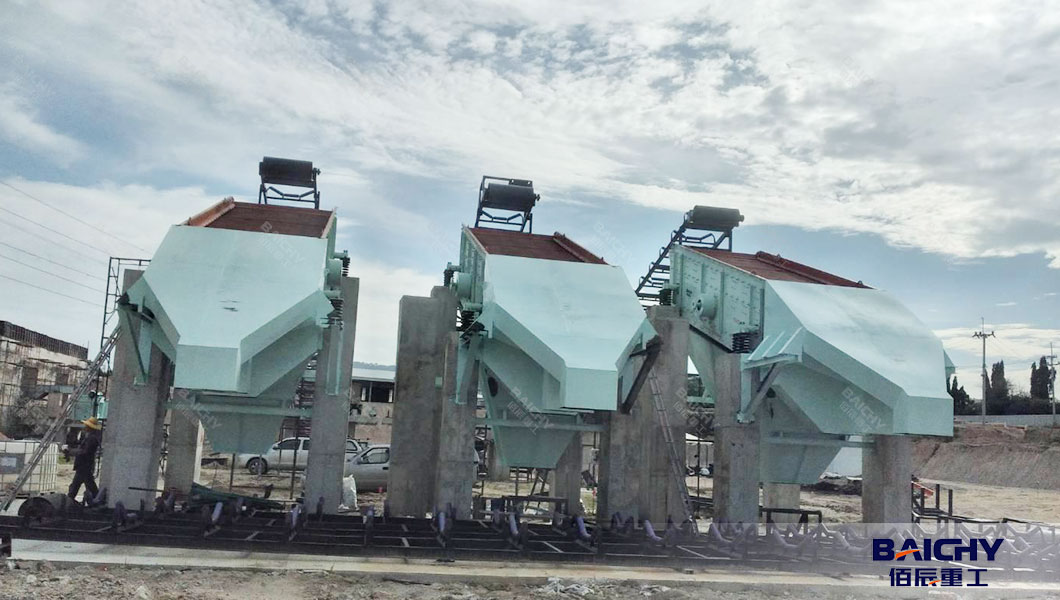
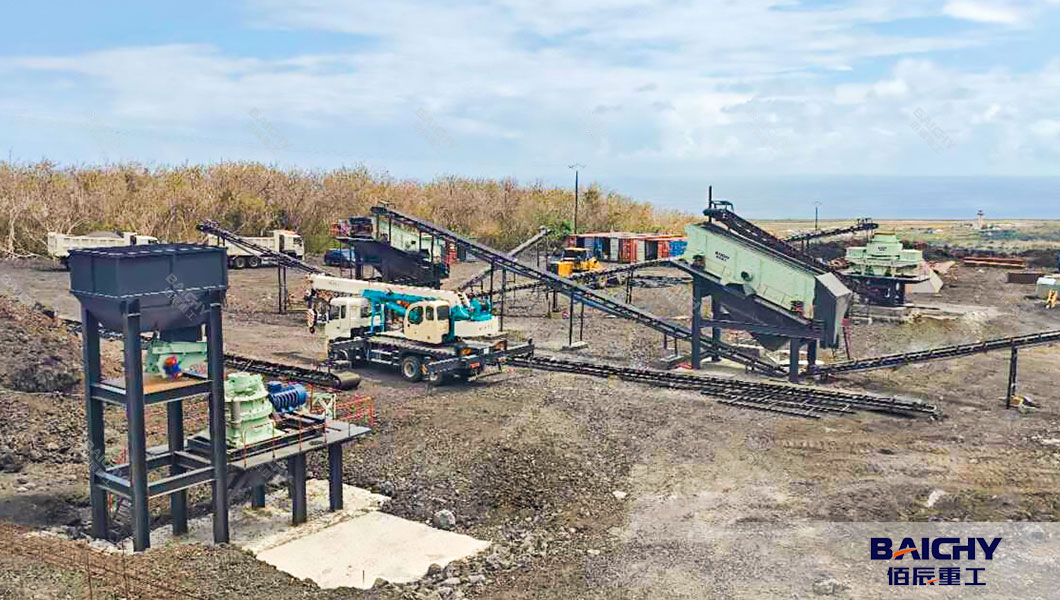
A 300 TPH quarry screening plant is an aggregate processing system designed to handle approximately 300 tons of material per hour under specified operating conditions. It uses vibrating screens to separate crushed stone into different sizes for construction, road building, concrete production, and other applications. A typical system includes a feed hopper, vibrating feeder, multi-deck vibrating screen, belt conveyors, and stockpiling areas. Depending on the required feed size and final products, crushing equipment may also be integrated into the plant.
What Does 300 TPH Mean in Quarry Screening?
The meaning of 300 TPH needs to be clearly defined before equipment selection.
It may refer to:
-
Screen feed capacity: The total material entering the screening equipment per hour.
-
Plant feed capacity: The fresh material entering the entire production line per hour.
-
Finished product output: The amount of saleable aggregate produced per hour.
These figures are not necessarily equal.
For example, a closed-circuit crushing and screening plant may send oversized material back to the crusher. This creates additional circulating material that must be processed by the screening system. Therefore, a screen handling 300 TPH of total feed does not automatically produce 300 TPH of finished aggregate.
What Materials Can a Quarry Screening Plant Process?
A quarry screening plant can process different types of crushed rock and natural aggregate, including:
-
Granite: Hard and abrasive rock commonly used in high-strength construction aggregates.
-
Limestone: Widely used in concrete, asphalt, road base, and cement production.
-
Basalt: Hard volcanic rock used in road construction and durable aggregate production.
-
River gravel: Rounded or partly weathered aggregate requiring size classification.
-
Construction waste: Recycled concrete and mixed demolition materials, depending on the screening system.
Material hardness, particle shape, moisture, clay content, and feed-size distribution all influence screening performance.
What Products Can a 300 TPH Screening Plant Produce?
A multi-deck vibrating screen can separate aggregate into several commercial sizes.
Typical product specifications include:
| Product size |
Common application |
| 0–5 mm |
Manufactured sand and fine aggregate |
| 5–10 mm |
Fine concrete aggregate |
| 10–20 mm |
Concrete and general construction |
| 20–31.5 mm |
Coarse aggregate and road construction |
| 31.5 mm+ |
Oversized material for further crushing |
The actual product sizes depend on local market requirements and screen aperture selection.
2. What Equipment Is Needed for a 300 TPH Quarry Screening Plant?
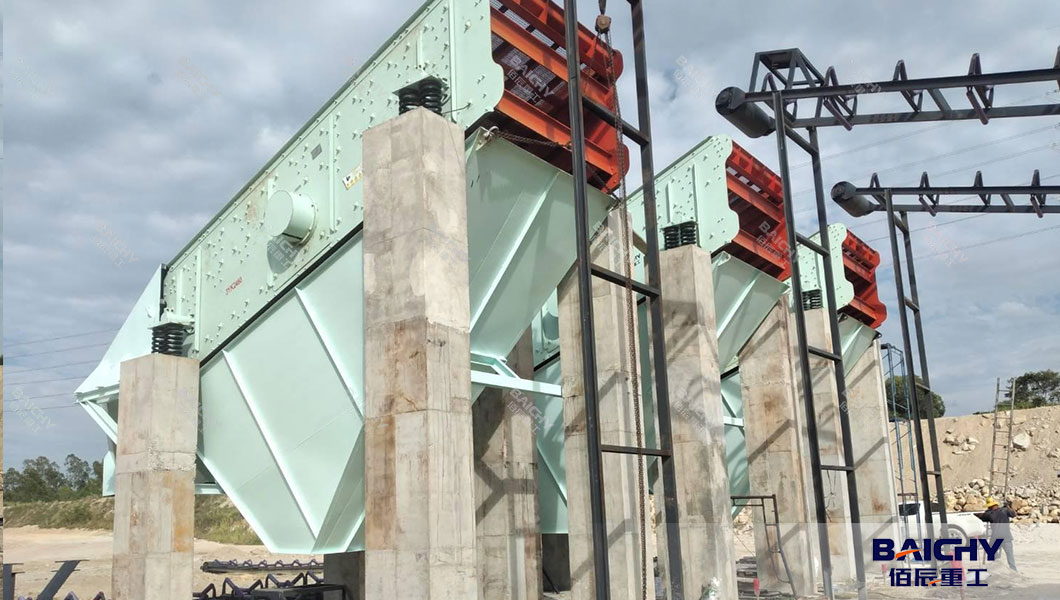
A 300 TPH quarry screening plant requires coordinated equipment rather than simply installing a large vibrating screen.
The main equipment should provide stable feeding, sufficient screening area, reliable material transfer, and separate discharge for each finished product.
| Main equipment |
Function |
Selection considerations |
| Feed hopper |
Receives incoming material |
Storage volume and loading method |
| Vibrating feeder |
Controls material feeding |
Feed rate and maximum particle size |
| Vibrating screen |
Separates aggregate by size |
Screen area, deck number, and aperture |
| Belt conveyors |
Transfers materials |
Belt width, length, and capacity |
| Return conveyor |
Transfers oversized material |
Circulating load |
| Sand washer |
Optional aggregate cleaning |
Clay content and cleanliness requirements |
Vibrating Feeder and Feed Hopper
The feed hopper receives material from a wheel loader, excavator, or upstream conveyor. A vibrating feeder then delivers material to the screening equipment at a controlled rate.
For a 300 TPH system, the feeding arrangement should distribute material evenly across the screen width.
Uneven feeding can overload one section of the screen while leaving other areas underutilized. This reduces effective screening area and may cause inconsistent product sizes.
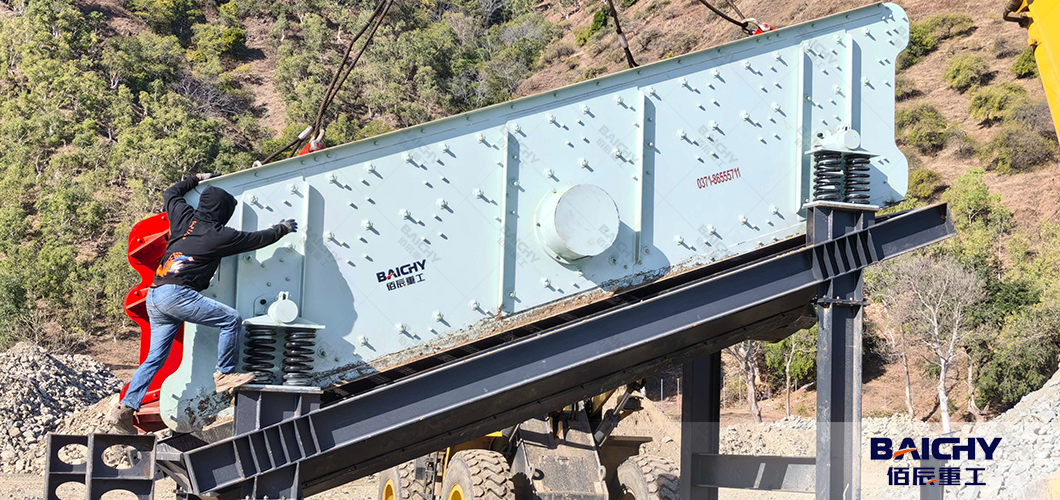
Heavy-Duty Vibrating Screen
The vibrating screen is the central component of the screening system.
A multi-deck screen separates incoming material into different size fractions through several screen surfaces.
For quarry applications, the selection should consider:
-
Required screening capacity.
-
Number of finished aggregate sizes.
-
Maximum feed particle size.
-
Screen aperture dimensions.
-
Material moisture and clay content.
-
Abrasion resistance of screen media.
A larger screening area may be necessary when the feed contains a high percentage of near-size particles or when fine separation is required.
Belt Conveyors and Material Transfer Systems
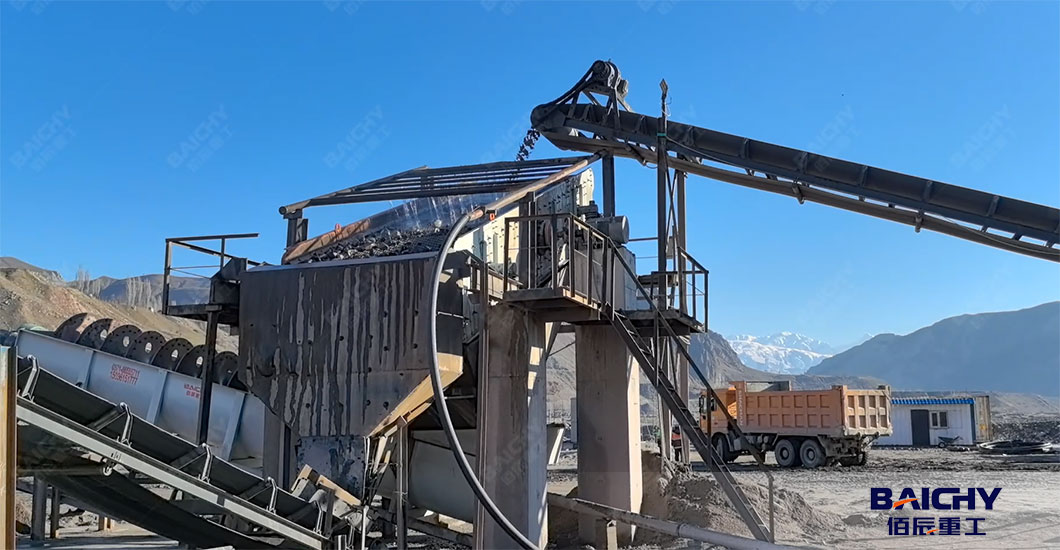
Belt conveyors connect the feeder, vibrating screen, crusher, and finished-product stockpiles.
Each conveyor must match the material flow of the equipment it serves. Particular attention should be given to conveyor loading points, transfer heights, belt width, and the distance between machines.
Poor conveyor layout can cause material spillage, blockages, and unnecessary maintenance.
Optional Crushing and Washing Equipment
A screening-only plant handles material that has already been crushed or otherwise prepared to the required feed size.
If the quarry needs to reduce large rocks, crushing equipment must be added.
Common options include:
-
Jaw crushers for primary crushing.
-
Cone crushers for secondary or tertiary crushing of hard rock.
-
Impact crushers for suitable limestone and other materials.
-
VSI crushers for manufactured sand and particle shaping.
If aggregate contains excessive clay, silt, or unwanted fines, a washing system may also be required.
The washing process should be selected according to the actual material characteristics and finished-product cleanliness requirements.
3. How Does a 300 TPH Quarry Screening Plant Work?
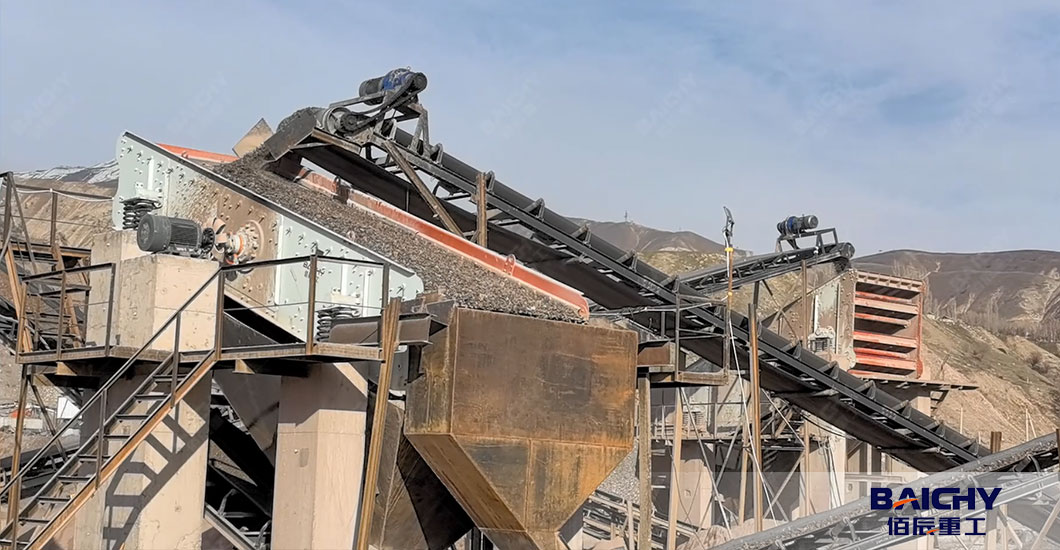
A typical quarry screening process follows four main stages: material feeding, screening, product separation, and stockpiling.
The exact arrangement depends on whether the project uses an independent screening station or an integrated crushing and screening plant.
Material Feeding and Pre-Screening
Raw or pre-crushed material enters the feed hopper.
A vibrating feeder controls the flow and distributes the material onto the vibrating screen.
For some applications, a grizzly section or separate pre-screening equipment can remove undersized material before it reaches the main crusher or screening equipment.
This helps reduce unnecessary equipment loading.
Multi-Deck Vibrating Screening
The material moves across the vibrating screen surface.
The largest particles remain on the upper deck, while smaller particles pass through the screen apertures and move to the lower decks.
Each deck uses a selected aperture size to separate a particular aggregate fraction.
For example, a three-deck screen may produce several different aggregate sizes in one operation, depending on the feed distribution and screen configuration.
Aggregate Separation and Stockpiling
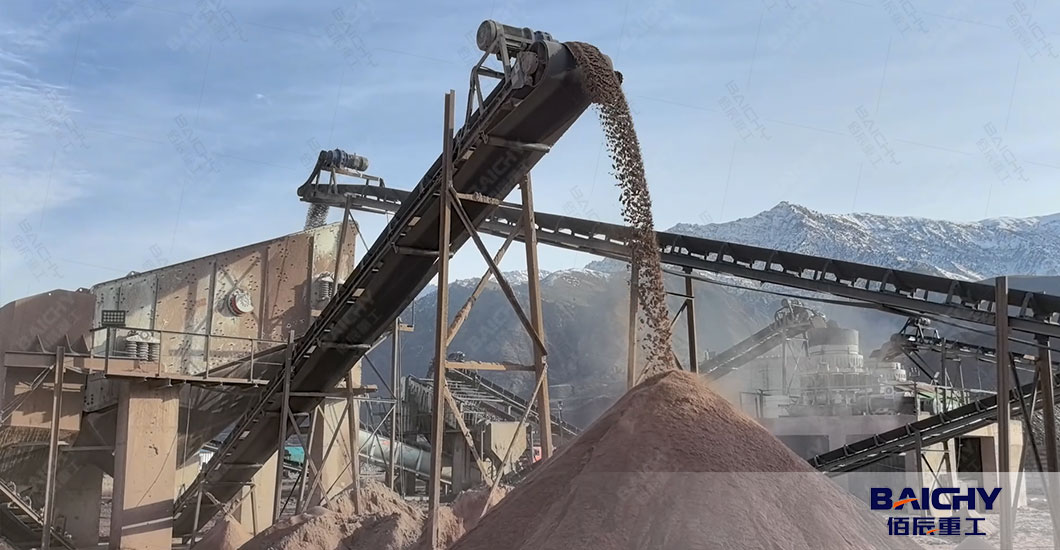
After screening, conveyors transport the separated materials to individual stockpiles.
A typical aggregate production line may produce:
Keeping different product sizes separate is essential for consistent quality and commercial sales.
Closed-Circuit Screening with Return Conveyors
In a closed-circuit system, oversized material is returned to a crusher for further size reduction.
The crushed material then returns to the screening system.
This arrangement helps control the final product size and reduce the amount of oversized material in the finished aggregate.
However, the return flow increases the total material load on the screen. Engineers must calculate the circulating load when determining the required screening capacity.
4. How to Choose the Right Vibrating Screen for 300 TPH?
Selecting a vibrating screen for a 300 TPH quarry requires more than matching a machine's advertised capacity to the target tonnage.
The correct model depends on feed characteristics, product specifications, screening area, deck configuration, and operating conditions.
Screen Size and Screening Area
Screening area is one of the most important factors affecting processing capacity.
A larger screen surface generally provides more space for material stratification and particle separation. However, the actual capacity also depends on material depth, aperture size, moisture, and the percentage of near-size particles.
When selecting a screen, evaluate:
-
Screen width and length.
-
Effective screening area.
-
Maximum feed size.
-
Material loading per deck.
-
Required separation accuracy.
The top deck may experience a different material load from the lower decks. Each deck should therefore be checked separately.
2-Deck, 3-Deck or 4-Deck Vibrating Screen?
The number of decks determines how many size fractions can be separated in one screening operation.
| Screen configuration |
Typical product fractions |
Suitable application |
| 2-deck screen |
Up to 3 |
Projects requiring fewer sizes |
| 3-deck screen |
Up to 4 |
Multi-size aggregate production |
| 4-deck screen |
Up to 5 |
More complex grading requirements |
These product counts assume conventional separation with one independent undersize stream from each deck and a separate top-deck oversize stream. Actual output arrangements depend on plant design.
A 3-deck vibrating screen is often worth evaluating for quarry projects producing several aggregate sizes.
However, a 4-deck screen is not automatically better. More decks can increase the number of products but may also reduce the available screening area per deck or complicate maintenance.
Screen Mesh Size and Final Aggregate Specifications
Screen aperture size determines the nominal separation size.
For example, a quarry producing 5–10 mm, 10–20 mm, and 20–31.5 mm aggregate may require multiple screen apertures selected around these product specifications.
The final selection should account for:
-
Particle shape.
-
Actual feed-size distribution.
-
Screen media opening dimensions.
-
Required product grading.
-
Expected wear and aperture changes.
Rubber, polyurethane, and wire mesh screen media may be considered depending on abrasion, impact, moisture, and screening requirements.
Dry Screening vs. Wet Screening
Dry and wet screening serve different material conditions.
| Comparison |
Dry screening |
Wet screening |
| Water requirement |
Low or none |
Requires process water |
| Typical application |
Relatively dry crushed rock |
Wet or clay-contaminated material |
| Fine separation |
Can be affected by moisture |
Water can assist fine particle separation |
| Additional equipment |
Dust control may be needed |
Water supply and drainage systems |
Dry screening is suitable for many crushed stone applications.
Wet screening may be more appropriate when moisture and clay cause screen blinding or when washing is required to meet aggregate cleanliness specifications.
The decision should be based on material testing rather than equipment preference alone.
5. 7 Key Factors That Affect Screening Efficiency
Even a correctly selected vibrating screen can fail to achieve the required production performance if operating conditions are not properly controlled.
The following seven factors deserve attention during plant design and daily operation.
1. Feed Rate and Material Distribution
The feed rate must remain within the screen's effective operating capacity. Excessive feeding creates a thick material bed, reducing the chance that undersized particles will reach the screen apertures. A consistent and evenly distributed feed improves screening performance.
2. Rock Size, Shape, and Bulk Density
Different materials behave differently during screening. Flat and elongated particles may have difficulty passing through apertures, even when their nominal dimensions are smaller than the opening. Bulk density also affects the mass of material occupying a given screen area. These properties should be considered when calculating the required screen capacity.
3. Moisture and Clay Content
High moisture and sticky clay can cause screen blinding, where particles block the apertures. This reduces the effective open area and lowers screening efficiency. Possible solutions include:
-
Adjusting the screening process.
-
Using suitable screen media.
-
Improving material pre-treatment.
-
Considering wet screening where appropriate.
4. Screen Aperture and Open Area
Aperture size directly affects separation performance. Smaller openings generally require more careful capacity evaluation because they provide less open area and may be more susceptible to blockage. The open area of screen media also influences how easily particles pass through the deck.
5. Screen Deck Configuration
Each screen deck handles a different particle-size distribution. The top deck usually receives the largest particles and experiences higher impact loads. Lower decks handle material that has already passed through the upper screening surfaces. The number of decks and the aperture sequence should match the required final products.
6. Screening Angle and Vibration
Screen inclination, vibration frequency, and amplitude affect material movement and particle separation. The correct operating settings depend on the screen design and material characteristics. Operators should follow the manufacturer's recommended operating parameters rather than making adjustments without technical guidance.
7. Maintenance and Screen Media Wear
Screen panels, bearings, springs, and other wear components require regular inspection. Worn or damaged screen media can change the effective aperture size and cause incorrect product grading. A practical maintenance routine should include:
-
Checking screen media for wear and damage.
-
Inspecting bolts and structural connections.
-
Monitoring bearing temperature and vibration.
-
Checking conveyor belts and transfer points.
-
Removing accumulated material and blockages.
How to Calculate Screening Efficiency
Screening efficiency measures how effectively undersized particles pass through the screen.
A simplified efficiency calculation is:
Screening Efficiency (%) =
(Mass of undersize particles correctly passing through the screen ÷ Total mass of undersize particles available in the feed) × 100
For example, if 90 tons of undersize material are correctly recovered from 100 tons of undersize material available in the feed, the screening efficiency is 90%.
This simplified calculation assumes that the undersize material in the feed has been accurately measured. In a complete engineering assessment, both undersize recovery and oversize contamination should be evaluated.
6. How Much Does a 300 TPH Quarry Screening Plant Cost?
The cost of a 300 TPH quarry screening plant depends on the equipment configuration, material characteristics, number of finished products, and project installation requirements.
There is no reliable universal price based only on the 300 TPH capacity figure.
A screening-only station generally requires a different investment from a complete crushing, screening, and washing plant.
Main Equipment Purchase Costs
The main equipment investment may include:
-
Feed hopper and vibrating feeder.
-
One or more vibrating screens.
-
Belt conveyors and transfer structures.
-
Electrical control system.
-
Optional crushers and washing equipment.
The number and size of vibrating screens are particularly important cost factors.
Installation and Foundation Costs
A fixed quarry screening plant may require concrete foundations, steel support structures, equipment installation, and site preparation.
The total installation cost depends on plant layout, ground conditions, equipment dimensions, and local construction costs.
A mobile screening plant may reduce some civil construction requirements, but it introduces other considerations such as mobility, transport, and site access.
Electrical System and Operating Costs
Operating expenses include:
-
Electricity consumption.
-
Screen media replacement.
-
Bearing and mechanical maintenance.
-
Conveyor belt replacement.
-
Lubricants and other consumables.
-
Operating labor.
When comparing equipment, buyers should consider operating cost per ton rather than looking only at the initial purchase price.
For an accurate quotation, provide the equipment supplier with the material type, maximum feed size, required capacity, finished aggregate specifications, and whether the project needs screening only or a complete crushing and screening system.
7. Baichy Quarry Screening Plant Solutions
A successful quarry screening project requires equipment that works as one coordinated system.
Baichy Machinery provides crushing and screening equipment for quarry and aggregate production applications. Equipment selection should be based on the customer's material characteristics, production targets, and required finished aggregate sizes.
Screening Equipment for Different Quarry Applications
Different materials require different screening arrangements.
For granite and basalt, equipment selection should consider high abrasion and the impact of coarse particles on the screen surface.
For limestone, the screen configuration should match the required aggregate grading and material moisture.
For river gravel and construction materials, the feed-size distribution and clay content may influence whether pre-screening or washing equipment is necessary.
Customized 300 TPH Screening Plant Configuration
A 300 TPH project should be designed around actual operating conditions rather than a standard equipment list.
Baichy can evaluate the following information when preparing a screening solution:
-
Material type: granite, limestone, basalt, or gravel.
-
Maximum feed size and feed-size distribution.
-
Required production capacity.
-
Number and specifications of finished aggregate products.
-
Moisture and clay content.
-
Available installation area.
-
Whether crushing and washing equipment are required.
Based on these details, the equipment arrangement can be developed to match the project's production requirements.
Technical Support and Complete Plant Supply
For customers planning a new quarry or upgrading an existing aggregate production line, equipment selection should cover the complete material flow.
This includes feeding, screening, conveying, and any necessary crushing or washing stages.
The goal is to achieve stable material distribution, reliable separation, manageable maintenance, and consistent finished aggregate quality.
Planning a 300 TPH quarry screening plant?
Contact Baichy Machinery with your material type, feed size, target aggregate sizes, and project requirements. Our team can help evaluate a suitable screening equipment configuration and prepare a project-specific quotation.
Conclusion: Get the Right Screening Solution for Your Quarry
A 300 TPH quarry screening plant should be designed around the material being processed and the aggregate sizes the market requires. The right vibrating screen, deck configuration, feed arrangement, and conveyor system all contribute to stable production and consistent product grading. Before purchasing equipment, confirm whether 300 TPH refers to fresh plant feed, total screen feed, or finished product output. Then evaluate material characteristics, screen area, circulating load, and operating conditions.
Looking for a suitable 300 TPH quarry screening solution? Contact Baichy Machinery with your project specifications to discuss equipment selection and a customized plant configuration.required space depends on the number of screens, conveyor lengths, equipment arrangement, stockpile capacity, and vehicle access.
Frequently Asked Questions
1. How many vibrating screens are needed for a 300 TPH quarry?
There is no fixed number of vibrating screens for every 300 TPH quarry. A single large multi-deck vibrating screen may handle the required material flow in some applications. Other projects may need two or more screens because of different product specifications, material characteristics, or plant layouts. The final number should be determined through capacity calculations for each screening deck.
What size vibrating screen is suitable for 300 TPH?
The suitable vibrating screen size depends on the feed-size distribution, material density, moisture, screen aperture, number of decks, and required separation efficiency. A 300 TPH target alone is insufficient to select a specific model. The supplier should evaluate the material data and calculate the effective screening area required for each deck.
What is the difference between a screening plant and a crushing and screening plant?
A screening plant separates material into different size fractions. It generally receives pre-crushed rock or naturally sized aggregate. A crushing and screening plant includes crushers to reduce oversized material before or between screening stages. If the quarry needs to process large raw rock, a complete crushing and screening system is usually necessary. If the feed material is already within the required size range, a standalone screening plant may be sufficient.
How much space is needed for a 300 TPH screening plant?
The required space depends on the number of screens, conveyor lengths, equipment arrangement, stockpile capacity, and vehicle access. A complete crushing and screening plant needs additional space for crushers, feeding areas, and material transfer. A practical site layout should also allow room for equipment maintenance, screen media replacement, and safe material loading.




 2026-11-06






 86-15093113821
 86-15093113821