High-quality concrete requires clean and well-graded sand with controlled particle size and low impurity content. A 100 TPH sand washing plant is designed to process natural sand or crushed sand materials and remove unwanted substances such as clay, dust, and organic impurities. The washed sand produced by this system can meet the requirements for concrete production, construction projects, and aggregate applications.

This sand washing solution adopts a simple and efficient process consisting of a static grizzly, trommel screen, twin screw washer, and one final radial stacker conveyor. The equipment combination provides an effective way to separate, clean, and stockpile finished concrete sand.
Concrete sand requires a specific gradation and cleanliness. While crusher dust or natural sand may seem adequate, they often contain excessive fines or impurities. A dedicated washing plant ensures:
● Cleanliness: Removal of minus-75 micron (-200 mesh) particles that weaken concrete.
● Gradation: Proper sorting of particle sizes to ensure workability and reduce voids.
● Quality Control: Consistent output that meets ASTM or local building standards.
The 100 TPH (Tons Per Hour) capacity is the sweet spot for medium to large-scale operations, providing efficient production without the massive footprint of high-tonnage plants.
Our specific configuration is engineered for durability and efficiency. Here is the process flow:
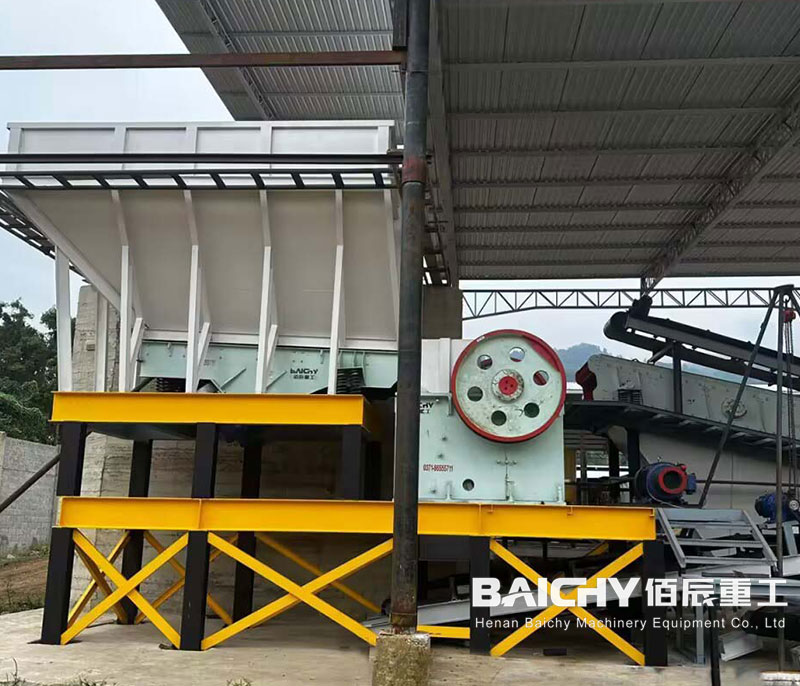
The process begins with the Static Grizzly. This heavy-duty screening unit is positioned at the feed hopper. Its primary function is scalping—removing oversize material (typically > 4 inches) such as large rocks and debris.
● Function: Protects downstream equipment from damage by oversized boulders.
● Benefit: Ensures that only manageable material enters the system, increasing the lifespan of the Trommel and Screw Washer.
After the Grizzly, the material moves into the Trommel Screen. This rotating cylindrical drum is the workhorse of the classification phase.
● Function: As the drum rotates, water is sprayed to break down clays, while the screen separates materials based on size.
● The Process: The undersize (sand and fine aggregates) passes through the screen mesh, while oversize (gravel or pebbles) is discharged at the rear.
● Benefit: The tumbling action provides intense scrubbing, ensuring that clay balls are broken down and removed with the wash water, making it ideal for difficult feed materials.
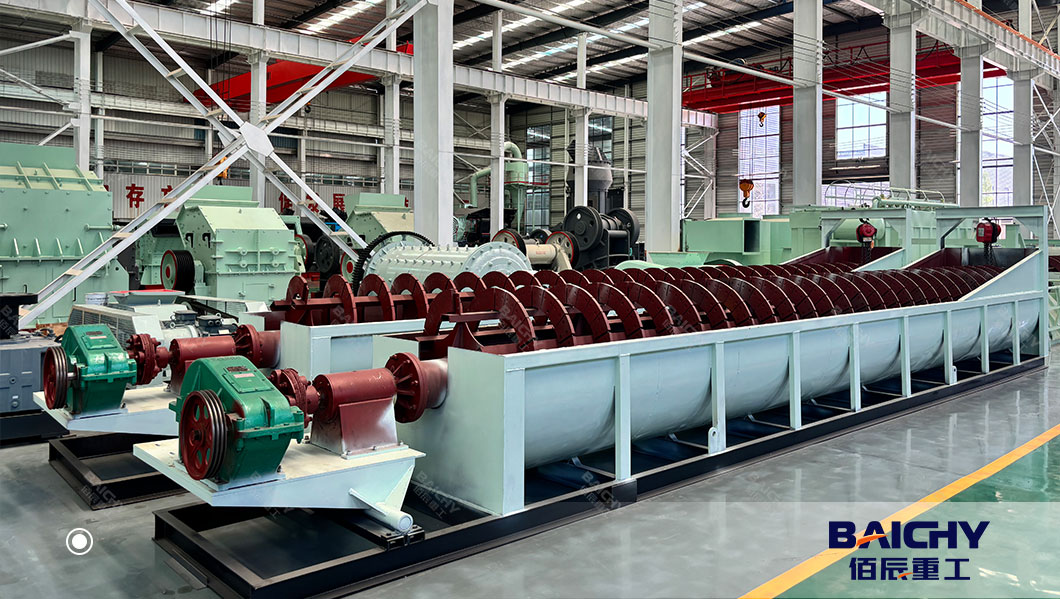
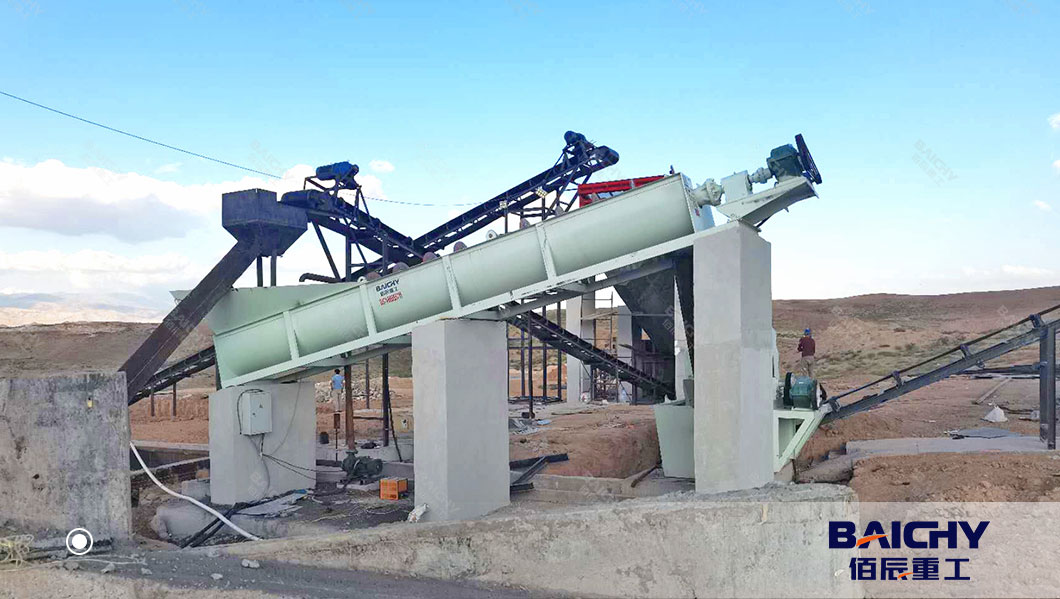
This is the critical phase for concrete sand quality. The material from the Trommel’s undersize is fed into the Twin Screw Washer.
● Function: This machine utilizes two large screw augers in a settling tank. Water is fed into the bottom of the tank, creating a rising current.
● The Process: The lighter, unwanted fines (silt and clay) overflow the weir and are washed away. The heavier, clean sand particles settle at the bottom and are conveyed upward by the twin screws.
● Benefit: The twin screw design provides a more consistent dewatering and classification than single screws. It efficiently removes the "floaters" and retains the "sinkers," ensuring the final product has the correct "fines content" necessary for concrete workability.

Once the sand is washed and dewatered to approximately 15-20% moisture content, it is discharged onto the Final Radial Stacker Conveyor.
● Function: This is a mobile, radial conveyor that pivots to create large, conical stockpiles.
● Benefit: Radial stacking creates a "live" stockpile, which helps to "spoon" the material and prevent segregation. More importantly, it allows the sand to continue draining water, reducing moisture content for truck loading and batching plants.
● Superior Scrubbing: The combination of the Trommel’s tumbling action and the rising current in the Twin Screw ensures even the most stubborn clays are removed, resulting in bright, clean sand.
● Low Maintenance: The Static Grizzly protects the mechanical components, while the Twin Screw design features heavy-duty bearings and replaceable wear shoes for extended life.
● Water Management: The system is designed for efficient water usage. The water overflow from the screw washer can be recirculated through a clarifier or settling pond, reducing makeup water requirements.
● Stockpile Efficiency: The Radial Stacker eliminates the need for a wheel loader to move finished material, reducing operational costs and maintaining product integrity.
The 100 TPH sand washing plant for concrete sand provides a complete solution for producing clean and high-quality washed sand. With a process including a static grizzly, trommel screen, twin screw washer, and radial stacker conveyor, the plant offers efficient impurity removal, stable production, and convenient sand stockpiling. For sand producers looking to upgrade raw sand into construction-grade concrete sand, this washing plant configuration provides a reliable and practical processing solution.
Save Time! Get A Detailed Quotation Quickly.