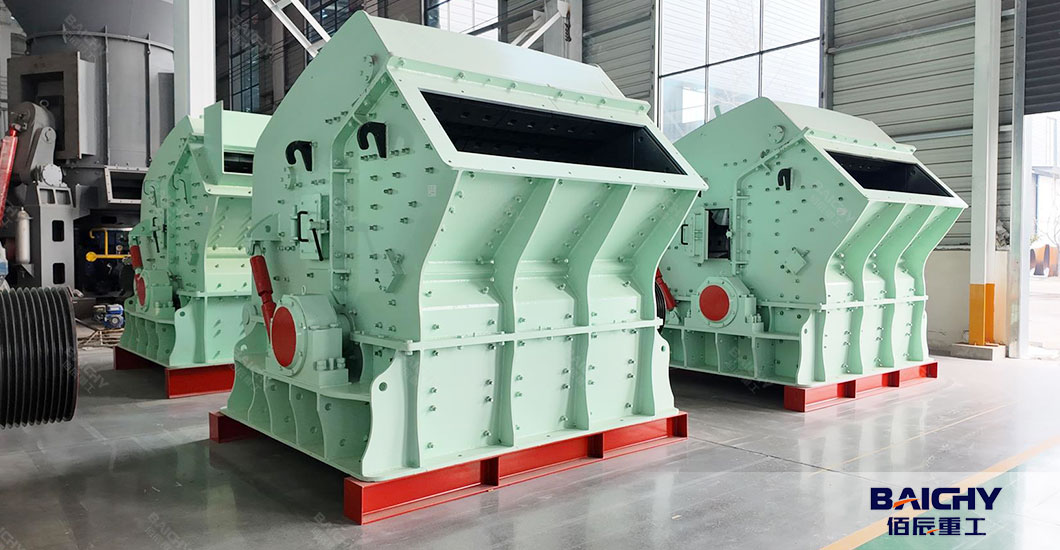
Impact crushers are essential stone crusher machine in mining, construction, and aggregate production, renowned for their unique crushing mechanism and versatile performance. Unlike jaw or cone crushers that rely on compression, impact crushers use high-speed impact force to break down materials—making them ideal for producing high-quality, cubical aggregates critical for concrete, road construction, and infrastructure projects. Their core function revolves around efficiently reducing material size while optimizing product shape, throughput, and operational flexibility.
Key Functions and Capabilities of Impact Crushers
Impact crushers offer multiple core functions that set them apart from other crushing equipment, addressing diverse production needs: The fundamental function of an impact crusher is to break materials using high-velocity impact and collision—rather than pressure or compression.
● High-Efficiency Size Reduction: With crushing ratios (feed size to output size) significantly higher than jaw crushers, impact crushers process large volumes of material quickly—capacities range from 1–500 t/h depending on the model. For example, the Eastman PF 1520 model handles 300–500 t/h of limestone, reducing processing time by 30–50% compared to traditional equipment.
● Cubical Aggregate Shaping: A standout function is producing uniformly shaped, cubical particles with a flakiness index below 10%—far lower than the 20% flakiness of jaw crusher outputs. This cubical shape enhances particle interlock in concrete and asphalt, meeting ASTM C33 standards for high-grade construction materials and improving structural strength.
● Versatile Material Handling: They efficiently process soft to medium-hard materials (Mohs hardness ≤7), including limestone, concrete, coal, feldspar, and construction waste. Advanced models like VSI impact crushers offer “stone-on-stone” and “stone-on-iron” mode switching, adapting to abrasive materials (e.g., granite) and non-abrasive materials alike.
● Adjustable Output Size: Operators can fine-tune the discharge gap or rotor speed to achieve precise particle sizes—faster rotor speeds or smaller gaps produce finer outputs. The 3:1 apron adjustment rule (positioning primary and secondary aprons to gradual reduce material size) optimizes output consistency and prevents clogging.
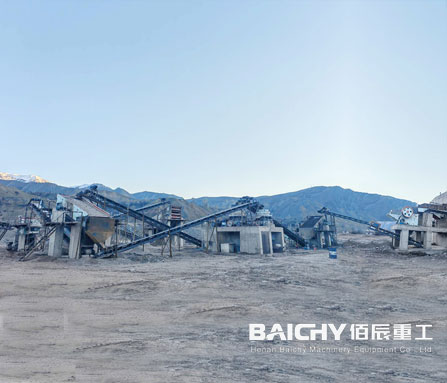
● Flexible Operation Modes: Impact crushers work in open or closed circuits (paired with screens) and are available as stationary or mobile units. Mobile impact crushers, mounted on crawler or wheeled chassis, offer on-site crushing capabilities—ideal for road construction, demolition recycling, and remote quarry operations where mobility is critical.
● Easy Maintenance and Safety: Designed with accessible components, impact crushers allow quick blow bar replacement (every 200–500 hours) and feature hydraulic systems for fast internal inspections. Safety functions include vibration alarms and automatic shutdowns for low oil pressure or overloading, protecting equipment and operators.
Types of Impact Crushers and Their Functional Differences
Different impact crusher designs tailor their functions to specific applications, with two primary categories:
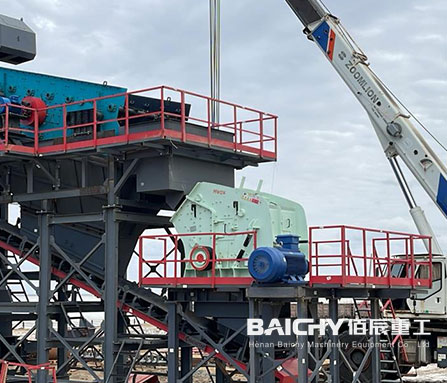
● Horizontal Shaft Impact (HSI) Crushers: The most common type, with a horizontal rotor that delivers high-impact force for secondary or tertiary crushing. Single-rotor models (e.g., PF series) excel at medium-scale aggregate production, while double-rotor designs offer enhanced crushing efficiency for hard materials like basalt. Their function focuses on balancing throughput and product quality, making them suitable for quarries and concrete plants.
● Vertical Shaft Impact (VSI) Crushers: Also known as sand makers, these have a vertical rotor and specialize in fine crushing and shaping—ideal for artificial sand production (output size ≤5mm). They use “stone-on-stone” impact to minimize iron contamination, critical for glass sand or high-purity aggregate applications. VSI models like the 5X series feature diamond-shaped impact blocks that extend wear life by 3–5 times, boosting long-term productivity.
Impact Crusher vs. Other Crushers: Functional Comparison
Understanding how impact crusher functions differ from other types helps in equipment selection:
● vs. Jaw Crushers: Jaw crushers use compression for primary crushing of hard materials but produce flaky particles and lower throughput. Impact crushers excel at secondary/tertiary crushing and shaping, offering better product quality but limited to medium-hard materials.
● vs. Cone Crushers: Cone crushers use compression for fine crushing and higher efficiency with hard materials but have higher energy consumption and produce less uniform particle shapes. Impact crushers deliver superior cubical shaping, lower power use, and easier maintenance, making them better for aggregate production.
● vs. Roll Crushers: Roll crushers rely on shear force for soft materials but have high failure rates with abrasive materials. Impact crushers offer greater versatility, higher capacity, and better adaptability to mixed-material feeds.
The core function of impact crushers—high-speed impact-driven size reduction—delivers unique value in mining, construction, and recycling industries. Their ability to produce cubical aggregates, handle diverse materials, and offer flexible operation makes them irreplaceable for modern production needs. From stationary models for large quarries to mobile units for on-site recycling, impact crushers adapt their functions to meet varying throughput, particle size, and application requirements.
Ready to leverage the powerful functions of impact crushers for your project? Our team of experts can help you select the right model (HSI, VSI, mobile) based on your material type, capacity needs, and output requirements. Contact us today for a free consultation, customized quotes, and on-site performance assessments.




 2026-09-15






 86-15093113821
 86-15093113821