Flotation cells are essential equipment in mineral processing plants, used to separate valuable minerals from gangue. By taking advantage of differences in mineral surface properties, flotation cells allow operators to produce high-quality concentrates efficiently. Choosing the right flotation cell is critical for maximizing recovery, improving grade, and minimizing energy consumption. A wrong choice can lead to poor separation, high operational costs, and reduced plant productivity.
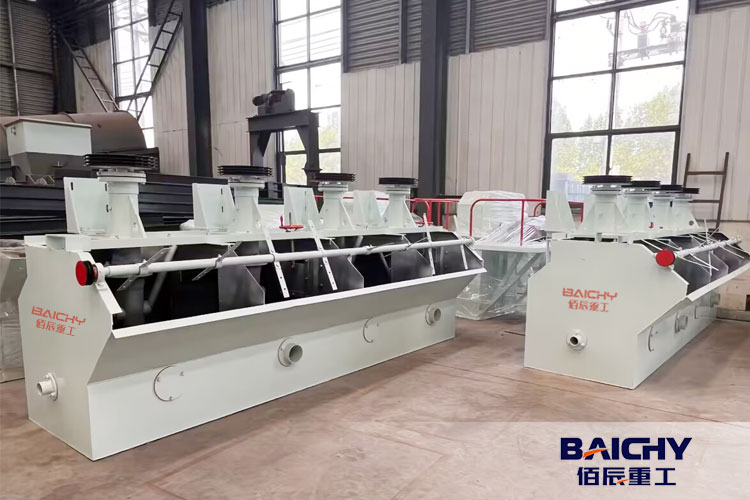
Key Factors to Consider When Choosing Flotation Cells
1. Ore Characteristics
The type of ore you are processing plays a major role in selecting flotation cells. Hard, coarse ores may require high-agitation mechanical cells, while fine particles benefit from column cells that provide longer retention time. Understanding particle size, mineral liberation, and flotation kinetics helps ensure that the selected cells optimize recovery and grade.
2. Production Capacity Requirements
Your plant’s throughput and target tonnage determine the size and number of flotation cells. For large-scale operations, multiple cells may be arranged in series or parallel to handle high volumes efficiently. Smaller operations may benefit from fewer but higher-efficiency cells. Additionally, consider whether the process is continuous or batch, as this affects the design and aeration method.
3. Recovery and Grade Goals
Flotation is a balancing act between recovery and concentrate grade. Higher recovery often reduces the concentrate grade, and vice versa. Selecting cells with appropriate mixing and aeration characteristics helps achieve your desired balance. For example, mechanical cells are known for high recovery of fine minerals, while column cells improve grade in low-grade ores.
4. Energy Consumption and Efficiency
Flotation cells consume a significant portion of a plant’s energy. Choosing energy-efficient cells reduces operating costs without compromising performance. Factors such as impeller design, aeration method, and cell geometry influence both energy consumption and flotation efficiency. Optimizing these parameters ensures that your flotation circuit operates effectively.
Types of Flotation Cells and Their Applications
1. Mechanical (Agitated) Flotation Cells
Mechanical cells are the most widely used type in mineral processing. They feature an impeller that agitates the slurry and introduces air bubbles. These cells are ideal for processing ores with fine to medium particles. Advantages include high recovery rates and suitability for diverse ore types. However, they require regular maintenance due to moving parts and can consume more energy compared to other types.
2. Column Flotation Cells
Column cells are tall, vertical flotation units that rely on a countercurrent flow of slurry and air bubbles. They provide long retention time, which improves the separation of fine and low-grade ores. Columns excel at producing high-grade concentrates with minimal dilution. Limitations include slower flotation kinetics, making them less suitable for coarse particles or high-throughput operations.
3. Hybrid or Modern Flotation Cells
Innovative hybrid cells combine features of mechanical and column flotation. They offer the efficiency of mechanical agitation with the high-grade capability of columns. These cells are often used in complex or mixed-ore operations where conventional cells may underperform. They can be customized for specific ores, offering flexibility in modern processing plants.
Best Practices for Selecting Flotation Cells
● Evaluate Plant Layout and Scalability: Consider the space available and potential for future expansion. Some cells are modular and easier to scale.
● Consider Maintenance and Flexibility: Mechanical cells require more maintenance, while columns need less but are less flexible in handling coarse feed.
● Automation and Control Systems: Modern cells often come with advanced sensors and control systems for precise operation, which improves consistency and reduces operator errors.
● Pilot Testing: Conducting pilot tests with your ore is essential. Laboratory-scale tests can predict recovery, grade, and flotation kinetics, ensuring the selected cells meet plant requirements.
Choosing the right flotation cells is a critical decision in mineral processing. By considering ore characteristics, production capacity, recovery goals, and energy efficiency, operators can select cells that optimize performance. Understanding the differences between mechanical, column, and hybrid cells helps match equipment to your ore and processing objectives. Ultimately, careful selection and proper operation lead to higher recovery, improved concentrate quality, and reduced operational costs.
People Also Frequently Asked For - FAQ
1. What type of flotation cell should I use for fine versus coarse ore?
For fine particles, column flotation cells are usually the best choice because they provide longer retention time and allow better separation of small mineral particles. For coarse or harder ores, mechanical (agitated) flotation cells are more effective, as their impellers create strong mixing that ensures proper contact between air bubbles and mineral surfaces. Matching the cell type to particle size improves recovery and concentrate quality.
2. How do I determine the right size and number of flotation cells for my plant?
The size and number of flotation cells depend on your plant’s production capacity and the tonnage of ore processed. High-throughput plants usually require multiple cells in series or parallel, while smaller plants may need fewer but higher-efficiency units. Conducting a mass balance and pilot testing can help determine the optimum cell configuration to achieve your recovery and grade targets.
3. What factors affect the efficiency and recovery of flotation cells?
Several factors influence flotation performance, including ore type, particle size, chemical reagents, air flow rate, and cell design. Mechanical cells rely on strong agitation and aeration, while column cells benefit from long retention time. Proper selection, operation, and regular maintenance are essential to maximize recovery and produce high-quality concentrate.




 2026-09-08





 86-15093113821
 86-15093113821